

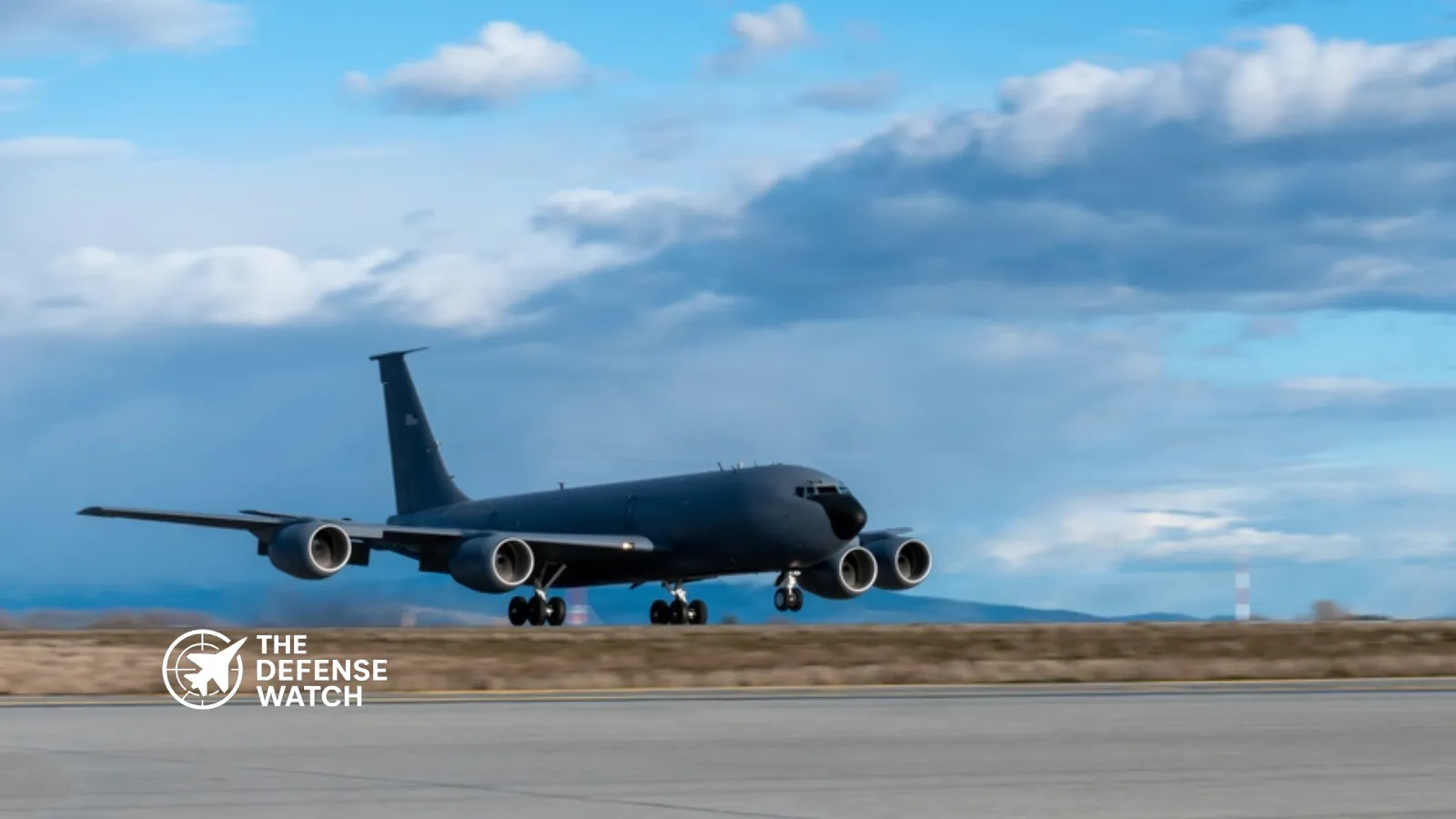
- Five US Air Force KC-135 Stratotanker aircraft were reportedly damaged during an Iranian missile strike on Prince Sultan Air Base in Saudi Arabia.
- The aircraft were on the ground when the strike occurred and sustained varying levels of damage but were not destroyed.
- The attack highlights the vulnerability of forward deployed support aircraft critical to US air operations in the Middle East.
- The strike occurred amid escalating US Iranian tensions linked to ongoing military operations in the region.
- Aerial refueling tankers remain a cornerstone capability enabling long range strike and persistent airpower.
Iranian Missile Strike Damages US KC-135 Tankers
The Iranian missile strike KC-135 incident has reportedly damaged five U.S. Air Force KC-135 Stratotanker aerial refueling aircraft at Prince Sultan Air Base in Saudi Arabia, according to U.S. officials cited in multiple reports. The aircraft were struck while parked on the ground during a missile attack linked to escalating regional tensions involving Iran and U.S. forces.
Officials said the tankers were damaged but not destroyed, and repair efforts are underway. No casualties were reported in the attack.
The incident represents one of the most significant reported hits on U.S. aerial refueling infrastructure during the current Middle East crisis.
The Big Picture
Aerial refueling aircraft are among the most critical enabling assets in modern air warfare. The KC-135 Stratotanker, a long serving U.S. Air Force tanker introduced in the late 1950s, allows fighters, bombers, and surveillance aircraft to remain airborne for extended missions far from their home bases.
In the Middle East theater, tanker aircraft are essential to maintaining U.S. airpower projection across large operational distances. Aircraft supporting strike missions, intelligence flights, and air patrols rely heavily on mid air refueling to sustain high sortie rates.
Forward bases such as Prince Sultan Air Base in Saudi Arabia serve as critical hubs for these operations, enabling coalition aircraft to conduct long range missions over Iraq, Syria, the Persian Gulf, and Iran.
When these support assets are disrupted, operational tempo and mission flexibility can quickly become constrained.
What’s Happening
According to reporting citing two U.S. officials, five KC-135 Stratotanker aircraft were hit during an Iranian missile strike on Prince Sultan Air Base in Saudi Arabia.
The tankers were reportedly parked on the airfield at the time of the attack. Initial assessments indicate the aircraft suffered structural or systems damage but were not completely destroyed.
Officials said maintenance teams are working to repair the aircraft, though the timeline for returning them to service remains unclear.
The attack occurred amid broader Iranian retaliatory strikes targeting regional infrastructure and U.S. military facilities following escalating hostilities between Iran and U.S. aligned forces.
Iran has conducted missile and drone strikes against multiple targets across Saudi Arabia since the conflict began, including energy infrastructure and military installations.
Prince Sultan Air Base hosts significant U.S. and coalition forces and has played a key role in regional air operations.
Why It Matters
The Iranian missile strike KC-135 incident underscores the vulnerability of high value support aircraft stationed at forward operating bases.
Unlike hardened fighter shelters, tanker aircraft are often parked on open ramps due to their large size and operational requirements. This makes them difficult to protect during missile or drone attacks.
While the reported damage did not destroy the aircraft, even temporary loss of tanker availability can disrupt complex air campaigns.
Aerial refueling capacity directly affects:
- fighter patrol duration
- bomber strike range
- intelligence and surveillance missions
- rapid response capability
When tanker availability drops, combat aircraft may need to operate closer to their bases or reduce time on station.
This can limit operational reach during sustained conflict.
Strategic Implications
The damage to five U.S. tanker aircraft illustrates how adversaries increasingly target enabling infrastructure rather than frontline combat systems.
Support assets such as tankers, surveillance aircraft, and logistics hubs are central to modern expeditionary warfare.
Disrupting these systems can have cascading operational effects.
Iran’s missile and drone capabilities have steadily expanded over the past decade, enabling the country to strike regional bases at long distances with increasing precision.
Attacks on air bases in Saudi Arabia and the Gulf also signal Tehran’s willingness to target coalition infrastructure supporting U.S. operations.
For U.S. planners, the incident reinforces the need for stronger base defense measures, including:
- layered missile defense systems
- hardened aircraft shelters
- dispersal of high value aircraft across multiple bases
- rapid runway and infrastructure repair capabilities
Such measures aim to reduce the operational risk posed by missile attacks.
Competitor View
Iran and its regional partners likely view attacks on U.S. logistical and support assets as an effective way to challenge American military superiority.
Rather than confronting advanced U.S. fighter aircraft directly, targeting tanker aircraft, drones, or air bases can impose operational costs on U.S. forces.
Strategically, these attacks demonstrate that Iran retains the capability to threaten U.S. and allied military infrastructure throughout the Gulf region.
Russia and China are also closely observing how such attacks affect U.S. expeditionary operations.
Both countries have invested heavily in strategies designed to disrupt logistics and support systems during conflict, often referred to as anti access or area denial approaches.
Events like the Iranian missile strike KC-135 incident provide real world examples of how such strategies could play out during major power conflict.
What To Watch Next
Several developments may follow in the coming weeks.
First, the U.S. military may increase air defense deployments around key regional bases. Systems such as Patriot and THAAD are commonly used to defend against ballistic and cruise missile threats.
Second, the U.S. Air Force may disperse tanker aircraft across additional bases to reduce the risk of concentrated losses.
Third, maintenance assessments will determine how quickly the damaged aircraft can return to service.
Even moderate structural damage to large aircraft like the KC-135 can require extensive inspection and repair.
Finally, the United States may increase the deployment of newer tanker platforms such as the KC-46 Pegasus to sustain refueling capacity in the theater.
Capability Gap
The incident highlights a persistent challenge in modern air operations.
Support aircraft remain large, slow, and difficult to harden against missile attack.
While fighters and bombers benefit from hardened shelters and dispersal strategies, tanker fleets often rely on exposed ramp space.
This creates a structural vulnerability that adversaries can exploit.
At the same time, replacing tanker capacity quickly during wartime remains difficult. Tankers are expensive, limited in number, and critical to global U.S. airpower.
Protecting them has become an increasingly important part of airbase defense planning.
The Bottom Line
The reported Iranian missile strike damaging five KC-135 Stratotanker aircraft highlights how attacks on support infrastructure can disrupt the operational backbone of modern airpower.


