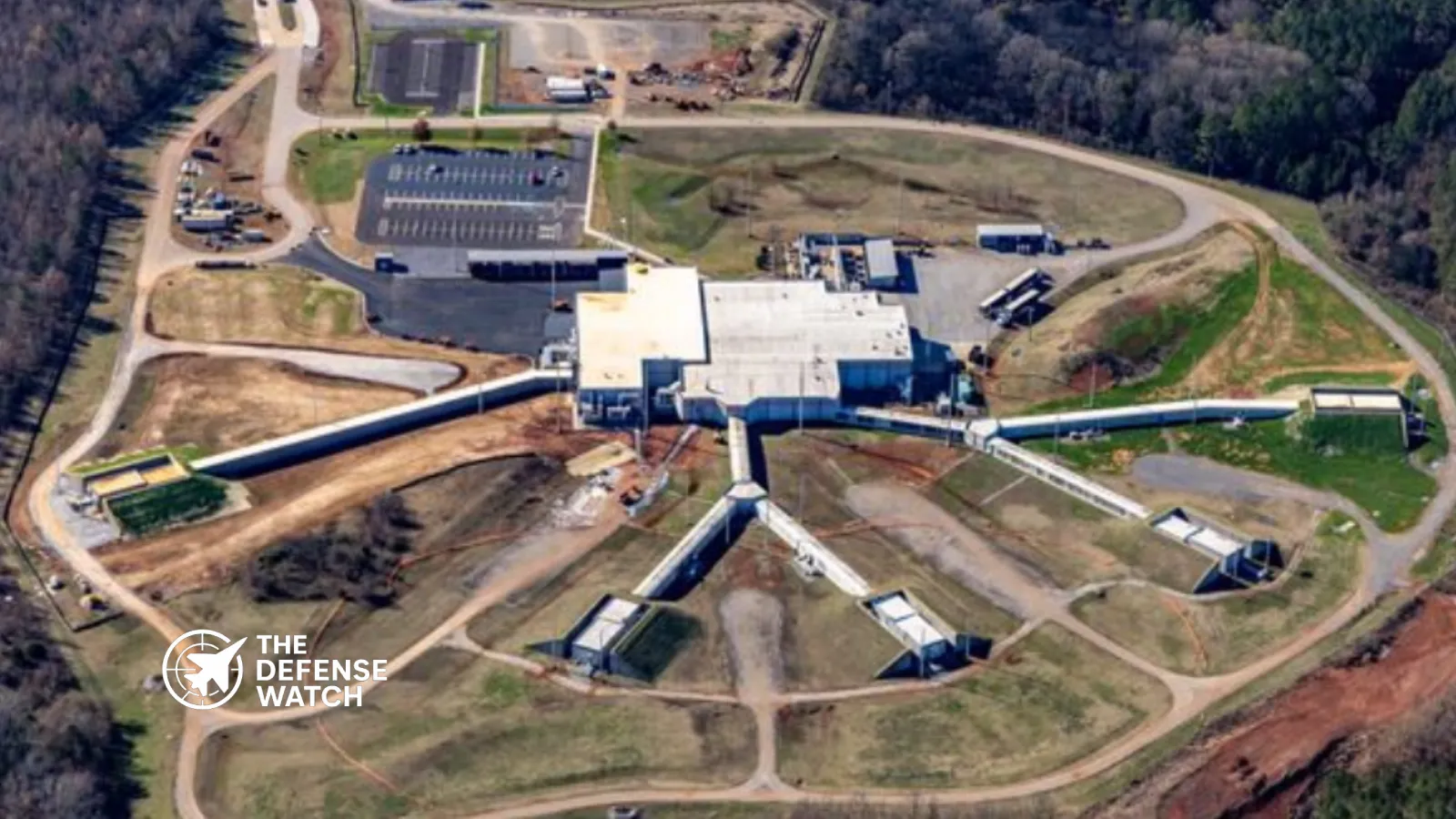
- Raytheon has completed expansion of its missile integration facility in Huntsville, Alabama.
- The $115 million project added about 26,000 square feet of production and integration space.
- The facility supports U.S. missile defense programs including the Standard Missile family and Glide Phase Interceptor.
- The expansion increases production capacity by more than 50 percent and adds roughly 185 jobs.
- The project strengthens U.S. missile defense manufacturing amid rising demand for advanced interceptors.
Raytheon Alabama Missile Integration Facility Expansion
The Raytheon Alabama missile integration facility expansion marks a significant step in strengthening the United States’ missile production capacity as demand for advanced air and missile defense systems continues to grow.
Raytheon, a business unit of RTX, completed the expansion of its Redstone Missile Integration Facility in Huntsville, Alabama, adding roughly 26,000 square feet of new production space and increasing the site’s integration capacity by more than 50 percent. The $115 million investment aims to accelerate delivery of critical missile defense systems for the U.S. military and allied partners.
The Huntsville facility serves as a final integration hub for several major U.S. missile programs operated by the U.S. Navy, the Missile Defense Agency, and other defense customers.
The Big Picture
U.S. defense planners have increasingly emphasized expanding the industrial base that supports missile production. Rising demand for interceptors and air defense systems has exposed capacity constraints across the U.S. defense manufacturing sector.
Recent conflicts and emerging threats, particularly hypersonic weapons and advanced cruise missiles, have pushed the Pentagon to accelerate missile procurement programs. These trends have forced defense contractors to expand production infrastructure to meet both U.S. and allied demand.
The Raytheon Alabama missile integration facility expansion reflects a broader effort by the U.S. Department of Defense to scale up missile defense manufacturing. Huntsville has become one of the most important hubs in this ecosystem, often called the center of U.S. missile defense development.
Multiple government agencies and contractors operate major programs in the region, including the Missile Defense Agency, NASA’s Marshall Space Flight Center, and several large defense contractors.
What’s Happening
Raytheon originally opened the Redstone Missile Integration Facility in 2012. The site integrates multiple missile systems before delivery to military customers.
The newly completed expansion increases production floor space by more than half and adds approximately 185 new jobs, bringing Raytheon’s workforce in Alabama to more than 2,200 employees.
The facility integrates multiple variants of the Standard Missile family, including:
- Standard Missile 3
- Standard Missile 6
These interceptors form a core component of U.S. naval missile defense architecture. They support missions ranging from ballistic missile interception to advanced air defense.
The facility will also support development and integration work for the Glide Phase Interceptor program, a next generation system designed to defeat hypersonic glide vehicles.
The Glide Phase Interceptor is expected to become one of the most important future missile defense capabilities for the United States and its allies.
Why It Matters
Expanding missile integration capacity directly addresses one of the Pentagon’s biggest challenges, scaling production of complex missile systems.
Missile defense programs require sophisticated integration work that combines guidance systems, propulsion units, warheads, and sensor packages into operational interceptors. Integration facilities like the one in Huntsville represent the final step before systems are delivered to military units.
Increasing this capacity allows Raytheon to shorten production timelines and deliver more systems to operational forces.
This matters at a time when the United States is replenishing interceptor inventories while simultaneously developing new systems designed to counter emerging threats.
The expansion also strengthens supply chain resilience. The defense industrial base has struggled in recent years with production bottlenecks and limited manufacturing capacity for advanced weapons.
By expanding integration infrastructure, Raytheon is positioning itself to support larger procurement orders expected from the U.S. Navy and Missile Defense Agency.
Strategic Implications
Missile defense remains a central element of U.S. deterrence strategy.
Standard Missile interceptors deployed aboard Aegis destroyers and cruisers provide a layered defense against ballistic missiles, cruise missiles, and aircraft. Increasing the rate at which these interceptors can be produced improves fleet readiness.
The addition of Glide Phase Interceptor production capability also signals a shift toward counter hypersonic defense.
Hypersonic glide vehicles travel at extreme speeds while maneuvering unpredictably during flight. Traditional missile defense systems struggle to intercept these weapons during the boost or terminal phases.
The Glide Phase Interceptor aims to engage these threats during their glide phase, a critical but technically challenging window.
By expanding the Huntsville facility, Raytheon is aligning its production capacity with this next generation mission set.
Competitor View
Strategic competitors such as China and Russia closely monitor U.S. missile defense infrastructure developments.
Both countries are rapidly expanding their own missile arsenals, including hypersonic weapons and advanced ballistic missile systems.
In response, U.S. missile defense modernization aims to maintain credible deterrence by improving interception capabilities and increasing available interceptor inventories.
Expanded manufacturing capacity signals to competitors that the United States intends to sustain large scale missile defense deployments while developing new technologies to counter emerging threats.
What To Watch Next
Several developments will determine how the expanded facility shapes future missile defense capabilities.
First, the Glide Phase Interceptor program remains in early development. Testing and design validation over the next several years will determine production timelines.
Second, procurement decisions by the U.S. Navy and Missile Defense Agency will influence how quickly interceptor production ramps up.
Third, allied demand for missile defense systems is increasing. Many U.S. partners rely on American produced interceptors for integrated air and missile defense architectures.
As a result, the Huntsville facility may play an increasingly important role in supporting both U.S. and allied missile defense networks.
Capability Gap
The Raytheon Alabama missile integration facility expansion addresses a clear operational gap.
The U.S. military requires larger inventories of missile interceptors to counter expanding missile threats from peer and regional adversaries.
However, missile production has historically been constrained by limited industrial capacity and complex manufacturing requirements.
Expanding integration infrastructure helps close this gap by enabling faster assembly, testing, and delivery of advanced missile systems.
That said, scaling missile production still depends on broader supply chain performance, including propulsion systems, guidance electronics, and specialized materials.
Integration capacity alone cannot fully eliminate production bottlenecks across the defense industrial base.
The Bottom Line
Raytheon’s expanded Huntsville facility strengthens the U.S. missile defense industrial base and supports the next generation of interceptor programs.