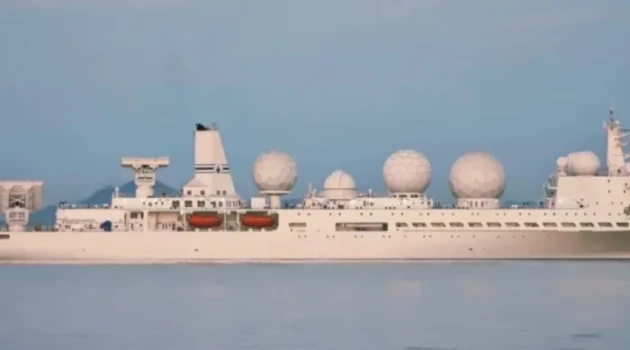

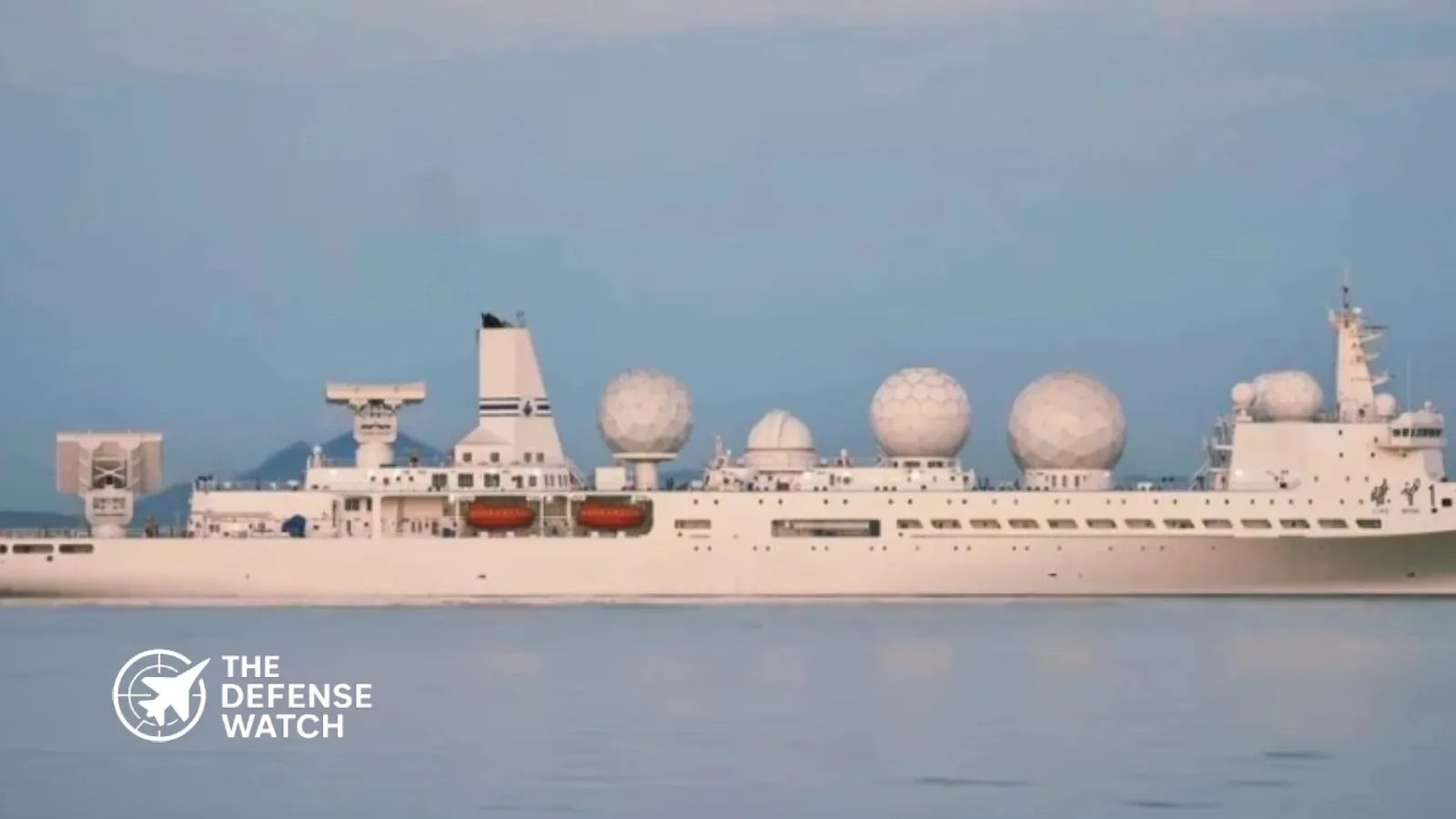
- Chinese surveillance vessel Liaowang-1 has been reported operating near the coast of Oman in the Arabian Sea.
- The ship is equipped with large radar domes and electronic intelligence sensors designed to track military signals and missile activity.
- Its presence comes amid heightened US military operations across the Middle East and growing geopolitical tensions.
- Surveillance vessels such as Liaowang-1 can monitor radar emissions, satellite communications, and aircraft operations over long distances.
- The deployment reflects increasing Chinese interest in monitoring US military activity far beyond the Indo-Pacific.
Chinese Spy Ship Liaowang-1 Operating Near Oman
Chinese spy ship Liaowang-1 has reportedly been operating near the coast of Oman in the Arabian Sea, drawing attention from defense observers monitoring intelligence activity around ongoing US military operations in the Middle East.
Open source tracking data and defense analysts indicate that the surveillance vessel has remained in international waters while collecting electronic signals and radar emissions from regional military forces. Such ships are commonly used to monitor missile tests, naval deployments, and aircraft activity.
The presence of the Liaowang-1 spy ship underscores the growing importance of signals intelligence in modern military competition and reflects China’s expanding interest in observing US force movements outside the Indo-Pacific.
The Big Picture
China has steadily expanded its global intelligence collection network over the past decade. The effort includes satellites, cyber capabilities, and specialized surveillance vessels designed to gather electronic and communications intelligence.
Signals intelligence ships play a critical role in this system. These vessels can track radar emissions from warships and air defense systems, monitor communications links, and observe flight activity across large regions.
The United States has long used similar platforms. US Navy surveillance ships frequently monitor missile tests and naval exercises conducted by other major powers.
China’s deployment of the Liaowang-1 surveillance vessel near the Middle East reflects Beijing’s broader goal of understanding US military operations, particularly those involving advanced aircraft, naval platforms, and missile defense systems.
The Middle East has become an increasingly active operating environment for US forces, including aircraft carriers, destroyers, and stealth aircraft.
What Is Happening
Defense analysts tracking maritime activity have identified the Chinese spy ship Liaowang-1 operating in waters near Oman and the Arabian Sea.
The vessel belongs to China’s fleet of ocean tracking and signals intelligence ships. These platforms typically carry large antenna arrays and radar domes designed to detect and analyze electronic signals from military equipment.
Operating in international waters allows such ships to legally observe military activities conducted by other nations.
Surveillance vessels commonly monitor:
• radar emissions from air defense systems
• communications between ships and aircraft
• satellite uplinks and downlinks
• missile launch telemetryShips like Liaowang-1 often accompany or observe major military exercises or conflict zones because these environments generate large volumes of electronic signals.
The concentration of US military assets in the Middle East makes the region a valuable intelligence collection opportunity.
Why It Matters
Electronic intelligence has become one of the most valuable forms of military information.
Modern platforms such as stealth aircraft, missile defense systems, and advanced radars rely heavily on electronic signatures. Collecting those signatures allows analysts to study how systems operate and potentially identify vulnerabilities.
Surveillance ships can gather information about radar frequencies, operating modes, and communications protocols. This data can help analysts develop countermeasures or refine electronic warfare tactics.
The presence of the Liaowang-1 spy ship near Oman therefore highlights the growing role of information warfare in military competition.
The United States and China increasingly compete not only in weapons development but also in the collection and analysis of operational data.
Strategic Implications
Signals intelligence vessels positioned near active military operations can provide valuable insights into force posture and readiness.
By monitoring electronic activity across the region, a ship like Liaowang-1 may observe patterns such as:
• carrier strike group communications
• radar operations of missile defense systems
• aircraft sortie patterns
• electronic warfare activityThis type of intelligence does not directly alter battlefield outcomes but contributes to long term military analysis.
For China, understanding how US systems operate in real combat environments can inform the development of countermeasures and future defense technologies.
For the United States, the presence of foreign surveillance ships reinforces the need for strong operational security and electronic emission control procedures.
Competitor View
China has increasingly deployed surveillance ships beyond its traditional operating areas.
These vessels have appeared near US missile tests in the Pacific and near international military exercises involving allies such as Australia, Japan, and India.
From Beijing’s perspective, observing US military activity provides valuable technical intelligence while remaining within the boundaries of international maritime law.
Iran and Russia also maintain strong interest in US operations in the region. Intelligence gathered through open sources, satellite imagery, and electronic monitoring contributes to their understanding of US capabilities.
However, analysts caution that linking specific battlefield outcomes directly to foreign surveillance platforms requires clear evidence and verified sources.
What To Watch Next
Several developments will shape how surveillance operations evolve in the region.
First, the scale of US military deployments in the Middle East will determine how attractive the region remains for intelligence collection.
Second, advances in electronic warfare and emissions control could limit how much data surveillance vessels can gather.
Third, China is expected to expand its fleet of intelligence collection ships and satellites, improving its ability to monitor global military activity.
In the long term, these platforms will likely become a routine feature around major military operations.
Capability Gap
Signals intelligence ships address a critical requirement for understanding foreign military technologies and operational behavior.
However, they also face limitations.
Their sensors rely on the emission of electronic signals. Systems operating in low probability of intercept modes or strict emissions control can reduce the amount of information available.
Weather conditions, distance from the target area, and counter surveillance tactics also limit the effectiveness of such platforms.
Despite these constraints, intelligence ships remain valuable tools for gathering long term technical data.
The Bottom Line
The presence of the Chinese spy ship Liaowang-1 near Oman highlights the expanding role of electronic surveillance in global military competition and the increasing intelligence focus on US operations in the Middle East.