


The US Air Force on December 22, 2025 officially designated Northrop Grumman’s experimental drone Project Talon as the YFQ‑48A. This designation marks the aircraft as a prototype in the service’s Collaborative Combat Aircraft (CCA) effort, which aims to field unmanned systems that fly with and extend the reach of manned fighters.1
What It Is
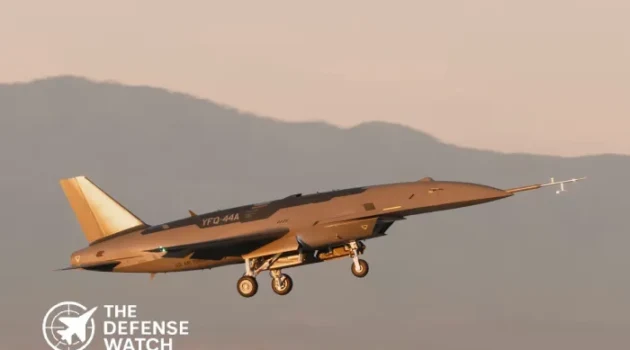
The official US Air Force designation YFQ‑48A reflects Pentagon naming practice where Y indicates a prototype, F signals a fighter role, and Q denotes unmanned aircraft. This is the first time Talon receives such a label, putting it alongside other prototype drone fighters like the YFQ‑42A from General Atomics and the YFQ‑44A from Anduril.3
How It Works
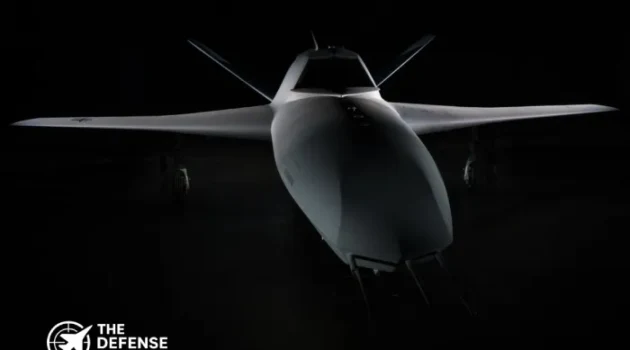
Details about the aircraft’s systems and performance remain limited. Available reports note Talon has a long slender body, unique wing planform, and single small turbofan engine. The focus is on rapid, affordable production and the ability to integrate sensors, communications and autonomy software to work in contested spaces.4
The broader CCA concept envisions networks of crewed and uncrewed systems. A manned fighter could lead a group of drones, handing off tasks such as surveillance, jamming, or targeting while preserving pilot decision authority. This shared workload aims to make air forces more flexible and resilient in high‑threat environments.
Why It Matters
The designation signals that the Air Force sees Project Talon as a serious contender in its effort to field collaborative drones quickly and at scale. The CCA program emphasizes industry competition and aims to speed up development cycles for new technologies.1
Unmanned wingmen are part of a broader shift in military aviation. They aim to reduce risk to pilots, extend operational reach, and counter advanced air defenses. Concepts like manned‑unmanned teaming are seen as key to future air combat in contested spaces, especially against near‑peer competitors with layered air defenses.
Strategic Context
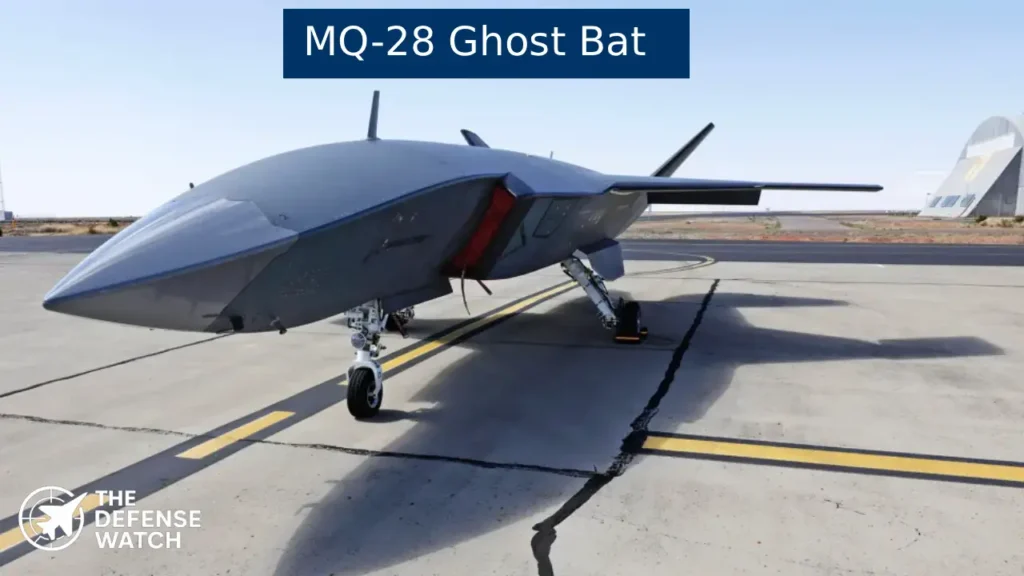
Other nations are also pursuing similar systems. Australia’s MQ‑28 Ghost Bat, for example, is an autonomous wingman designed for interoperability with allied jets. These developments reflect a global trend toward combining human judgment with unmanned platforms that can face greater danger or carry additional sensors and payloads. (This comparison is based on publicly reported programs; specifics vary by operator and mission.)
Information on Project Talon’s exact capabilities remains partly speculative. Northrop’s focus on simplicity, fewer parts, and rapid build suggests a lean approach to innovation compared with legacy large‑platform programs. Some analysis suggests Talon is meant to be lighter and quicker to build than earlier designs Northrop offered for CCA.5
Strategic Impact
The official YFQ‑48A designation indicates that the USAF and its industry partners are advancing beyond concept toward tangible prototype systems that could reshape air combat. As Collaborative Combat Aircraft prototypes mature, the strategic balance in airpower competition may shift. For the United States, fielding effective manned‑unmanned teams could give an edge over potential rivals. Allies watching these developments may seek similar capabilities, influencing global air force modernization plans. Continued testing and eventual selection decisions in the CCA program will clarify how these systems perform and how widely they might be adopted.
US Air Force Unveils First Uncrewed Fighter Jets in CCA Program
On March 3, 2025 the US Air Force formally designated two jet-powered unmanned fighters — YFQ-42A and YFQ-44A — under its newly launched Collaborative Combat Aircraft (CCA) initiative.
Less than a year later, both prototypes have taken to the skies: YFQ-42A achieved its maiden flight in August 2025, followed by YFQ-44A on October 31, 2025.
Together these jets mark the first time the service has fielded uncrewed platforms with a formal “fighter” designation.
Background: An Evolving Vision for Air Combat
The CCA program emerged as part of the Air Force’s broader push toward the next generation of air dominance, blending human-piloted aircraft with autonomous drones to expand mission flexibility and survivability in contested environments.
Under the official US military aircraft designation system, the “Y” prefix denotes prototype status, “F” indicates a fighter mission, and “Q” signals an uncrewed system. Thus YFQ-42A and YFQ-44A are the first uncrewed jets to carry a formal fighter label.
The aim is to complement existing frontline aircraft — such as the F-35 Lightning II — with swarms of lower-cost, high-performance drones that can assume risky roles, extend sensor coverage, conduct electronic warfare or strike missions, and multiply combat mass without putting pilots in danger.
YFQ-42A and YFQ-44A: What We Know
YFQ-42A (General Atomics)
- Built by General Atomics Aeronautical Systems (GA-ASI), the YFQ-42A traces its roots to the earlier XQ-67A demonstrator from the Air Force Research Laboratory’s Off-Board Sensing Station program.
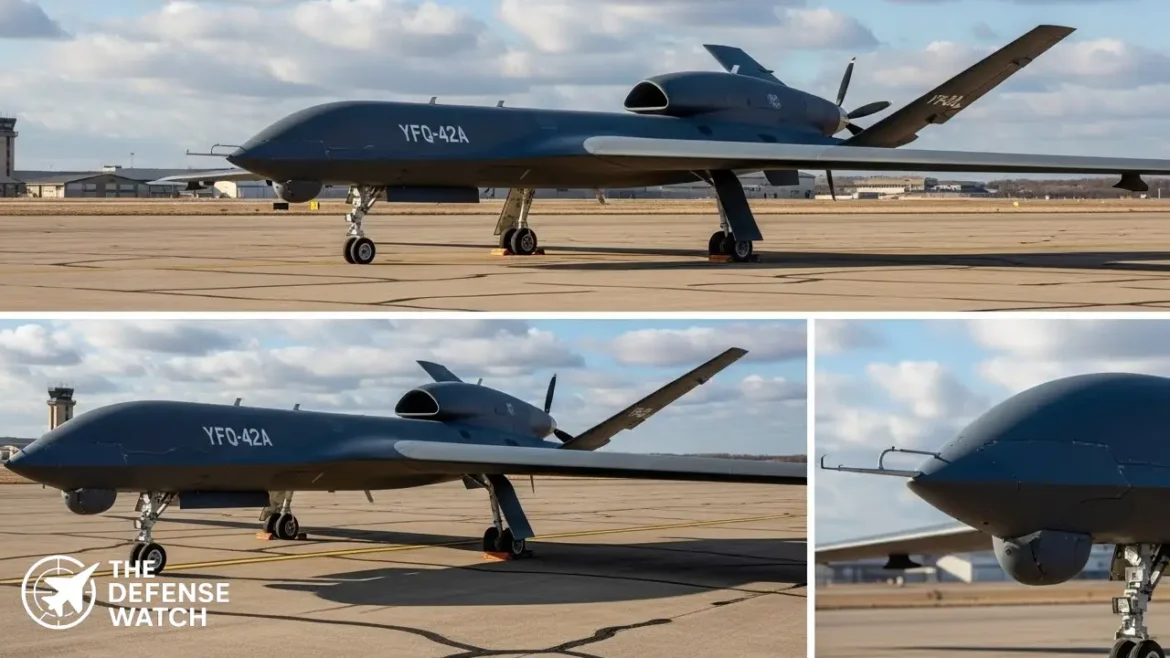
- The jet features a stealth-informed design with a streamlined fuselage, dorsal-mounted air intake, and twin canted V-tails. It carries weapons in internal bays — including air-to-air missiles such as the AIM-120 AMRAAM.
- Its architecture is modular, built to support different mission profiles including air-to-air combat, strike, electronic warfare, and surveillance — depending on payload and configuration.
- According to GA-ASI, the design provides “affordable mass” — lower unit cost and higher deployability than manned fighters — making it suitable for high-risk missions where attrition is possible.
- Flight testing kicked off in August 2025 at a classified site in California.
YFQ-44A (Anduril “Fury”)
- Developed by Anduril Industries, YFQ-44A — internally known as “Fury” — represents a clean-sheet, jet-powered combat drone design. Anduril acquired the original design from Blue Force Technologies in 2023.
- The aircraft incorporates swept trapezoidal wings, a chin-mounted air inlet, a cruciform tail, and external hardpoints. It relies on a Williams FJ44-4M turbofan engine, giving thrust around 4,000 lbf (roughly 17.8 kilonewtons).
- Estimated performance puts it at near-supersonic speed (around Mach 0.95) at altitudes up to 50,000 feet, and capable of withstanding up to 9 g maneuvers.
- On Oct 31, 2025, YFQ-44A completed its first semi-autonomous flight at Southern California Logistics Airport. During the flight the aircraft carried out its mission plan, managed flight control and throttle autonomously, and returned to land under operator supervision.
- Anduril says the development from clean-sheet design to first flight took just 556 days, showing a rapid development pace unusual in modern military aviation.
What This Means: Redefining Air Combat
With the introduction of YFQ-42A and YFQ-44A, the Air Force is signalling a shift toward manned-unmanned teaming. These drones are not meant just as remote-controlled recon platforms, but as fully capable combat assets that can fly alongside — or ahead of — crewed fighters.
The fighter designation alone marks a doctrinal change. According to Air Force leadership, the move reflects a broader transition to what some call “affordable mass” — deploying larger numbers of cheaper, attritable platforms rather than fewer high-cost, high-risk manned jets.
Additionally, these uncrewed fighters could expand mission flexibility. They might handle dangerous strike or suppression tasks, act as decoys, perform electronic warfare, or extend sensor and weapons coverage — all while reducing risk to pilots.
By pairing with existing fighters such as F-35, the drones could offer significant force multiplication — potentially enabling one pilot to control multiple unmanned wingmen in future combat formations.
What’s Next: Testing, Production, Planning
Both YFQ-42A and YFQ-44A remain in a developmental phase. After their first flights, the next steps will involve more flight tests, integration trials with manned fighters, and evaluation of autonomy, weapons delivery, sensor packages, and survivability in contested environments.
If testing proceeds successfully, the Air Force may move toward production later in the decade under the CCA program’s Increment 1 deliverables. Observers expect future CCAs may number in the hundreds — or possibly thousands — providing a radically expanded air-combat force structure.
Implications
The successful flight tests of YFQ-42A and YFQ-44A mark the start of a new chapter in U.S. airpower. As these uncrewed fighters advance through evaluation and integration, they could significantly reshape how air combat is fought — blending human-led decision-making with autonomous execution, increasing force flexibility, and lowering risk to pilots.
If adopted at scale, CCAs may shift military investment away from expensive, high-end manned jets toward fleets of attritable, capable drones that deliver combat mass with lower cost per unit and higher operational risk tolerance.
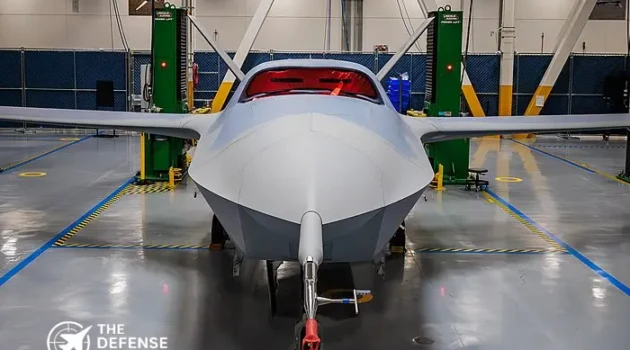
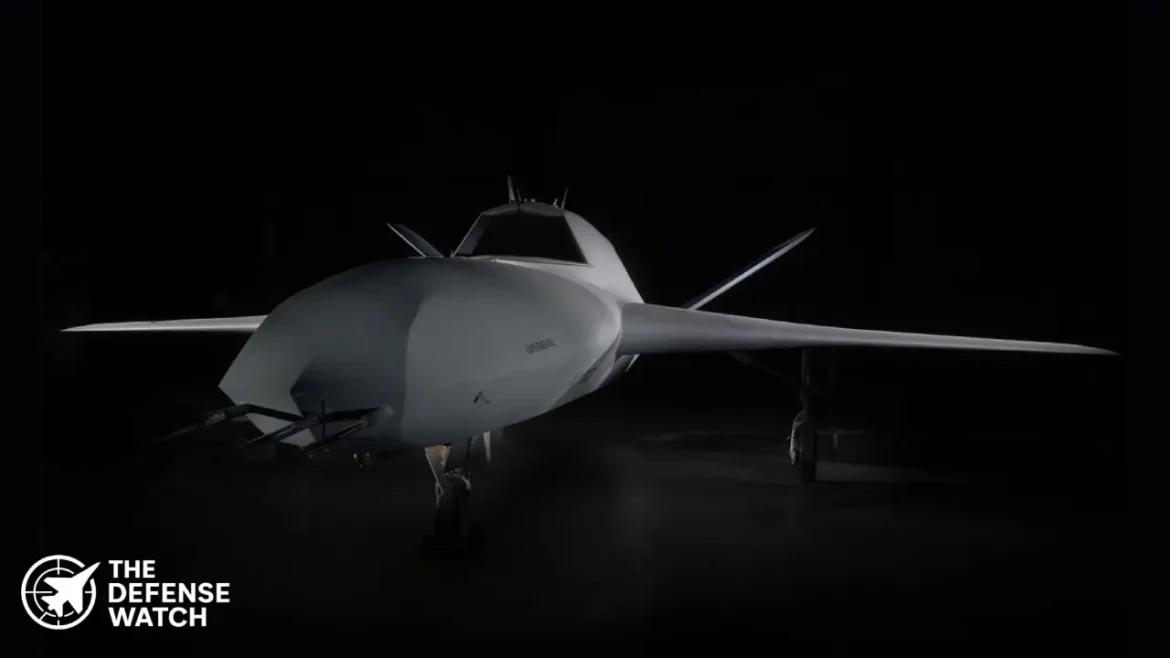
Northrop Grumman formally unveiled Project Talon — a new uncrewed fighter jet concept designed to accompany crewed combat aircraft. Company representatives presented the small jet at the company’s Mojave facility, positioning Talon as an “autonomous wingman” built to support manned air-dominance fighters.
Why it matters
Project Talon enters a fast-growing market for autonomous combat aircraft, offering what Northrop describes as a cost-effective, quickly-produced drone intended to complement existing manned fighters. Its debut underscores shifting priorities in aerial combat, where unmanned systems play an increasingly critical role in contested airspace.
Talon at a glance
Design and origins
- Talon appears derived from Scaled Composites Model 437 — a compact optionally manned jet now used by Northrop to test autonomous systems.
- The prototype reveals a long slender fuselage, a dorsal-mounted air intake above the wings, a shovel-shaped nose, a low-aspect-ratio lambda wing, and sharply canted twin V-tails.
- Its layout resembles that of other uncrewed combat aircraft currently under development by other firms.
Manufacturing and timeline
- Northrop reports Talon went from program launch to “weight on wheels” in roughly 15 months — a strikingly rapid pace for a jet-powered combat aircraft.
- The company targets a first flight within nine months, keeping the full development period under two years.
- The aircraft uses a fully composite structure, reducing build weight by about 1,000 pounds compared to previous designs, and includes roughly half the number of parts. This, combined with modular manufacturing methods, cuts assembly time by roughly 30 percent.
Mission role and capabilities
- Talon is described as a “collaborative” combat aircraft capable of teaming with crewed fighters, serving as a force multiplier.
- Its design reportedly allows for versatile mission roles, including intelligence, surveillance and reconnaissance (ISR), electronic warfare, and strike missions. Modular payload bays (internal) could allow carriage of air-to-air or air-to-ground missiles, sensors or jammers.
- Open avionics architecture and secure data links are expected to support integration with crewed platforms, enabling sensor sharing, target tracking, and coordinated mission execution in contested environments.
Context in the evolving CCA landscape
The U.S. Air Force’s initiative to field uncrewed, semi-autonomous “Collaborative Combat Aircraft” (CCA) has already produced two prime contenders: YFQ-42A by General Atomics and YFQ-44A by Anduril Industries. They were selected in 2024 for prototype development and are scheduled for flight testing soon.
Northrop’s Talon, while not explicitly awarded a contract under the first CCA round, appears shaped to compete in future phases or acquisition efforts — including export opportunities with allied air forces.
What’s next
Northrop plans the first flight of Project Talon by fall 2026 if development proceeds on schedule. The company says Talon was developed independently — funded internally — highlighting a strategy to respond quickly to evolving military needs without relying solely on established procurement cycles.
As Talon advances toward flight testing, attention will focus on performance, payload capacity, sensor integration, and data-link reliability. Its success could reshape expectations for how crewed and uncrewed platforms operate together in future air conflicts.
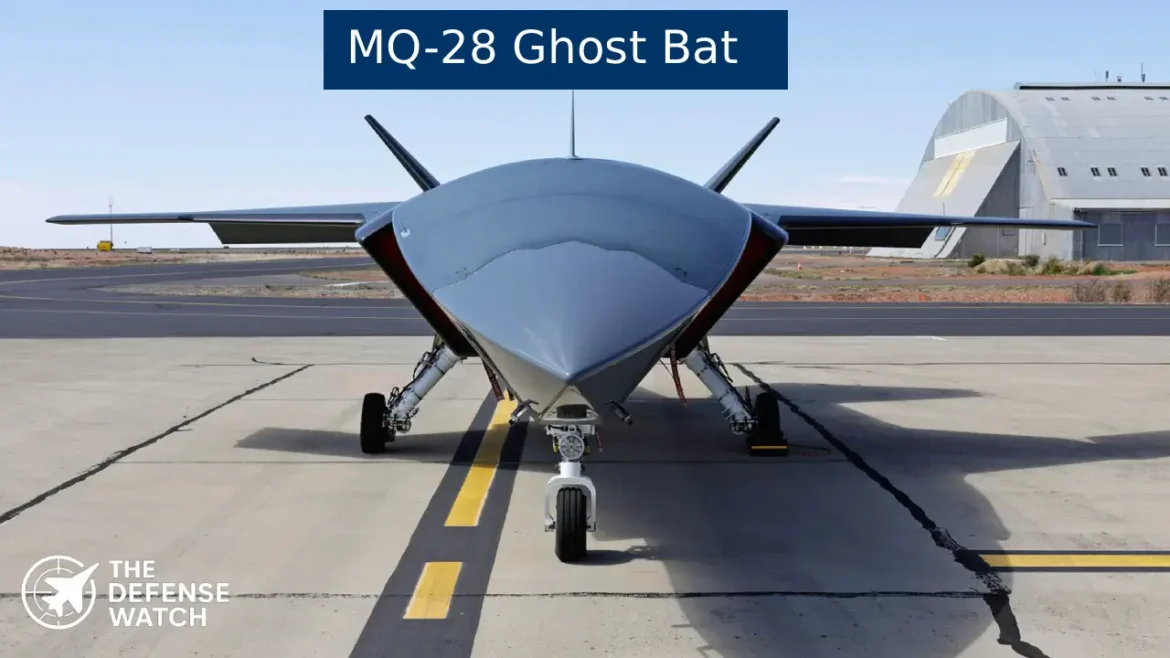
MQ-28 Ghost Bat: Current Status and Operational Progress
The MQ-28 Ghost Bat, Boeing Australia’s collaborative combat aircraft (CCA), has made significant strides in 2025, with the Royal Australian Air Force (RAAF) now validating its operational viability and planning its first live-fire weapons test.
Operational Demonstrations Complete
- In Capability Demonstration 2025, Boeing and the RAAF validated the Ghost Bat’s autonomous behaviors, multi-aircraft operations, deployment flexibility, and data-sharing capabilities.
- The platform has now logged more than 150 flight hours and over 20,000 hours of virtual testing.
- In a first-of-its-kind mission, two MQ-28s were controlled in flight by a single operator aboard an E-7A Wedgetail AEW&C aircraft, validating collaborative control from a crewed command platform.
- The aircraft’s deployment capability was tested during Exercise Carlsbad at RAAF Base Tindal, demonstrating rapid redeployment, base operations, and integration with local RAAF units.
- For the first time, the MQ-28 operated from an operational air base, showing the aircraft can be transported (via C-17), set up, launched, and redeployed within a short timeframe.
Live-Fire Test Planned: AIM-120 AMRAAM
- Boeing has announced plans for the first live-fire test of the MQ-28, expected in late 2025 or early 2026, using an AIM-120 Advanced Medium-Range Air-to-Air Missile (AMRAAM).
- According to Boeing, the test will take place over the Woomera Range Complex and simulate a “tactically relevant scenario” against a real airborne target.
- The Ghost Bat is configurable: its nose section is modular and swappable, enabling payload flexibility. Some early test aircraft have been spotted carrying an infrared search and track (IRST) sensor, which could be used to detect and target threats.
Program Maturity and Next Phases
- Boeing is now building Block 2 MQ-28s, which incorporate improvements such as a refined wing design and upgraded GPS/INS.
- The operational lessons from 2025 will feed directly into the Block 2 production aircraft, forming the basis of an initial operational capability (IOC) for the RAAF.
- Boeing has also invested in a production facility in Queensland (Wellcamp, Toowoomba), which will support local assembly and future export potential.

Analysis: Strategic Implications and Challenges
The progress of the MQ-28 Ghost Bat reflects the growing seriousness of “loyal wingman” concepts in modern air warfare. By demonstrating multi-ship autonomy, base deployability, and the capacity to carry air-to-air weapons, the MQ-28 offers the RAAF a scalable way to add combat mass without relying solely on traditional manned platforms.
If the live-fire test succeeds, it could mark a first among CCAs: an uncrewed aircraft firing an air-to-air missile in a combat-like scenario. That would significantly shift the narrative on unmanned combat aircraft, not merely as surveillance or decoy drones, but as active combat participants.
However, there are challenges:
- The AIM-120 test is still pending, and success is not guaranteed — integrating a missile onto a CCA is non-trivial, especially in terms of guidance, targeting, and launch dynamics.
- While Block 2 production is underway, the path to full operational deployment and export remains uncertain; further funding and partner adoption will be critical.
- Rules of engagement, command & control, and doctrine for fully autonomous or semi-autonomous combat operations are still developing, especially for weapons employment.
Key Facts at a Glance
Item Status Developer Boeing Defence Australia User Royal Australian Air Force (RAAF) Demonstration Program Capacity Demonstration 2025 (CD-25) Flight Hours ~150 real + 20,000+ virtual First Live-Fire Weapon Planned AIM-120 AMRAAM Deployment Proven from RAAF Base Tindal (Exercise Carlsbad) Team Control Demonstrated control from E-7A Wedgetail Production Standard Block 2 in production FAQs
Is the MQ-28 Ghost Bat already in active service?No, as of now it is in a demonstrator/testing phase. While its deployment and operational capabilities are being validated, it has not yet been declared as fully operational service by the RAAF.
Has the MQ-28 fired its missile yet?Not yet. The AIM-120 live-fire test is planned but has not yet been publicly confirmed as completed.
What makes the MQ-28 different from other drones?It’s designed as a Collaborative Combat Aircraft (CCA) — not just a drone for ISR, but to actively team with crewed aircraft, share data, perform combat missions, and potentially fire weapons.
Which aircraft has it teamed with?It has teamed in trials with a Boeing E-7A Wedgetail AEW&C, where one operator onboard controlled two MQ-28s simultaneously.
Is this just for Australia, or could it be exported?While the primary user is the RAAF, Boeing aims for export potential. The production facility in Toowoomba underlines that ambition. However, export will depend on customer interest, funding, and strategic alignment.

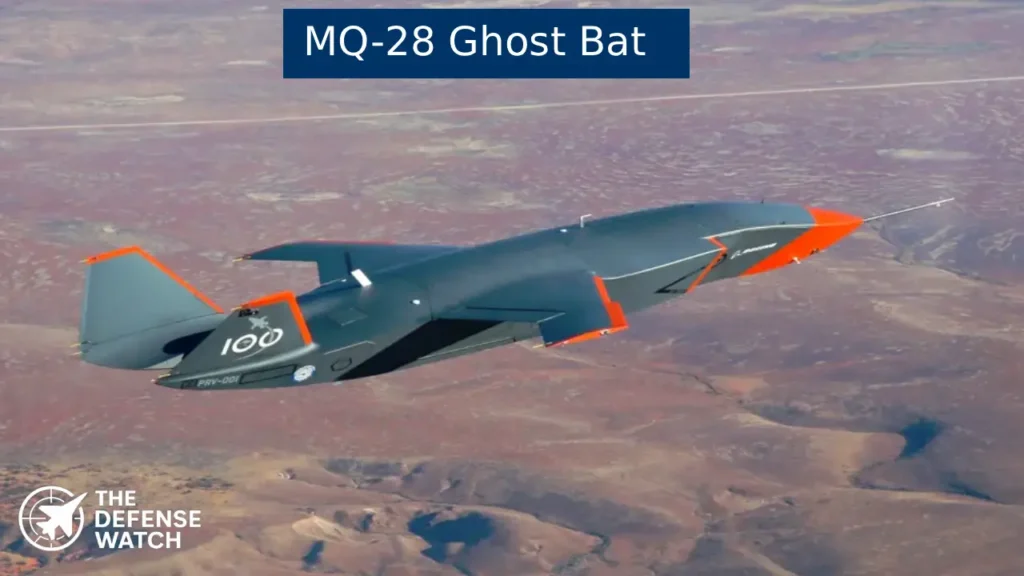
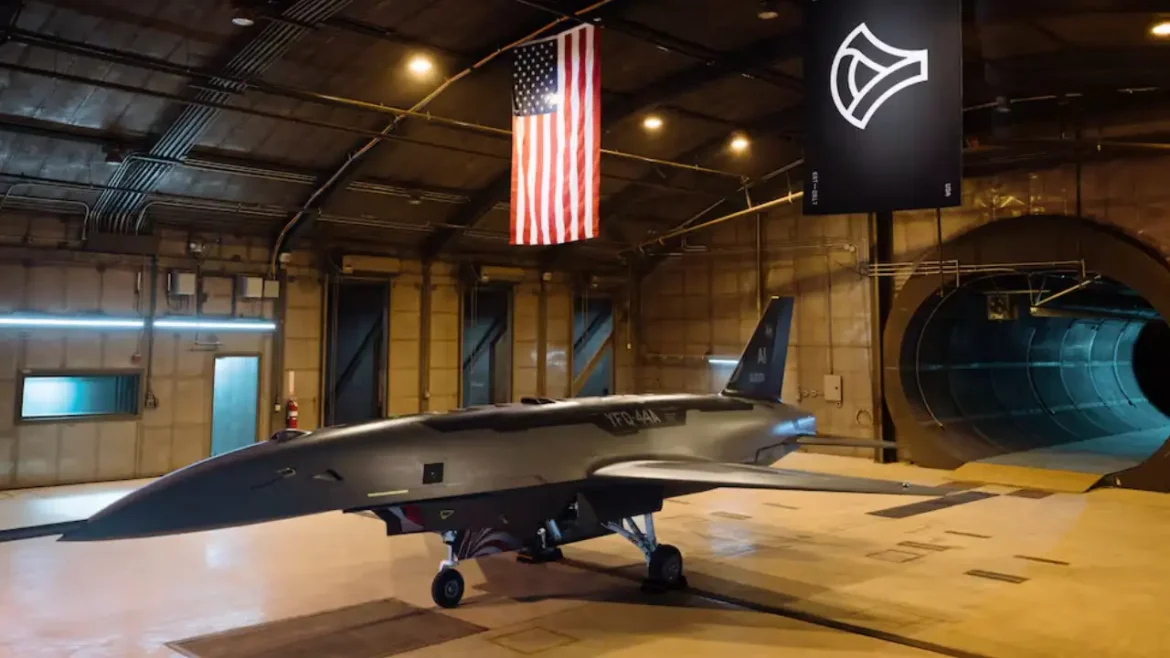
Anduril’s Drone Wingman Nears Historic First Flight
Anduril Industries is set to conduct the first flight of its YFQ-44A collaborative combat aircraft (CCA) in mid-October, marking a critical milestone in the U.S. Air Force’s push to field drone wingmen for crewed fighters. The flight, expected to take place in California, will test the aircraft’s ability to operate semiautonomously from takeoff to landing—without traditional remote piloting.
The YFQ-44A is one of two candidates for the Air Force’s CCA program, alongside General Atomics’ YFQ-42A, which successfully flew in August. Both firms were awarded initial contracts in 2024 to design and build prototypes under a program the service sees as pivotal to future air dominance.
Semiautonomy From the Start
Unlike its competitor, Anduril is skipping the remote-control stage. According to company executives, the YFQ-44A has been designed from the outset to execute flight profiles with autonomy software, including automated taxiing, takeoff, and landing at the push of a button.
“There is no stick and throttle,” said Diem Salmon, vice president for air dominance and strike at Anduril. “It will be able to execute the first flight profile, preplanned, using autonomy software on the vehicle.”
This approach, though slower to reach first flight, is intended to accelerate long-term testing and integration. By tackling autonomy challenges upfront, Anduril believes it can “leapfrog” the traditional development cycle.
Air Force’s Collaborative Combat Aircraft Vision
The U.S. Air Force envisions a fleet of at least 1,000 CCAs to accompany fifth- and sixth-generation fighters like the F-35 Lightning II and forthcoming F-47. These drones are expected to perform strike missions, reconnaissance, electronic warfare, and decoy operations.
In May, Air Force Chief of Staff Gen. David Allvin said CCAs would feature stealth comparable to the F-35, a combat radius of more than 700 nautical miles, and be operational later this decade. That range exceeds that of the F-35A and even the F-22, providing greater mission flexibility in the vast Indo-Pacific theater.
Competition and Diverging Paths
While General Atomics’ YFQ-42A is already flying under remote control, the company stresses its long experience with autonomy through platforms like the MQ-9 Reaper and Avenger. General Atomics argues that piloted test flights reduce risk and yield valuable data.
Anduril, by contrast, has invested heavily in a “clean-sheet” software design for semiautonomous flight. Jason Levin, senior vice president of engineering at Anduril, said the company avoided developing a ground control station in favor of solving autonomy from day one.
Analysis: What This Means for U.S. Defense
The Air Force’s CCA initiative represents a shift from expensive, pilot-centric platforms toward affordable mass and attritable assets. By pairing advanced fighters with lower-cost autonomous wingmen, the service aims to stretch budgets while complicating adversary planning.
For the U.S., this could mean greater ability to deter China in the Pacific, where large distances demand aircraft with long ranges and endurance. If successful, Anduril’s software-first approach may also influence future unmanned systems across the Pentagon, from naval drones to autonomous ground combat vehicles.
Globally, the race to integrate autonomy into combat aircraft is accelerating. China has showcased its own loyal wingman projects, while Australia’s MQ-28 Ghost Bat has already flown operational tests. The U.S. cannot afford delays if it hopes to maintain an edge.
Conclusion: A Turning Point in Air Combat Development
Anduril’s upcoming YFQ-44A flight is more than just a technical milestone—it could signal a turning point in how the Air Force develops and fields unmanned combat systems. By embedding autonomy from the beginning, Anduril is betting on a faster path to scalable, mission-ready CCAs.
If the program delivers, the Air Force may enter the 2030s with not only stealth fighters but also a loyal wingman fleet capable of reshaping air warfare.
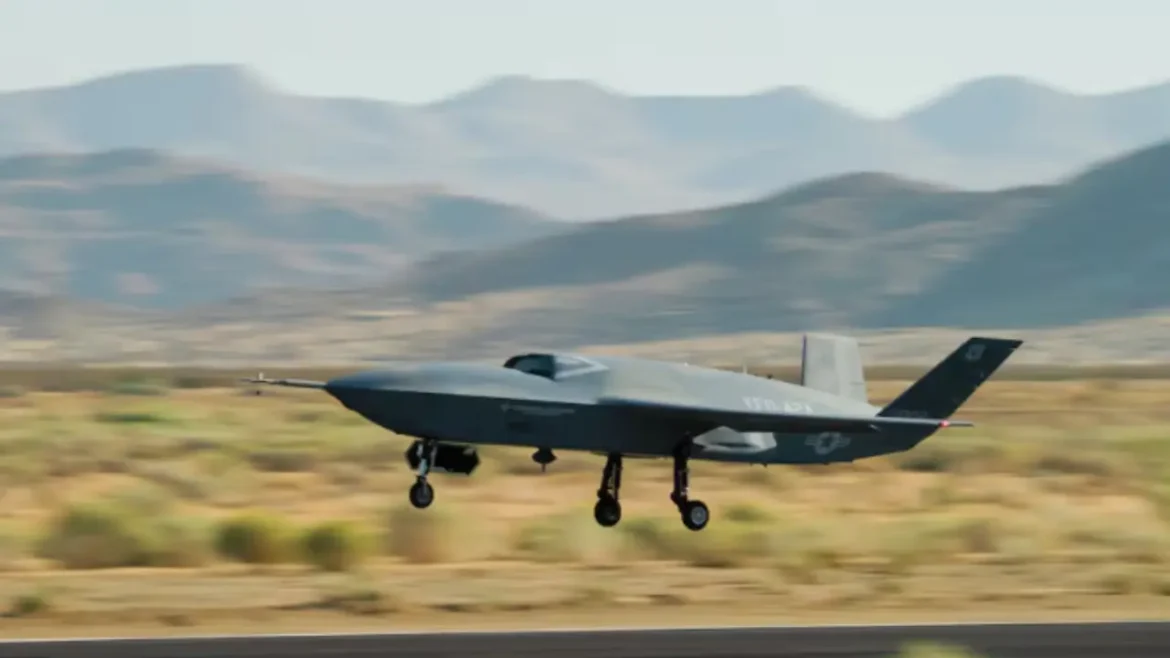
First Flight of Air Force’s YFQ-42A Drone Wingman Marks Major Step for CCA Program
The U.S. Air Force confirmed that its next-generation drone wingman initiative has taken a critical leap forward. On Thursday, the service announced that the General Atomics-made YFQ-42A collaborative combat aircraft (CCA) completed its first flight at a test site in California.
The flight marks the first real-world demonstration of one of the Air Force’s prototype CCA designs, a program intended to deliver AI-enabled, modular, and low-cost drone wingmen to accompany frontline fighters such as the F-35 and the forthcoming sixth-generation Next Generation Air Dominance (NGAD) fighter, also known as the F-47.
A Rapid Development Timeline
The Air Force emphasized that the YFQ-42A reached the flight test stage just over a year after work began, highlighting its new “fast-track” acquisition model. This approach relies on rapid prototyping, competition between vendors, and modular open-systems architecture to allow frequent upgrades to avionics, autonomy, and mission payloads.
David Alexander, president of General Atomics Aeronautical Systems Inc. (GA-ASI), called the flight a “great moment” for both the company and the service.
“It’s been our collaboration that enabled us to build and fly the YFQ-42A in just over a year,” Alexander said.
Anduril Industries, which is developing a competing prototype known as the YFQ-44A, is expected to fly its aircraft soon. Both companies were awarded initial CCA contracts in April 2024, with ground testing beginning in May.
Air Force’s Vision for a Drone Wingman Fleet
The Air Force envisions deploying at least 1,000 CCAs in the coming years. Each platform is designed to be highly adaptable—capable of performing roles ranging from precision strikes and electronic warfare to reconnaissance and decoy missions that draw enemy fire away from manned aircraft.
According to Air Force Chief of Staff Gen. David Allvin, the first generation of CCAs will have a combat radius exceeding 700 nautical miles and incorporate stealth characteristics to penetrate contested airspace.
“CCA will help us rethink the battlespace, extend reach, flexibility and lethality in combat operations and optimize warfighter performance through human-machine teaming,” Allvin said.
Strategic Importance and Analysis
The first flight of the YFQ-42A underscores how seriously the Pentagon is pursuing human-machine teaming as a force multiplier in future wars. With rising concerns over China’s rapid airpower modernization, the U.S. Air Force is betting on drone wingmen to increase survivability, expand strike packages, and reduce the risk to human pilots.
Experts note that if CCAs can be produced at scale and relatively low cost, they may change the economics of air combat. Instead of relying solely on extremely expensive, manned stealth fighters, the Air Force could field swarms of autonomous aircraft that can be tailored for specific missions.
The Air Force plans to select between General Atomics’ and Anduril’s designs for production by fiscal year 2026.
FAQs
The YFQ-42A is General Atomics’ prototype collaborative combat aircraft (CCA), designed to fly alongside crewed fighters as an autonomous wingman.
The service aims for a fleet of at least 1,000 CCAs with modular configurations.
CCAs can conduct strikes, reconnaissance, electronic warfare, or serve as decoys to protect manned fighters.
The Air Force plans to choose a production design in FY2026.
General Atomics (YFQ-42A) and Anduril (YFQ-44A) are the first two contractors awarded under the CCA program.