Anduril YFQ-44A Combat Drone Production Timeline: What We Know and What’s at Stake
The United States Air Force’s push to field autonomous combat aircraft has entered its most consequential phase, with Anduril Industries’ YFQ-44A combat drone production timeline now drawing intense scrutiny from defense planners, industry analysts, and rival powers alike. Selected as a finalist for the Air Force’s landmark Collaborative Combat Aircraft (CCA) program in early 2025, Anduril is racing to transform a bold concept — an AI-driven unmanned wingman — into a deployable weapons system capable of operating in contested airspace against near-peer adversaries.
- Anduril Industries was selected by the U.S. Air Force in March 2025 as one of two contractors for the Collaborative Combat Aircraft (CCA) program, alongside General Atomics.
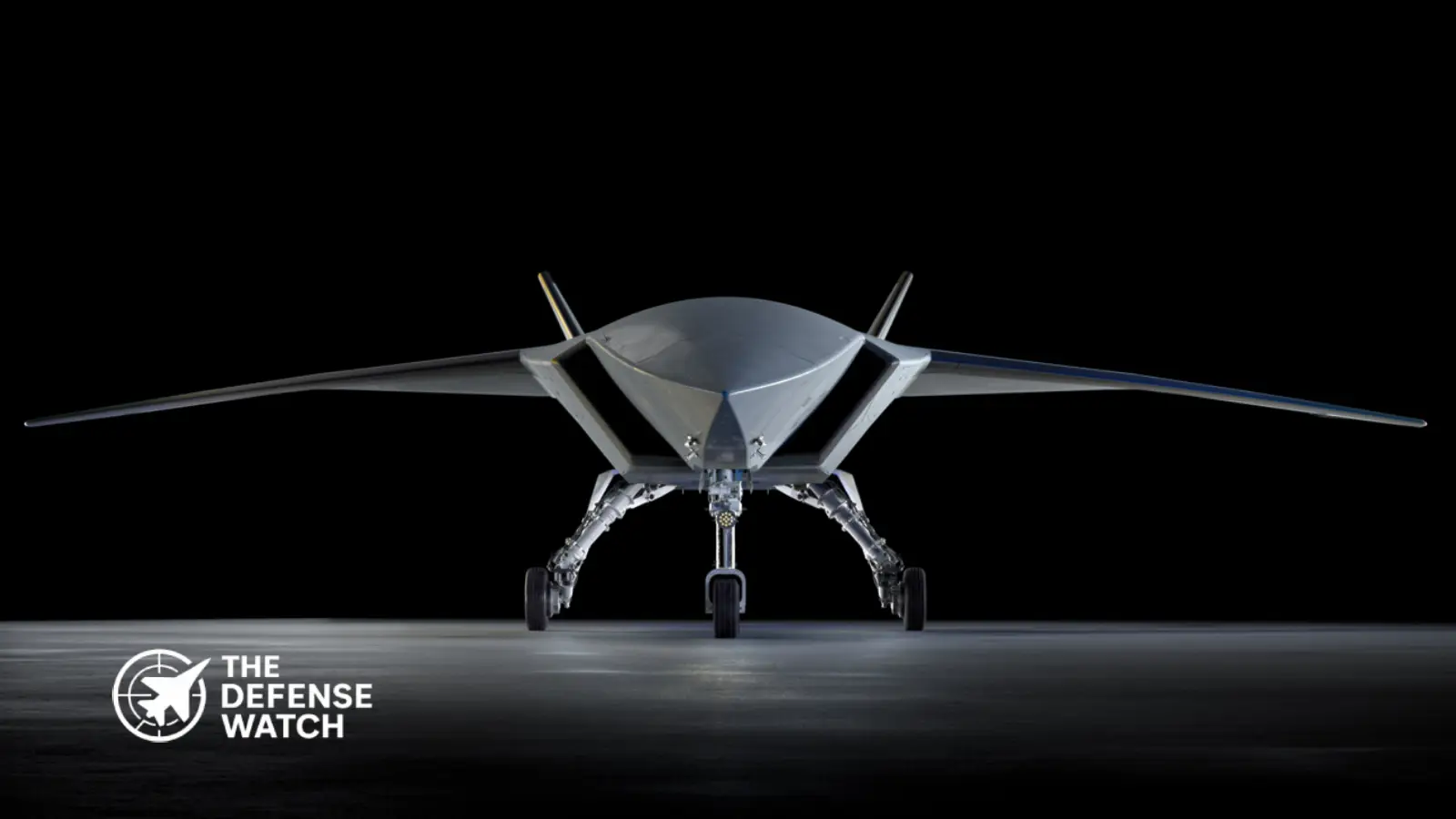
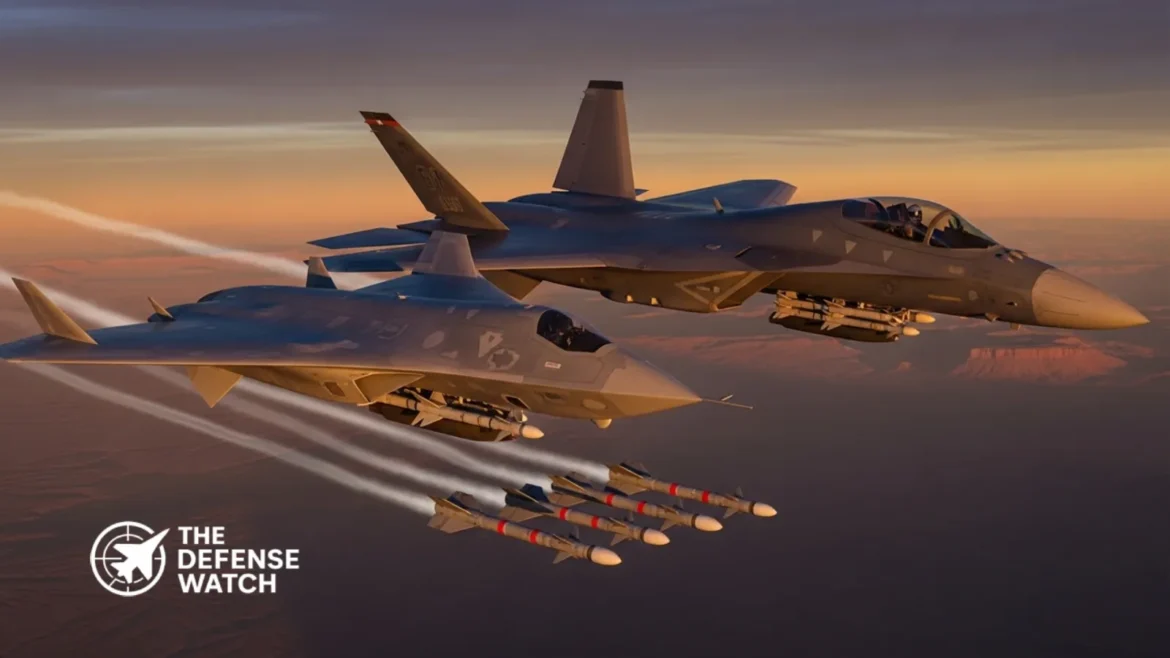
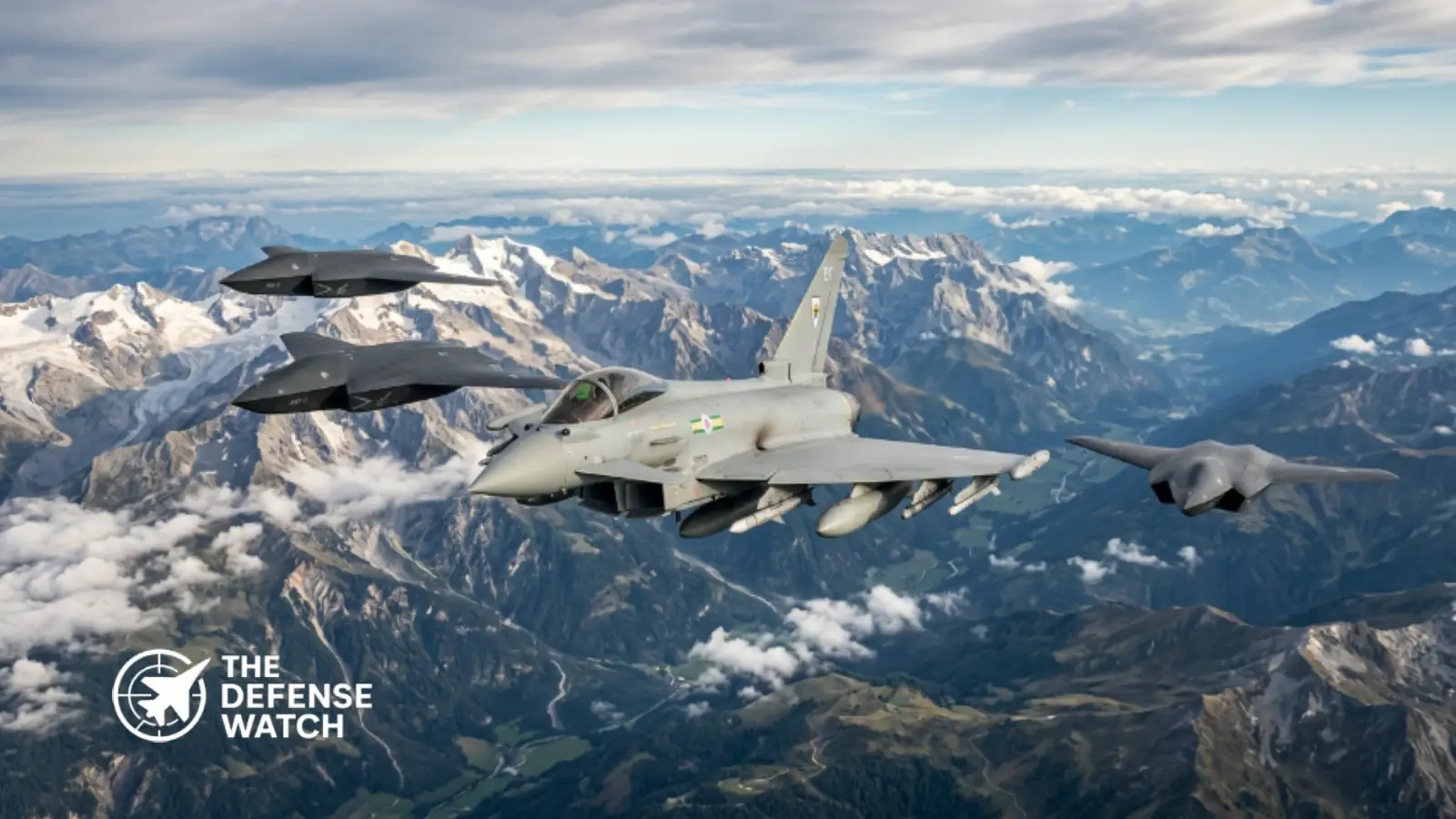
- Anduril’s entry is designated the YFQ-44A — a combat-capable autonomous drone designed to fly alongside crewed fighters such as the F-35 and F-22.
- The Air Force aims to field an initial CCA operational capability by the late 2020s, with full-rate production targeted in the early 2030s.
- The YFQ-44A is powered by Anduril’s Lattice AI autonomy platform, enabling real-time mission adaptation without continuous human input.
- The Pentagon has signaled intent to procure over 1,000 CCAs across both contractors, making this one of the largest unmanned combat aircraft programs in U.S. history.
This is no incremental upgrade to existing drone technology. The YFQ-44A represents a generational shift in how the United States intends to fight and win in the skies over the Pacific and beyond.
What Is the YFQ-44A? Understanding Anduril’s Autonomous Wingman
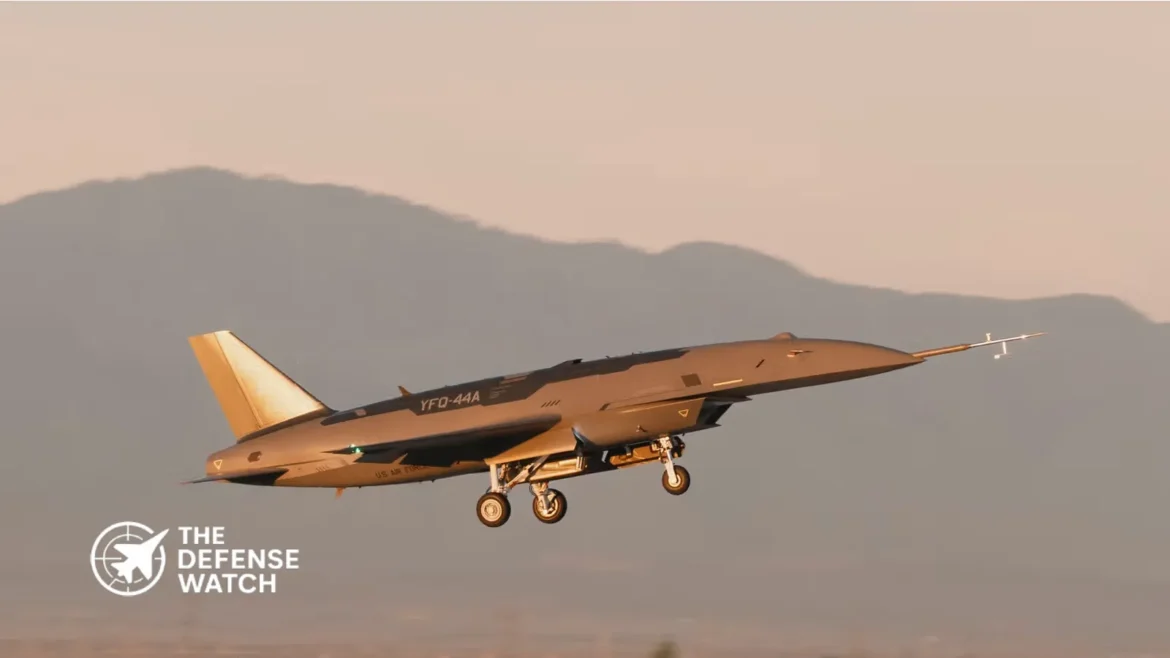
The YFQ-44A is Anduril’s candidate aircraft for the Air Force’s CCA Increment 1 program — a competition designed to develop low-cost, attritable autonomous aircraft that can accompany crewed fighters into high-threat environments. The “Y” prefix in its designation denotes a prototype development stage, while “FQ” indicates an unmanned fighter category — a designation class that did not exist in official U.S. military nomenclature until recently, underscoring just how new this entire domain is.
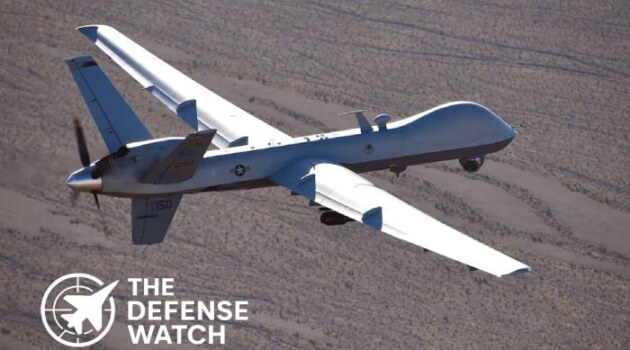
Unlike legacy remotely piloted aircraft such as the MQ-9 Reaper, which require continuous human control from a ground station, the YFQ-44A is designed for autonomous mission execution. It runs on Anduril’s proprietary Lattice AI operating system — the same platform that underpins the company’s Fury unmanned aircraft and its integrated defense network solutions. Lattice allows the YFQ-44A to process sensor data, identify threats, and execute tactical maneuvers without waiting for a human command input on every action.
The aircraft is intended to be affordable and producible at scale — a deliberate design philosophy in direct contrast to the eye-watering per-unit costs of the F-35. Pentagon planners have made clear they want a drone that can be purchased in the hundreds or thousands, accepting some degree of mission loss rather than designing an irreplaceable platform.
The CCA Program: How the YFQ-44A Fits the Bigger Picture
The Collaborative Combat Aircraft program is the Air Force’s answer to a strategic problem that has been building for years: the United States simply cannot afford — in time, money, or industrial capacity — to replace every aging crewed fighter with a next-generation manned platform fast enough to meet the pace of China’s military modernization.
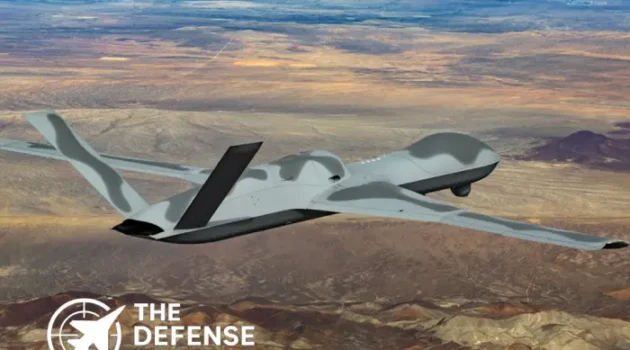
In March 2025, the Air Force awarded CCA Increment 1 development contracts to Anduril Industries and General Atomics, selecting them over competing proposals from Boeing and Lockheed Martin in a decision that sent shockwaves through the traditional defense industrial base. General Atomics’ entry carries the designation YFQ-42A, making the two programs direct competitors for what could become a combined procurement of over 1,000 aircraft.
The Air Force’s decision to go with Anduril — a defense technology startup founded in 2017 — over legacy primes was a deliberate signal that the Pentagon is willing to restructure how it buys advanced weapons systems. Anduril’s ability to move faster and iterate software more rapidly than traditional contractors appears to have been a decisive factor.
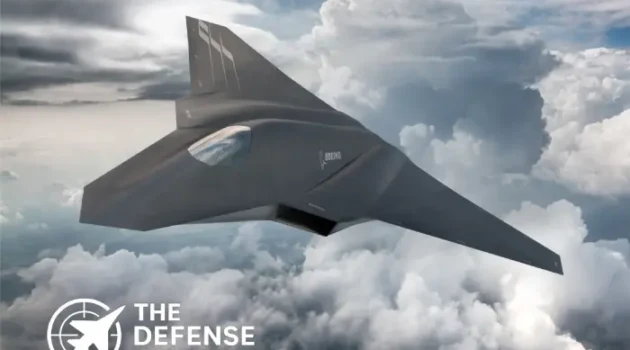
The broader CCA vision calls for these autonomous wingmen to perform a range of missions including electronic warfare support, ISR (intelligence, surveillance, and reconnaissance), weapons carriage and release, and aerial attrition in contested environments — essentially acting as force multipliers for crewed aircraft like the F-35A and the next-generation F-47.
YFQ-44A Production Timeline: Key Milestones
While the Air Force and Anduril have not published a fully detailed, public production schedule, information gathered from Congressional testimony, industry briefings, and defense reporting allows for a reasonable reconstruction of the program’s trajectory.
2024–2025: Competitive Development Phase
Anduril conducted extensive ground testing and early flight evaluations of its CCA design during this period. The company’s Costa Mesa, California headquarters and its manufacturing facilities served as the nerve center for rapid prototyping. The contract award in March 2025 formalized what had been an aggressive development push, locking in Anduril as one of two official CCA developers.
2025–2027: Prototype Refinement and Operational Testing
Following the contract award, Anduril entered a phase of intensive prototype refinement. This includes integration testing with Air Force operational systems, Lattice AI software maturation, and early evaluations by Air Combat Command. Developmental testing flights are expected to occur at Edwards Air Force Base, California — the traditional home of U.S. flight test operations — as well as classified test ranges in the Nevada desert.
The Air Force is expected to conduct a Milestone B decision during this window, which formally authorizes entry into Engineering and Manufacturing Development (EMD) — a critical program gate that unlocks significant additional funding and production preparation activities.
2027–2029: Low-Rate Initial Production (LRIP)
If the program proceeds on schedule, Low-Rate Initial Production of the YFQ-44A could begin as early as 2027 to 2028. LRIP units will be used for operational testing with operational units, allowing pilots and mission commanders to develop the tactics, techniques, and procedures (TTPs) needed to integrate autonomous wingmen into actual combat formations. Early LRIP deliveries may go to Air Force test and evaluation units before transitioning to frontline squadrons.
Late 2020s to Early 2030s: Initial Operating Capability (IOC)
The Air Force has publicly signaled a desire to achieve Initial Operating Capability for the CCA program by the late 2020s, though official milestone dates have not been disclosed for classification reasons. IOC would mean at least one operational unit is equipped, trained, and certified to deploy the YFQ-44A in a combat scenario. Full-Rate Production, which would enable the large-scale fleet numbers Pentagon planners envision, is broadly projected for the early 2030s.
Anduril’s Industrial Strategy: Can It Deliver at Scale?
One of the most important — and underreported — dimensions of the YFQ-44A story is whether Anduril possesses the industrial infrastructure to actually manufacture these aircraft at the volumes the Air Force requires. Building a handful of prototypes in a modern machine shop is a very different challenge from standing up a production line capable of producing hundreds of combat aircraft per year.
Anduril has been investing heavily in manufacturing capacity. The company announced plans for a large-scale Arsenal facility in Columbus, Ohio — a purpose-built manufacturing campus intended to produce autonomous systems at volume. The Arsenal concept is central to Anduril’s pitch to the Pentagon: that it can deliver not just innovative technology, but the production capacity to back it up at wartime scale.
This industrial positioning matters enormously given the stated lessons from the war in Ukraine, where attrition rates for unmanned systems have been extraordinarily high. A combat drone that costs tens of millions of dollars and takes years to manufacture offers far less strategic value than one that can be built quickly, cheaply, and in quantity.
Strategic Analysis: Why the YFQ-44A Timeline Is Being Watched Globally
The pace at which Anduril brings the YFQ-44A to operational status carries implications well beyond U.S. Air Force force structure planning.
China’s People’s Liberation Army Air Force is actively developing its own loyal wingman concepts, most notably the GJ-11 stealth unmanned combat aerial vehicle. Beijing has demonstrated a consistent ability to move from development to deployment with disconcerting speed. If the YFQ-44A program encounters significant delays — a realistic risk given the technical and programmatic complexity of what is being attempted — the U.S. risks ceding an early mover advantage in autonomous air combat that may be difficult to recover.
There is also a deterrence value to a credible production timeline. An adversary that believes the United States will field 1,000+ autonomous combat aircraft within a defined window must factor that capability into its own strategic calculations today, not merely when the aircraft arrive at Kadena or Andersen Air Force Base. This means Anduril’s ability to demonstrate credible progress — through test flights, production contracts, and Congressional briefings — carries real geopolitical weight.
The YFQ-44A program also sets a precedent for how defense acquisition will function in the coming decade. If a seven-year-old startup can win and execute a major combat aircraft program, it validates a model of defense procurement built around speed, software-first design, and commercial manufacturing methods — a model that stands in sharp contrast to the cost-plus contracting structures that produced the F-35 at roughly $80 million per unit.
The Road Ahead
The Anduril YFQ-44A combat drone production timeline remains a closely held program, but the strategic logic driving it is unmistakable. The United States Air Force has concluded that future high-end conflict — particularly in the Pacific — will demand more combat aircraft than the nation can afford to build in the traditional manned fighter model. Autonomous wingmen, available in large numbers, flying into contested environments where human pilots cannot reasonably be sent, are no longer a speculative concept. They are a procurement priority.
Whether Anduril can execute — delivering a mature, producible, combat-ready aircraft on the timeline the Air Force needs — is the central question facing the program. The answer will significantly shape American airpower through the 2030s and beyond.
FAQs
What is the Anduril YFQ-44A?The YFQ-44A is Anduril Industries’ prototype autonomous combat drone developed for the U.S. Air Force’s Collaborative Combat Aircraft (CCA) program. It is designed to fly alongside crewed fighters as an AI-driven unmanned wingman.
When will the YFQ-44A enter service?The Air Force is targeting Initial Operating Capability for the CCA program by the late 2020s, with full-rate production expected in the early 2030s, though official milestone dates remain classified.
How does the YFQ-44A differ from the YFQ-42A?The YFQ-42A is General Atomics’ competing CCA entry. Both aircraft are developing under parallel Air Force contracts. The Air Force may ultimately select one or both for production based on performance and cost.
What AI system powers the YFQ-44A?The YFQ-44A operates on Anduril’s Lattice AI platform, which enables autonomous mission execution, real-time threat processing, and adaptive tactical decision-making.
How many CCAs does the Air Force plan to buy?Pentagon officials have indicated a desire to procure over 1,000 Collaborative Combat Aircraft across the program, though final procurement numbers will be subject to Congressional authorization and appropriations.
U.S. Air Force Completes Operational Testing Of Anduril’s YFQ-44A Autonomous Drone Wingman
The U.S. Air Force has completed a significant operational test of Anduril’s YFQ-44A Fury — a semiautonomous, jet-powered Collaborative Combat Aircraft (CCA) — marking one of the most concrete demonstrations yet of the service’s push toward autonomous warfighting capabilities.
The Air Force’s Experimental Operations Unit (EOU), working alongside Air Force Materiel Command’s 412th Test Wing, conducted the exercise at Edwards Air Force Base, California, during the week of April 14, 2026. The test was confirmed in an official Air Force release on April 17 and corroborated by Anduril Vice President of Autonomous Airpower Mark Shushnar via social media.
¦ KEY FACTS AT A GLANCE- The U.S. Air Force’s Experimental Operations Unit conducted live sorties with Anduril’s YFQ-44A Fury semiautonomous combat drone at Edwards Air Force Base, California, in mid-April 2026.
- Operators used a ruggedized laptop — eliminating the need for fixed base infrastructure — to upload mission plans, initiate autonomous taxi and takeoff, and manage in-flight tasking.
- The YFQ-44A requires no traditional stick-and-throttle operator; the aircraft operates semiautonomously once mission parameters are uploaded.
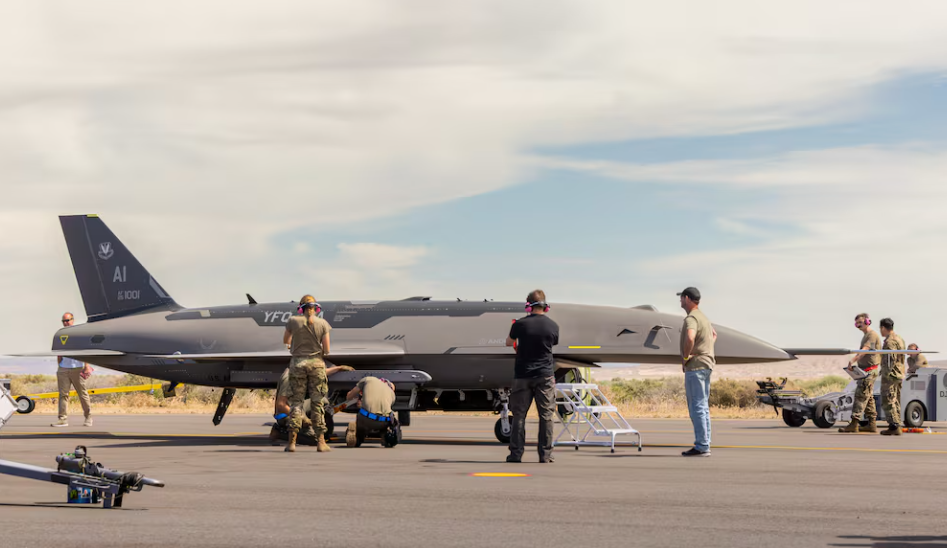
- A small crew of EOU maintainers — with only a couple days of training — turned the aircraft between multiple sorties, demonstrating rapid-deployment potential.
- The Air Force has stated a goal of fielding a fleet of at least 1,000 Collaborative Combat Aircraft for strike, operational, and manned-unmanned teaming missions.
The exercise is more than a routine test flight. It represents a deliberate strategic and doctrinal shift in how the U.S. military intends to fight and sustain air combat operations in future high-threat environments.
No Stick. No Throttle. No Fixed Base Required.
Perhaps the most operationally significant aspect of the test was how it was executed: entirely without a traditional remote pilot.
“There is no operator with a stick and throttle flying the aircraft behind the scenes,” Jason Levin, Anduril’s Senior Vice President of Engineering for Air Dominance and Strike, stated in an October 2025 company release. That philosophy was put into practice at Edwards AFB.
EOU operators used a ruggedized laptop to upload mission plans, initiate autonomous taxi and takeoff, assign in-flight tasks to the aircraft, and handle post-flight data collection. The portable command setup eliminates the need for the large, established infrastructure that has historically anchored unmanned operations to fixed bases — a critical advantage if the United States ever faces a peer adversary capable of striking forward installations.
The implications are significant. A force that can launch, operate, and recover semiautonomous combat aircraft from austere or expeditionary environments dramatically changes the calculus for contested airspace operations against adversaries such as China or a reconstituted regional power.
Small Crew, Fast Turnaround
Another element of the test that drew attention was the YFQ-44A’s ease of maintenance and rapid turnaround between sorties.
Shushnar noted that a handful of EOU maintainers, with only a few days of training, successfully turned the aircraft between sorties — a notable contrast to the complex, crew-intensive logistics traditionally associated with unmanned combat aircraft.
The YFQ-44A Fury was specifically designed for low logistics burden. This quality is central to the Air Force’s vision of deploying CCAs in large numbers across distributed, potentially austere locations in the Pacific theater or other contested regions where traditional air support chains may be degraded or disrupted.
What Is The Collaborative Combat Aircraft Program?
The CCA program is one of the Air Force’s highest-priority modernization efforts. Conceived as a drone wingman concept, CCAs are intended to fly alongside crewed fighters — including the F-22, F-35, and the newly revealed F-47 — to extend their reach, absorb risk, and multiply combat mass without placing additional human pilots in harm’s way.
The Air Force announced in April 2024 that Anduril Industries and General Atomics had each been selected to develop competing CCA designs under the program’s initial increment. Anduril began flight testing its YFQ-44A in October 2025 and moved into production announcements in March 2026. General Atomics, competing with its own design, began ground testing in May 2025.
The service has stated a long-term objective of fielding at least 1,000 CCAs. These aircraft are envisioned to serve in a range of roles: conducting strike missions autonomously, executing suppression of enemy air defenses, carrying electronic warfare payloads, and flying in coordinated formations with manned aircraft.
However, the Air Force has indicated it may ultimately select only one of the two competing designs for the full production phase. That decision is expected sometime in 2026.
A New Acquisition Model: Operators First
Beyond the technology itself, the April exercise reflected a broader cultural and institutional shift in how the Air Force is approaching acquisition.
Col. Timothy Helfrich, Portfolio Acquisition Executive for Fighters and Advanced Aircraft, stated in the official release that embedding operators with acquisition professionals creates “a tight feedback loop that lets us trade operational risk with acquisition risk in real-time.”

This approach — termed the Warfighting Acquisition System — places front-line operators at the center of the development and testing process rather than treating them as end-users who receive a finished product. The EOU was designed precisely for this role: to inject warfighter feedback into programs while they are still actively being developed and refined.
By executing the entire exercise — from pre-flight checks and weapons loading to autonomous flight tasking and post-flight data review — EOU airmen effectively stress-tested both the aircraft and the operational doctrine surrounding it simultaneously. This compressed feedback loop is intended to accelerate the pace at which capable systems reach operational units.
Strategic Context: Autonomous Airpower And The Pacing Threat
The timing of these tests is not incidental. The United States Air Force is under sustained pressure to modernize faster, particularly in light of China’s rapid fielding of advanced combat aircraft and its own investments in unmanned systems.
The People’s Liberation Army Air Force has significantly expanded its inventory of advanced fighters and is actively developing its own loyal wingman and unmanned combat air vehicle programs. In this environment, the Air Force’s ability to field a large, affordable, expendable combat mass — represented by platforms like the YFQ-44A — is seen as a strategic hedge against a numerically and geographically challenging adversary.
CCAs are not intended to replace manned fighters. Rather, they serve as force multipliers: expanding the sensor coverage, strike range, and survivability of crewed aircraft while absorbing attrition that would otherwise reduce the irreplaceable human talent within the force.
What Comes Next
With sorties now under the EOU’s belt, the Air Force is expected to accelerate the CCA development timeline. The service’s decision on which company — Anduril or General Atomics — advances to the production phase remains the central near-term milestone.
Anduril’s March 2026 production announcement and the recent operational testing give the company visible momentum. However, General Atomics’ experience with platforms such as the MQ-9 Reaper and its established Air Force relationships make any outcome competitive.
The broader Collaborative Combat Aircraft program, meanwhile, is being closely watched by allied nations. Australia has expressed interest in similar autonomous wingman concepts through its own Loyal Wingman program — now known as the MQ-28 Ghost Bat — developed with Boeing. The U.S. Air Force’s CCA advances may further shape interoperability requirements with key Indo-Pacific partners.
■ KEY FACTS AT A GLANCE- ► HÜRJET test flights will run from February 23, 2026, through March 16, 2026, over Antalya Bay.
- ► Flights will originate from Antalya Air Base Command and extend toward Gazipaşa.
- ► The aircraft may reach supersonic speeds during certain test profiles.
- ► Sonic booms may be heard in coastal areas as a natural result of high speed testing.
- ► Authorities emphasized there is no cause for public concern during the scheduled activities.
HÜRJET Test Flights Over Antalya Bay Enter Supersonic Phase
HÜRJET test flights over Antalya Bay are scheduled to continue through March 16, with Turkish authorities confirming that some sorties may include supersonic runs.
In a public notice, the Antalya Governor’s Office stated that flight tests under the HÜRJET Project will take place between February 23, 2026, and March 16, 2026. Operations will be conducted over the maritime area stretching from Antalya Bay to Gazipaşa, with aircraft departing from Antalya Air Base Command.
Officials warned that explosion like high intensity sounds could be heard along parts of the coastline. These sounds would result from the aircraft exceeding the speed of sound during specific test profiles.
Authorities stressed that such noise is a routine outcome of supersonic flight testing and urged residents not to be alarmed.
Advancing The HÜRJET Program
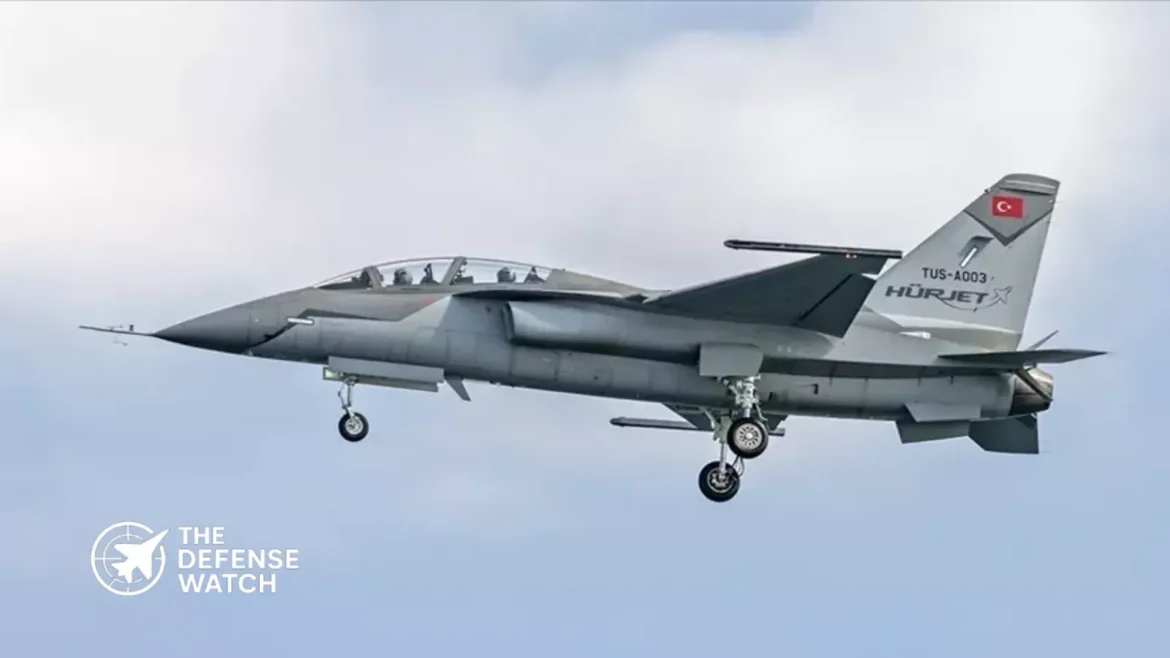
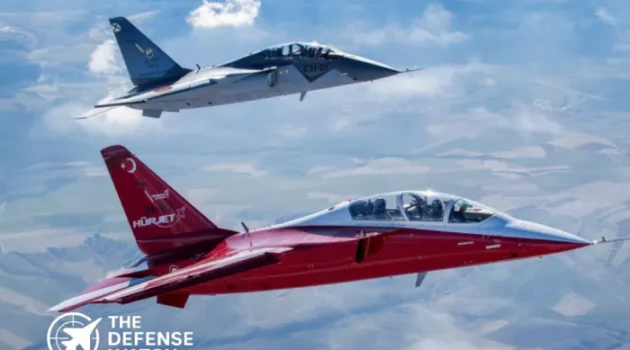
The HÜRJET advanced jet trainer is being developed by Turkish Aerospace Industries as part of Turkey’s broader effort to modernize pilot training and expand domestic aerospace capabilities.
Designed as a supersonic, single engine advanced trainer, HÜRJET is intended to replace aging jet trainers in Turkish service and support the transition of pilots to frontline platforms such as the F-16 Fighting Falcon and Turkey’s next generation combat aircraft programs.
According to Turkish defense officials and company disclosures in prior briefings, HÜRJET is expected to reach speeds above Mach 1, making controlled supersonic testing a key milestone in flight envelope expansion.
The Antalya maritime test zone offers a safer environment for high speed trials, minimizing risks to populated urban areas while allowing engineers to gather critical aerodynamic and structural data.
Why Supersonic Testing Matters
Supersonic trials are not symbolic. They are essential for validating airframe integrity, engine performance, flight control systems, and structural response under high stress conditions.
When an aircraft breaks the sound barrier, it generates a shock wave known as a sonic boom. Over water, these effects are easier to manage from both a safety and public relations standpoint.
For HÜRJET, expanding into supersonic regimes signals that the program is moving beyond basic flight validation toward full performance certification. This phase typically involves:
- Incremental speed increases
- Structural load assessments
- Avionics performance verification
- Stability and control evaluations
Defense aviation programs worldwide follow similar flight test methodologies before operational approval.
Strategic Implications For Turkey’s Aerospace Sector
The continued HÜRJET test flights over Antalya Bay highlight Ankara’s long term push for defense industrial autonomy.
Turkey has invested heavily in indigenous aerospace programs, seeking to reduce reliance on foreign suppliers. The HÜRJET program fits within a broader portfolio that includes unmanned systems, helicopters, and next generation fighter development.
From a policy perspective, a domestically produced supersonic trainer offers several advantages:
- Reduced foreign procurement exposure
- Export potential to allied and partner nations
- Greater control over training doctrine and upgrades
If successfully fielded, HÜRJET could position Turkey among a limited group of nations capable of designing and producing advanced jet trainers domestically.
However, sustained testing is critical. Flight envelope expansion, especially at supersonic speeds, often determines whether a program meets performance targets on schedule.
Public Communication And Transparency
The Antalya Governor’s Office decision to notify residents ahead of the HÜRJET test flights over Antalya Bay reflects standard aviation safety and civil coordination practices.
Sonic booms can cause concern among local communities unfamiliar with supersonic activity. Clear communication helps prevent misinformation and unnecessary alarm.
Similar public advisories are issued in the United States during military supersonic training over designated airspace corridors, particularly in coastal or desert regions.
By identifying the maritime corridor from Antalya Bay to Gazipaşa, authorities delineated a specific operational zone, reinforcing transparency in military flight activity.
What Comes Next
The March 16 end date does not necessarily mark the conclusion of the HÜRJET test campaign. Rather, it likely represents a defined test window for specific performance evaluations.
Future milestones may include:
- Expanded weapons integration trials
- Advanced avionics validation
- Export demonstration campaigns
For now, the focus remains on validating high speed performance and operational reliability.
The coming weeks will provide clearer insight into how rapidly the HÜRJET program progresses through its certification roadmap.
■ KEY FACTS AT A GLANCE- ► The U.S. Air Force is advancing the Collaborative Combat Aircraft program through a phased weapons integration strategy.
- ► CCA platforms are designed to operate alongside crewed fighters under the Next Generation Air Dominance framework.
- ► Initial integration focuses on existing U.S. munitions to reduce risk and accelerate operational capability.
- ► The effort supports broader Air Force modernization and distributed combat operations.
- ► Officials emphasize deliberate testing and integration to ensure safety, reliability, and combat effectiveness.
USAF Collaborative Combat Aircraft Program Moves Into Weapons Integration Phase
The Collaborative Combat Aircraft program is progressing through a deliberate weapons integration process as the U.S. Air Force refines how autonomous platforms will operate in future high-end conflicts.
According to the United States Air Force, the effort focuses on carefully integrating proven munitions onto emerging uncrewed aircraft designed to fly alongside crewed fighters. The goal is to reduce technical risk while accelerating operational capability.
The Collaborative Combat Aircraft program forms a central pillar of the Next Generation Air Dominance architecture. Under this concept, autonomous aircraft will support crewed platforms by carrying additional weapons, conducting sensing missions, and extending operational reach.
A Phased and Risk-Managed Approach
Air Force officials describe the weapons integration strategy as deliberate and incremental. Instead of developing entirely new weapons in parallel with new aircraft, the service is prioritizing compatibility with existing, combat-proven munitions already in the inventory.
This approach serves several purposes.
First, it reduces development timelines. Integrating established weapons avoids the long certification cycles associated with new munitions. Second, it supports logistical continuity across the force. Third, it strengthens interoperability within joint and allied operations.
From a force design perspective, the Collaborative Combat Aircraft program is intended to create mass at a lower cost than traditional fighters. By distributing weapons across multiple autonomous platforms, commanders can complicate enemy targeting and increase survivability in contested airspace.
Supporting NGAD and Future Air Dominance
The Collaborative Combat Aircraft program is closely aligned with NGAD objectives. While NGAD centers on a sixth-generation crewed fighter, CCA platforms provide scalable combat power around that core aircraft.
In practical terms, autonomous aircraft could carry additional air-to-air missiles, electronic warfare payloads, or intelligence, surveillance, and reconnaissance systems. This reduces the burden on crewed aircraft and enables greater tactical flexibility.
The Air Force has consistently emphasized that CCAs are not simply drones in the traditional sense. Instead, they are designed as collaborative systems that integrate into a broader combat network. That network includes advanced data links, distributed sensors, and secure communications that allow real-time coordination.
The deliberate weapons integration effort reflects lessons learned from past acquisition programs. Rushing integration can create cascading delays and cost overruns. A phased plan, by contrast, allows the service to validate software, hardware interfaces, and safety protocols step by step.
Operational Implications and Strategic Context
The Collaborative Combat Aircraft program arrives at a time when the United States faces pacing challenges in the Indo-Pacific and other theaters. Potential adversaries continue to expand integrated air defense systems, long-range missiles, and counter-air capabilities.
In that environment, survivability and distributed operations become critical.
Autonomous aircraft operating in coordination with crewed fighters can increase tactical options. They can absorb risk in high-threat areas, extend sensor coverage, and expand weapons capacity without placing additional pilots in harm’s way.
From an operational standpoint, integrating weapons early and methodically ensures these platforms are not limited to sensing roles alone. Arming CCAs provides credible combat utility from the outset.
The Air Force has underscored that testing remains central to the effort. Weapons separation trials, flight envelope validation, and software verification are essential before operational deployment. Safety, reliability, and predictable performance remain non-negotiable requirements.
Industrial and Modernization Impact
The Collaborative Combat Aircraft program also signals a shift in how the Air Force approaches acquisition. Modular architectures and open systems design are intended to allow faster upgrades over time.
By aligning weapons integration with existing inventories, the service reduces supply chain friction and enhances sustainment efficiency. This matters as the Air Force balances modernization priorities across fighters, bombers, tankers, and space-based assets.
As development continues, the deliberate weapons integration strategy positions the Collaborative Combat Aircraft program as a credible component of future U.S. airpower.
Rather than pursuing rapid but risky fielding, the Air Force is prioritizing structured integration, operational validation, and scalable growth. That methodical path may prove decisive as the service works to maintain air superiority in increasingly contested environments.
U.S. Air Force Selects Shield AI For CCA Mission Autonomy Development
Shield AI has been selected as a mission autonomy provider for the U.S. Air Force Collaborative Combat Aircraft program following a competitive Technology Maturity and Risk Reduction evaluation, the San Diego-based company announced February 13, 2026.
The company’s Hivemind autonomy software has successfully integrated on Anduril’s Fury aircraft and is supporting system-level testing in preparation for flight demonstrations expected in the coming months, marking a significant milestone in the Air Force’s effort to field autonomous combat drones alongside crewed fighters.
The announcement positions Shield AI as one of two mission autonomy providers for the Air Force’s CCA program. Collins Aerospace will provide autonomous software for General Atomics’ YFQ-42A platform, while Shield AI’s Hivemind will power Anduril’s YFQ-44A variant.
“Shield AI is proud to be named a mission autonomy provider supporting the Collaborative Combat Aircraft program,” said Gary Steele, CEO of Shield AI. “The Air Force is moving with urgency to explore how autonomy can reshape air combat, and we have spent years preparing for this—building, testing, and flying mission autonomy in the real world.”
What Is Collaborative Combat Aircraft?
The U.S. Air Force is developing CCAs as large uncrewed aircraft powered by jet engines, potentially equipped for missions including air-to-air combat, air-to-ground combat, electronic warfare, targeting, and intelligence, surveillance, and reconnaissance. The platforms are designed to fly alongside fifth and sixth-generation fighters such as the F-35A and future F-47.
The Air Force hopes to field at least 1,000 CCAs in varying configurations and have them carry out missions such as strike operations, reconnaissance, electronic warfare and as decoys to lure enemy fire away from piloted fighters.
Air Force officials have estimated that CCAs might cost roughly one-third the price of crewed fighters, potentially enabling the service to purchase the platforms in larger quantities than traditional combat aircraft.
Hivemind Autonomy Software Capabilities
Hivemind is Shield AI’s core artificial intelligence software that assumes the role of a human pilot or operator, enabling unmanned defense systems to sense, decide, and act. Unlike conventional autopilot systems that follow predetermined flight paths, Hivemind can reroute around no-fly zones, avoid or engage obstacles, respond to unexpected conditions, and complete missions safely and effectively without human intervention.
Christian Gutierrez, vice president of Hivemind Solutions at Shield AI, emphasized the complexity of the mission. “Delivering mission autonomy in real-world combat conditions is hard, which is why Shield AI has spent more than a decade building Hivemind and the technical and operational foundation to do it right,” he stated.
Hivemind is Autonomy Government Reference Architecture compliant, platform-agnostic, and has demonstrated A-GRA-aligned autonomy across multiple government and industry test efforts. The software has been tested on platforms including General Atomics’ MQ-20 Avenger, Northrop Grumman’s Talon IQ autonomous ecosystem, U.S. Navy BQM-177 test aircraft, and the Airbus UH-72A Lakota helicopter.
CCA Program Timeline And Competition
In April 2024, the Air Force selected Anduril and General Atomics to produce Increment 1 production-representative test articles after eliminating Boeing, Lockheed Martin, and Northrop Grumman from competition. The service designated the platforms YFQ-44A and YFQ-42A respectively in March 2025.
General Atomics‘ YFQ-42A completed its maiden flight in August 2025, while Anduril’s YFQ-44A first flew on October 31, 2025. Both platforms are now undergoing flight testing at California locations.
The Air Force is currently integrating a government-owned Autonomy Government Reference Architecture onto loyal wingman drones built by both General Atomics and Anduril. The A-GRA framework prevents vendor lock-in by establishing a single standard for CCA mission autonomy systems, allowing the service to install new software and capabilities from multiple vendors.
The Air Force said Thursday that government-owned autonomous software programs have been successfully integrated into both of its prototype collaborative combat aircraft, demonstrating that the platforms can be easily modified using modular open systems architecture.
Strategic Significance For Air Dominance
The CCA program represents a cornerstone of the Air Force’s Next-Generation Air Dominance initiative, which seeks to counter sophisticated adversary air defense systems. China’s development of anti-access/area-denial capabilities, such as long-range missiles and sophisticated air defense systems, has challenged the U.S. Air Force’s ability to achieve air superiority.
CCAs are central to restoring mass and resilience to U.S. combat air power in the face of sophisticated Chinese and Russian air defenses. The combination of lower unit cost, modular payloads, and AI-enabled autonomy promises to extend the reach, sensing, and striking power of a shrinking fleet of crewed aircraft.
The Air Force is planning to make a final competitive production decision on Increment 1 of CCA in fiscal year 2026 and expects to field a fully operational capability by the end of the decade.
Industry Impact And Future Increments
Several Increment 2 contract awards are expected in the early part of fiscal year 2026, with overseas suppliers also in contention The Air Force has indicated Increment 2 will focus on different capability sets than the initial platforms, potentially including enhanced stealth features or specialized mission packages.
The Air Force awarded nine contracts under Increment 2 of the CCA program in December 2025, though the service has not disclosed recipient companies citing enhanced security measures.
Shield AI, founded in 2015, develops state-of-the-art autonomy software products and aircraft including the V-BAT and X-BAT platforms. The company maintains offices and facilities across the United States, Europe, the Middle East, and Asia-Pacific, with its technology actively supporting operations worldwide.
The selection of Shield AI and Collins Aerospace for mission autonomy development underscores the Air Force’s commitment to competition and modular architecture in the CCA program. As flight testing accelerates through 2026, the service will gather critical data to refine requirements and reduce risk ahead of full-scale production decisions expected later this year.
Navy Demonstrates AI-Enabled Autonomy for Future Collaborative Combat Aircraft
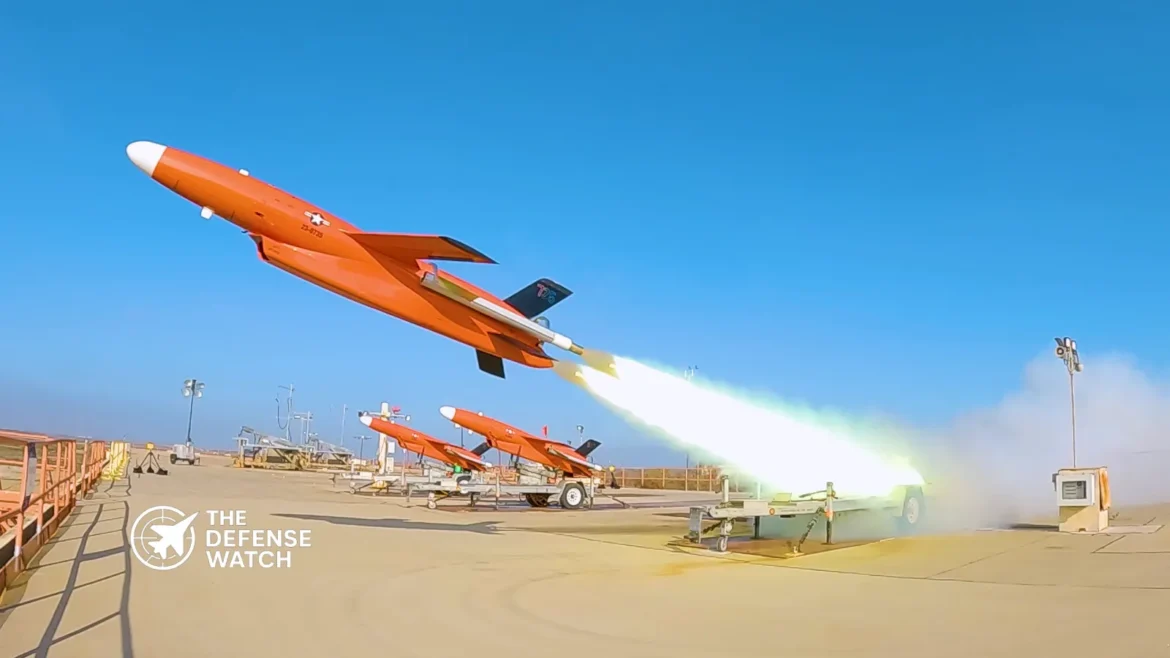
The U.S. Navy has completed a second AI-enabled autonomy demonstration that advances the development of future Collaborative Combat Aircraft (CCA). The December 11 event at Point Mugu Sea Range in California focused on multi-platform coordination of autonomous systems and manned-unmanned teaming, using modified BQM-177A aerial targets running Shield AI’s Hivemind software.
Focused AI Test With Real and Simulated Assets
Two BQM-177A subsonic aerial targets were flown autonomously using AI software connected to a Live Virtual Constructive (LVC) environment. That setup included a virtual F/A-18 and two simulated adversary aircraft. In the scenario, the virtual F/A-18 served as mission lead, directing the autonomous targets to defend designated perimeters against simulated threats.
Navy officials say this demonstration is an important step toward integrating AI autonomy across manned and unmanned platforms as the service shapes next-generation carrier air wing concepts and approaches contested operational environments.
Program Offices and Industry Roles
The effort was led by Naval Air Systems Command’s Strike Planning and Execution Systems (PMA-281) and Aerial Targets (PMA-208) offices with industry partners Shield AI, Kratos and CTSI. Shield AI provided the autonomy software, Kratos supplied the BQM-177A platforms, and CTSI delivered mission planning and pilot-vehicle interface systems.
Officials noted the event also demonstrated progress in implementing the Navy’s Autonomy Government Reference Architecture, a key framework for interoperability across autonomous platforms.
Part of a Broader Autonomy Push
This demonstration builds on earlier efforts to integrate AI-controlled autonomy into naval aviation platforms and complements other CCA developments, including contracts awarded to major defense firms to design carrier-ready unmanned combat aircraft and related autonomy systems.
Future work will include further autonomous flight testing and integration exercises with fleet systems as part of ongoing CCA development and naval aviation modernization.
US Air Force Designates YFQ-48 Unmanned Aircraft in Collaborative Combat Aircraft Program
The US Air Force has officially designated the YFQ-48 unmanned aircraft prototype under its Collaborative Combat Aircraft (CCA) program, advancing efforts to field semi-autonomous drones that can operate with manned fighters. This designation underscores progress in the broader effort to expand manned-unmanned teaming and distributed air operations.
YFQ-48 Emerges as Next Prototype in CCA Push
The YFQ-48, internally known as Project Talon, was quietly designated as a Mission Design Series aircraft by the Air Force in late December 2025. The move formalizes Northrop Grumman’s prototype in the CCA initiative, tasked with developing unmanned systems to work alongside platforms such as the F-35 and future fighters.
Details on specifications remain limited, but service and industry sources say the design emphasizes semi-autonomous operation, modular systems, and the flexibility to carry sensors or mission-specific payloads. These aircraft are intended for strike, sensing, and electronic warfare support in contested environments where lowering risk to human pilots is a priority.
CCA Strategy and Companion Efforts
The Collaborative Combat Aircraft program aims to expand combat mass and survivability by pairing loyal wingman style drones with crewed aircraft. Early designations within the program include the General Atomics YFQ-42A and Anduril YFQ-44A, both moving through ground and flight testing phases.
This strategy fits within the Air Force’s Next Generation Air Dominance portfolio, which integrates autonomy, secure networking, and new acquisition models meant to field systems more quickly and at lower cost than traditional fighters.
Outlook and Broader Context
While the program’s timeline for operational fielding remains tied to further testing and evaluation, the YFQ-48 designation marks a clear step toward expanding unmanned combat roles. Similar efforts by other nations in manned-unmanned teaming reflect a global shift in airpower concepts.
The US Air Force on December 22, 2025 officially designated Northrop Grumman’s experimental drone Project Talon as the YFQ‑48A. This designation marks the aircraft as a prototype in the service’s Collaborative Combat Aircraft (CCA) effort, which aims to field unmanned systems that fly with and extend the reach of manned fighters.1
What It Is
The official US Air Force designation YFQ‑48A reflects Pentagon naming practice where Y indicates a prototype, F signals a fighter role, and Q denotes unmanned aircraft. This is the first time Talon receives such a label, putting it alongside other prototype drone fighters like the YFQ‑42A from General Atomics and the YFQ‑44A from Anduril.3
How It Works
Details about the aircraft’s systems and performance remain limited. Available reports note Talon has a long slender body, unique wing planform, and single small turbofan engine. The focus is on rapid, affordable production and the ability to integrate sensors, communications and autonomy software to work in contested spaces.4
The broader CCA concept envisions networks of crewed and uncrewed systems. A manned fighter could lead a group of drones, handing off tasks such as surveillance, jamming, or targeting while preserving pilot decision authority. This shared workload aims to make air forces more flexible and resilient in high‑threat environments.
Why It Matters
The designation signals that the Air Force sees Project Talon as a serious contender in its effort to field collaborative drones quickly and at scale. The CCA program emphasizes industry competition and aims to speed up development cycles for new technologies.1
Unmanned wingmen are part of a broader shift in military aviation. They aim to reduce risk to pilots, extend operational reach, and counter advanced air defenses. Concepts like manned‑unmanned teaming are seen as key to future air combat in contested spaces, especially against near‑peer competitors with layered air defenses.
Strategic Context
Other nations are also pursuing similar systems. Australia’s MQ‑28 Ghost Bat, for example, is an autonomous wingman designed for interoperability with allied jets. These developments reflect a global trend toward combining human judgment with unmanned platforms that can face greater danger or carry additional sensors and payloads. (This comparison is based on publicly reported programs; specifics vary by operator and mission.)
Information on Project Talon’s exact capabilities remains partly speculative. Northrop’s focus on simplicity, fewer parts, and rapid build suggests a lean approach to innovation compared with legacy large‑platform programs. Some analysis suggests Talon is meant to be lighter and quicker to build than earlier designs Northrop offered for CCA.5
Strategic Impact
The official YFQ‑48A designation indicates that the USAF and its industry partners are advancing beyond concept toward tangible prototype systems that could reshape air combat. As Collaborative Combat Aircraft prototypes mature, the strategic balance in airpower competition may shift. For the United States, fielding effective manned‑unmanned teams could give an edge over potential rivals. Allies watching these developments may seek similar capabilities, influencing global air force modernization plans. Continued testing and eventual selection decisions in the CCA program will clarify how these systems perform and how widely they might be adopted.
US Air Force Unveils First Uncrewed Fighter Jets in CCA Program
On March 3, 2025 the US Air Force formally designated two jet-powered unmanned fighters — YFQ-42A and YFQ-44A — under its newly launched Collaborative Combat Aircraft (CCA) initiative.
Less than a year later, both prototypes have taken to the skies: YFQ-42A achieved its maiden flight in August 2025, followed by YFQ-44A on October 31, 2025.
Together these jets mark the first time the service has fielded uncrewed platforms with a formal “fighter” designation.
Background: An Evolving Vision for Air Combat
The CCA program emerged as part of the Air Force’s broader push toward the next generation of air dominance, blending human-piloted aircraft with autonomous drones to expand mission flexibility and survivability in contested environments.
Under the official US military aircraft designation system, the “Y” prefix denotes prototype status, “F” indicates a fighter mission, and “Q” signals an uncrewed system. Thus YFQ-42A and YFQ-44A are the first uncrewed jets to carry a formal fighter label.
The aim is to complement existing frontline aircraft — such as the F-35 Lightning II — with swarms of lower-cost, high-performance drones that can assume risky roles, extend sensor coverage, conduct electronic warfare or strike missions, and multiply combat mass without putting pilots in danger.
YFQ-42A and YFQ-44A: What We Know
YFQ-42A (General Atomics)
- Built by General Atomics Aeronautical Systems (GA-ASI), the YFQ-42A traces its roots to the earlier XQ-67A demonstrator from the Air Force Research Laboratory’s Off-Board Sensing Station program.
- The jet features a stealth-informed design with a streamlined fuselage, dorsal-mounted air intake, and twin canted V-tails. It carries weapons in internal bays — including air-to-air missiles such as the AIM-120 AMRAAM.
- Its architecture is modular, built to support different mission profiles including air-to-air combat, strike, electronic warfare, and surveillance — depending on payload and configuration.
- According to GA-ASI, the design provides “affordable mass” — lower unit cost and higher deployability than manned fighters — making it suitable for high-risk missions where attrition is possible.
- Flight testing kicked off in August 2025 at a classified site in California.
YFQ-44A (Anduril “Fury”)
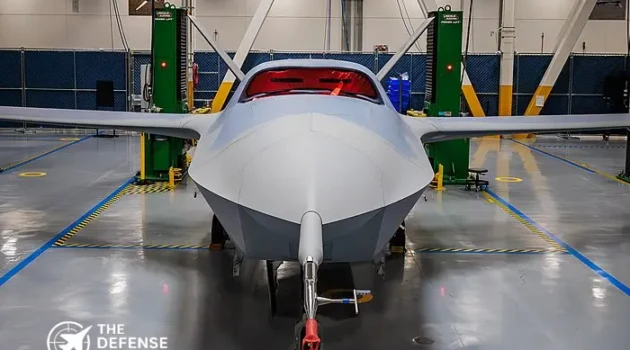
- Developed by Anduril Industries, YFQ-44A — internally known as “Fury” — represents a clean-sheet, jet-powered combat drone design. Anduril acquired the original design from Blue Force Technologies in 2023.
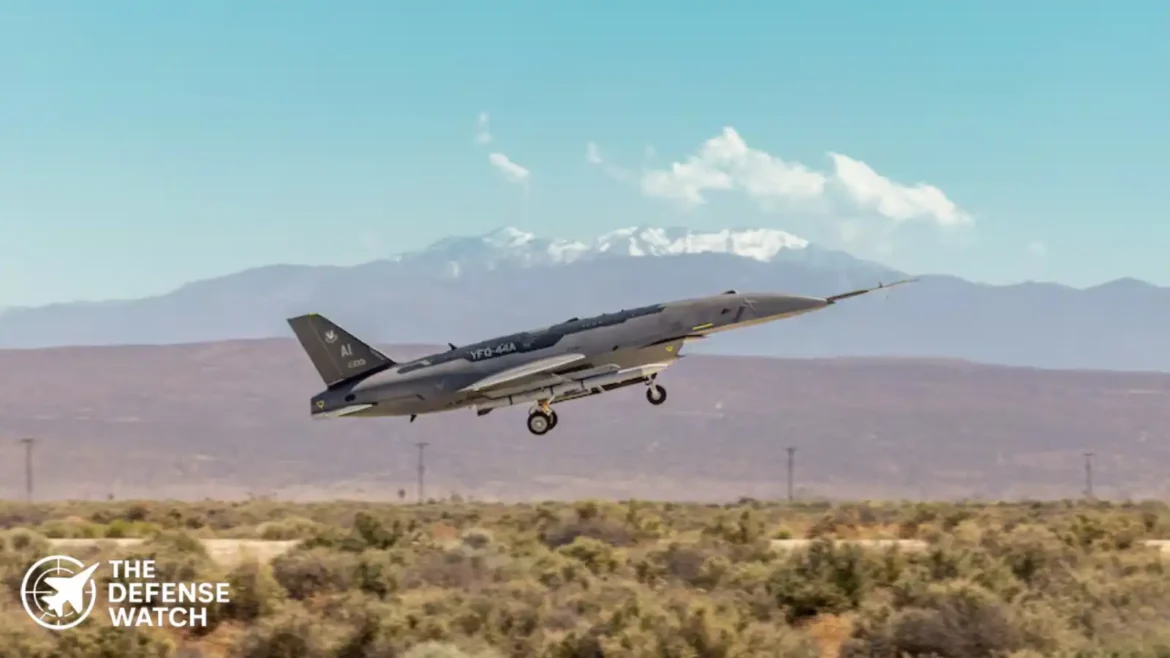
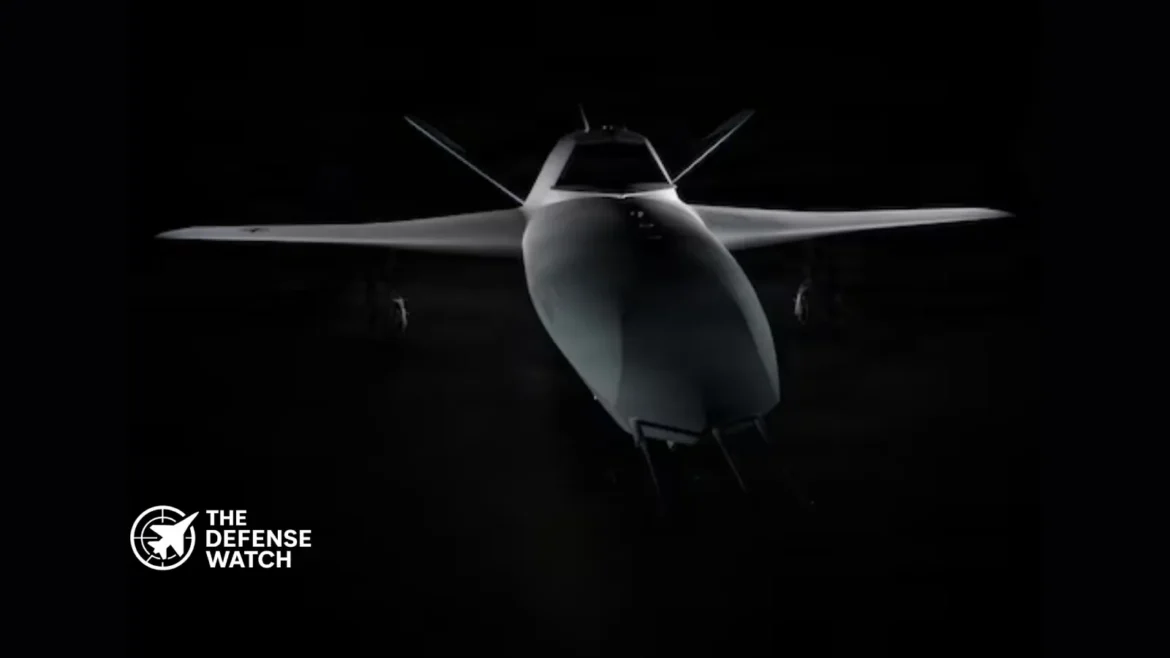
- The aircraft incorporates swept trapezoidal wings, a chin-mounted air inlet, a cruciform tail, and external hardpoints. It relies on a Williams FJ44-4M turbofan engine, giving thrust around 4,000 lbf (roughly 17.8 kilonewtons).
- Estimated performance puts it at near-supersonic speed (around Mach 0.95) at altitudes up to 50,000 feet, and capable of withstanding up to 9 g maneuvers.
- On Oct 31, 2025, YFQ-44A completed its first semi-autonomous flight at Southern California Logistics Airport. During the flight the aircraft carried out its mission plan, managed flight control and throttle autonomously, and returned to land under operator supervision.
- Anduril says the development from clean-sheet design to first flight took just 556 days, showing a rapid development pace unusual in modern military aviation.
What This Means: Redefining Air Combat
With the introduction of YFQ-42A and YFQ-44A, the Air Force is signalling a shift toward manned-unmanned teaming. These drones are not meant just as remote-controlled recon platforms, but as fully capable combat assets that can fly alongside — or ahead of — crewed fighters.
The fighter designation alone marks a doctrinal change. According to Air Force leadership, the move reflects a broader transition to what some call “affordable mass” — deploying larger numbers of cheaper, attritable platforms rather than fewer high-cost, high-risk manned jets.
Additionally, these uncrewed fighters could expand mission flexibility. They might handle dangerous strike or suppression tasks, act as decoys, perform electronic warfare, or extend sensor and weapons coverage — all while reducing risk to pilots.
By pairing with existing fighters such as F-35, the drones could offer significant force multiplication — potentially enabling one pilot to control multiple unmanned wingmen in future combat formations.
What’s Next: Testing, Production, Planning
Both YFQ-42A and YFQ-44A remain in a developmental phase. After their first flights, the next steps will involve more flight tests, integration trials with manned fighters, and evaluation of autonomy, weapons delivery, sensor packages, and survivability in contested environments.
If testing proceeds successfully, the Air Force may move toward production later in the decade under the CCA program’s Increment 1 deliverables. Observers expect future CCAs may number in the hundreds — or possibly thousands — providing a radically expanded air-combat force structure.
Implications
The successful flight tests of YFQ-42A and YFQ-44A mark the start of a new chapter in U.S. airpower. As these uncrewed fighters advance through evaluation and integration, they could significantly reshape how air combat is fought — blending human-led decision-making with autonomous execution, increasing force flexibility, and lowering risk to pilots.
If adopted at scale, CCAs may shift military investment away from expensive, high-end manned jets toward fleets of attritable, capable drones that deliver combat mass with lower cost per unit and higher operational risk tolerance.
Northrop Grumman formally unveiled Project Talon — a new uncrewed fighter jet concept designed to accompany crewed combat aircraft. Company representatives presented the small jet at the company’s Mojave facility, positioning Talon as an “autonomous wingman” built to support manned air-dominance fighters.
Why it matters
Project Talon enters a fast-growing market for autonomous combat aircraft, offering what Northrop describes as a cost-effective, quickly-produced drone intended to complement existing manned fighters. Its debut underscores shifting priorities in aerial combat, where unmanned systems play an increasingly critical role in contested airspace.
Talon at a glance
Design and origins
- Talon appears derived from Scaled Composites Model 437 — a compact optionally manned jet now used by Northrop to test autonomous systems.
- The prototype reveals a long slender fuselage, a dorsal-mounted air intake above the wings, a shovel-shaped nose, a low-aspect-ratio lambda wing, and sharply canted twin V-tails.
- Its layout resembles that of other uncrewed combat aircraft currently under development by other firms.
Manufacturing and timeline
- Northrop reports Talon went from program launch to “weight on wheels” in roughly 15 months — a strikingly rapid pace for a jet-powered combat aircraft.
- The company targets a first flight within nine months, keeping the full development period under two years.
- The aircraft uses a fully composite structure, reducing build weight by about 1,000 pounds compared to previous designs, and includes roughly half the number of parts. This, combined with modular manufacturing methods, cuts assembly time by roughly 30 percent.
Mission role and capabilities
- Talon is described as a “collaborative” combat aircraft capable of teaming with crewed fighters, serving as a force multiplier.
- Its design reportedly allows for versatile mission roles, including intelligence, surveillance and reconnaissance (ISR), electronic warfare, and strike missions. Modular payload bays (internal) could allow carriage of air-to-air or air-to-ground missiles, sensors or jammers.
- Open avionics architecture and secure data links are expected to support integration with crewed platforms, enabling sensor sharing, target tracking, and coordinated mission execution in contested environments.
Context in the evolving CCA landscape
The U.S. Air Force’s initiative to field uncrewed, semi-autonomous “Collaborative Combat Aircraft” (CCA) has already produced two prime contenders: YFQ-42A by General Atomics and YFQ-44A by Anduril Industries. They were selected in 2024 for prototype development and are scheduled for flight testing soon.
Northrop’s Talon, while not explicitly awarded a contract under the first CCA round, appears shaped to compete in future phases or acquisition efforts — including export opportunities with allied air forces.
What’s next
Northrop plans the first flight of Project Talon by fall 2026 if development proceeds on schedule. The company says Talon was developed independently — funded internally — highlighting a strategy to respond quickly to evolving military needs without relying solely on established procurement cycles.
As Talon advances toward flight testing, attention will focus on performance, payload capacity, sensor integration, and data-link reliability. Its success could reshape expectations for how crewed and uncrewed platforms operate together in future air conflicts.