- Home
- Catalog
- Fighter Jets
- Shenyang J-35 Fighter Jet
Shenyang J-35 Fighter Jet
Full Specifications
General Information
| Name | J-35 (FC-31 Gyrfalcon) |
| Manufacturer | Shenyang Aircraft Corporation (SAC) |
| Country of Origin | China |
| Type / Role | Multirole Stealth Fighter (Carrier-Based) |
| Generation | 5th |
| Status | In Development / Testing |
| First Flight | 2012 (Prototype), 2021 (Naval Variant) |
| Introduction / In Service Since | Expected mid-2020s |
| Number Built | Limited Prototypes |
| Operators | People’s Liberation Army Navy (PLAN) |
Dimensions & Structure
| Length | ~16.9 m |
| Wingspan | ~11.5 m (folded for carrier ops) |
| Height | 4.8 m |
| Wing Area | 40 m² (est.) |
| Empty Weight | ~17,000 kg |
| Maximum Takeoff Weight (MTOW) | ~28,000 kg |
| Internal Weapons Bay | Yes |
| External Hardpoints | 6 |
Performance
| Maximum Speed | Mach 1.8 |
| Range | 2,000 km (est.) |
| Combat Radius | 1,200 km |
| Service Ceiling | 50,000 ft |
| Rate of Climb | 250 m/s |
| Thrust-to-Weight Ratio | 1.05 |
| G Limits | +9 |
Powerplant
| Engine Type | WS-13 / WS-19 Turbofan |
| No. of Engines | 2 |
| Thrust (each) | 9,000–10,000 kgf |
| Thrust Vectoring | Planned (future) |
| Fuel Capacity | ~9,000 kg |
Armament
| Gun | Internal 30mm Cannon (optional) |
| Missiles (Air-to-Air) | PL-10, PL-15 |
| Missiles (Air-to-Ground) | KD-88, LS-6 |
| Bombs | Precision-guided bombs |
| Hardpoints | 6 external + internal bays |
| Payload Capacity | ~8,000 kg |
Avionics & Systems
| Radar | AESA Radar |
| Radar Range | 200+ km |
| Electronic Warfare (EW) System | Yes |
| Targeting System | IRST + EO Targeting |
| Helmet Display | Integrated HMD |
| Navigation | GPS/INS |
| Autopilot / AI Assistance | Partial AI Systems |
| Communication | Encrypted Data Link |
Stealth & Technology
| Radar Cross Section (RCS) | <0.5 m² (estimated) |
| Stealth Features | Shaping, RAM coating |
| Infrared Signature Reduction | Yes |
| Sensor Fusion | Multi-sensor integration |
| Networking Capabilities | Data-link enabled |
Variants
| Special Export Versions | - |
Operational History
| Major Conflicts / Deployments | None (testing stage) |
| Notable Operators | PLAN |
| Combat Proven? | No |
| Mission Types | Air superiority, strike, interception |
Cost & Program
| Unit Cost | ~$70–80 million (est.) |
| Development Cost | Classified |
| Program Name | J-35/FC-31 Program |
| Funding Countries | China |
Additional Information
| Upgrades Planned | WS-19 engine, AI integration |
| Future Replacement | J-15 in PLAN carrier fleet |
| Export Restrictions | Available under FC-31 variant |
| Notable Achievements | China’s first stealth carrier jet |
| Competitors | F-35C, Su-57, KF-21 |
PROS
- Advanced stealth shaping reduces radar signature
- Carrier-capable with folding wings
- Modern AESA radar and data-link integration
- Dual-engine design enhances survivability
- Expanding role within PLAN and export potential
CONS
- Still under testing; not fully combat-proven
- Engine performance below Western equivalents
- Limited export customers due to political constraints
- Lower range compared to F-35A
- Maintenance and logistics yet to mature
J-35 Stealth Fighter: China’s Next-Gen Carrier Jet
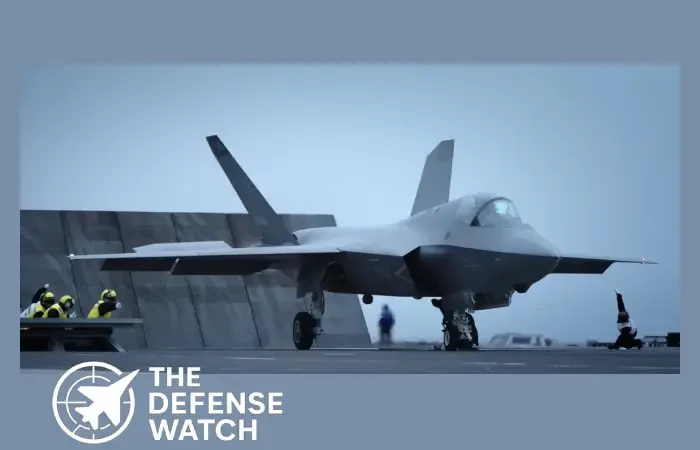
The Shenyang J-35, also known as the FC-31 Gyrfalcon, represents China’s effort to field a fifth-generation multirole stealth fighter capable of both land-based and carrier operations. Developed by Shenyang Aircraft Corporation (SAC) under AVIC, the J-35 is intended to complement the J-15 in the People’s Liberation Army Navy (PLAN) fleet, offering a stealthier, more advanced replacement for older fourth-generation aircraft.
First unveiled as the FC-31 prototype in 2012, the J-35 evolved into a carrier-capable variant with folding wings, strengthened landing gear, and a twin-wheel nose gear to accommodate catapult launches. The aircraft’s design reflects a blend of stealth shaping and agility, aimed at matching Western fighters like the F-35C and F/A-18E Super Hornet in performance and technology.
Powered by two WS-13 or WS-19 turbofan engines, the J-35 is expected to reach speeds around Mach 1.8 with an estimated combat radius of 1,200 km. Its AESA radar, sensor fusion, and network-centric warfare capabilities give it a modern digital cockpit environment similar to Western fifth-gen aircraft.
Armament includes beyond-visual-range (BVR) air-to-air missiles, precision-guided bombs, and air-to-surface munitions, carried in internal bays to preserve stealth. Designed for carrier strike missions, interception, and electronic warfare, the J-35 marks China’s first step toward a fully indigenous stealth naval air wing for its new generation of CATOBAR aircraft carriers.
Get real time update about this post category directly on your device, subscribe now.
Reviews
Disclaimer Note
The information provided on TheDefenseWatch.com is for general informational purposes only. While we strive to ensure the accuracy, completeness, and timeliness of our content regarding defense and aerospace products, technologies, and specifications, we cannot guarantee that all information is 100% accurate or up-to-date due to the evolving nature of military technology and classified data.TheDefenseWatch.com does not warrant the reliability, suitability, or availability of the information for any specific purpose. Users are advised to consult official sources, such as manufacturers, government publications, or defense agencies, for precise and verified data before making decisions based on our content.We are not affiliated with any defense manufacturers, governments, or military organizations mentioned. Opinions, reviews, and ratings reflect expert analysis but are subjective and should not be considered endorsements. TheDefenseWatch.com is not responsible for any errors, omissions, or consequences arising from the use of this website’s content.External links are provided for convenience and do not imply endorsement. TheDefenseWatch.com reserves the right to update or modify content without prior notice. By using this website, you agree to our Privacy & Cookies Policy.
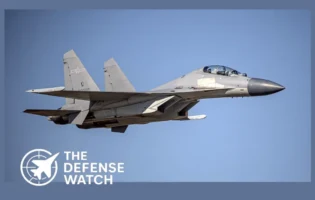
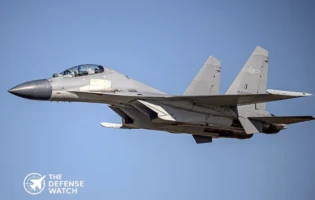
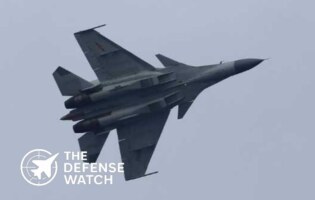
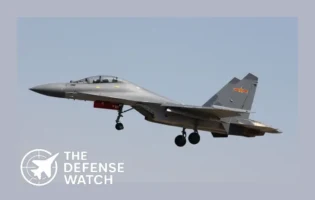
More Products from Shenyang Aircraft Corporation (SAC)
New Arrivals


Popular Comparisons
-
 SIG XM7 Rifle vs M4: Key Differences and Performance Comparison
View Comparison →
SIG XM7 Rifle vs M4: Key Differences and Performance Comparison
View Comparison → -
Eurofighter Typhoon vs Rafale vs F-35: Fighter Jet Comparison
View Comparison →
-
J-20 vs F-22: Stealth Fighter Showdown Explained
View Comparison →
-
F-14 Tomcat vs Su-57: Can a Legend Challenge Russia’s Stealth Fighter?
View Comparison →
-
Su-35 vs Su-57: Russia’s Top Fighter Jets Compared
View Comparison →
-
Eurofighter Typhoon vs Su-57: Ultimate Fighter Jet Comparison
View Comparison →
-
Rafale vs Su-57: 4.5 Gen vs 5th Gen Fighter Jet Comparison
View Comparison →
-
Su-57 vs F-16 Fighting Falcon: Stealth vs Speed
View Comparison →
-
China vs Russia: J-20 Mighty Dragon vs Su-57 Felon Comparison
View Comparison →
-
Su-57 Felon vs F-22 Raptor: Stealth Air Superiority Face-Off
View Comparison →


- France Unveils 78,000-Ton Nuclear Aircraft Carrier France Libre With 40-Aircraft Capacity

- L3Harris Wins $77.8M U.S. Navy Contract for Kineto Tracking Mount Sustainment
- US Navy Awards $15.38B Columbia-Class Submarine Contract To Strengthen Nuclear Deterrent
- China Surges Production Capacity For J-20 And J-35 Stealth Fighters As Beijing Expands Fifth-Generation Fleet
- Netanyahu Announces Elimination Of Senior Iranian Figures In Air Campaign
- US Bombers Avoid European Airspace On Iran Bombing Runs In Strategic Route Shift
- Japan’s EC-2 Electronic Warfare Jet Completes First Flight, Expanding Standoff Jamming Capabilities
- NASA’s X-59 Quiet Supersonic Jet Gears Up for Second Flight — A Giant Leap Toward Silent Boom AviationNASA X-59 Second Flight: Supersonic Aviation Reborn
- US Weapons Shipments to Taiwan Unaffected by Iran War, Officials Confirm
- USS Gerald R. Ford Fire Incident Exposes Crew Strain And Carrier Readiness Risks