- Home
- Catalog
- Aircraft Carriers
- Shandong CV-17 Aircraft Carrier
Shandong CV-17 Aircraft Carrier

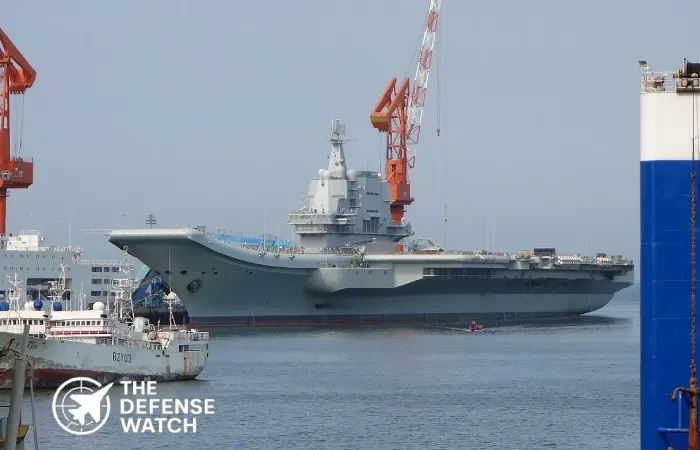
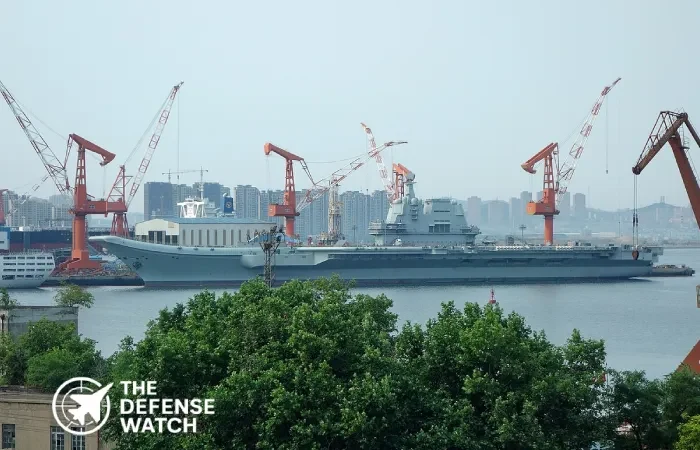
Full Specifications
1. Physical Characteristics
| Ship Type | Aircraft Carrier |
| Class | Shandong-class (Type 002) |
| Length | ~315 m |
| Beam (Width) | ~75 m |
| Flight Deck Width | ~70 m |
| Draft | ~10.5 m |
| Displacement (Full Load) | ~65,000–70,000 tons |
2. Propulsion & Performance
| Propulsion Type | Conventional |
| Powerplant | Steam turbines |
| Shafts | 4 shafts |
| Maximum Speed | ~30 knots |
| Range | 8,000–10,000+ nm |
| Endurance | ~45 days |
3. Flight Operations
| Aircraft Launch System | STOBAR |
| Catapult Type | None (ski-jump) |
| Recovery System | Arresting gear |
| Total Aircraft Capacity | ~40+ |
| Hangar Capacity | Full-length hangar |
| Aircraft Types Supported | J-15, AEW helos, ASW helos |
4. Sensors & Electronics
| Primary Radar | AESA multifunction |
| Navigation Radar | Standard PLAN system |
| Fire Control Radar | Supports SAM & CIWS |
| Electronic Warfare Suite | ESM/ECM systems |
| Communication Systems | SATCOM, PLAN data links |
5. Weapons & Defense Systems
| CIWS | Type 1130 |
| Short-Range SAMs | HQ-10 |
| Missile Launchers | Defensive only |
| Decoy Systems | Chaff, flare, EW decoys |
6. Command & Control
| Combat Management System | PLAN integrated CMS |
| Combat Information Center (CIC) | Centralized control |
| Air Operations Center | Full aviation management |
| Data Links | PLAN tactical systems |
7. Crew & Capacity
| Ship Crew | ~2,000 personnel |
| Air Wing Personnel | ~1,000 |
| Total Complement | ~3,000+ |
8. Construction & Cost
| Shipbuilder/Manufacturer | Dalian Shipbuilding Industry Company |
| Construction Started | 2013 |
| Commissioned | 2019 |
| Estimated Cost | ~$7B (conventional) |
PROS
- China’s first fully indigenous aircraft carrier
- Expanded air wing capacity vs. Liaoning
- Improved flight deck layout and island design
- Strong regional power projection capability
- Modern defensive systems (HQ-10, Type 1130 CIWS)
CONS
- STOBAR limits aircraft payload and launch efficiency
- Lacks catapult systems used on U.S. carriers
- Conventional propulsion restricts endurance
- Smaller air wing compared to supercarriers
- Limited operational experience in sustained blue-water missions
Shandong CV-17: China’s First Indigenous Carrier
The Shandong (CV-17) represents a major milestone in China’s naval modernization, marking the country’s first indigenously built aircraft carrier and a key asset in the People’s Liberation Army Navy’s (PLAN) expanding blue-water ambitions. Commissioned in December 2019, the carrier builds upon the design of China’s first carrier, Liaoning, offering improved aviation facilities, a larger flight deck, and enhanced combat readiness. For U.S. defense watchers, Shandong reflects Beijing’s rapid progress toward achieving sustained carrier-based operations in the Western Pacific.
Constructed by Dalian Shipbuilding Industry Company (DSIC) in China, Shandong is a conventional-powered STOBAR (Short Take-Off But Arrested Recovery) carrier designed primarily for regional power projection, maritime security, and air superiority missions. The ship supports an expanded air wing that includes J-15 multirole fighters, Z-18 transport helicopters, and Z-9 ASW platforms, giving China increased reach across contested waters such as the South China Sea.
The carrier features a ski-jump ramp for fighter launches, a redesigned island structure for better deck management, and advanced command-and-control systems for air operations. Although it lacks catapult launch systems like EMALS on U.S. carriers, Shandong provides China with greater operational capacity than its predecessor, enabling more frequent flight operations and improved sortie generation.
In terms of defense, the ship incorporates HQ-10 short-range surface-to-air missiles, Type 1130 CIWS, electronic warfare suites, and decoy systems designed to protect against incoming threats. While not equivalent to U.S. supercarriers in power projection or endurance, Shandong significantly strengthens China’s regional military posture.
With increasing deployments in the South China Sea and Western Pacific, Shandong plays a critical role in shaping China’s maritime strategy, signaling a steady move toward a multi-carrier fleet designed to challenge established naval powers.
Get real time update about this post category directly on your device, subscribe now.
Reviews
Disclaimer Note
The information provided on TheDefenseWatch.com is for general informational purposes only. While we strive to ensure the accuracy, completeness, and timeliness of our content regarding defense and aerospace products, technologies, and specifications, we cannot guarantee that all information is 100% accurate or up-to-date due to the evolving nature of military technology and classified data.TheDefenseWatch.com does not warrant the reliability, suitability, or availability of the information for any specific purpose. Users are advised to consult official sources, such as manufacturers, government publications, or defense agencies, for precise and verified data before making decisions based on our content.We are not affiliated with any defense manufacturers, governments, or military organizations mentioned. Opinions, reviews, and ratings reflect expert analysis but are subjective and should not be considered endorsements. TheDefenseWatch.com is not responsible for any errors, omissions, or consequences arising from the use of this website’s content.External links are provided for convenience and do not imply endorsement. TheDefenseWatch.com reserves the right to update or modify content without prior notice. By using this website, you agree to our Privacy & Cookies Policy.
More Products from Dalian Shipbuilding Industry Company (DSIC)
New Arrivals

Popular Comparisons
-
 SIG XM7 Rifle vs M4: Key Differences and Performance Comparison
View Comparison →
SIG XM7 Rifle vs M4: Key Differences and Performance Comparison
View Comparison → -
Eurofighter Typhoon vs Rafale vs F-35: Fighter Jet Comparison
View Comparison →
-
J-20 vs F-22: Stealth Fighter Showdown Explained
View Comparison →
-
F-14 Tomcat vs Su-57: Can a Legend Challenge Russia’s Stealth Fighter?
View Comparison →
-
Su-35 vs Su-57: Russia’s Top Fighter Jets Compared
View Comparison →
-
Eurofighter Typhoon vs Su-57: Ultimate Fighter Jet Comparison
View Comparison →
-
Rafale vs Su-57: 4.5 Gen vs 5th Gen Fighter Jet Comparison
View Comparison →
-
Su-57 vs F-16 Fighting Falcon: Stealth vs Speed
View Comparison →
-
China vs Russia: J-20 Mighty Dragon vs Su-57 Felon Comparison
View Comparison →
-
Su-57 Felon vs F-22 Raptor: Stealth Air Superiority Face-Off
View Comparison →


- Iran-US Ceasefire Negotiations Stall as Strait of Hormuz Standoff Deepens

- US Deploys Uncrewed Drone Boats In Conflict With Iran As Maritime Tensions Escalate
- Raytheon Expands Alabama Missile Integration Facility To Boost U.S. Defense Production Capacity
- Australian-Built Boxer Combat Reconnaissance Vehicles Roll Off Production Line, Boosting Land 400 Program
- U.S. Army To Begin M1E3 Abrams Prototype Operational Testing In Summer 2026
- Raytheon Secures $773.5M Contract Boost For AN/TPY-2 Radar Development Through 2030
- Javelin Missile Production Ramp Accelerates as Lockheed Martin Overhauls Supply Chain for High-Volume Output
- Indian Army To Buy 800 Km Plus Range BrahMos Supersonic Cruise Missiles
- US Navy Iwo Jima Amphibious Ready Group Expands Caribbean Anti-Trafficking Push
- Chinas Laser Air Defense Systems Light Arrow 21A And Light Arrow 11E Form Layered Counter Drone Shield