- Home
- Catalog
- Radar Systems
- PARCS Radar System
PARCS Radar System
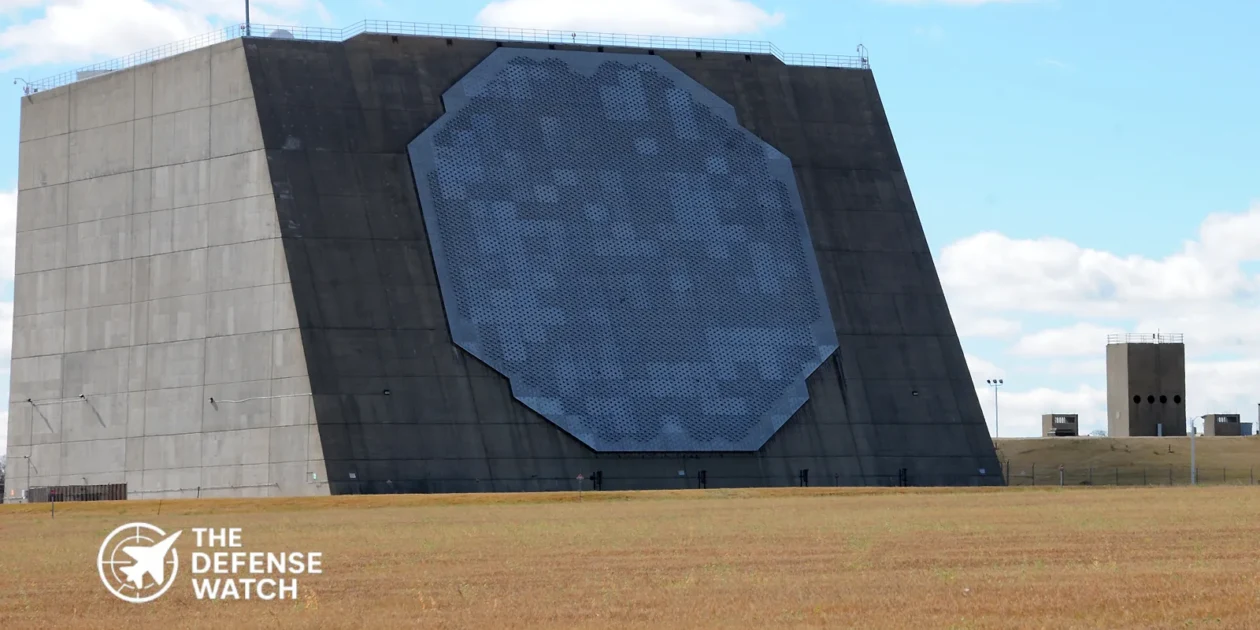
Full Specifications
1. General Information
| Name / Designation | AN/FPQ-16 PARCS |
| Manufacturer | General Electric |
| Country of Origin | United States |
| Type / Role | Long-Range Missile Warning Radar |
| Operational Domain | Ground / Space Surveillance |
| Status | Operational |
2. Technical Specifications
| Frequency Band | 420–450 MHz |
| Antenna Type | Phased Array |
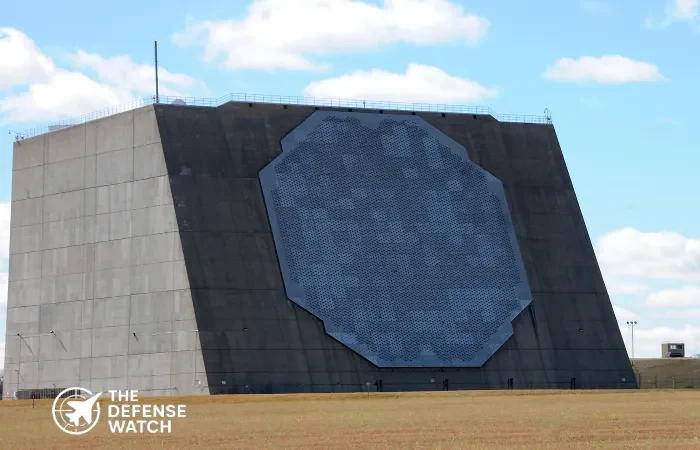
| Antenna Aperture / Size | Large single-face installation |
| Power Output | Max ~14.3 MW |
| Detection Range | ~2,000 mi |
| Tracking Range | Space objects beyond ballistic targets |
| Target Tracking Capacity | Thousands per day |
| Elevation Coverage | ~93° |
| Azimuth Coverage | ~140° |
| Beam Steering | Electronic |
| Pulse Repetition Frequency (PRF) | Classified |
| Resolution | Classified |
| Update Rate | Continuous |
| Clutter Rejection / ECCM | Standard military radar features |
3. Functional Capabilities
| Primary Functions | Ballistic missile warning and space surveillance |
| Target Types | ICBMs, SLBMs, satellites, space debris |
| Integration / Networking | NORAD, USSTRATCOM, Space Surveillance Network |
| IFF Capability | Integrated with defense networks |
| Data Link / Networking | Secure military data links |
| Weather & Terrain Resistance | Hardened against environment |
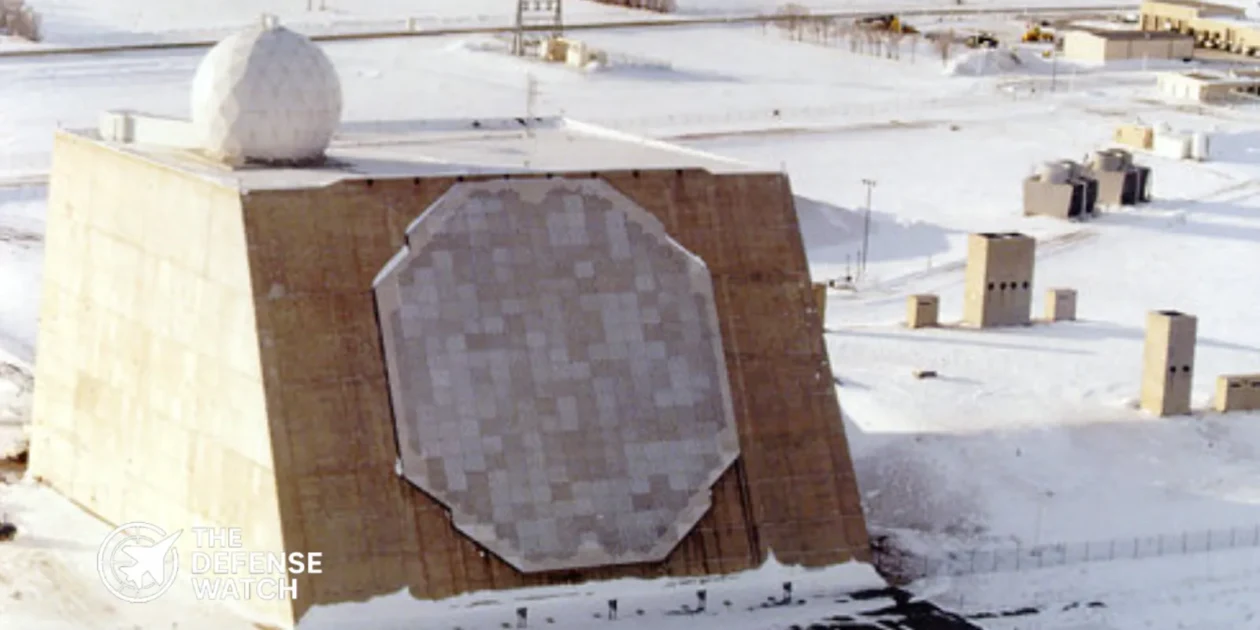
| Mobility / Mounting | Fixed ground installation |
4. Physical & Operational Characteristics
| Dimensions | Large fixed radar installation |
| Weight | Fixed structure |
| Power Requirement | High continuous power |
| Cooling System | Industrial cooling |
| Operating Temperature Range | Wide military range |
| Deployment Platform | Cavalier Space Force Station |
| Crew Requirement | Space Force radar operators |
5. Software & Processing
| Signal Processor Type | Legacy defense processors |
| Processing Speed | High for tracking |
| AI / Automation Features | Standard automated track processing |
| Data Output / Interface | Military data networks |
| Software Upgradeability | Through sustainment programs |
6. Operational History
| Year Introduced | 1975 |
| Users / Operators | US Space Force |
| Notable Deployments | Continual missile warning since 1977 |
| Successor / Predecessor | N/A |
7. Export / Compliance Data
| Export Availability | Not exported |
| ITAR / MTCR Status | Controlled US system |
| Cost Estimate | Funded via US defense budgets |
PROS
- Very long detection range for ballistic targets
- Supports both missile warning and space surveillance
- Integrates with NORAD and U.S. Strategic Command
- Single face phased‑array allows rapid scanning
- Critical national defense sensor
CONS
- Uses older technology with obsolete components
- High maintenance cost
- Limited mobility (fixed site only)
- No published modern upgrades like AESA
- Single installation creates single point of failure
PARCS Long‑Range Missile Warning Radar
The Perimeter Acquisition Radar Attack Characterization System, or PARCS, is a long‑range, ground‑based phased‑array radar at Cavalier Space Force Station, North Dakota. It stands as a key part of the United States missile warning network. Built during the Cold War, this huge radar now provides missile warning data and space surveillance input to the North American Aerospace Defense Command and U.S. Strategic Command. PARCS operates in the UHF band and continuously scans northward toward the Arctic to detect intercontinental and sea‑launched ballistic missiles headed toward the continental U.S. and Canada. It also feeds satellite track and space object metrics into the Space Surveillance Network.
Manufacturer
PARCS was originally developed by General Electric in the early 1970s as part of the Army’s Safeguard anti‑ballistic missile system. After the Safeguard system was shut down, control passed to the U.S. Air Force and later to the U.S. Space Force. Today it is operated by Space Delta 4 and supported by contractors including Summit Technical Solutions.
Speed and Range
Radar systems do not have “speed” like aircraft, but PARCS provides continuous, real‑time scanning with a very long detection range. It can detect and track missile targets and space objects at distances up to about 2,000 miles (3,200 km) and monitor greater space volumes, making it a backbone sensor in continental and space warning networks.
Cost/Price
Because AN/FPQ-16 PARCS is a government‑owned defense asset, no unit price is published. Lifecycle sustainment, operations, and maintenance contracts run into the tens of millions of dollars per year, reflecting its high cost to keep operational with aging, custom components.
Get real time update about this post category directly on your device, subscribe now.
Reviews
Disclaimer Note
The information provided on TheDefenseWatch.com is for general informational purposes only. While we strive to ensure the accuracy, completeness, and timeliness of our content regarding defense and aerospace products, technologies, and specifications, we cannot guarantee that all information is 100% accurate or up-to-date due to the evolving nature of military technology and classified data.TheDefenseWatch.com does not warrant the reliability, suitability, or availability of the information for any specific purpose. Users are advised to consult official sources, such as manufacturers, government publications, or defense agencies, for precise and verified data before making decisions based on our content.We are not affiliated with any defense manufacturers, governments, or military organizations mentioned. Opinions, reviews, and ratings reflect expert analysis but are subjective and should not be considered endorsements. TheDefenseWatch.com is not responsible for any errors, omissions, or consequences arising from the use of this website’s content.External links are provided for convenience and do not imply endorsement. TheDefenseWatch.com reserves the right to update or modify content without prior notice. By using this website, you agree to our Privacy & Cookies Policy.
New Arrivals



Popular Comparisons
-
 GCAP vs FCAS, Europe Sixth Generation Fighter Race
View Comparison →
GCAP vs FCAS, Europe Sixth Generation Fighter Race
View Comparison → -
Su-57 vs F-35 Cost Analysis: Price, Maintenance, and Export Availability
View Comparison →
-
SIG XM7 Rifle vs M4: Key Differences and Performance Comparison
View Comparison →
-
Eurofighter Typhoon vs Rafale vs F-35: Fighter Jet Comparison
View Comparison →
-
J-20 vs F-22: Stealth Fighter Showdown Explained
View Comparison →
-
F-14 Tomcat vs Su-57: Can a Legend Challenge Russia’s Stealth Fighter?
View Comparison →
-
Su-35 vs Su-57: Russia’s Top Fighter Jets Compared
View Comparison →
-
Eurofighter Typhoon vs Su-57: Ultimate Fighter Jet Comparison
View Comparison →
-
Rafale vs Su-57: 4.5 Gen vs 5th Gen Fighter Jet Comparison
View Comparison →
-
Su-57 vs F-16 Fighting Falcon: Stealth vs Speed
View Comparison →


- Breaking the Sound Barrier Without Breaking the Peace: How the U.S. Military and NASA Are Redefining Sonic Boom Science in 2026

- U.S. Navy Races To Expand Fleet As $65.8 Billion Shipbuilding Plan Unveiled
- US Rescues Downed F-15 Pilot After Aircraft Shot Down Over Iran
- UK Races To Expand Munitions Production As Stockpile Pressures Mount
- Portugal Deploys F-16s To Expand NATO Baltic Air Policing Mission
- UK Typhoon And Wildcat Operations Expand Air Defense Capability Across Middle East
- BAE Systems Expands Cyber Capabilities To Strengthen AUKUS Defense Integration
- Pentagon Moves To Fund 38 F-35A Fighters As Air Force Battles Its Worst Fighter Shortfall In History
- Iran Moves To Keep Peace Talks Open As Search For Missing US Pilot Intensifies
- U.S. Navy Expands Undersea Readiness As USS New Jersey Attack Submarine Returns To Service