- Home
- Catalog
- Missiles & Precision Weapons
- LGM-30G Minuteman III ICBM
LGM-30G Minuteman III ICBM
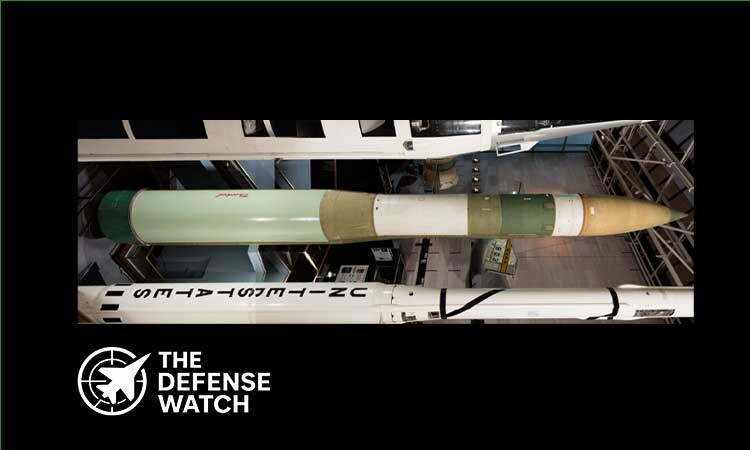
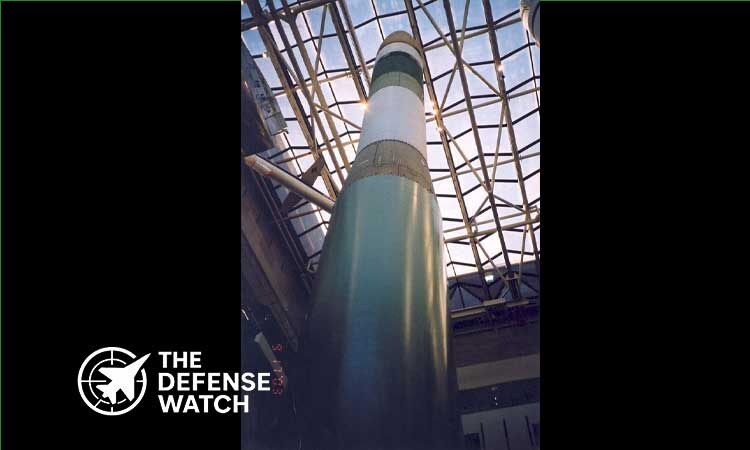
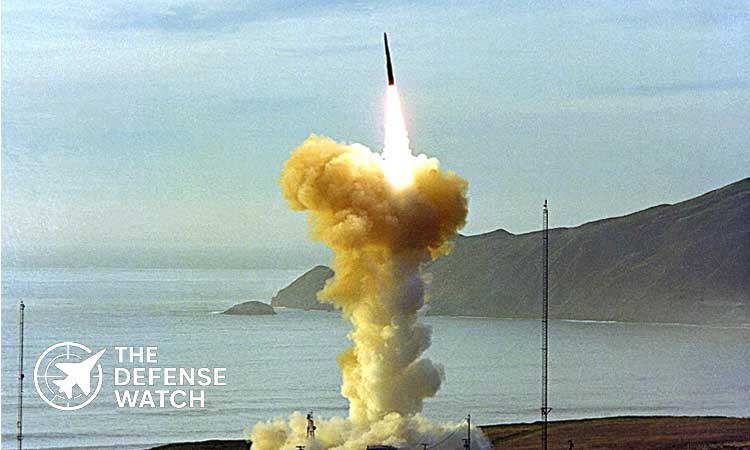
Full Specifications
1. General Information
| Name / Designation | LGM-30G Minuteman III |
| Type / Role | Intercontinental Ballistic Missile (ICBM), Nuclear Deterrent |
| Country of Origin | United States |
| Manufacturer | Boeing Defense, Space & Security |
| Service Entry / Year Introduced | 1970 |
| Operational Status | Active |
2. Performance & Range
| Range | 13,000 km (8,100 miles) |
| Speed | Mach 23+ |
| Ceiling / Altitude Limit | Sub-orbital trajectory (approx. 1,200 km apogee) |
| Accuracy (CEP) | ~120 meters (modernized systems) |
| Warhead Type | Nuclear (W62, W78, W87 variants) |
3. Guidance & Targeting
| Guidance System | Inertial guidance with GPS-aided upgrades |
| Targeting Mode | Pre-programmed strategic targeting |
| Launch Platform Compatibility | Hardened underground silos |
| Seeker Type | None (ballistic trajectory) |
4. Physical Characteristics
| Length | 18.2 m |
| Diameter | 1.68 m |
| Wingspan | N/A (no control surfaces) |
| Launch Weight | 36,000 kg |
| Propulsion | Three-stage solid-fuel rocket motor |
5. Warhead & Payload
| Warhead Weight | Approx. 1,150 kg |
| Explosive Type | Thermonuclear |
| Detonation Mechanism | Airburst or groundburst fuse options |
| Payload Options | Single RV (W87), formerly MIRV-capable |
6. Operational Use & Capabilities
| Operational Range Type | Long |
| Deployment Platform | Ground-based silo |
| Target Types | Strategic, hardened, or city-scale targets |
| Combat Proven | No (deterrent role only) |
| Users / Operators | United States Air Force |
PROS
- Exceptional global strike range and rapid response.
- Hardened silo launch protection.
- Proven reliability and over 50 years of service.
- Upgradable guidance and communications systems.
- Integral part of U.S. nuclear deterrence posture.
CONS
- Aging system with increasing maintenance costs.
- Limited mobility compared to mobile ICBMs.
- Vulnerability to preemptive attacks due to fixed silos.
- Treaty limitations on warhead deployment.
- Replacement program (Sentinel) faces high modernization costs.
LGM-30G Minuteman III Ballistic Missile — U.S. Strategic Deterrent
The LGM-30G Minuteman III is the backbone of the United States’ land-based nuclear deterrent, forming a critical component of the nation’s strategic triad alongside nuclear-capable bombers and submarine-launched ballistic missiles (SLBMs). Designed for rapid launch and global reach, the Minuteman III represents decades of continuous modernization and reliability within the U.S. Air Force’s Global Strike Command.
Manufactured by Boeing Defense, Space & Security, the Minuteman III entered service in 1970 as an intercontinental ballistic missile (ICBM) capable of delivering nuclear warheads across continents within minutes. It replaced earlier Minuteman variants with improved guidance, accuracy, and multiple independently targetable reentry vehicle (MIRV) capability — allowing it to carry up to three nuclear warheads (though current arms control treaties limit deployment to a single warhead).
Powered by a three-stage solid-fuel rocket, the missile can reach speeds exceeding Mach 23 (approximately 15,000 mph) and strike targets over 13,000 km (8,100 miles) away. Its advanced inertial guidance system has been continuously upgraded to ensure exceptional accuracy and survivability in contested environments.
The Minuteman III is launched from hardened underground silos located across several U.S. states, primarily operated by the 341st, 90th, and 91st Missile Wings. Despite being over five decades old, ongoing life-extension programs—such as guidance modernization, solid-fuel refurbishment, and command system upgrades—have kept the system fully operational into the 2030s. It will eventually be replaced by the LGM-35A Sentinel ICBM under development by Northrop Grumman.
LGM-30G Minuteman III Price in United States
While exact figures are classified, the estimated cost of maintaining and modernizing each LGM-30G missile system is approximately $7 million to $10 million, with the full life-cycle cost exceeding several billion dollars when infrastructure and command systems are included.
Get real time update about this post category directly on your device, subscribe now.
Reviews
Disclaimer Note
The information provided on TheDefenseWatch.com is for general informational purposes only. While we strive to ensure the accuracy, completeness, and timeliness of our content regarding defense and aerospace products, technologies, and specifications, we cannot guarantee that all information is 100% accurate or up-to-date due to the evolving nature of military technology and classified data.TheDefenseWatch.com does not warrant the reliability, suitability, or availability of the information for any specific purpose. Users are advised to consult official sources, such as manufacturers, government publications, or defense agencies, for precise and verified data before making decisions based on our content.We are not affiliated with any defense manufacturers, governments, or military organizations mentioned. Opinions, reviews, and ratings reflect expert analysis but are subjective and should not be considered endorsements. TheDefenseWatch.com is not responsible for any errors, omissions, or consequences arising from the use of this website’s content.External links are provided for convenience and do not imply endorsement. TheDefenseWatch.com reserves the right to update or modify content without prior notice. By using this website, you agree to our Privacy & Cookies Policy.



New Arrivals



Popular Comparisons
-
 SIG XM7 Rifle vs M4: Key Differences and Performance Comparison
View Comparison →
SIG XM7 Rifle vs M4: Key Differences and Performance Comparison
View Comparison → -
Eurofighter Typhoon vs Rafale vs F-35: Fighter Jet Comparison
View Comparison →
-
J-20 vs F-22: Stealth Fighter Showdown Explained
View Comparison →
-
F-14 Tomcat vs Su-57: Can a Legend Challenge Russia’s Stealth Fighter?
View Comparison →
-
Su-35 vs Su-57: Russia’s Top Fighter Jets Compared
View Comparison →
-
Eurofighter Typhoon vs Su-57: Ultimate Fighter Jet Comparison
View Comparison →
-
Rafale vs Su-57: 4.5 Gen vs 5th Gen Fighter Jet Comparison
View Comparison →
-
Su-57 vs F-16 Fighting Falcon: Stealth vs Speed
View Comparison →
-
China vs Russia: J-20 Mighty Dragon vs Su-57 Felon Comparison
View Comparison →
-
Su-57 Felon vs F-22 Raptor: Stealth Air Superiority Face-Off
View Comparison →


- Pentagon Considers Second B-21 Raider Production Line To Accelerate U.S. Stealth Bomber Expansion

- France Unveils 78,000-Ton Nuclear Aircraft Carrier France Libre With 40-Aircraft Capacity
- L3Harris Wins $77.8M U.S. Navy Contract for Kineto Tracking Mount Sustainment
- US Navy Awards $15.38B Columbia-Class Submarine Contract To Strengthen Nuclear Deterrent
- China Surges Production Capacity For J-20 And J-35 Stealth Fighters As Beijing Expands Fifth-Generation Fleet
- Netanyahu Announces Elimination Of Senior Iranian Figures In Air Campaign
- US Bombers Avoid European Airspace On Iran Bombing Runs In Strategic Route Shift
- Japan’s EC-2 Electronic Warfare Jet Completes First Flight, Expanding Standoff Jamming Capabilities
- NASA’s X-59 Quiet Supersonic Jet Gears Up for Second Flight — A Giant Leap Toward Silent Boom AviationNASA X-59 Second Flight: Supersonic Aviation Reborn
- US Weapons Shipments to Taiwan Unaffected by Iran War, Officials Confirm