- Home
- Catalog
- Attack & Multirole Drones (UAVs)
- Lanying R6000 Tiltrotor Drone
Lanying R6000 Tiltrotor Drone
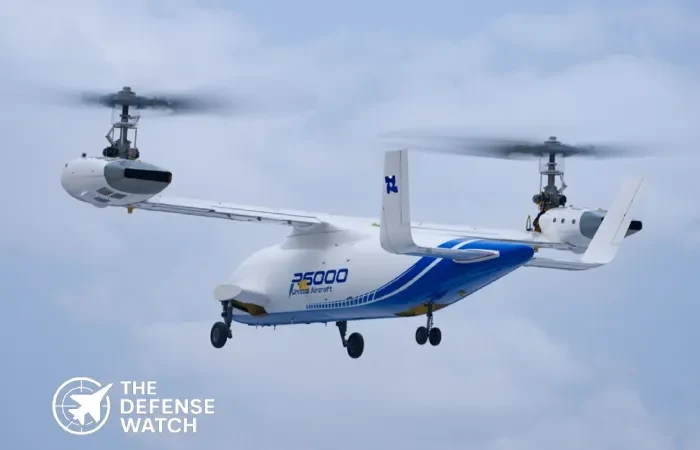
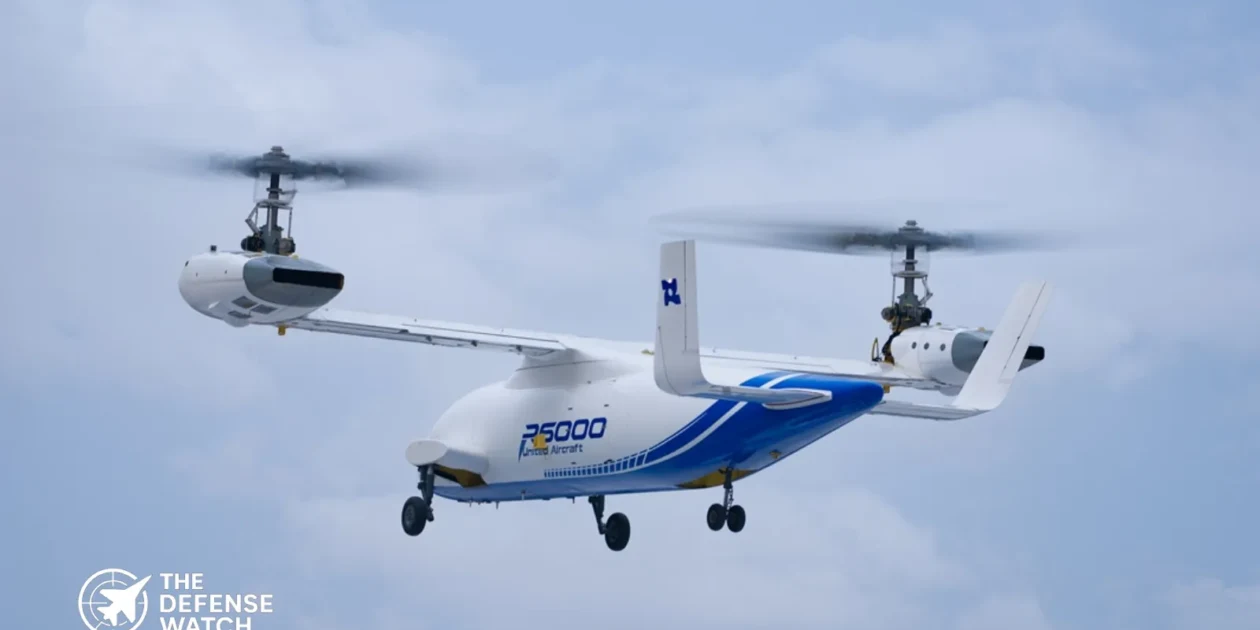

Full Specifications
1. General Information
| Name | Lanying R6000 |
| Manufacturer | AVIC |
| Country of Origin | China |
| Type / Role | Heavy Lift Tiltrotor UAV |
| First Flight / Introduced | 2025 |
| Status | Under Development |
| Unit Cost | Not Disclosed |
2. Performance
| Maximum Speed | ~500 km/h |
| Cruise Speed | ~400 km/h |
| Operational Range | ~1,500 km |
| Endurance | ~10 hours |
| Service Ceiling | ~25,000 ft |
3. Dimensions
| Length | ~15 m |
| Wingspan | ~25 m |
| Maximum Takeoff Weight (MTOW) | ~10,000 kg |
4. Payload & Armament
| Payload Capacity | Up to 6,000 kg - Cargo pods, ISR modules |
5. Propulsion
| Engine Type | Turboshaft engines |
6. Communication & Control
| Control Type | Remote and Autonomous |
| Data Link Range | Line of sight and SATCOM |
| Navigation | GPS and INS |
7. Operational Use
| Primary Users | PLA support units (planned) |
| Combat Proven | No |
PROS
- True VTOL with long range cruise
- Very high payload capacity for a UAV
- No runway required
- Suitable for naval and expeditionary use
- Supports autonomous logistics missions
CONS
- Limited public data on combat systems
- Complex tiltrotor mechanics
- Likely high unit and maintenance cost
- Not combat proven
- Large size reduces survivability in contested airspace
Lanying R6000 Heavy Tiltrotor Drone
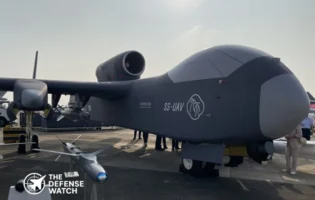
The Lanying R6000 is one of China’s most ambitious large unmanned aircraft projects. Designed to bridge the gap between helicopters and fixed wing drones, it combines vertical takeoff and landing with long range cruise efficiency. The platform targets military logistics, intelligence support, and special mission roles where runways are limited or unavailable.
Developed by the Aviation Industry Corporation of China (AVIC), the Lanying R6000 is part of Beijing’s broader push to expand heavy unmanned systems for joint and expeditionary operations. It is positioned as a high payload, long endurance drone capable of operating from ships, forward bases, and austere locations.
Design and Mission Role
The R6000 uses a tiltrotor layout with rotating nacelles, allowing it to lift vertically like a helicopter and then transition to airplane mode for forward flight. This gives it far greater range and speed than traditional rotary wing UAVs.
Its primary role is unmanned logistics, moving cargo, equipment, or supplies to remote units. Secondary missions include ISR support, communications relay, and maritime operations. While not publicly shown with weapons, the airframe could support modular payloads depending on mission needs.
Performance and Capabilities
Open source data suggests the Lanying R6000 can carry several tons of payload over long distances, far exceeding most medium UAVs. Advanced flight control systems support autonomous operation, shipboard landings, and night missions. For U.S. planners, the system highlights China’s focus on distributed logistics and unmanned sustainment in contested environments.
Lanying R6000 Drone Price
The unit cost has not been officially released. Based on size and role, analysts estimate a price comparable to manned medium lift helicopters, depending on configuration and sensors.
Get real time update about this post category directly on your device, subscribe now.
Reviews
Disclaimer Note
The information provided on TheDefenseWatch.com is for general informational purposes only. While we strive to ensure the accuracy, completeness, and timeliness of our content regarding defense and aerospace products, technologies, and specifications, we cannot guarantee that all information is 100% accurate or up-to-date due to the evolving nature of military technology and classified data.TheDefenseWatch.com does not warrant the reliability, suitability, or availability of the information for any specific purpose. Users are advised to consult official sources, such as manufacturers, government publications, or defense agencies, for precise and verified data before making decisions based on our content.We are not affiliated with any defense manufacturers, governments, or military organizations mentioned. Opinions, reviews, and ratings reflect expert analysis but are subjective and should not be considered endorsements. TheDefenseWatch.com is not responsible for any errors, omissions, or consequences arising from the use of this website’s content.External links are provided for convenience and do not imply endorsement. TheDefenseWatch.com reserves the right to update or modify content without prior notice. By using this website, you agree to our Privacy & Cookies Policy.
New Arrivals





Popular Comparisons
-
 SIG XM7 Rifle vs M4: Key Differences and Performance Comparison
View Comparison →
SIG XM7 Rifle vs M4: Key Differences and Performance Comparison
View Comparison → -
Eurofighter Typhoon vs Rafale vs F-35: Fighter Jet Comparison
View Comparison →
-
J-20 vs F-22: Stealth Fighter Showdown Explained
View Comparison →
-
F-14 Tomcat vs Su-57: Can a Legend Challenge Russia’s Stealth Fighter?
View Comparison →
-
Su-35 vs Su-57: Russia’s Top Fighter Jets Compared
View Comparison →
-
Eurofighter Typhoon vs Su-57: Ultimate Fighter Jet Comparison
View Comparison →
-
Rafale vs Su-57: 4.5 Gen vs 5th Gen Fighter Jet Comparison
View Comparison →
-
Su-57 vs F-16 Fighting Falcon: Stealth vs Speed
View Comparison →
-
China vs Russia: J-20 Mighty Dragon vs Su-57 Felon Comparison
View Comparison →
-
Su-57 Felon vs F-22 Raptor: Stealth Air Superiority Face-Off
View Comparison →


- UK Nightfall Procurement Plans Face Government Silence Amid Air Defense Debate

- NASA Completes First Flight Of Laminar Flow Scaled Wing Design In Aerodynamic Breakthrough
- Singapore Orders Three G550 Maritime Surveillance Aircraft To Boost Early Warning Network
- Polish Defense Industry Backs EU SAFE Mechanism To Boost National Production And Exports
- How StormBreaker Integration Expands Super Hornet Precision Strike Options for The U.S. Navy
- Former US F-35 Pilot Arrested for Allegedly Training Chinese Air Force
- NATO Intelligence From Germany: SWARM Biotactics Cybernetic Insect Swarms Enter Operational Use
- UK And Norway Sign Naval Helicopter Pact To Deepen Maritime Defense Cooperation
- Israel MOD Signs $42 Million Merkava Tank Transmission Deal With Ashot Ashkelon
- China’s New Aircraft Carrier Faces Persistent Design Flaw, Raising Questions About PLAN Power Projection