- Home
- Catalog
- Bombers & Strategic Aircraft
- EC-2 Electronic Warfare Jet
EC-2 Electronic Warfare Jet
Full Specifications
1. General Information
| Name | EC-2 Electronic Warfare Jet |
| Manufacturer | Kawasaki Heavy Industries |
| Country of Origin | Japan |
| Introduction / In Service Since | Under development / testing |
| Status | Emerging platform |
| Category | Electronic Warfare Aircraft |
| Crew | 2–4 |
| Unit Cost | $150M–$200M (estimated) |
2. Dimensions & Structure
| Length | ~20–25 m |
| Wingspan | ~25–30 m |
| Height | ~8–10 m |
| Wing Area | Classified |
| Empty Weight | Classified |
| Maximum Takeoff Weight (MTOW) | Classified |
3. Performance
| Maximum Speed | Mach 0.8 |
| Range | 4,000+ km |
| Combat Radius | 1,500–2,000 km |
| Service Ceiling | ~40,000 ft |
| Rate of Climb | Classified |
4. Powerplant
| Engine Type | Twin turbofan |
| Thrust (per engine) | Classified |
| Total Thrust | Classified |
5. Payload & Armament
| Internal Payload Capacity | Electronic warfare systems |
| Weapons Bay | None |
| Compatible Weapons | Limited / None |
| Hardpoints | Minimal / Optional |
6. Avionics & Systems
| Radar System | Advanced surveillance radar |
| Navigation | GPS / INS |
| Electronic Warfare (EW) | Radar jamming, SIGINT, ELINT systems |
| Stealth Features | Reduced radar signature elements |
7. Operational History
| Primary Operator | Japan Air Self-Defense Force |
| Conflict Usage | Not yet deployed |
| Notable Missions | Testing and electronic surveillance |
8. Additional Information
| Variants | Future upgrades expected |
| Successor / Future Replacement | AI-enabled EW platforms |
| Notable Features | Long-range stand-off jamming |
| Estimated Operational Life | 25–30 years |
PROS
- Advanced long-range electronic attack capability
- Reduces need for kinetic strikes
- Enhances survivability of allied aircraft
- Long endurance for persistent operations
- Highly specialized mission systems
CONS
- Limited offensive weapon capability
- High development and procurement cost
- Dependent on escort and support aircraft
- Vulnerable without air superiority
- Complex maintenance requirements
Japan’s EC-2 electronic warfare jet
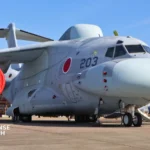
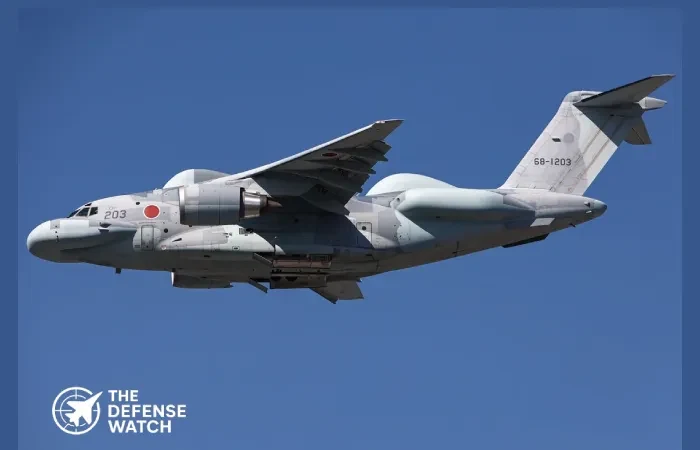
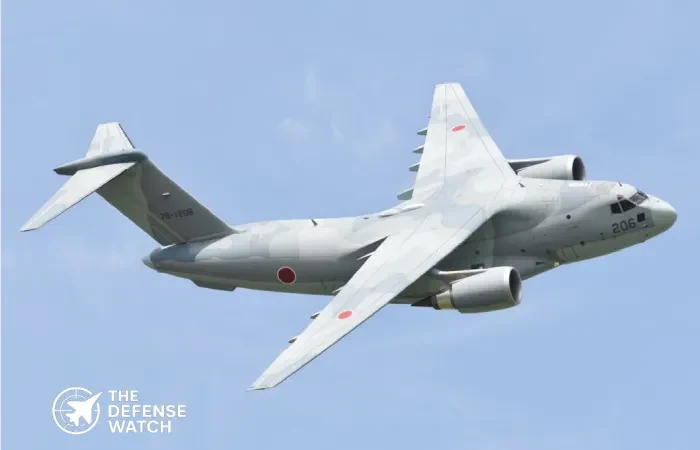
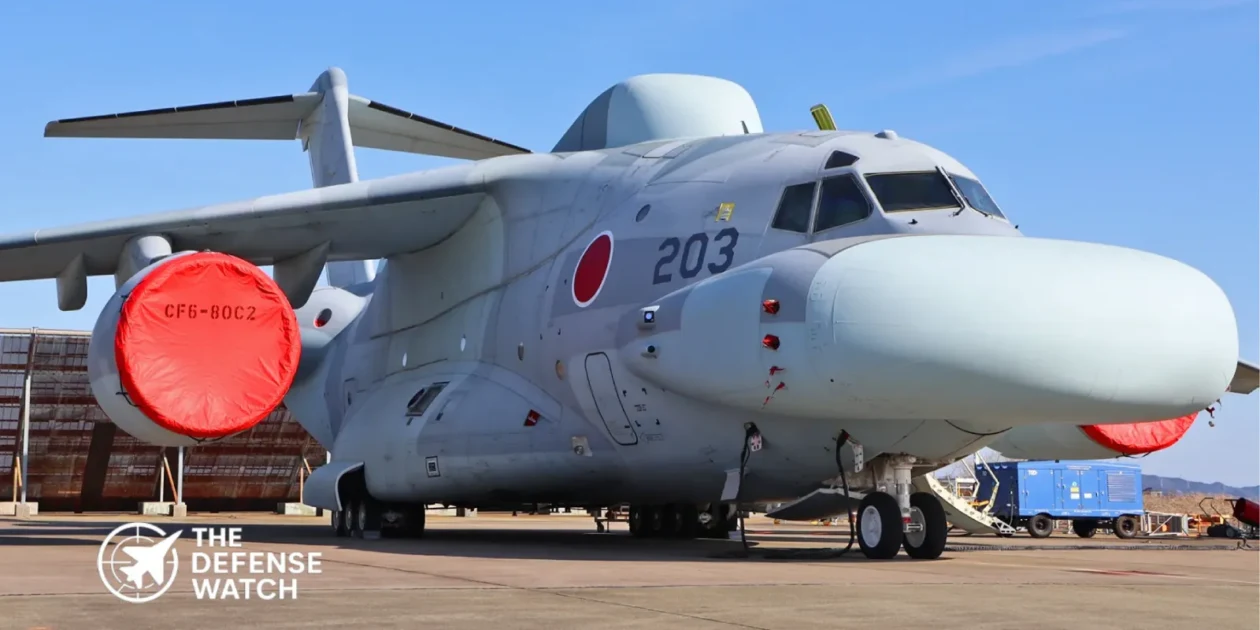
The EC-2 electronic warfare jet represents Japan’s next step in airborne electronic attack and stand-off disruption capabilities. Designed to counter advanced air defense systems, the aircraft specializes in jamming enemy radar, communications, and sensor networks from extended distances. This allows friendly forces to operate with reduced detection risk in contested environments.
Built as a dedicated electronic warfare platform, the EC-2 focuses on non-kinetic combat. Instead of relying on traditional weapons, it uses advanced electronic attack suites to degrade adversary capabilities. Its mission profile includes escort jamming, suppression of enemy air defenses, and support for joint operations across air, land, and maritime domains.
Manufacturer
The EC-2 is developed by Kawasaki Heavy Industries in collaboration with Japan’s defense sector. It is based on proven airframe technology but heavily modified to integrate next-generation electronic warfare systems. The aircraft supports the operational requirements of the Japan Air Self-Defense Force.
Speed and Range
The EC-2 is designed for long-endurance missions rather than high-speed interception. It operates at subsonic speeds, optimized for fuel efficiency and extended loiter time in operational zones. Its estimated range exceeds 4,000 km, enabling deep stand-off operations without entering heavily defended airspace.
The aircraft’s endurance allows it to maintain persistent electronic attack coverage, a critical advantage in modern multi-domain warfare.
Cost/Price
While exact figures remain undisclosed, the EC-2 is expected to cost between $150 million and $200 million per unit, depending on configuration and mission systems. The high cost reflects its advanced electronic warfare suite, specialized sensors, and mission integration systems.
Get real time update about this post category directly on your device, subscribe now.
Reviews
Disclaimer Note
The information provided on TheDefenseWatch.com is for general informational purposes only. While we strive to ensure the accuracy, completeness, and timeliness of our content regarding defense and aerospace products, technologies, and specifications, we cannot guarantee that all information is 100% accurate or up-to-date due to the evolving nature of military technology and classified data.TheDefenseWatch.com does not warrant the reliability, suitability, or availability of the information for any specific purpose. Users are advised to consult official sources, such as manufacturers, government publications, or defense agencies, for precise and verified data before making decisions based on our content.We are not affiliated with any defense manufacturers, governments, or military organizations mentioned. Opinions, reviews, and ratings reflect expert analysis but are subjective and should not be considered endorsements. TheDefenseWatch.com is not responsible for any errors, omissions, or consequences arising from the use of this website’s content.External links are provided for convenience and do not imply endorsement. TheDefenseWatch.com reserves the right to update or modify content without prior notice. By using this website, you agree to our Privacy & Cookies Policy.
New Arrivals

Popular Comparisons
-
 SIG XM7 Rifle vs M4: Key Differences and Performance Comparison
View Comparison →
SIG XM7 Rifle vs M4: Key Differences and Performance Comparison
View Comparison → -
Eurofighter Typhoon vs Rafale vs F-35: Fighter Jet Comparison
View Comparison →
-
J-20 vs F-22: Stealth Fighter Showdown Explained
View Comparison →
-
F-14 Tomcat vs Su-57: Can a Legend Challenge Russia’s Stealth Fighter?
View Comparison →
-
Su-35 vs Su-57: Russia’s Top Fighter Jets Compared
View Comparison →
-
Eurofighter Typhoon vs Su-57: Ultimate Fighter Jet Comparison
View Comparison →
-
Rafale vs Su-57: 4.5 Gen vs 5th Gen Fighter Jet Comparison
View Comparison →
-
Su-57 vs F-16 Fighting Falcon: Stealth vs Speed
View Comparison →
-
China vs Russia: J-20 Mighty Dragon vs Su-57 Felon Comparison
View Comparison →
-
Su-57 Felon vs F-22 Raptor: Stealth Air Superiority Face-Off
View Comparison →


- Japan’s EC-2 Electronic Warfare Jet Completes First Flight, Expanding Standoff Jamming Capabilities

- NASA’s X-59 Quiet Supersonic Jet Gears Up for Second Flight — A Giant Leap Toward Silent Boom AviationNASA X-59 Second Flight: Supersonic Aviation Reborn
- US Weapons Shipments to Taiwan Unaffected by Iran War, Officials Confirm
- USS Gerald R. Ford Fire Incident Exposes Crew Strain And Carrier Readiness Risks
- BAE Systems Awarded Contract To Modernize ALQ-221 Electronic Warfare System On U-2 Aircraft
- Boeing Secures $38.6M Contract To Upgrade South Korea P-8A Maritime Patrol Aircraft Software
- KBR Wins $95M Air Force Contract For Digital Engineering And Decision Support At Kirtland AFB
- Iran Guards Confirm Death Of Basij Chief In U.S.-Israeli Strike
- Iran Confirms Death Of Security Chief Ali Larijani Amid Heightened Regional Tensions
- US Conducts 6,000 Combat Sorties Against Iran Since Operation Epic Fury Began