- Home
- Catalog
- Tanks & Armored Vehicles
- Challenger 3 Main Battle Tank
Challenger 3 Main Battle Tank
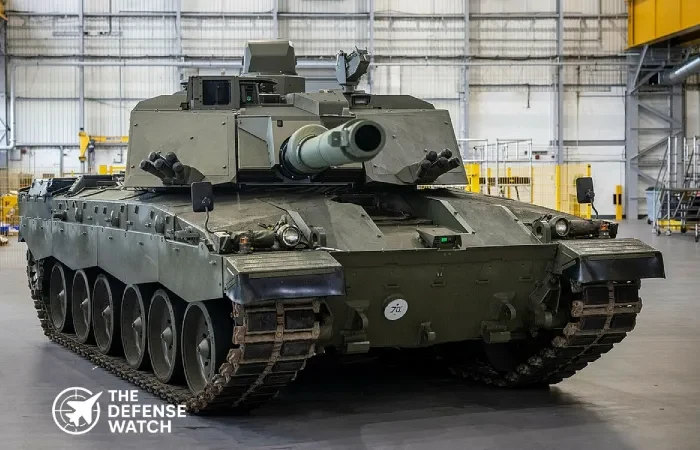
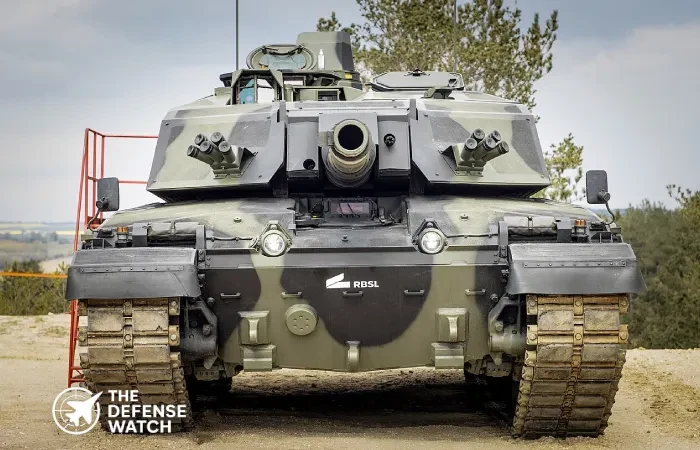
Full Specifications
1. General Information
| Vehicle Name | Challenger 3 |
| Type / Role | Main Battle Tank |
| Manufacturer | Rheinmetall BAE Systems Land |
| Country of Origin | United Kingdom |
| In Service | Entering service |
| Year Introduced | 2020s |
| Unit Cost | Approx. GBP 5.5 million |
| Crew | 4 |
2. Dimensions & Weight
| Length (Gun Forward) | 11.5 m |
| Width | 3.5 m |
| Height | 2.5 m |
| Weight | Approx. 66 tons |
| Ground Clearance | 0.5 m |
| Chassis Material | Steel with composite armor |
3. Performance
| Engine Type | Diesel |
| Engine Power | 1,200 hp |
| Power-to-Weight Ratio | ~18 hp per ton |
| Transmission | Automatic |
| Maximum Speed (Road) | 59 km/h |
| Maximum Speed (Off-Road) | 40 km/h |
| Operational Range | 500 km |
| Suspension Type | Hydrogas |
4. Armament
| Main Gun | 120 mm L55A1 Smoothbore |
| Ammunition Capacity | 42 rounds |
| Secondary Armament | 12.7 mm MG, 7.62 mm MG |
| Gun Elevation/Depression | +20° / −10° |
| Fire Control System | Digital FCS |
| Stabilization | Dual-axis |
| Rate of Fire | 6 rounds per minute |
5. Protection & Armor
| Armor Type | Composite Modular Armor |
| Reactive Armor | Optional |
| Active Protection System (APS) | Provisioned |
| NBC Protection | Yes |
| Smoke Grenade Launchers | Yes |
| Fire Suppression System | Automatic |
| Mine Protection | Enhanced belly armor |
6. Mobility & Capability
| Maximum Gradient | 60% |
| Side Slope | 40% |
| Trench Crossing | 2.8 m |
| Vertical Obstacle | 1.2 m |
| Fording Depth | 1.2 m |
| Turning Radius | Neutral turn |
| Amphibious Capability | No |
7. Sensors & Electronics
| Fire Control Computer | Yes |
| Thermal Imaging | Commander and gunner |
| Night Vision | Infrared |
| Laser Rangefinder | Yes |
| Ballistic Computer | Yes |
| Communication System | Secure digital radio |
| Battlefield Management System | Integrated |
8. Operational Info
| Service Branch | British Army |
| Primary Operator | United Kingdom |
| Combat Experience | None |
| Upgrade Packages | Challenger 3 |
| Export Status | Not exported |
| Production Status | Active upgrade program |
PROS
- NATO-standard 120 mm smoothbore gun
- Strong armor protection with growth potential
- Modern sensors and digital fire control
- Improved interoperability with U.S. and NATO forces
- Extended service life into the 2040s
CONS
- Limited fleet size
- Heavy weight affects strategic mobility
- Upgrade, not a new hull design
- No confirmed APS fit at entry into service
- High sustainment costs
Challenger 3 Main Battle Tank Modernization Program
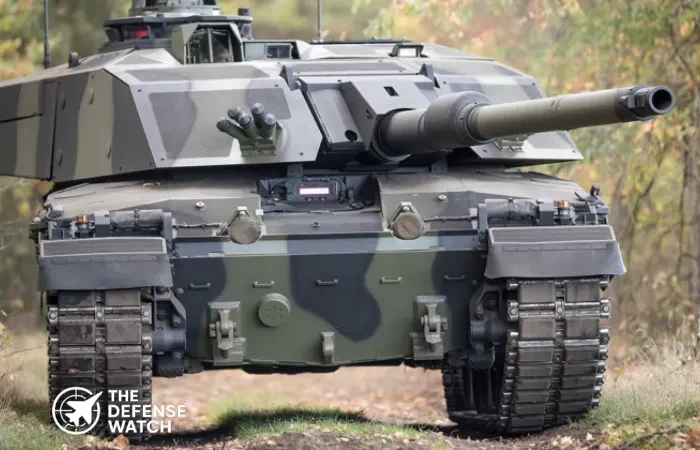
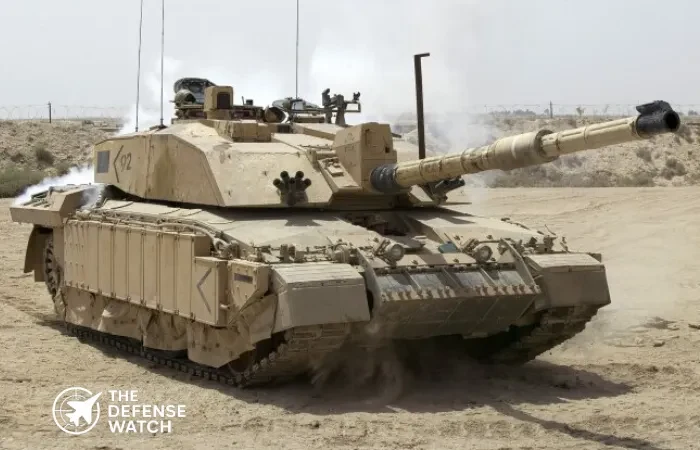
The Challenger 3 represents the United Kingdom’s most significant armored warfare upgrade in decades. Designed to keep British heavy armor credible well into the 2040s, the program transforms the legacy Challenger 2 into a fully modern main battle tank aligned with NATO standards.
Program Background and Purpose
Developed by Rheinmetall BAE Systems Land, Challenger 3 is a deep modernization rather than a clean-sheet design. The UK Ministry of Defence launched the program to address obsolescence in firepower, electronics, and survivability, lessons reinforced by recent high-intensity conflicts in Europe.
A key success story is the integration of a NATO-standard 120 mm smoothbore main gun. This change allows the British Army to share ammunition with U.S. and European allies, improving logistics and coalition readiness.
Capabilities and Technology
Challenger 3 replaces the older rifled gun with the 120 mm L55A1 smoothbore cannon, capable of firing advanced kinetic energy and multi-purpose rounds. A fully digital fire control system, commander and gunner thermal sights, and modern sensors improve first-round hit probability day or night.
Protection remains centered on advanced composite armor, with provision for modular upgrades and active protection systems. The platform retains a powerful diesel engine, providing solid mobility despite increased weight.
Operational Role
The tank is optimized for high-intensity combined arms combat, defensive operations, and deterrence missions in Europe. Challenger 3 ensures the British Army can operate alongside U.S. and NATO armored forces without capability gaps.
Challenger 3 Main Battle Tank Price
The Challenger 3 Main Battle Tank program is valued at roughly GBP 800 million for 148 upgraded vehicles. Per-unit costs vary due to refurbishment, new systems integration, training, and long-term support.
Get real time update about this post category directly on your device, subscribe now.
Reviews
Disclaimer Note
The information provided on TheDefenseWatch.com is for general informational purposes only. While we strive to ensure the accuracy, completeness, and timeliness of our content regarding defense and aerospace products, technologies, and specifications, we cannot guarantee that all information is 100% accurate or up-to-date due to the evolving nature of military technology and classified data.TheDefenseWatch.com does not warrant the reliability, suitability, or availability of the information for any specific purpose. Users are advised to consult official sources, such as manufacturers, government publications, or defense agencies, for precise and verified data before making decisions based on our content.We are not affiliated with any defense manufacturers, governments, or military organizations mentioned. Opinions, reviews, and ratings reflect expert analysis but are subjective and should not be considered endorsements. TheDefenseWatch.com is not responsible for any errors, omissions, or consequences arising from the use of this website’s content.External links are provided for convenience and do not imply endorsement. TheDefenseWatch.com reserves the right to update or modify content without prior notice. By using this website, you agree to our Privacy & Cookies Policy.
New Arrivals



Popular Comparisons
-
 SIG XM7 Rifle vs M4: Key Differences and Performance Comparison
View Comparison →
SIG XM7 Rifle vs M4: Key Differences and Performance Comparison
View Comparison → -
Eurofighter Typhoon vs Rafale vs F-35: Fighter Jet Comparison
View Comparison →
-
J-20 vs F-22: Stealth Fighter Showdown Explained
View Comparison →
-
F-14 Tomcat vs Su-57: Can a Legend Challenge Russia’s Stealth Fighter?
View Comparison →
-
Su-35 vs Su-57: Russia’s Top Fighter Jets Compared
View Comparison →
-
Eurofighter Typhoon vs Su-57: Ultimate Fighter Jet Comparison
View Comparison →
-
Rafale vs Su-57: 4.5 Gen vs 5th Gen Fighter Jet Comparison
View Comparison →
-
Su-57 vs F-16 Fighting Falcon: Stealth vs Speed
View Comparison →
-
China vs Russia: J-20 Mighty Dragon vs Su-57 Felon Comparison
View Comparison →
-
Su-57 Felon vs F-22 Raptor: Stealth Air Superiority Face-Off
View Comparison →


- Israel Launches Operation Roar Of The Lion, IDF Strikes Hundreds Of Targets In Western Iran

- US-Iran Escalation: Iran Strikes Multiple US Military Bases Across Gulf After US-Israeli Attacks
- Iran Launches Retaliatory Strikes Against Israel After Reported Western Air Campaign
- Airlines Cancel And Reroute Flights After US, Israel Strikes On Iran Impact Middle East Airspace
- US And Israel Launch Missile Strikes On Iran, Tehran And Multiple Cities Hit, Tehran Responds
- UK Nightfall Procurement Plans Face Government Silence Amid Air Defense Debate
- NASA Completes First Flight Of Laminar Flow Scaled Wing Design In Aerodynamic Breakthrough
- Singapore Orders Three G550 Maritime Surveillance Aircraft To Boost Early Warning Network
- Polish Defense Industry Backs EU SAFE Mechanism To Boost National Production And Exports
- How StormBreaker Integration Expands Super Hornet Precision Strike Options for The U.S. Navy