- Home
- Catalog
- Radar Systems
- AN/SPY-6(V)1 Air and Missile Defense Radar
AN/SPY-6(V)1 Air and Missile Defense Radar

Full Specifications
1. General Information
| Name / Designation | AN/SPY-6(V)1 Air and Missile Defense Radar |
| Manufacturer | Raytheon Technologies |
| Country of Origin | United States |
| Type / Role | Multi-mission shipborne AESA radar |
| Operational Domain | Naval |
| Status | In production and active deployment |
2. Technical Specifications
| Frequency Band | S-Band |
| Antenna Type | AESA (GaN-based) |
| Antenna Aperture / Size | Four fixed array faces, each ~14 ft in diameter |
| Power Output | Classified (Estimated >6 MW total ship power) |
| Detection Range | 300+ nautical miles |
| Tracking Range | 250–300 nautical miles |
| Target Tracking Capacity | 600+ targets |
| Elevation Coverage | 0°–90° |
| Azimuth Coverage | 360° |
| Beam Steering | Electronic |
| Pulse Repetition Frequency (PRF) | Variable, adaptive |
| Resolution | High (fine target discrimination) |
| Update Rate | Continuous, sub-second refresh |
| Clutter Rejection / ECCM | Advanced digital filtering, AI-assisted ECCM |
3. Functional Capabilities
| Primary Functions | Air and missile defense, surveillance, tracking |
| Target Types | Aircraft, cruise missiles, ballistic missiles, surface vessels |
| Integration / Networking | Aegis Combat System, CEC, Link-16 |
| IFF Capability | Integrated Mode 5/S |
| Data Link / Networking | Cooperative Engagement Capability (CEC) |
| Weather & Terrain Resistance | All-weather operation |
| Mobility / Mounting | Fixed shipborne installation |
4. Physical & Operational Characteristics
| Dimensions | Array: 14 ft diameter each |
| Weight | Approx. 120,000 lbs (full array set) |
| Power Requirement | Approx. 6 MW ship power |
| Cooling System | Liquid-cooled GaN modules |
| Operating Temperature Range | -40°C to +55°C |
| Deployment Platform | Arleigh Burke-class Flight III destroyers |
| Crew Requirement | Automated with minimal operator input |
5. Software & Processing
| Signal Processor Type | Digital beamforming processors |
| Processing Speed | Multi-gigaflop real-time computing |
| AI / Automation Features | Threat prioritization and adaptive tracking |
| Data Output / Interface | Ethernet-based, Aegis integration |
| Software Upgradeability | Modular, open-architecture design |
6. Operational History
| Year Introduced | 2023 (initial operational capability) |
| Users / Operators | U.S. Navy |
| Notable Deployments | USS Jack H. Lucas (DDG-125), USS Ted Stevens (DDG-128) |
| Successor / Predecessor | Replaces AN/SPY-1D(V) radar |
7. Export / Compliance Data
| Export Availability | Restricted under ITAR |
| ITAR / MTCR Status | Controlled |
| Cost Estimate | Estimated $300–500 million per ship set |
PROS
- Exceptional multi-mission capability (air, missile, and surface tracking)
- Modular and scalable radar architecture
- Superior GaN AESA performance and power efficiency
- Seamless integration with Aegis Combat System
- Enhanced ECCM and AI-based signal processing
CONS
- Extremely high production and integration costs
- Requires significant power and cooling infrastructure
- Limited export availability under ITAR
- High maintenance demands for complex AESA modules
- Deployment restricted to large naval vessels
AN/SPY-6(V)1 Air and Missile Defense Radar
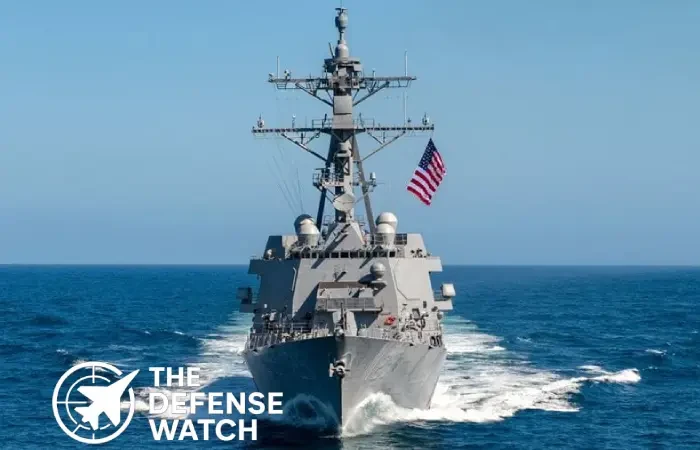
The AN/SPY-6(V)1 is the U.S. Navy’s next-generation Air and Missile Defense Radar (AMDR), developed by Raytheon Technologies to replace legacy SPY-1 systems aboard Arleigh Burke-class Flight III destroyers. Designed to counter evolving aerial and missile threats, it represents a major leap in maritime sensor technology, providing enhanced sensitivity, greater range, and superior discrimination across multiple targets simultaneously.
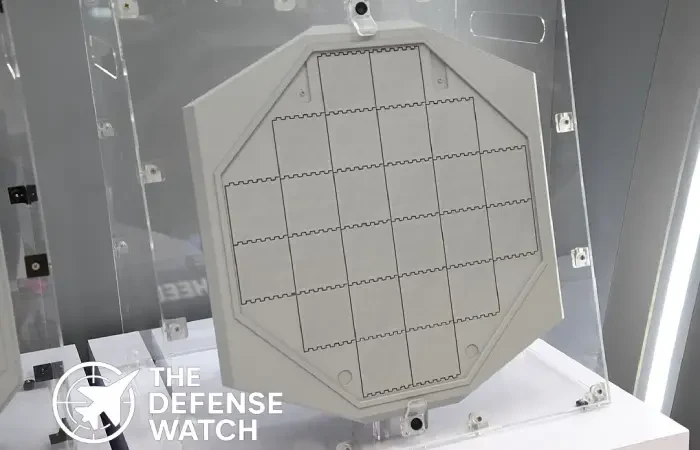
Powered by Active Electronically Scanned Array (AESA) radar technology, the SPY-6(V)1 operates in the S-band and uses Gallium Nitride (GaN) transmit/receive modules for increased power efficiency and reliability. Its modular radar blocks (Radar Modular Assemblies, or RMAs) allow scalable configurations, enabling integration on various surface ships such as destroyers, amphibious vessels, and aircraft carriers.
The system delivers comprehensive 360° coverage, tracking hundreds of targets in the air, on the surface, and in space. With a detection range exceeding 300 nautical miles, it can simultaneously detect ballistic missiles, cruise missiles, aircraft, and small surface threats. SPY-6’s advanced signal processing and AI-enabled algorithms enhance clutter rejection and electronic counter-countermeasure (ECCM) performance, ensuring operation in dense electronic environments.
Operationally, the radar is fully integrated with the Aegis Combat System, providing real-time fire control data for Standard Missile interceptors, such as the SM-2, SM-3, and SM-6. Its open-architecture software ensures future upgradeability, keeping pace with evolving threats and mission requirements.
AN/SPY-6(V)1 Radar Price in United States
As of 2025, pricing for the AN/SPY-6(V)1 radar is not publicly disclosed, but defense estimates suggest multi-million-dollar unit costs, depending on configuration and integration with ship systems.
FAQs
The AN/SPY-6(V)1 is the U.S. Navy’s next-generation air and missile defense radar system. It provides long-range detection and tracking of aircraft, cruise missiles, ballistic missiles, and surface threats. The radar equips Flight III Arleigh Burke-class destroyers, enhancing situational awareness and multi-mission capability.
The SPY-6(V)1 uses AESA technology with Gallium Nitride (GaN) modules, offering significantly greater sensitivity, range, and reliability than the legacy SPY-1 radar. It can detect smaller, faster, and more distant targets while tracking hundreds simultaneously. Its modular design also allows scalable integration across multiple ship classes.
The SPY-6(V)1 radar can detect and track targets at ranges exceeding 300 nautical miles, depending on target type and environmental conditions. Its long-range capability enables early warning and fire control for interceptors like the SM-3 and SM-6 missiles.
The radar is currently deployed aboard Arleigh Burke-class Flight III destroyers, including the USS Jack H. Lucas (DDG-125) and USS Ted Stevens (DDG-128). Future U.S. Navy vessels, such as aircraft carriers and amphibious ships, will also receive modular SPY-6 variants.
The AN/SPY-6 family is developed and produced by Raytheon Technologies (now RTX). The radar program is a cornerstone of U.S. Navy modernization efforts, enhancing fleet defense against next-generation threats such as hypersonic and ballistic missiles.
Get real time update about this post category directly on your device, subscribe now.
Reviews
Disclaimer Note
The information provided on TheDefenseWatch.com is for general informational purposes only. While we strive to ensure the accuracy, completeness, and timeliness of our content regarding defense and aerospace products, technologies, and specifications, we cannot guarantee that all information is 100% accurate or up-to-date due to the evolving nature of military technology and classified data.TheDefenseWatch.com does not warrant the reliability, suitability, or availability of the information for any specific purpose. Users are advised to consult official sources, such as manufacturers, government publications, or defense agencies, for precise and verified data before making decisions based on our content.We are not affiliated with any defense manufacturers, governments, or military organizations mentioned. Opinions, reviews, and ratings reflect expert analysis but are subjective and should not be considered endorsements. TheDefenseWatch.com is not responsible for any errors, omissions, or consequences arising from the use of this website’s content.External links are provided for convenience and do not imply endorsement. TheDefenseWatch.com reserves the right to update or modify content without prior notice. By using this website, you agree to our Privacy & Cookies Policy.


New Arrivals



Popular Comparisons
-
 SIG XM7 Rifle vs M4: Key Differences and Performance Comparison
View Comparison →
SIG XM7 Rifle vs M4: Key Differences and Performance Comparison
View Comparison → -
Eurofighter Typhoon vs Rafale vs F-35: Fighter Jet Comparison
View Comparison →
-
J-20 vs F-22: Stealth Fighter Showdown Explained
View Comparison →
-
F-14 Tomcat vs Su-57: Can a Legend Challenge Russia’s Stealth Fighter?
View Comparison →
-
Su-35 vs Su-57: Russia’s Top Fighter Jets Compared
View Comparison →
-
Eurofighter Typhoon vs Su-57: Ultimate Fighter Jet Comparison
View Comparison →
-
Rafale vs Su-57: 4.5 Gen vs 5th Gen Fighter Jet Comparison
View Comparison →
-
Su-57 vs F-16 Fighting Falcon: Stealth vs Speed
View Comparison →
-
China vs Russia: J-20 Mighty Dragon vs Su-57 Felon Comparison
View Comparison →
-
Su-57 Felon vs F-22 Raptor: Stealth Air Superiority Face-Off
View Comparison →


- Pentagon Considers Second B-21 Raider Production Line To Accelerate U.S. Stealth Bomber Expansion

- France Unveils 78,000-Ton Nuclear Aircraft Carrier France Libre With 40-Aircraft Capacity
- L3Harris Wins $77.8M U.S. Navy Contract for Kineto Tracking Mount Sustainment
- US Navy Awards $15.38B Columbia-Class Submarine Contract To Strengthen Nuclear Deterrent
- China Surges Production Capacity For J-20 And J-35 Stealth Fighters As Beijing Expands Fifth-Generation Fleet
- Netanyahu Announces Elimination Of Senior Iranian Figures In Air Campaign
- US Bombers Avoid European Airspace On Iran Bombing Runs In Strategic Route Shift
- Japan’s EC-2 Electronic Warfare Jet Completes First Flight, Expanding Standoff Jamming Capabilities
- NASA’s X-59 Quiet Supersonic Jet Gears Up for Second Flight — A Giant Leap Toward Silent Boom AviationNASA X-59 Second Flight: Supersonic Aviation Reborn
- US Weapons Shipments to Taiwan Unaffected by Iran War, Officials Confirm