America’s Nuclear Triad Modernization Enters Its Most Critical Phase Yet
The United States is preparing to execute the most sweeping overhaul of its nuclear deterrent since the Cold War arms race. The Trump administration’s fiscal year 2027 budget proposal dedicates $71.4 billion to modernizing all three legs of the U.S. nuclear triad — land-based missiles, submarine-launched ballistic missiles, and strategic bombers — along with the nuclear command, control, and communications architecture that ties them together. Secretary of War Pete Hegseth, testifying before the Senate Armed Services Committee on April 30, 2026, framed the stakes bluntly: get nuclear deterrence wrong, and everything else in the defense portfolio collapses with it.
- The FY2027 U.S. defense budget totals $1.5 trillion — the largest in American history — announced at the Pentagon on April 22, 2026.
- $71.4 billion is earmarked specifically for nuclear triad modernization and nuclear command, control, and communications (NC3) systems.
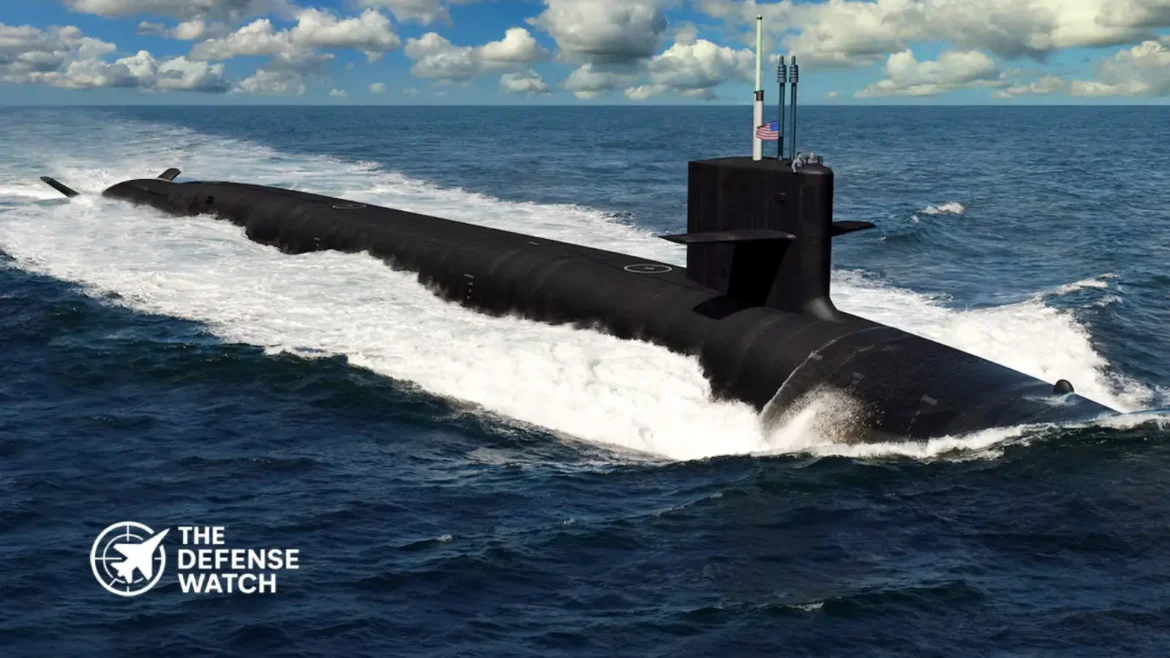
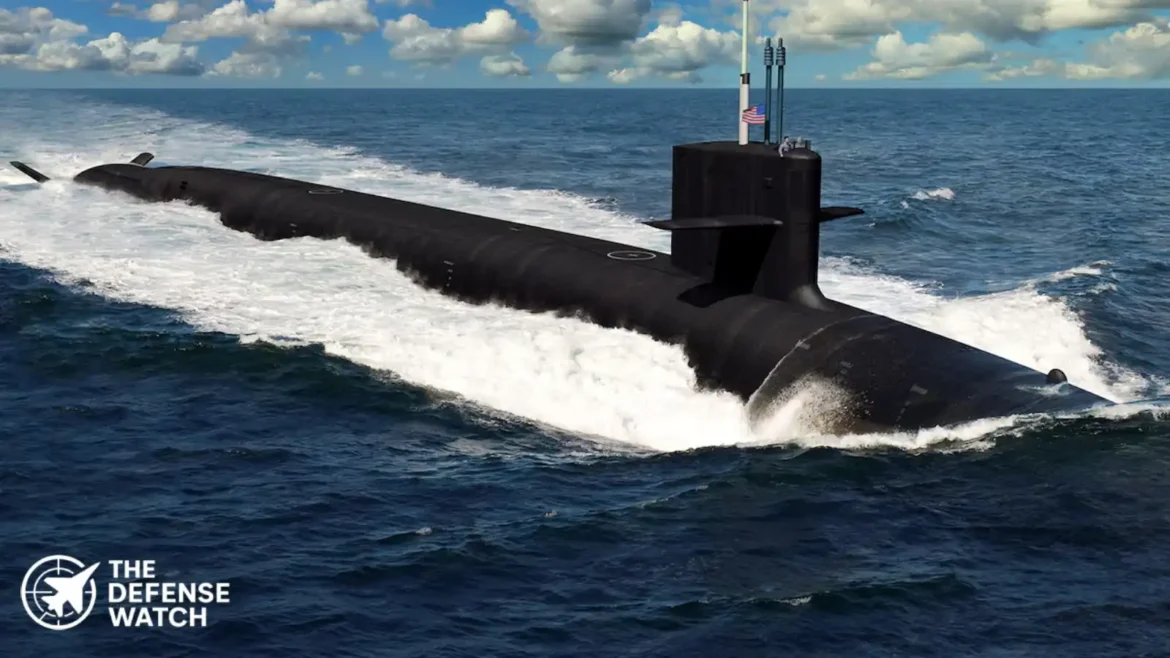
- The sea leg receives the largest share: $16.2 billion for the Columbia-class ballistic missile submarine program, including procurement of the fourth boat in class.
- The air leg receives $6.1 billion for the B-21 Raider stealth bomber and $1.5 billion for the Long-Range Standoff cruise missile (LRSO).
- The land leg receives $4.6 billion for the LGM-35 Sentinel ICBM program, which will field 400 deployed missiles across 450 hardened silos in five states.
The broader $1.5 trillion FY2027 budget request — described by the Pentagon as the largest defense spending proposal in U.S. history — was unveiled at a Pentagon briefing on April 22, 2026, and is intended to support service members and their families, secure the American homeland, modernize aging equipment, and rebuild the defense industrial base. Within that historic number, the nuclear modernization allocation stands apart for both its scale and its urgency.
Why $71 Billion — and Why Now?
The timing of this investment is not coincidental. Hegseth pointed specifically to Iran’s pursuit of nuclear weapons as a live demonstration of why the United States maintains a credible nuclear deterrent, and why that deterrent must remain modern and reliable. That argument carries fresh weight in May 2026, following a period of acute regional instability in the Middle East.
But Iran is only part of the calculus. The proposal is being framed as a response to near-peer competitors — specifically China and Russia — with the administration arguing that decades of underinvestment have left the United States’ strategic posture in need of urgent repair. Pentagon planners are not merely patching aging Cold War infrastructure; they are pursuing a near-simultaneous replacement of all three delivery systems that constitute the triad — a generational shift that no previous administration has attempted at this scale or speed.
Space Force Lt. Gen. Steven P. Whitney, the Pentagon’s joint staff director of force structure, described the request as a continuation of a “generational modernization effort” and highlighted $20.2 billion within the nuclear envelope specifically for NC3 architecture — ensuring missile warning capabilities and strengthening presidential decision-making authority over the country’s strategic forces.
The Air Leg: B-21 Raider and the Long-Range Standoff Weapon
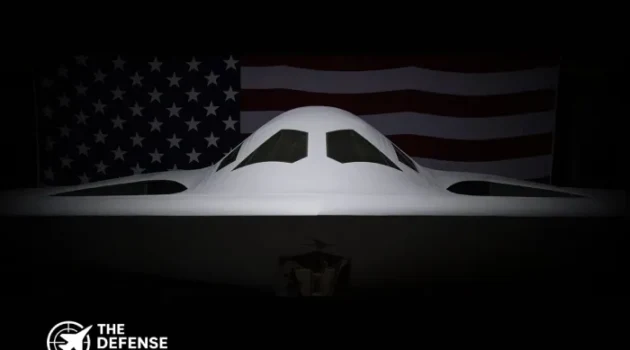
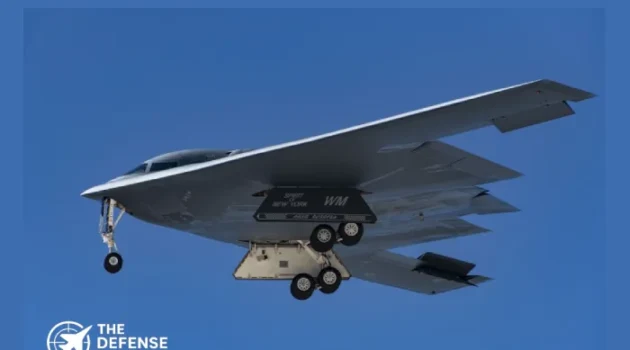
The air component of the triad receives $6.1 billion for the B-21 Raider program. The next-generation stealth bomber, developed by Northrop Grumman, is designed as a dual-capable platform able to deliver both conventional and nuclear payloads, and the U.S. Air Force plans to procure a minimum of 100 aircraft. FY2027 funding supports continued development, testing, production readiness, and low-rate initial production.
Alongside the Raider, $1.5 billion is allocated for the Long-Range Standoff (LRSO) cruise missile, the intended replacement for the aging AGM-86B air-launched cruise missile that currently arms the B-52H bomber fleet. Lifetime procurement costs for the LRSO have climbed to $11.8 billion — up from $9.8 billion projected just two years ago — with the FY2027 request nearly doubling the previous year’s enacted funding for the program.
The B-21 and LRSO together represent a penetrating strike-plus-standoff combination designed to defeat even the most advanced integrated air defense systems that adversaries like China and Russia are fielding. The combination gives U.S. Strategic Command far more flexibility than the bomber leg has historically offered.
The Land Leg: Sentinel ICBM Faces Cost Pressure but Moves Forward
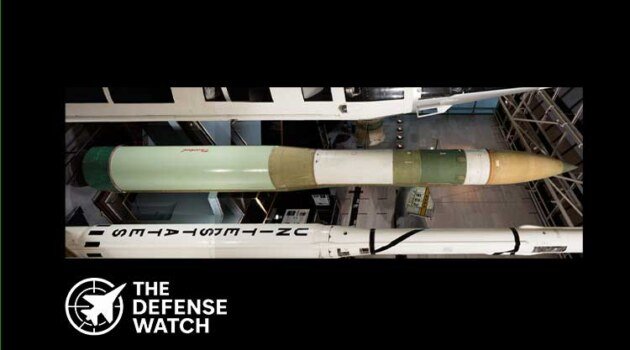
The FY2027 budget includes $4.6 billion for the LGM-35 Sentinel program, the long-overdue replacement for the Minuteman III intercontinental ballistic missile. When fully fielded, the Sentinel will deploy 400 operational warheads across 450 hardened silos in five states, requiring major infrastructure projects at each location.
The Air Force anticipates achieving Milestone B approval for the Sentinel by the end of 2026, following significant cost overruns and a program restructuring. Northrop Grumman broke ground in February 2026 on a test silo intended to validate a new modular silo launcher design. FY2027 silo construction funding of just over $1 billion is distributed across F.E. Warren Air Force Base in Wyoming ($632 million), Minot Air Force Base in North Dakota ($232 million), and Malmstrom Air Force Base in Montana ($138.5 million).
The Sentinel program has absorbed criticism for budget overruns and schedule delays, but its strategic logic remains intact. Minuteman III missiles have been in service since the early 1970s, and their guidance, propulsion, and communication systems are stretching the limits of maintainability. Delaying Sentinel further would eventually force a choice between operating an increasingly unreliable land leg or standing it down — neither of which is acceptable under current threat conditions.
The Sea Leg: Columbia-Class Submarine Leads the Pack
The nuclear sea leg receives the largest single allocation within the triad package: $16.2 billion for the Columbia-class ballistic missile submarine program. The FY2027 request funds procurement of the fourth Columbia-class boat as well as continued development work on the third submarine in the class, USS Groton, along with research, development, testing, evaluation, and investment in the submarine industrial base.
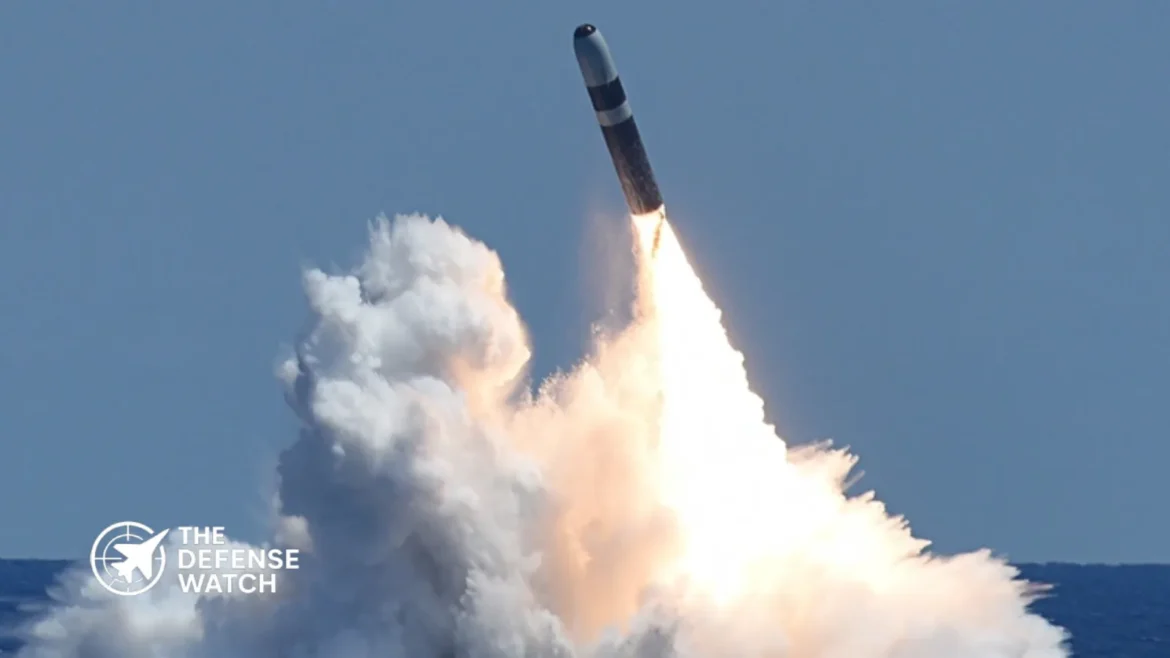
The Navy still expects to receive the first Columbia-class boat by the end of 2028, according to Vice Adm. Robert Gaucher, the service’s direct reporting portfolio manager for submarines. The Trident II ballistic missile — the sea leg’s primary weapon — is also moving from an R&D phase into full procurement in FY2027, with associated costs rising from $2.6 billion to $3.9 billion.
The Columbia program is arguably the most critical single investment in the entire nuclear enterprise. Submarines on patrol are essentially invulnerable to first-strike targeting, making the sea-based leg the ultimate guarantor of a retaliatory second strike. Any gap in Columbia deliveries as Ohio-class boats age out would create a structural vulnerability in the deterrent posture that adversaries could exploit in a crisis.
Industrial Base: The Hidden Variable in the Entire Budget
Secretary Hegseth told lawmakers that rebuilding the industrial base underpins everything else in the budget, arguing that the capacity of America’s private sector to deliver advanced weapons at speed and scale is itself a form of deterrence — and that for years, that capacity had been deliberately neglected.
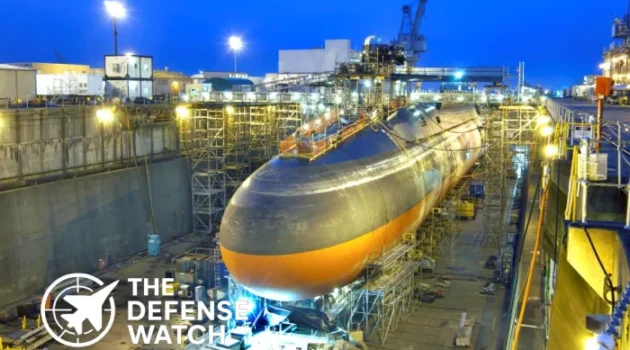
The central physical constraint confronting the entire modernization effort is the eroded state of the U.S. defense industrial base. The country has only two shipyards capable of building nuclear submarines, and expanding that capacity requires new dry docks, cranes, and skilled workers — a process that takes five to seven years before the first additional hull is laid.
This is the quiet risk buried inside an otherwise impressive budget document. Money is necessary but not sufficient. The Sentinel silo construction program requires specialized contractors; the Columbia program requires a submarine workforce that has been contracting for decades. Throwing capital at a depleted industrial ecosystem does not instantly restore it, and the Pentagon’s own planners acknowledge that the timeline for full capacity restoration extends well beyond a single budget cycle.
What the Numbers Mean Strategically
The $71.4 billion nuclear allocation should be read in the context of a broader strategic signaling exercise as much as a procurement plan. The FY2027 request represents a 44 percent increase over prior defense spending levels and is structured as $1.15 trillion in base discretionary funding plus $350 billion in supplemental funding for what the administration terms “critical presidential priorities.
Peer competitors are watching. China is expanding its own land-based ICBM force at a pace that U.S. intelligence has described as alarming, while Russia continues to invest in hypersonic nuclear delivery vehicles designed to penetrate missile defense systems. The United States is not modernizing the triad in a vacuum — it is doing so in an environment where nuclear competition is actively accelerating on multiple fronts simultaneously.
The key analytical question for 2026 and beyond is not whether the budget request is bold enough — it clearly is — but whether the industrial, congressional, and fiscal conditions exist to execute it on the timelines the administration has set. History suggests that nuclear modernization programs routinely slip, cost more than projected, and encounter technical obstacles that no budget document anticipates. The Sentinel program has already demonstrated that lesson once. Whether the political will exists to sustain $71 billion in annual nuclear investment through successive budget cycles remains an open question that Capitol Hill will ultimately answer.
FAQs
What is the total nuclear triad funding in the FY2027 defense budget?The FY2027 budget allocates $71.4 billion specifically to the nuclear triad and nuclear command, control, and communications systems — the largest such investment in the current modernization cycle.
What is the B-21 Raider’s role in the nuclear triad?The B-21 Raider is the air leg of the triad. It is a dual-capable stealth bomber that can deliver both conventional and nuclear weapons, including the Long-Range Standoff cruise missile. The Air Force plans to procure a minimum of 100 aircraft.
What is the LGM-35 Sentinel and why is it significant?The Sentinel is the replacement for the Minuteman III ICBM, which has been in service since the early 1970s. The FY2027 budget includes $4.6 billion to continue its development, and the program will eventually deploy 400 operational missiles across 450 hardened silos in five states.
How does the Columbia-class submarine fit into the nuclear triad?The Columbia-class submarine is the sea leg of the triad. Submarines on patrol are considered the most survivable component of the deterrent because they are extremely difficult to detect and target. The FY2027 budget allocates $16.2 billion to the program, including procurement of the fourth boat.
Will the $1.5 trillion defense budget actually pass Congress?The proposal is a request, not an enacted appropriation. The request faces significant debate over its scale, with analysts noting industrial base constraints, competing fiscal priorities, and bipartisan concerns about the national debt. Congressional passage at the full requested level is considered unlikely, though substantial portions are expected to be approved.

Pentagon Requests $71.4 Billion for Nuclear Triad Modernization in FY27 Budget
The War Department’s fiscal year 2027 budget proposal allocates $71.4 billion specifically for nuclear triad modernization — the largest publicly disclosed, consolidated nuclear investment in recent memory — covering every leg of America’s strategic deterrent force.
Secretary of War Pete Hegseth presented the proposal during Senate Armed Services Committee testimony, framing the nuclear triad as the irreducible foundation of U.S. deterrence strategy.
- The FY27 War Department budget request totals $1.5 trillion, with $71.4 billion earmarked specifically for nuclear triad modernization and nuclear command, control, and communications (NC3).
- The B-21 Raider stealth bomber receives $6.1 billion; the Air Force plans a minimum procurement of 100 aircraft to anchor the air leg of the triad.
- $4.6 billion funds the LGM-35 Sentinel ICBM to replace the aging Minuteman III, covering 400 deployed missiles and 450 hardened silos across five states.
- The sea-based leg receives $16.2 billion for the Columbia-class ballistic missile submarine, including procurement of the fourth boat and continued development of the USS Groton.
- Secretary of War Pete Hegseth told the Senate Armed Services Committee that nuclear deterrence is the foundational priority: “If you get that wrong, you get everything else wrong.”
The Big Picture
The United States has operated a nuclear triad — land-based ICBMs, submarine-launched ballistic missiles, and nuclear-capable bombers — since the Cold War. That architecture has not been simultaneously modernized across all three legs in decades.
Russia completed a near-total overhaul of its strategic nuclear forces over the past fifteen years, fielding the RS-28 Sarmat heavy ICBM, the Borei-class ballistic missile submarines, and continuing Tu-160M bomber production. China has expanded its nuclear arsenal at a pace that U.S. Strategic Command officials have publicly described as unprecedented, with projections placing Beijing’s warhead count above 1,000 by 2030.
Against that backdrop, Washington’s FY27 commitment signals that the administration views nuclear recapitalization not as an incremental upgrade cycle, but as an urgent strategic imperative.
What’s Happening
The $1.5 trillion War Department budget proposal, unveiled during Hegseth’s April 30 Senate Armed Services Committee appearance, dedicates $71.4 billion to modernizing all three legs of the U.S. nuclear capability and nuclear command, control, and communications infrastructure.
In the air domain, the budget allocates $6.1 billion for the B-21 Raider, the nation’s sixth-generation dual-capable penetrating strike stealth bomber, with the Air Force planning a minimum procurement of 100 aircraft.
The ground-based leg receives $4.6 billion for the LGM-35 Sentinel intercontinental ballistic missile program, which will replace the Minuteman III with 400 operationally deployed missiles and 450 hardened silos across five states, plus supporting infrastructure.
Around $1.5 billion covers the long-range standoff cruise missile, which will replace the AGM-86B air-launched cruise missile carried by bomber aircraft.
The sea-based leg draws $16.2 billion for the Columbia-class ballistic missile submarine program, covering procurement of the fourth boat in the class, continued development of the third vessel — the USS Groton — and investment in the submarine industrial base.
Why It Matters
The simultaneous recapitalization of all three triad legs is operationally significant for a specific reason: each leg contributes a different layer of survivability and deterrence resilience.
ICBMs provide rapid response and force the adversary to allocate an enormous number of warheads just to suppress them. Ballistic missile submarines are the most survivable leg, operating covertly and holding adversary populations and infrastructure at continuous risk. Bomber aircraft provide the most flexible leg — visible, recallable, and deployable in ways that send unmistakable political signals without crossing the threshold of use.
Allowing any single leg to atrophy creates exploitable gaps. The Minuteman III has been in service since 1970. The Ohio-class submarines that the Columbia-class will replace are approaching the limits of their extended service lives. The B-2 Spirit bomber fleet, at just 20 aircraft, is too small for a peer-conflict deterrence posture.
Hegseth told lawmakers that a nation’s ability to build, innovate, and support warfighters at speed and scale is the foundation upon which deterrence and survival rest — framing industrial base investment as inseparable from nuclear capability.
Strategic Implications
The $71.4 billion nuclear allocation carries implications that extend beyond hardware procurement.
The explicit inclusion of NC3 — nuclear command, control, and communications — within the investment envelope signals awareness that modernized delivery platforms are only as credible as the communications architecture that commands and authenticates their use. Adversary investments in electronic warfare, cyber capabilities, and anti-satellite weapons have placed legacy NC3 systems under growing stress.
The decision to pursue the long-range standoff cruise missile alongside the B-21 Raider reflects a layered penetration strategy. Standoff weapons allow bombers to deliver nuclear effects without entering the dense integrated air defense systems that both Russia and China have developed specifically to defeat penetrating aircraft. Pairing a new standoff missile with a stealth bomber produces compounding deterrence complexity for any adversary planner.
Hegseth pointed directly to Iran’s nuclear ambitions as illustrative of why the U.S. maintains strategic deterrence, noting the constraints a nuclear-armed Iran would impose on American freedom of action in the region. That framing is analytically important: it positions the triad not merely as a great-power tool but as the backstop that enables conventional operations globally.
Competitor View
Moscow will interpret the FY27 nuclear investment through the lens of its own modernization trajectory. Russia has used its nuclear arsenal rhetorically throughout the conflict in Ukraine, and U.S. triad recapitalization confirms for Russian strategic planners that Washington remains committed to first-tier nuclear parity.
Beijing’s calculus is more complex. China is currently in an expansion phase, building toward a force posture that requires the United States to plan against a near-peer nuclear adversary in the Pacific for the first time. The Columbia-class investment — particularly the industrial base component — signals that the U.S. is sustaining its most survivable strike capability for decades, complicating Chinese targeting assumptions in any future crisis scenario.
For both Moscow and Beijing, the sheer fiscal scale of the commitment — $71.4 billion in a single budget year — communicates political will as much as it does military capability.
What To Watch Next
class submarine program and shipyard capacity challenges here.
Congressional authorization and appropriations remain the next critical gates. The Senate Armed Services Committee hearing marked the opening of a legislative process that will involve significant negotiation over line-item allocations. The Sentinel program, in particular, has faced cost growth scrutiny, and lawmakers may probe whether the $4.6 billion FY27 allocation is sufficient given contractor performance history.
The B-21 Raider program at Northrop Grumman’s Palmdale facility will remain under close watch as the Air Force moves from developmental testing toward low-rate initial production decisions. The aircraft completed flight testing milestones at Edwards Air Force Base in September 2025, and procurement cadence will determine how quickly the bomber fleet reaches operationally meaningful numbers.
On the sea leg, Columbia-class production capacity at General Dynamics Electric Boat is a known constraint. Industrial base investment funded in this budget is intended to address workforce and supplier limitations that have affected Virginia-class submarine production timelines — a bottleneck that must be resolved before Columbia-class delivery schedules can be held.
Capability Gap
The FY27 nuclear investment explicitly targets a set of aging systems that have accumulated risk over decades of deferred recapitalization.
The Minuteman III was designed in the 1960s. Sustaining it beyond its intended service life has required expensive life-extension efforts that address symptoms rather than the underlying obsolescence of the weapon system itself. The Sentinel program aims to close that gap with a modern ICBM designed from the ground up for the current threat environment, with updated command and control interfaces and hardened infrastructure.

The Ohio-class submarines, while still operationally capable, are reaching the service life boundaries set by their reactor plants and pressure hull certification timelines. Columbia-class production must proceed on schedule to prevent a gap in sea-based deterrence coverage.
Realistic limitations exist. The Sentinel program’s cost trajectory and the Columbia-class shipyard constraint are not resolved by a budget request alone. Congressional oversight, industrial execution, and workforce development will determine whether the investment translates into delivered capability within the timelines the department requires.
The Bottom Line
America’s $71.4 billion nuclear triad modernization commitment in FY27 represents the most comprehensive — and fiscally consequential — recapitalization of U.S. strategic deterrence in a generation, and its success will hinge as much on industrial execution and congressional support as on the budget figures Secretary Hegseth placed before the Senate.

- $15.38 billion contract modification awarded to General Dynamics Electric Boat.
- Supports Columbia-class submarine design, lead yard services, and sustainment.
- Reinforces US nuclear deterrence through next-generation ballistic missile submarines.
- Work spans multiple US states and continues through June 2035.
- Includes major investment in submarine industrial base and supplier development.
Columbia-Class Submarine Contract Strengthens US Nuclear Deterrence
The Columbia-class submarine contract marks a $15.38 billion investment by the US Navy to expand design, sustainment, and industrial base support for its next-generation ballistic missile submarines, reinforcing the nation’s sea-based nuclear deterrent.
The award to General Dynamics Electric Boat reflects a long-term commitment to replacing the aging Ohio-class fleet with a more survivable and technologically advanced platform.
The Big Picture
The United States is executing one of its most critical nuclear modernization programs. The Columbia-class submarine will serve as the backbone of the sea-based leg of the nuclear triad well into the 2080s.
The Navy plans to build 12 Columbia-class submarines to replace 14 Ohio-class boats. Despite fewer hulls, each Columbia submarine is designed for higher availability, reducing the total number required for continuous at-sea deterrence.
This contract highlights how nuclear modernization is not limited to platforms alone. It includes workforce expansion, supplier stability, and long-term industrial resilience.
What’s Happening
The Naval Sea Systems Command awarded a $15,383,494,792 contract modification to General Dynamics Electric Boat under an existing agreement.
The funding supports:
- Additional Columbia-class design work
- Lead yard services
- Sustainment planning
- Integrated enterprise initiatives
- Supplier and industrial base development
Work will take place across multiple locations, including Connecticut, Virginia, California, Wisconsin, Rhode Island, and others, with completion expected by June 2035.
Funding comes primarily from the Fiscal Year 2026 National Sea-Based Deterrence Fund, alongside smaller allocations from research and industrial base accounts.
Why It Matters
The Columbia-class program directly underpins US nuclear deterrence strategy.
Ballistic missile submarines provide the most survivable leg of the nuclear triad. They operate undetected, ensuring a secure second-strike capability even in the event of a large-scale attack.
This contract ensures continuity in design and production while addressing a known risk: delays in submarine construction due to industrial bottlenecks.
The inclusion of supplier development funding signals that the Pentagon is actively managing risks in the submarine supply chain.
Strategic Implications
The Columbia-class submarine contract strengthens US military readiness in several ways.
First, it ensures schedule stability. The Navy cannot afford delays because the Ohio-class submarines are nearing the end of their service lives.
Second, it reinforces deterrence credibility. A modern, stealthy submarine force signals to adversaries that the US retains a reliable second-strike capability.
Third, it supports simultaneous production of Columbia- and Virginia-class submarines. This dual production demand places significant strain on shipyards and suppliers, making industrial base investment essential.
Competitor View
China and Russia closely monitor US nuclear modernization efforts.
China continues expanding its own sea-based deterrent with the Jin-class and future Type 096 submarines. A sustained US investment in Columbia-class boats reinforces strategic balance in the Indo-Pacific.
Russia maintains a modernized fleet of Borei-class ballistic missile submarines. Moscow will likely view this contract as confirmation that the US remains committed to long-term nuclear parity.
Both competitors are expected to interpret this move as part of a broader US effort to maintain credible deterrence across all domains.
What To Watch Next
Several milestones will define the program’s trajectory:
- Continued construction progress on the lead Columbia-class submarine
- Supplier capacity improvements across the industrial base
- Integration of advanced systems and quieting technologies
- Alignment of Columbia and Virginia production schedules
Any disruption in these areas could affect delivery timelines, making industrial performance a key indicator.
Capability Gap
The Columbia-class program addresses a critical gap created by the aging Ohio-class fleet.
Ohio-class submarines are reaching the limits of their service life, and life extensions are no longer sufficient to guarantee long-term deterrence.
However, the program faces constraints:
- Limited shipyard capacity
- Workforce shortages in skilled trades
- Complex supply chains for nuclear-grade components
The contract’s industrial base funding directly targets these challenges, but execution risk remains.
The Bottom Line
The Columbia-class submarine contract secures the foundation of US nuclear deterrence while exposing the growing importance of industrial capacity in modern defense strategy.