F/A-18 Hornet vs F-35 Lightning II — Legacy Multirole Fighter vs Stealth Jet
The F/A-18 Hornet vs F-35 Lightning II comparison captures a pivotal moment in U.S. naval aviation — a clash between legacy multirole versatility and 5th-generation stealth innovation. The Hornet, born during the Cold War, has served as a reliable backbone for U.S. and allied air forces for over four decades. The F-35, meanwhile, represents the cutting edge of digital warfare, stealth technology, and joint-force integration.
As the U.S. Navy transitions from the F/A-18E/F Super Hornet to the F-35C, understanding this evolution matters not only for American defense strategy but also for allies worldwide who depend on U.S. airpower standards and interoperability.
Specifications Comparison: F/A-18 Hornet vs F-35 Lightning II
| Specification | F/A-18C/D Hornet | F-35A Lightning II |
|---|---|---|
| Manufacturer | McDonnell Douglas / Boeing | Lockheed Martin |
| Type | Multirole Fighter | Stealth Multirole Fighter |
| Crew | 1–2 | 1 |
| Top Speed | Mach 1.8 (1,190 mph) | Mach 1.6 (1,200 mph) |
| Combat Range | ~1,100 km | ~1,200 km |
| Ceiling | 50,000 ft | 50,000 ft |
| Powerplant | 2 × GE F404-GE-402 (36,000 lbf) | 1 × Pratt & Whitney F135 (43,000 lbf) |
| Armament Capacity | Up to 13,700 lb | Up to 18,000 lb (internal + external) |
| Unit Cost (USD) | ~$65 million | ~$85 million (F-35A), ~$115M (F-35C) |
| Service Entry | 1983 | 2015 |
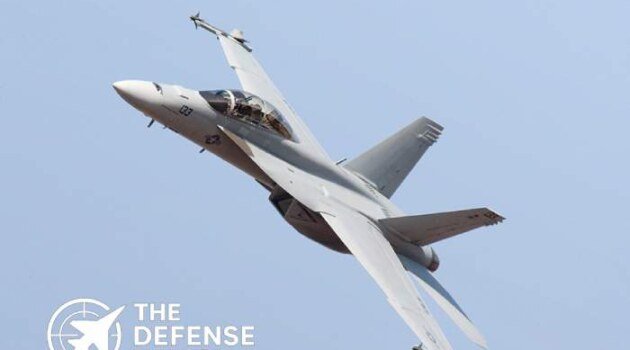
F/A-18E/F Super Hornet Fighter Jet vs F-35 Lightning II Fighter Jet

Design & Technology
The F/A-18 Hornet reflects late 20th-century design priorities: carrier durability, redundancy, and cost-effective performance. Its twin engines enhance safety for naval operations, and its modular structure allows easy maintenance — a major reason for its longevity.
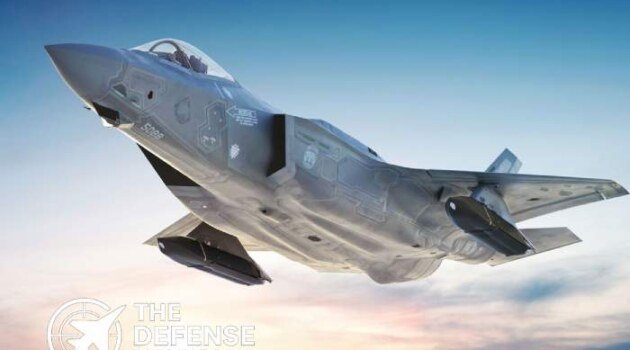
The F-35 Lightning II, on the other hand, embodies the digital revolution. Its stealth shaping, radar-absorbent coatings, and internal weapons bays drastically reduce radar cross-section. The F-35’s sensor fusion, powered by the AN/APG-81 AESA radar, Distributed Aperture System (DAS), and Electro-Optical Targeting System (EOTS), gives pilots unmatched situational awareness.
In modern contested airspace, stealth and data sharing often outweigh speed or maneuverability — and this is where the F-35 reigns supreme.
Firepower & Performance
Both aircraft are formidable multirole platforms, but their weapon configurations differ sharply.
F/A-18 Hornet Armament:
- M61A1 Vulcan 20mm cannon
- Up to 9 external hardpoints for AIM-9 Sidewinder, AIM-120 AMRAAM, AGM-84 Harpoon, AGM-65 Maverick, JDAM, and laser-guided bombs
- External fuel tanks for extended range
F-35 Lightning II Armament:
- GAU-22/A 25mm cannon
- Internal bays for AIM-120D AMRAAM, AIM-9X, GBU-31 JDAM, and SDB II precision bombs
- External pylons (“Beast Mode”) for additional payload when stealth isn’t essential
In a f35 vs f18 dogfight, the F/A-18’s agility and twin-engine thrust remain advantages in visual-range combat. Yet beyond visual range (BVR), the F-35’s advanced sensors, stealth, and electronic warfare suite ensure first detection — and often, first kill.
Operational Range & Mobility
The Hornet’s design emphasizes short carrier takeoffs and recoveries, making it ideal for naval operations. Its twin engines also enhance survivability in combat zones.
The F-35, with superior fuel efficiency and aerodynamic stealth shaping, offers slightly more range. The F-35B’s STOVL variant (used by the Marine Corps) can operate from amphibious assault ships and forward bases — offering unmatched deployment flexibility.
Combat Effectiveness & Real-World Use
The F/A-18 Hornet has seen extensive combat — from Operation Desert Storm to Libya and Afghanistan. Its record proves its reliability and versatility in both strike and air defense roles.
The F-35 Lightning II, while newer, has already flown operational missions with the U.S. Air Force, Marine Corps, Navy, and allied forces such as Israel and the U.K.. Israeli F-35s have reportedly conducted stealth strikes against Iranian targets, demonstrating real-world survivability and lethality.
According to the U.S. Navy, the F-35C’s integration with Nimitz-class and Ford-class carriers enhances joint-force capability by combining stealth with networked ISR (Intelligence, Surveillance, Reconnaissance).
(Source: U.S. Navy official site)
Cost & Export Value
The F/A-18 Hornet remains one of America’s most exported fighters, serving in Australia, Canada, Finland, and Switzerland. Its affordability and adaptability made it a NATO favorite.
The F-35, however, dominates the 21st-century export landscape, with over a dozen allied operators including Japan, South Korea, Italy, Poland, and Finland. The program’s global logistics and maintenance network, while complex, ensures standardized training and interoperability.
While the F-35’s unit cost has decreased over time, its operational cost per hour remains higher — estimated at around $35,000–$40,000, compared to the Hornet’s $25,000–$28,000.
Analysis: Legacy vs Future
The f18 hornet vs f35 comparison highlights a shift in warfare philosophy. The Hornet was built to win through versatility and pilot skill. The F-35 wins through information dominance — leveraging stealth, sensors, and shared data across the joint battle network.
Strengths of the F/A-18 Hornet:
- Proven reliability
- Easier maintenance and lower costs
- Strong dogfighting performance
Strengths of the F-35 Lightning II:
- Stealth and sensor fusion
- Networked situational awareness
- Precision strike capability in denied airspace
The U.S. military sees the F-35 not merely as a replacement, but as a force multiplier that enhances the capability of all other platforms — including the F/A-18 Super Hornet, F-22 Raptor, and naval assets.
Conclusion: Two Generations of Airpower
In the F/A-18 vs F-35 debate, there is no true loser. The Hornet remains a symbol of Cold War engineering excellence and enduring versatility, while the F-35 represents the digital future of combat aviation.
- For high-threat, contested airspace, the F-35 Lightning II holds a decisive edge.
- For carrier flexibility and cost efficiency, the F/A-18 Hornet still excels.
Ultimately, the transition from Hornet to Lightning II reflects America’s broader evolution from hardware-centric warfare to data-driven air dominance.
FAQ: F/A-18 Hornet vs F-35 Lightning II
The F/A-18 Hornet has a slightly higher top speed (Mach 1.8) compared to the F-35 (Mach 1.6), though the F-35’s stealth advantage outweighs raw speed in modern combat.
Yes, the F-35C is gradually replacing the F/A-18 in U.S. Navy carrier wings, but the Super Hornet will remain in service for at least another decade.
The F-35 is a 5th-generation stealth aircraft, making it vastly harder to detect than the 4th-generation F/A-18.
The F/A-18 costs about $65 million per unit, while the F-35 ranges between $85–115 million depending on the variant.
At close range, the F/A-18’s agility gives it a fighting chance, but the F-35’s stealth and superior sensors likely ensure it never needs to engage that close.
Get real time update about this post category directly on your device, subscribe now.
| |
| Price | |
| Our Rating | |
| Manufacturer | Boeing Defense Lockheed Martin |
| Category | Fighter Jets Fighter Jets |
General Information
| Name | F/A-18E/F Super Hornet F-35 Lightning II |
| Manufacturer | Boeing Defense, Space & Security Lockheed Martin |
| Country of Origin | United States United States |
| Type / Role | Carrier-based Multirole Fighter Multirole Stealth Fighter |
| Generation | 4.5th 5th |
| Status | In active service In Service |
| First Flight | November 29, 1995 December 15, 2006 |
| Introduction / In Service Since | 1999 2015 |
| Number Built | Over 600 units 1,200+ (as of 2025) |
| Operators | U.S. Navy, Royal Australian Air Force USA, UK, Japan, Israel, Italy, Australia, and others |
Dimensions & Structure
| Length | 60.3 ft (18.5 m) 51.2 ft (15.6 m) |
| Wingspan | 44.9 ft (13.6 m) 35 ft (10.7 m) |
| Height | 16 ft (4.9 m) 14.4 ft (4.38 m) |
| Wing Area | 500 sq ft (46.5 m²) 460 sq ft (42.7 m²) |
| Empty Weight | 32,081 lb (14,552 kg) 29,300 lb (13,300 kg) |
| Maximum Takeoff Weight (MTOW) | 66,000 lb (29,937 kg) 70,000 lb (31,800 kg) |
| Internal Weapons Bay | None 2 (up to 5,700 lb payload) |
| External Hardpoints | 11 6–10 (up to 18,000 lb total) |
Performance
| Maximum Speed | Mach 1.8 Mach 1.6 |
| Range | 1,275 nm (2,346 km) 1,380 mi (2,220 km) |
| Combat Radius | 390 nm (722 km) ~670 mi (1,080 km) |
| Service Ceiling | 50,000 ft (15,240 m) 50,000 ft (15,240 m) |
| Rate of Climb | 44,882 ft/min 45,000 ft/min |
| Thrust-to-Weight Ratio | 0.93 0.87 |
| G Limits | +7.5 / -3.0 +9 |
Powerplant
| Engine Type | Afterburning Turbofan Pratt & Whitney F135-PW-100 |
| No. of Engines | 2 1 |
| Thrust (each) | 22,000 lbf 43,000 lbf |
| Thrust Vectoring | No Yes (on F-35B variant) |
| Fuel Capacity | 14,400 lb (internal) ~18,500 lb internal |
Armament
| Gun | 1× M61A2 20mm Vulcan GAU-22/A 25mm cannon (F-35A) |
| Missiles (Air-to-Air) | AIM-9X, AIM-120 AMRAAM AIM-120 AMRAAM, AIM-9X |
| Missiles (Air-to-Ground) | AGM-84 Harpoon, AGM-88 HARM AGM-154 JSOW, AGM-158 JASSM |
| Bombs | JDAM, Paveway, Mk 83/84 JDAM, Paveway II/III, SDB I/II |
| Hardpoints | 11 6 external + 2 internal |
| Payload Capacity | 9,920 kg (21,900 lb) ~18,000 lb |
Avionics & Systems
| Radar | AN/APG-79 AESA AN/APG-81 AESA |
| Radar Range | 150+ km ~150+ km |
| Electronic Warfare (EW) System | AN/ALQ-214 IDECM AN/ASQ-239 suite |
| Targeting System | ATFLIR pod EOTS (Electro-Optical Targeting System) |
| Helmet Display | JHMCS HMDS Gen III |
| Navigation | GPS/INS GPS/INS with terrain-following |
| Autopilot / AI Assistance | Advanced Flight Control System Advanced flight management |
| Communication | Secure data link, Link 16 MADL & Link 16 secure data links |
Stealth & Technology
| Radar Cross Section (RCS) | Reduced (~1 m² class) ~0.001 m² |
| Stealth Features | Radar-absorbent materials, shaping RAM coating, internal weapons bay, edge alignment |
| Infrared Signature Reduction | Moderate Yes |
| Sensor Fusion | Partial Full 360° data integration |
| Networking Capabilities | NIFC-CA compatible Distributed data-sharing with allied units |
Variants
| Special Export Versions | Australia (F/A-18F) F-35I (Israel), F-35A (Japan), etc. |
Operational History
| Major Conflicts / Deployments | Iraq, Afghanistan, Syria, Libya Middle East operations (Iraq, Syria) |
| Notable Operators | U.S. Navy, Australia USAF, USN, USMC, RAF, IDF |
| Combat Proven? | Yes Yes |
| Mission Types | Air superiority, strike, SEAD, maritime patrol Air superiority, strike, SEAD, ISR |
Cost & Program
| Unit Cost | ~$70–80 million (Block III) $80–100 million (variant-dependent) |
| Development Cost | ~$5 billion ~$400 billion (program total) |
| Program Name | F/A-18E/F Super Hornet Program Joint Strike Fighter (JSF) |
| Funding Countries | United States, Australia USA, UK, Italy, Netherlands, Canada, Australia, etc. |
Additional Information
| Upgrades Planned | Block III digital cockpit, network enhancements Block 4, Tech Refresh 3 |
| Future Replacement | F/A-XX (Next Generation Air Dominance) NGAD (2035+) |
| Export Restrictions | U.S. ITAR-controlled U.S. FMS approval required |
| Notable Achievements | Over two decades of carrier dominance Widest global fighter program in history |
| Competitors | Rafale M, F-35C, MiG-29K Su-57, J-20, Tempest, KF-21 |

|
Disclaimer Note
The information provided on TheDefenseWatch.com is for general informational purposes only. While we strive to ensure the accuracy, completeness, and timeliness of our content regarding defense and aerospace products, technologies, and specifications, we cannot guarantee that all information is 100% accurate or up-to-date due to the evolving nature of military technology and classified data.TheDefenseWatch.com does not warrant the reliability, suitability, or availability of the information for any specific purpose. Users are advised to consult official sources, such as manufacturers, government publications, or defense agencies, for precise and verified data before making decisions based on our content.We are not affiliated with any defense manufacturers, governments, or military organizations mentioned. Opinions, reviews, and ratings reflect expert analysis but are subjective and should not be considered endorsements. TheDefenseWatch.com is not responsible for any errors, omissions, or consequences arising from the use of this website’s content.External links are provided for convenience and do not imply endorsement. TheDefenseWatch.com reserves the right to update or modify content without prior notice. By using this website, you agree to our Privacy & Cookies Policy.
New Arrivals


Popular Comparisons
-
 SIG XM7 Rifle vs M4: Key Differences and Performance Comparison
View Comparison →
SIG XM7 Rifle vs M4: Key Differences and Performance Comparison
View Comparison → -
Eurofighter Typhoon vs Rafale vs F-35: Fighter Jet Comparison
View Comparison →
-
J-20 vs F-22: Stealth Fighter Showdown Explained
View Comparison →
-
F-14 Tomcat vs Su-57: Can a Legend Challenge Russia’s Stealth Fighter?
View Comparison →
-
Su-35 vs Su-57: Russia’s Top Fighter Jets Compared
View Comparison →
-
Eurofighter Typhoon vs Su-57: Ultimate Fighter Jet Comparison
View Comparison →
-
Rafale vs Su-57: 4.5 Gen vs 5th Gen Fighter Jet Comparison
View Comparison →
-
Su-57 vs F-16 Fighting Falcon: Stealth vs Speed
View Comparison →
-
China vs Russia: J-20 Mighty Dragon vs Su-57 Felon Comparison
View Comparison →
-
Su-57 Felon vs F-22 Raptor: Stealth Air Superiority Face-Off
View Comparison →


- Pentagon Considers Second B-21 Raider Production Line To Accelerate U.S. Stealth Bomber Expansion

- France Unveils 78,000-Ton Nuclear Aircraft Carrier France Libre With 40-Aircraft Capacity
- L3Harris Wins $77.8M U.S. Navy Contract for Kineto Tracking Mount Sustainment
- US Navy Awards $15.38B Columbia-Class Submarine Contract To Strengthen Nuclear Deterrent
- China Surges Production Capacity For J-20 And J-35 Stealth Fighters As Beijing Expands Fifth-Generation Fleet
- Netanyahu Announces Elimination Of Senior Iranian Figures In Air Campaign
- US Bombers Avoid European Airspace On Iran Bombing Runs In Strategic Route Shift
- Japan’s EC-2 Electronic Warfare Jet Completes First Flight, Expanding Standoff Jamming Capabilities
- NASA’s X-59 Quiet Supersonic Jet Gears Up for Second Flight — A Giant Leap Toward Silent Boom AviationNASA X-59 Second Flight: Supersonic Aviation Reborn
- US Weapons Shipments to Taiwan Unaffected by Iran War, Officials Confirm