F-35 vs Su-57 Felon — How Stealth Jets from Russia Stack Up
In an era of renewed great-power competition, the contest between stealth fighters has renewed relevance. The comparison between the U.S. F-35 Lightning II and Russia’s Su-57 Felon isn’t just about raw performance — it reflects differing doctrines, supply chains and geopolitical alliances. For the U.S., the F-35 embodies coalition interoperability, network-centric warfare and widespread export reach. For Russia, the Su-57 is a statement of aerospace ambition and independent power-projection amid sanctions and shifting alliances.
Why this matters: as NATO, allied nations and U.S. regional partners assess 5th-generation platforms, the “F-35 vs Su-57” debate influences procurement, tactics and strategic choices. Moreover, with Russia publicizing the Su-57’s development and export prospects, U.S. defense watchers must understand how the “su 57 vs f35” match-up plays out on paper — and what it might mean in real-world operations.
Specifications Table
Here’s a side-by-side comparison of key specs for the F-35 and Su-57:
| Specification | F-35 Lightning II | Su-57 Felon |
|---|---|---|
| Crew | 1 pilot | 1 pilot |
| Service Entry | ~2016 (US service operational) | ~2019 (Russian service) |
| Maximum Speed | ~Mach 1.6 (≈1,930 km/h) | Up to ~Mach 2.0–2.1 (≈2,600 km/h) |
| Combat/ Ferry Range | ~2,220 km (≈1,380 mi) | ~5,000 km (≈3,100 mi) |
| Payload / Max Take-off | ~31,800 kg MTOW (≈70,107 lb) | ~37,000 kg MTOW (≈81,571 lb) |
| Engines | 1 × Pratt & Whitney F135 | 2 × Saturn/AL-41F1 (future upgrade Izdeliye 30) ( |
| Role / Philosophy | Multirole strike / stealth penetration | Multirole/air-dominance with emphasis on manoeuvre & speed |
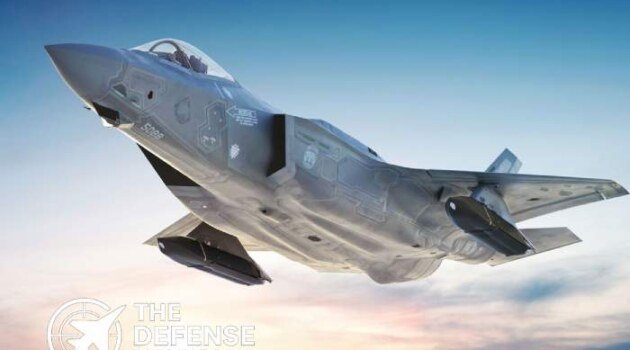
F-35 Lightning II Fighter Jet vs SU-57 Felon Stealth Fighter

Design & Technology
Stealth, Sensors & Signature
The F-35 was built around stealth first: compact single-engine design, internal weapon bays and radar-absorbent materials. As one analysis puts it: “The F-35 specializes in low radar-cross-section operations.” Its design emphasizes all-aspect low observability (LO) — that is, attempts to reduce radar signature from front, side and rear.
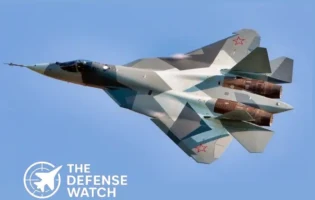
The Su-57, by contrast, combines stealth features with high performance. The aircraft emphasizes super-maneuverability (via thrust vectoring), twin-engine redundancy and a larger airframe that allows larger internal bays. According to Wikipedia: “Designed from the outset as a multirole aircraft … internal payload capacity … and advanced sensor systems.” But analysts caution that its radar-cross-section is likely higher than the F-35’s, particularly from non-front aspects.
Airframe, Aerodynamics & Engines
The F-35’s single-engine design simplifies maintenance and lowers weight; it was optimized for stealth and strike rather than air-superiority dogfights. The Su-57’s twin-engine design gives it greater thrust, higher top speeds and potentially super-cruise capability (sustained supersonic without afterburner) which the F-35 lacks. The Su-57 also features thrust-vectoring nozzles and advanced flight control for high angle-of-attack manoeuvres.
Avionics & Sensor Fusion
In the sensor domain, the F-35 holds a strong advantage in terms of proven integration, coalition interoperability and sensor fusion (such as the Helmet-Mounted Display, DAS – Distributed Aperture System). For the Su-57, its full avionics suite is still being matured; Russian sources suggest powerful radar arrays (including side-mounted AESA and L-band sensors) giving potential advantages against stealth aircraft in some scenarios.
Firepower & Performance
Weapons Load-out
The F-35 carries a variety of air-to-air and air-to-ground munitions, leveraging internal bays for stealth missions while also supporting external stores in less contested airspaces. For example, it can carry internal missiles like the AIM-120, bombs like the GBU series, and link Sensors across networks.
The Su-57 benefits from large internal weapon bays and a larger airframe that enables heavier loads. Open-source commentary suggests it can carry up to six large missiles internally, and moreover supports Russian long-range missiles (such as the R-37M) and integration with unmanned assets.
Engagement & Accuracy
In beyond-visual-range (BVR) engagements, the F-35’s stealth and sensor-fusion suite gives it a strong edge: “Most simulations have the F-35 coming out ahead … due to the American plane’s supposed superior detection avoidance and situational awareness.” In close-range manoeuvres, the Su-57’s higher thrust-to-weight ratio and super-maneuverability give it an advantage.
Mission Flexibility
The F-35 is built from the ground up for strike-penetration, ISR (intelligence-surveillance-reconnaissance) and networked operations. The Su-57 appears more optimized for air superiority or interception in contested airspace, with a design reflecting Russian doctrine emphasizing kinematic performance and multi-role capability.
Operational Range & Mobility
The Su-57 offers significantly greater range and endurance on paper: data suggests a combat radius up to ~3,100 mi (≈5,000 km) versus around ~1,380 mi (≈2,220 km) for the F-35. This gives the Russian jet the potential to project power further without refueling.
However, in practice mobility also involves logistics, maintenance, tactical deployment and network support. The F-35 benefits from an established global logistics engine (for the U.S. and allied states), high sortie rates and mature support infrastructure. The Su-57, by contrast, remains in early production with limited fleet size, which constrains its operational availability and mobility in large-scale deployments.
Combat Effectiveness
Real-World Use
The F-35 is fielded in large numbers across multiple U.S. services and allied nations; it has operational combat experience (for example Israeli use) and has been integrated into coalition operations. The Su-57, while officially in service, has had limited combat exposure and few international exports to date.
Doctrine & Training
The U.S. doctrine emphasizes penetrating contested air-space, using stealth and data link networks, and employing the F-35 as both shooter and “quarterback” linking other assets. The Russian side emphasizes air-dominance, large missile loads and high‐kinematic performance to intercept or engage adversary aircraft in disputed zones.
Availability & Reliability
Production maturity and fleet readiness matter. The F-35 program, despite cost and maintenance challenges, has achieved widespread deployment. The Su-57’s production rollout has been slower and its operational metrics less transparent. Some defense analysts caution about its readiness levels.
Cost & Export Value
Price & Production
The F-35 program is one of the most costly defense program in history, though unit costs have declined over time. Its export footprint is global (NATO allies, partner nations) and its supply chain spans multiple nations. The Su-57 is comparatively cheaper to acquire (per many open-source citations) and Russia is actively marketing it to export markets.
Geopolitical Impact & Export Reach
The F-35 serves as a strategic asset for U.S. alliances: countries acquiring the F-35 integrate into a long-term network and logistics ecosystem aligned with U.S./NATO. The “f35 vs su57 who wins” debate matters also because export decisions signal alignment. Russia’s offer of the Su-57 to countries such as India demonstrates its intent to build alternative security partnerships.
Maintenance, Upgrades & Lifecycle
Long-term sustainment is key. The F-35 has scheduled upgrades for decades, with a predictable roadmap (Block 4, sensor improvements, etc.). The Su-57 program’s upgrade path (e.g., new engines) is progressing but less mature in export or large-fleet terms.
Analysis
When it comes to “F-35 vs Su-57”, each system brings distinct strengths and trade-offs.
Strengths of the F-35:
- Superior stealth in contested environments and strong sensor-fusion / network integration.
- Proven export success and support ecosystem across many allied nations.
- Optimised for coalition operations, strike missions and ISR roles.
Weaknesses of the F-35:
- Lower top speed and range compared to the Su-57 on paper.
- High lifecycle cost, complex logistics, and in some cases readiness metrics less than ideal.
- By design, it is not built primarily for extreme air-superiority dogfights; it avoids close-in knife fights.
Strengths of the Su-57:
- Higher speed, greater range and potential for super-maneuverability favouring air-dominance engagements.
- Larger internal payload capacity and potential to carry heavier/hypersonic missiles.
- Lower acquisition cost (for some markets) and alternative export path.
Weaknesses of the Su-57:
- Stealth is not believed to match the F-35’s all-aspect low-RCS capability.
- Production numbers are small, combat record limited, and maintenance/support infrastructure less mature.
- Integration into networked coalition operations and logistics may lag allied systems.
How the U.S. military views each system:
From a U.S. perspective, the F-35 is the core platform for members of the U.S.-led alliance architecture; its mission is to ensure dominance in contested airspace, target hostile air-defenses, and link sensors across platforms. Conversely, the Su-57 is viewed as a potential asymmetric threat — capable of challenging air-superiority missions or intercepting advanced air assets, particularly in scenarios where Russia defends its near-airspace or projects power. The “su 57 vs f35” debate underscores the need for the U.S. and NATO to maintain edge not just in performance metrics but in numbers, integration and support infrastructure.
Conclusion
In the F-35 vs Su-57 comparison, there is no simple “winner” — but clear contextual advantages.
- If the mission is penetrating high-grade air defences, networked strike operations and coalition interoperability in contested zones, the F-35 holds the edge.
- If the scenario is long-range power projection, high-end air-superiority fights, or where speed, range and missile load dominate, the Su-57 shows strong potential.
In practice, the F-35 is better suited for the U.S. defense ecosystem and allied operations today. The Su-57 remains a credible and evolving adversary, especially as production scales and export customers grow. For U.S. defence watchers, the key takeaway is that maintaining quantitative superiority, integration of sensors and logistics remains as critical as raw aircraft performance.
FAQ
In a beyond-visual-range engagement where detection counts, the F-35 is likely to hold the advantage due to its stealth and sensor-fusion. But if the engagement closes to short-range manoeuvring, the Su-57’s kinematic performance gives it a chance. Many analysts caution it depends heavily on tactics, environment and pilot training.
The F-35 has a smaller radar cross-section (all-aspect stealth) and is optimized for low observability across multiple radar bands. The Su-57 possesses stealth features but likely has a higher RCS from side/rear aspects; it prioritizes performance alongside LO.
The F-35 has a much larger export base, strong allied integration and a mature supply chain. The Su-57 is just beginning exports and faces production and infrastructure challenges. The export decisions also carry geopolitical weight — acquisition of F-35 often means alignment with U.S./NATO, whereas acquiring Su-57 may signal alternative alliances.
While the Su-57 is operational in limited numbers, it has not yet been deployed widely in high-intensity combat like the F-35 has (at least in allied operations). Readiness, fleet size and export quantities remain smaller.
Yes, for the U.S. and its allied network, the F-35 remains the better choice today: it is integrated, proven, and aligned with current doctrine. However, the evolving capabilities of rivals (such as the Su-57) mean that continuous upgrade, numbers and logistics will determine future superiority — not just aircraft specs in isolation.
Get real time update about this post category directly on your device, subscribe now.

| |
| Price | |
| Our Rating | |
| Manufacturer | Lockheed Martin Sukhoi |
| Category | Fighter Jets Fighter Jets |
General Information
| Name | F-35 Lightning II Su-57 Felon |
| Manufacturer | Lockheed Martin Sukhoi (UAC) |
| Country of Origin | United States Russia |
| Type / Role | Multirole Stealth Fighter Stealth Air Superiority / Multirole Fighter |
| Generation | 5th Fifth |
| Status | In Service In limited service |
| First Flight | December 15, 2006 January 29, 2010 |
| Introduction / In Service Since | 2015 2020 |
| Number Built | 1,200+ (as of 2025) ~25 (as of 2025) |
| Operators | USA, UK, Japan, Israel, Italy, Australia, and others Russian Aerospace Forces |
Dimensions & Structure
| Length | 51.2 ft (15.6 m) 20.1 m |
| Wingspan | 35 ft (10.7 m) 14.1 m |
| Height | 14.4 ft (4.38 m) 4.6 m |
| Wing Area | 460 sq ft (42.7 m²) 78.8 m² |
| Empty Weight | 29,300 lb (13,300 kg) ~18,000 kg |
| Maximum Takeoff Weight (MTOW) | 70,000 lb (31,800 kg) 35,000 kg |
| Internal Weapons Bay | 2 (up to 5,700 lb payload) Yes (2 main, 2 side) |
| External Hardpoints | 6–10 (up to 18,000 lb total) 6 |
Performance
| Maximum Speed | Mach 1.6 Mach 2.0 |
| Range | 1,380 mi (2,220 km) 3,500 km |
| Combat Radius | ~670 mi (1,080 km) 1,500 km |
| Service Ceiling | 50,000 ft (15,240 m) 20,000 m |
| Rate of Climb | 45,000 ft/min 330 m/s |
| Thrust-to-Weight Ratio | 0.87 ~1.15 |
| G Limits | +9 +9 |
Powerplant
| Engine Type | Pratt & Whitney F135-PW-100 Saturn AL-41F1 (future Izdeliye 30) |
| No. of Engines | 1 2 |
| Thrust (each) | 43,000 lbf 142 kN with afterburner |
| Thrust Vectoring | Yes (on F-35B variant) Yes (3D) |
| Fuel Capacity | ~18,500 lb internal ~10,300 kg |
Armament
| Gun | GAU-22/A 25mm cannon (F-35A) 30mm GSh-30-1 cannon |
| Missiles (Air-to-Air) | AIM-120 AMRAAM, AIM-9X R-77, R-74M, R-37M |
| Missiles (Air-to-Ground) | AGM-154 JSOW, AGM-158 JASSM Kh-38, Kh-59MK2 |
| Bombs | JDAM, Paveway II/III, SDB I/II KAB-250/500 guided bombs |
| Hardpoints | 6 external + 2 internal 10 (internal + external) |
| Payload Capacity | ~18,000 lb 10,000 kg |
Avionics & Systems
| Radar | AN/APG-81 AESA N036 Byelka AESA |
| Radar Range | ~150+ km 400+ km |
| Electronic Warfare (EW) System | AN/ASQ-239 suite L402 Himalayas suite |
| Targeting System | EOTS (Electro-Optical Targeting System) IRST + radar fusion |
| Helmet Display | HMDS Gen III Integrated HMS |
| Navigation | GPS/INS with terrain-following GLONASS-based INS |
| Autopilot / AI Assistance | Advanced flight management Partial autonomy |
| Communication | MADL & Link 16 secure data links Encrypted data link |
Stealth & Technology
| Radar Cross Section (RCS) | ~0.001 m² Estimated 0.3–0.5 m² |
| Stealth Features | RAM coating, internal weapons bay, edge alignment Internal bays, radar-absorbing composites |
| Infrared Signature Reduction | Yes Engine shielding, cooling design |
| Sensor Fusion | Full 360° data integration Multi-source integration |
| Networking Capabilities | Distributed data-sharing with allied units Limited data-link interoperability |
Variants
| Special Export Versions | F-35I (Israel), F-35A (Japan), etc. Su-57E (Export Variant) |
Operational History
| Major Conflicts / Deployments | Middle East operations (Iraq, Syria) Syria (testing), Ukraine (limited combat) |
| Notable Operators | USAF, USN, USMC, RAF, IDF Russia |
| Combat Proven? | Yes Limited |
| Mission Types | Air superiority, strike, SEAD, ISR Air superiority, strike, reconnaissance |
Cost & Program
| Unit Cost | $80–100 million (variant-dependent) ~$45–50 million (estimated) |
| Development Cost | ~$400 billion (program total) ~$10 billion (PAK FA program) |
| Program Name | Joint Strike Fighter (JSF) PAK FA (T-50) |
| Funding Countries | USA, UK, Italy, Netherlands, Canada, Australia, etc. Russia |
Additional Information
| Upgrades Planned | Block 4, Tech Refresh 3 New radar, Izdeliye 30 engines |
| Future Replacement | NGAD (2035+) None planned (Su-57M modernization) |
| Export Restrictions | U.S. FMS approval required Controlled by Russian government |
| Notable Achievements | Widest global fighter program in history Russia’s first fifth-gen stealth jet |
| Competitors | Su-57, J-20, Tempest, KF-21 F-22 Raptor, F-35 Lightning II, J-20 Mighty Dragon |
|
Disclaimer Note
The information provided on TheDefenseWatch.com is for general informational purposes only. While we strive to ensure the accuracy, completeness, and timeliness of our content regarding defense and aerospace products, technologies, and specifications, we cannot guarantee that all information is 100% accurate or up-to-date due to the evolving nature of military technology and classified data.TheDefenseWatch.com does not warrant the reliability, suitability, or availability of the information for any specific purpose. Users are advised to consult official sources, such as manufacturers, government publications, or defense agencies, for precise and verified data before making decisions based on our content.We are not affiliated with any defense manufacturers, governments, or military organizations mentioned. Opinions, reviews, and ratings reflect expert analysis but are subjective and should not be considered endorsements. TheDefenseWatch.com is not responsible for any errors, omissions, or consequences arising from the use of this website’s content.External links are provided for convenience and do not imply endorsement. TheDefenseWatch.com reserves the right to update or modify content without prior notice. By using this website, you agree to our Privacy & Cookies Policy.
New Arrivals


Popular Comparisons
-
 SIG XM7 Rifle vs M4: Key Differences and Performance Comparison
View Comparison →
SIG XM7 Rifle vs M4: Key Differences and Performance Comparison
View Comparison → -
Eurofighter Typhoon vs Rafale vs F-35: Fighter Jet Comparison
View Comparison →
-
J-20 vs F-22: Stealth Fighter Showdown Explained
View Comparison →
-
F-14 Tomcat vs Su-57: Can a Legend Challenge Russia’s Stealth Fighter?
View Comparison →
-
Su-35 vs Su-57: Russia’s Top Fighter Jets Compared
View Comparison →
-
Eurofighter Typhoon vs Su-57: Ultimate Fighter Jet Comparison
View Comparison →
-
Rafale vs Su-57: 4.5 Gen vs 5th Gen Fighter Jet Comparison
View Comparison →
-
Su-57 vs F-16 Fighting Falcon: Stealth vs Speed
View Comparison →
-
China vs Russia: J-20 Mighty Dragon vs Su-57 Felon Comparison
View Comparison →
-
Su-57 Felon vs F-22 Raptor: Stealth Air Superiority Face-Off
View Comparison →


- Pentagon Considers Second B-21 Raider Production Line To Accelerate U.S. Stealth Bomber Expansion

- France Unveils 78,000-Ton Nuclear Aircraft Carrier France Libre With 40-Aircraft Capacity
- L3Harris Wins $77.8M U.S. Navy Contract for Kineto Tracking Mount Sustainment
- US Navy Awards $15.38B Columbia-Class Submarine Contract To Strengthen Nuclear Deterrent
- China Surges Production Capacity For J-20 And J-35 Stealth Fighters As Beijing Expands Fifth-Generation Fleet
- Netanyahu Announces Elimination Of Senior Iranian Figures In Air Campaign
- US Bombers Avoid European Airspace On Iran Bombing Runs In Strategic Route Shift
- Japan’s EC-2 Electronic Warfare Jet Completes First Flight, Expanding Standoff Jamming Capabilities
- NASA’s X-59 Quiet Supersonic Jet Gears Up for Second Flight — A Giant Leap Toward Silent Boom AviationNASA X-59 Second Flight: Supersonic Aviation Reborn
- US Weapons Shipments to Taiwan Unaffected by Iran War, Officials Confirm