- Home
- Catalog
- Compare
- F-15EX Eagle vs F-35 Lightning II — Power, Payload, and Technology Showdown in 2025
F-15EX Eagle vs F-35 Lightning II — Power, Payload, and Technology Showdown in 2025
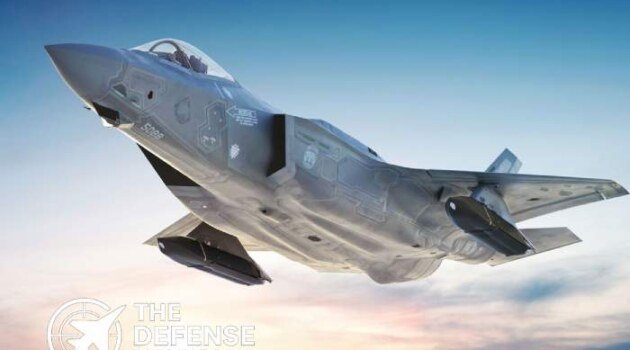
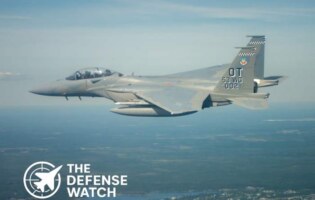
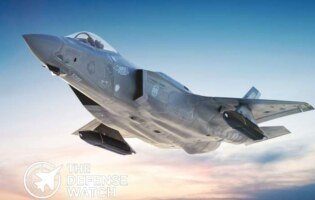
Few rivalries in modern aviation capture the U.S. Air Force’s transformation like the F-15EX Eagle II vs F-35 Lightning II. Both aircraft embody America’s pursuit of air dominance, yet their philosophies couldn’t be more different.
The F-15EX, an evolution of the Cold War–era Eagle, represents proven power, massive payload, and adaptability. The F-35, by contrast, redefines warfare with stealth, sensor fusion, and digital connectivity — becoming the cornerstone of U.S. and allied fifth-generation fleets.
This comparison matters not just for the Pentagon, but globally. As great-power competition intensifies with China’s J-20 and Russia’s Su-57, understanding how the U.S. blends legacy and stealth platforms offers insight into how air combat will evolve through 2030.
Specifications Comparison: F-15EX vs F-35 Lightning II
| Specification | F-15EX Eagle II | F-35 Lightning II |
|---|---|---|
| Manufacturer | Boeing | Lockheed Martin |
| Role | Air Superiority / Multirole | Stealth Multirole Fighter |
| Crew | 1 or 2 | 1 |
| Top Speed | Mach 2.5 (approx. 1,875 mph) | Mach 1.6 (approx. 1,200 mph) |
| Combat Range | ~1,100 miles | ~670 miles |
| Service Ceiling | 70,000 ft | 50,000 ft |
| Payload Capacity | Up to 29,500 lb | Around 18,000 lb (internal + external) |
| Stealth Capability | Low | Very High |
| Avionics | Open Mission System, EPAWSS EW suite | Distributed Aperture System (DAS), AN/APG-81 AESA radar |
| Unit Cost (est.) | ~$90 million | ~$82 million (F-35A variant) |
| Service Entry | 2021 | 2015 |
Design & Technology
The F-15EX retains the Eagle’s proven airframe but integrates 21st-century electronics. Boeing’s Advanced Cockpit System features large area displays and open mission architecture — allowing easier software upgrades and weapon integration. The EPAWSS (Eagle Passive Active Warning Survivability System) provides cutting-edge electronic warfare protection, improving survivability against radar-guided threats.
Meanwhile, the F-35 Lightning II pushes the frontier of stealth and sensor fusion. Its radar-absorbing materials, internal weapons bays, and low-RCS (Radar Cross Section) design make it almost invisible to enemy radars. The aircraft’s sensor fusion links data from multiple sources — satellites, AWACS, ground radars — giving pilots unmatched situational awareness.
Where the F-15EX emphasizes power and modularity, the F-35 focuses on invisibility and information dominance — a digital hunter in the skies.
Firepower & Performance
The F-15EX remains unmatched in payload capacity, carrying up to 12 air-to-air missiles or a combination of JDAMs, JASSMs, and hypersonic weapons under development. Its dual engines generate enormous thrust, enabling it to carry heavy ordnance without sacrificing speed or climb rate.
The F-35, though limited in payload compared to the Eagle, gains its edge from precision and stealth. It carries four internal weapons in stealth mode (such as AIM-120 AMRAAMs and JDAMs), or up to 22,000 lb in “beast mode” when stealth isn’t required. The F-35’s AN/APG-81 AESA radar and electro-optical targeting system deliver precision engagement at long ranges before an opponent even detects it.
In short: the F-15EX brings overwhelming firepower; the F-35 delivers surgical strikes.
F-15EX Eagle II Fighter Jet vs F-35 Lightning II Fighter Jet

Operational Range & Mobility
The F-15EX boasts a longer combat range, capable of deep-strike missions without refueling. Its robust airframe and twin-engine reliability allow operations from rougher runways and greater endurance.
The F-35, however, benefits from its smaller radar cross-section and networked communication systems, enabling it to enter contested airspace undetected — a key advantage in near-peer warfare scenarios.
In future joint operations, both jets are expected to operate in tandem: the F-35 acting as a forward sensor and target designator, and the F-15EX following with heavy strike capability.
Combat Effectiveness
While the F-15EX hasn’t yet seen combat, it inherits decades of battle-proven Eagle DNA from the F-15C/D, which holds a legendary 100+ to 0 air-to-air kill ratio. The new variant’s enhanced radar and electronic warfare suite make it ideal for air defense suppression and missile truck missions.
The F-35, on the other hand, has already seen combat — notably with the U.S. Marine Corps and Israeli Air Force. Its stealth and sensor capabilities have proven invaluable in reconnaissance, air interdiction, and electronic attack missions.
U.S. military doctrine increasingly envisions them as complementary — the F-35 as the eyes and ears, the F-15EX as the hammer.
Cost & Export Value
The F-15EX and F-35 are both critical for U.S. defense export markets. The F-35 dominates globally with orders from NATO allies, Japan, South Korea, and others. Its cost has dropped to around $82 million per unit, making it competitive even for mid-tier allies.
The F-15EX, while more expensive, appeals to countries seeking non-stealth platforms with massive payload flexibility — such as Indonesia, Israel, and Saudi Arabia. Its lower maintenance footprint compared to legacy F-15s adds to its export appeal.
From a U.S. budget perspective, the Air Force is betting on a high-low mix: the stealthy F-35 fleet supported by robust, cheaper-to-maintain F-15EX squadrons.
Analysis: Strengths and Weaknesses
| Aspect | F-15EX Strengths | F-35 Strengths |
|---|---|---|
| Payload | Carries nearly double the weapons load | Limited but internal stealth load |
| Stealth | Minimal stealth; radar-visible | Very low RCS; near-invisible |
| Speed | Faster and climbs higher | Moderate but efficient |
| Avionics & Sensors | Advanced but not fully fused | Full sensor fusion and data sharing |
| Cost | Higher upfront, easier maintenance | Lower cost, higher maintenance |
| Combat Role | Air dominance, heavy strike | Stealth penetration, ISR, precision strike |
The F-15EX shines in brute-force missions where stealth is less critical — defending airspace or carrying hypersonic missiles. The F-35 dominates when information and invisibility decide the outcome.
Conclusion
In the F-15EX vs F-35 contest, there’s no single winner — only different masters of airpower.
The F-15EX excels in payload, speed, and endurance, making it the go-to platform for high-intensity air superiority and strike operations. The F-35, meanwhile, is the future of networked warfare — stealthy, data-driven, and versatile across air, ground, and naval environments.
The U.S. Air Force’s strategy to operate both ensures maximum flexibility: the F-35 leads the digital battlespace, while the F-15EX delivers overwhelming force. Together, they guarantee American air dominance well into the 2030s.
FAQ: F-15EX vs F-35 Lightning II
The F-15EX is significantly faster, reaching Mach 2.5 compared to the F-35’s Mach 1.6, due to its twin-engine design and aerodynamic efficiency.
The F-35 is a fifth-generation stealth fighter with radar-absorbing materials and low-RCS design. The F-15EX is not stealth-capable but relies on electronic warfare systems for survivability.
The F-15EX can carry nearly 29,500 pounds of ordnance — more than any other U.S. fighter. The F-35’s load is smaller but more precise, with internal bays for stealth missions.
While the F-15EX’s unit price is slightly higher, its maintenance and flight hour costs are expected to be lower than the F-35’s complex stealth upkeep.
Both. The F-35 leads in stealth and digital warfare, while the F-15EX provides heavy firepower and adaptability — a strategic pairing for U.S. air dominance.
Get real time update about this post category directly on your device, subscribe now.

| |
| Price | |
| Our Rating | |
| Manufacturer | Boeing Defense Lockheed Martin |
| Category | Fighter Jets Fighter Jets |
General Information
| Name | F-15EX Eagle II F-35 Lightning II |
| Manufacturer | Boeing Defense, Space & Security Lockheed Martin |
| Country of Origin | United States United States |
| Type / Role | Multirole / Air Superiority Fighter Multirole Stealth Fighter |
| Generation | 4.5+ 5th |
| Status | In production / Active service In Service |
| First Flight | February 2, 2021 December 15, 2006 |
| Introduction / In Service Since | 2023 (U.S. Air Force) 2015 |
| Number Built | ~20 (planned: 104+) 1,200+ (as of 2025) |
| Operators | U.S. Air Force USA, UK, Japan, Israel, Italy, Australia, and others |
Dimensions & Structure
| Length | 63.8 ft (19.45 m) 51.2 ft (15.6 m) |
| Wingspan | 42.8 ft (13.05 m) 35 ft (10.7 m) |
| Height | 18.5 ft (5.64 m) 14.4 ft (4.38 m) |
| Wing Area | 608 sq ft (56.5 m²) 460 sq ft (42.7 m²) |
| Empty Weight | 31,700 lb (14,380 kg) 29,300 lb (13,300 kg) |
| Maximum Takeoff Weight (MTOW) | 81,000 lb (36,700 kg) 70,000 lb (31,800 kg) |
| Internal Weapons Bay | None 2 (up to 5,700 lb payload) |
| External Hardpoints | 12 6–10 (up to 18,000 lb total) |
Performance
| Maximum Speed | Mach 2.5+ Mach 1.6 |
| Range | 2,700 mi (4,345 km) 1,380 mi (2,220 km) |
| Combat Radius | 1,100 mi (1,770 km) ~670 mi (1,080 km) |
| Service Ceiling | 60,000 ft (18,300 m) 50,000 ft (15,240 m) |
| Rate of Climb | 50,000 ft/min 45,000 ft/min |
| Thrust-to-Weight Ratio | 1.19 0.87 |
| G Limits | +9 +9 |
Powerplant
| Engine Type | Pratt & Whitney F100-PW-229 Pratt & Whitney F135-PW-100 |
| No. of Engines | 2 1 |
| Thrust (each) | 29,000 lbf 43,000 lbf |
| Thrust Vectoring | No Yes (on F-35B variant) |
| Fuel Capacity | 36,000 lb internal/external ~18,500 lb internal |
Armament
| Gun | 1× M61A1 Vulcan 20mm GAU-22/A 25mm cannon (F-35A) |
| Missiles (Air-to-Air) | AIM-120, AIM-9X AIM-120 AMRAAM, AIM-9X |
| Missiles (Air-to-Ground) | AGM-158 JASSM, AGM-84 AGM-154 JSOW, AGM-158 JASSM |
| Bombs | JDAM, GBU series JDAM, Paveway II/III, SDB I/II |
| Hardpoints | 12 6 external + 2 internal |
| Payload Capacity | 29,500 lb (13,380 kg) ~18,000 lb |
Avionics & Systems
| Radar | AN/APG-82(V)1 AESA AN/APG-81 AESA |
| Radar Range | 200+ miles ~150+ km |
| Electronic Warfare (EW) System | EPAWSS AN/ASQ-239 suite |
| Targeting System | Sniper XR pod EOTS (Electro-Optical Targeting System) |
| Helmet Display | JHMCS II HMDS Gen III |
| Navigation | GPS/INS with terrain-following GPS/INS with terrain-following |
| Autopilot / AI Assistance | Digital fly-by-wire Advanced flight management |
| Communication | Link 16, secure datalinks MADL & Link 16 secure data links |
Stealth & Technology
| Radar Cross Section (RCS) | Moderate (non-stealth) ~0.001 m² |
| Stealth Features | Radar-absorbent coatings RAM coating, internal weapons bay, edge alignment |
| Infrared Signature Reduction | Partial Yes |
| Sensor Fusion | Advanced mission computer Full 360° data integration |
| Networking Capabilities | Open mission systems, JADC2 compatible Distributed data-sharing with allied units |
Variants
| Special Export Versions | F-15QA (Qatar), F-15SA (Saudi Arabia), F-15IA (Israel), F-15SG (Singapore) F-35I (Israel), F-35A (Japan), etc. |
Operational History
| Major Conflicts / Deployments | Not yet combat-deployed (2025) Middle East operations (Iraq, Syria) |
| Notable Operators | U.S. Air Force USAF, USN, USMC, RAF, IDF |
| Combat Proven? | Not yet Yes |
| Mission Types | Air superiority, strike, defense suppression Air superiority, strike, SEAD, ISR |
Cost & Program
| Unit Cost | ~$87.9 million $80–100 million (variant-dependent) |
| Development Cost | ~$1.2 billion ~$400 billion (program total) |
| Program Name | F-15EX Eagle II Program Joint Strike Fighter (JSF) |
| Funding Countries | United States USA, UK, Italy, Netherlands, Canada, Australia, etc. |
Additional Information
| Upgrades Planned | Hypersonic weapons integration Block 4, Tech Refresh 3 |
| Future Replacement | Potential sixth-gen NGAD NGAD (2035+) |
| Export Restrictions | Limited to close U.S. allies U.S. FMS approval required |
| Notable Achievements | Fastest U.S. production fighter Widest global fighter program in history |
| Competitors | Rafale, Eurofighter Typhoon, Su-35 Su-57, J-20, Tempest, KF-21 |
|
Disclaimer Note
The information provided on TheDefenseWatch.com is for general informational purposes only. While we strive to ensure the accuracy, completeness, and timeliness of our content regarding defense and aerospace products, technologies, and specifications, we cannot guarantee that all information is 100% accurate or up-to-date due to the evolving nature of military technology and classified data.TheDefenseWatch.com does not warrant the reliability, suitability, or availability of the information for any specific purpose. Users are advised to consult official sources, such as manufacturers, government publications, or defense agencies, for precise and verified data before making decisions based on our content.We are not affiliated with any defense manufacturers, governments, or military organizations mentioned. Opinions, reviews, and ratings reflect expert analysis but are subjective and should not be considered endorsements. TheDefenseWatch.com is not responsible for any errors, omissions, or consequences arising from the use of this website’s content.External links are provided for convenience and do not imply endorsement. TheDefenseWatch.com reserves the right to update or modify content without prior notice. By using this website, you agree to our Privacy & Cookies Policy.
New Arrivals


Popular Comparisons
-
 SIG XM7 Rifle vs M4: Key Differences and Performance Comparison
View Comparison →
SIG XM7 Rifle vs M4: Key Differences and Performance Comparison
View Comparison → -
Eurofighter Typhoon vs Rafale vs F-35: Fighter Jet Comparison
View Comparison →
-
J-20 vs F-22: Stealth Fighter Showdown Explained
View Comparison →
-
F-14 Tomcat vs Su-57: Can a Legend Challenge Russia’s Stealth Fighter?
View Comparison →
-
Su-35 vs Su-57: Russia’s Top Fighter Jets Compared
View Comparison →
-
Eurofighter Typhoon vs Su-57: Ultimate Fighter Jet Comparison
View Comparison →
-
Rafale vs Su-57: 4.5 Gen vs 5th Gen Fighter Jet Comparison
View Comparison →
-
Su-57 vs F-16 Fighting Falcon: Stealth vs Speed
View Comparison →
-
China vs Russia: J-20 Mighty Dragon vs Su-57 Felon Comparison
View Comparison →
-
Su-57 Felon vs F-22 Raptor: Stealth Air Superiority Face-Off
View Comparison →


- Pentagon Considers Second B-21 Raider Production Line To Accelerate U.S. Stealth Bomber Expansion

- France Unveils 78,000-Ton Nuclear Aircraft Carrier France Libre With 40-Aircraft Capacity
- L3Harris Wins $77.8M U.S. Navy Contract for Kineto Tracking Mount Sustainment
- US Navy Awards $15.38B Columbia-Class Submarine Contract To Strengthen Nuclear Deterrent
- China Surges Production Capacity For J-20 And J-35 Stealth Fighters As Beijing Expands Fifth-Generation Fleet
- Netanyahu Announces Elimination Of Senior Iranian Figures In Air Campaign
- US Bombers Avoid European Airspace On Iran Bombing Runs In Strategic Route Shift
- Japan’s EC-2 Electronic Warfare Jet Completes First Flight, Expanding Standoff Jamming Capabilities
- NASA’s X-59 Quiet Supersonic Jet Gears Up for Second Flight — A Giant Leap Toward Silent Boom AviationNASA X-59 Second Flight: Supersonic Aviation Reborn
- US Weapons Shipments to Taiwan Unaffected by Iran War, Officials Confirm