


















@2026 – All Right Reserved. TheDefenseWatch.com
- Home
- Defense Systems
- Tanks & Armored Vehicles
- XM30 Infantry Fighting Vehicle
XM30 Infantry Fighting Vehicle
Defense Systems Full Specifications
1. General Information
| Vehicle Name | XM30 Infantry Fighting Vehicle |
| Type / Role | Infantry Fighting Vehicle (IFV) |
| Manufacturer | General Dynamics Land Systems |
| Country of Origin | United States |
| In Service | Testing / Initial Deployment |
| Year Introduced | 2025 |
| Unit Cost | USD 6–7 million |
| Crew | 3 (Commander, Gunner, Driver) + 6–8 Infantry |
2. Dimensions & Weight
| Length (Gun Forward) | 7.2 m |
| Width | 3.5 m |
| Height | 2.8 m |
| Weight | 35 tons |
| Ground Clearance | 0.45 m |
| Chassis Material | Modular Composite / Steel |
3. Performance
| Engine Type | Diesel Engine |
| Engine Power | 1,000 hp |
| Power-to-Weight Ratio | 28.5 hp/ton |
| Transmission | Automatic (Cross-Drive) |
| Maximum Speed (Road) | 70 km/h |
| Maximum Speed (Off-Road) | 45 km/h |
| Operational Range | 500 km |
| Suspension Type | Hydropneumatic |
4. Armament
| Main Gun | 30 mm Autocannon |
| Ammunition Capacity | 500–600 rounds |
| Secondary Armament | 1 × 7.62 mm coaxial MG, 2 × ATGM launchers |
| Gun Elevation/Depression | +40° / -10° |
| Fire Control System | Digital Computerized FCS |
| Stabilization | Dual-Axis Gun Stabilizer |
| Rate of Fire | 200–300 rounds per minute |
5. Protection & Armor
| Armor Type | Modular Composite Armor |
| Reactive Armor | Optional Explosive Reactive Armor (ERA) |
| Active Protection System (APS) | Trophy APS |
| NBC Protection | Yes |
| Smoke Grenade Launchers | 2 × 6-barrel launchers |
| Fire Suppression System | Automatic |
| Mine Protection | Reinforced Belly Armor |
6. Mobility & Capability
| Maximum Gradient | 60% |
| Side Slope | 35% |
| Trench Crossing | 2.5 m |
| Vertical Obstacle | 1.2 m |
| Fording Depth | 1.0 m (2 m with preparation) |
7. Sensors & Electronics
| Thermal Imaging | Commander & Gunner |
| Night Vision | IR/NVG |
| Laser Rangefinder | Yes |
| Ballistic Computer | Yes |
| Communication System | Secure Tactical Radio |
| Battlefield Management System | Optional |
8. Operational Info
| Service Branch | U.S. Army |
| Primary Operator | USA |
| Combat Experience | Initial Trials |
| Upgrade Packages | Modular Armor, APS, FCS |
| Export Status | Limited |
| Production Status | Active / Testing |
PROS
- Advanced modular armor for maximum protection
- Powerful 30mm autocannon and missile integration
- High mobility on and off-road terrain
- Integrated sensors and battlefield management system
- Future-proof modular design for upgrades
CONS
- High unit cost may limit initial production
- Larger size may reduce maneuverability in urban environments
- Heavy weight affects strategic transport options
- Complex electronics require specialized maintenance
- Limited amphibious capability without additional kits
XM30 Infantry Fighting Vehicle Next Gen Combat Platform
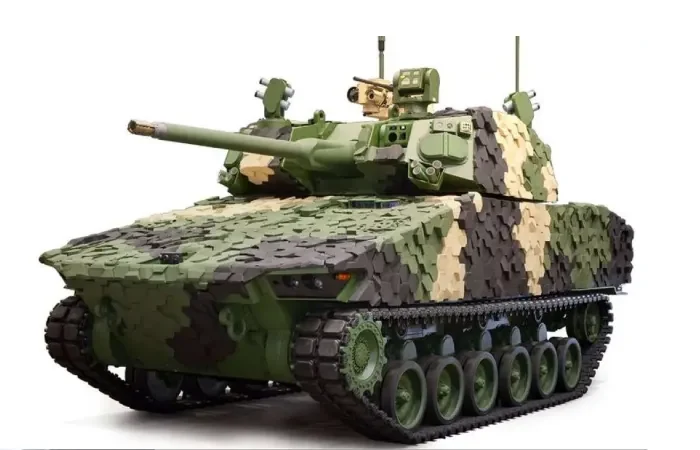
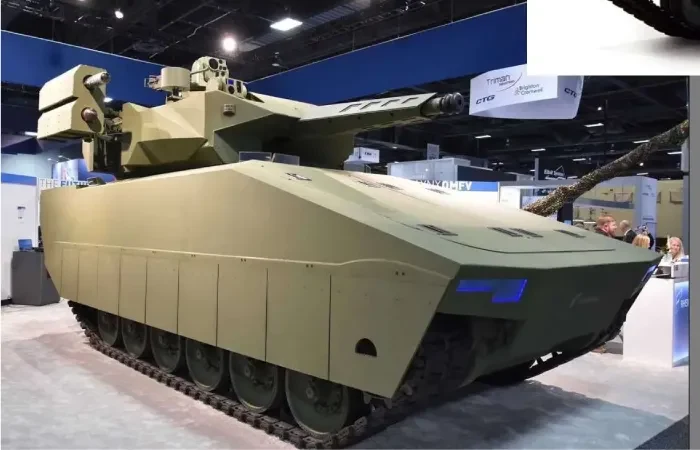
The XM30 Infantry Fighting Vehicle represents the US Army shift toward a future ground combat platform built for peer conflict. Designed to replace the aging Bradley fleet, the XM30 is part of the Optionally Manned Fighting Vehicle program. It focuses on survivability, digital warfare, and close integration with infantry units operating in contested environments.
Development and Purpose
The XM30 is being developed by General Dynamics Land Systems in partnership with Rheinmetall. Originating in the United States, the vehicle is intended to carry mechanized infantry while providing direct fire support against armored and fortified targets. It is designed to operate with or without a crew, allowing commanders to reduce risk in high threat zones.
Combat Capabilities and Technology
The vehicle is expected to mount a 50 mm automatic cannon as its primary weapon, supported by a coaxial machine gun and anti tank guided missiles. This combination allows the XM30 to engage enemy armor, drones, and infantry at extended ranges. Advanced sensors, thermal sights, and digital fire control systems support accurate day and night operations.
Mobility is driven by a powerful diesel engine paired with a modern suspension system. This enables high cross country speed and long operational range. Modular armor packages provide scalable protection against kinetic rounds, mines, and top attack threats. The XM30 also supports active protection systems to counter incoming missiles.
Operational Role and Future Use
The XM30 is designed to fight alongside Abrams tanks, unmanned ground systems, and aerial drones. It supports networked operations through secure data links and battle management systems. While still under evaluation, the XM30 is expected to form the backbone of US mechanized infantry units well into the 2040s.
XM30 Infantry Fighting Vehicle Price
The XM30 Infantry Fighting Vehicle is still in development, with an estimated unit cost projected between USD 8 million and USD 12 million depending on configuration, sensors, and protection level once full rate production begins.
Disclaimer Note
The information provided on TheDefenseWatch.com is for general informational purposes only. While we strive to ensure the accuracy, completeness, and timeliness of our content regarding defense and aerospace products, technologies, and specifications, we cannot guarantee that all information is 100% accurate or up-to-date due to the evolving nature of military technology and classified data.TheDefenseWatch.com does not warrant the reliability, suitability, or availability of the information for any specific purpose. Users are advised to consult official sources, such as manufacturers, government publications, or defense agencies, for precise and verified data before making decisions based on our content.We are not affiliated with any defense manufacturers, governments, or military organizations mentioned. Opinions, reviews, and ratings reflect expert analysis but are subjective and should not be considered endorsements. TheDefenseWatch.com is not responsible for any errors, omissions, or consequences arising from the use of this website’s content.External links are provided for convenience and do not imply endorsement. TheDefenseWatch.com reserves the right to update or modify content without prior notice. By using this website, you agree to our Privacy & Cookies Policy.
New Arrivals
Popular Comparisons
-
 Tejas Fighter Jet vs F-16 Fighting Falcon: Capability Compared
View Comparison →
Tejas Fighter Jet vs F-16 Fighting Falcon: Capability Compared
View Comparison → -
Rafale Fighter Jet vs F-16 Fighting Falcon : Which Fighter Has the Edge?
View Comparison →
-
Su-57 Fighter Jet vs J-20 Fighter Jet: Stealth and Air Combat Compared
View Comparison →
-
Mirage 2000 vs Tejas Mk1A: Legacy Combat Power vs Indigenous Modernization
View Comparison →
-
Rafale Fighter Jet vs F-22 Raptor: Which Air Dominance Fighter Has the Edge?
View Comparison →
-
Tejas Fighter Jet vs. Rafale Fighter Jet: India’s Indigenous Fighter Meets France’s Proven Multirole Combat Aircraft
View Comparison →
-
F-22 Raptor vs. F-35 Joint Strike Fighter: Which Fifth Generation Fighter Has the Edge?
View Comparison →
-
F-35A vs. F-22 Raptor: Which U.S. Stealth Fighter Dominates Modern Air Combat?
View Comparison →
-
AGM-114 Hellfire vs. AGM-179 JAGM: Which U.S. Precision Missile Is Better?
View Comparison →
-
Patriot (PAC-3) vs. THAAD: Complete Missile Defense System Comparison, Capabilities, Range, and Strategic Roles
View Comparison →
- FQ-42 Vengeance Flies With F-35 and F-15E as Air Force Advances CCA Teaming

- Albania Secures $302 Million U.S. Defense Loan for Military Modernization
- Rockwell Collins Wins $10.7M Navy E-2D Training Contract
- Boeing Receives $11.8 Million Contract Modification for Kuwait F/A-18E/F Support
- General Dynamics Wins $22.4M MK 41 VLS Engineering Contract
- Bell Boeing Wins $29.7M Contract for V-22 Loads and Dynamics Data
- Raytheon Wins $34.4M V-22 Tactical Software Sustainment Contract
- Dayton T. Brown Wins $55.8M P-8A Mobile Mission Systems Contract
- Finland deepens European F-35 cooperation with first pilot flight in Europe
- Luxembourg Deploys Additional Detection Assets After Drone Sightings