





@2026 – All Right Reserved. TheDefenseWatch.com
- Home
- Defense Systems
- Submarines
- Lada Class Submarine
Lada Class Submarine
Defense Systems Full Specifications
1. General Information
| Name / Class | Lada Class |
| Country of Origin | Russia |
| Type | Diesel electric attack submarine |
| Manufacturer | Rubin Design Bureau, Admiralty Shipyards |
| Operators | Russian Navy |
| In Service | 2010 |
| Status | Active, limited production |
2. Dimensions & Design
| Length | 66.8 m |
| Beam (Width) | 7.1 m |
| Draught / Draft | 6.5 m |
| Displacement (Surfaced) | approx 1765 tons |
| Displacement (Submerged) | approx 2650 tons |
| Hull Material | High strength steel |
| Crew | about 35 |
3. Propulsion & Performance
| Power Source | Diesel electric |
| Engine / Reactor Type | Diesel generators, batteries |
| Propulsion System | Single shaft |
| Speed (Surfaced) | 10 knots |
| Speed (Submerged) | 21 knots |
| Range | approx 6500 km |
| Endurance | up to 45 days |
| Operational Depth | 300 m |
| Test Depth | 350 m |
| Maximum Depth | estimated 400 m |
4. Armament
| Torpedo Tubes | 6 x 533 mm |
| Torpedoes / Missiles | Heavy torpedoes, anti ship missiles |
| Cruise / Ballistic Missiles | Limited capability |
| Mines | Naval mines |
| Decoys / Countermeasures | Acoustic decoys |
5. Sensors & Electronics
| Sonar System | Bow and flank arrays |
| Radar | Surface navigation radar |
| Combat Management System | Integrated digital CMS |
| Electronic Warfare System | Basic electronic support |
| Communication Systems | Secure naval comms |
| Navigation Systems | Inertial and satellite |
6. Stealth & Defense
| Anechoic Coating | Yes |
| Noise Reduction Features | Raft mounted machinery |
| Magnetic Signature Reduction | Demagnetization system |
| Acoustic Signature Level | Very low for class |
7. Payload & Capacity
| Weapons Payload | Up to 18 torpedoes or mix |
| Special Forces Accommodation | Limited accommodation |
| UUV / Drone Capability | Future integration possible |
8. Notable Technologies
| Reactor / AIP Type | Planned AIP, not operational |
| Automation Level | High |
| Special Features | Reduced crew workload |
9. Operational History
| Major Deployments | Baltic Sea patrols |
| Combat / Exercises | None reported |
| Upgrades | Sensor and battery upgrades |
10. Cost & Production
| Unit Cost | 300 to 400 million USD estimated |
| Number Built | 3 |
| Production Period | 2004 to present |
11. Media & Credits
| Image / Video Source | Russian Navy media |
| Official Website | United Shipbuilding Corporation |
| Reference Credit | Open source defense analysis |
PROS
- Very low acoustic signature
- Modern sonar and combat systems
- Reduced crew size
- Strong coastal defense capability
- Flexible weapon loadout
CONS
- Limited operational range
- No fully deployed AIP system
- Small production numbers
- Slower than nuclear submarines
- Primarily suited for regional missions
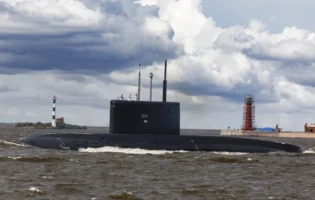
Lada Class Submarine Russia Advanced Diesel Electric Boat
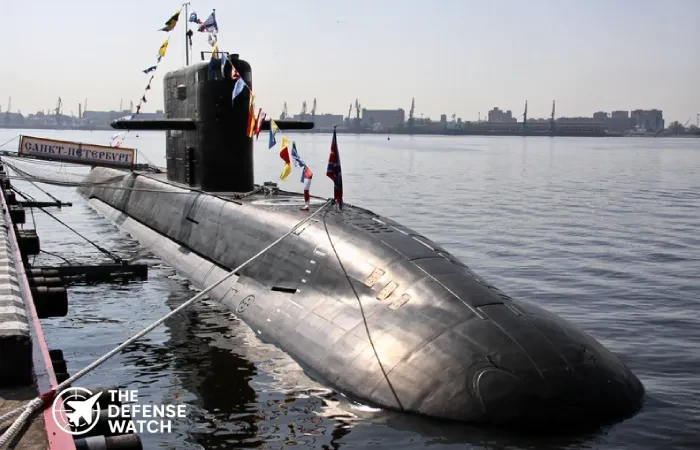
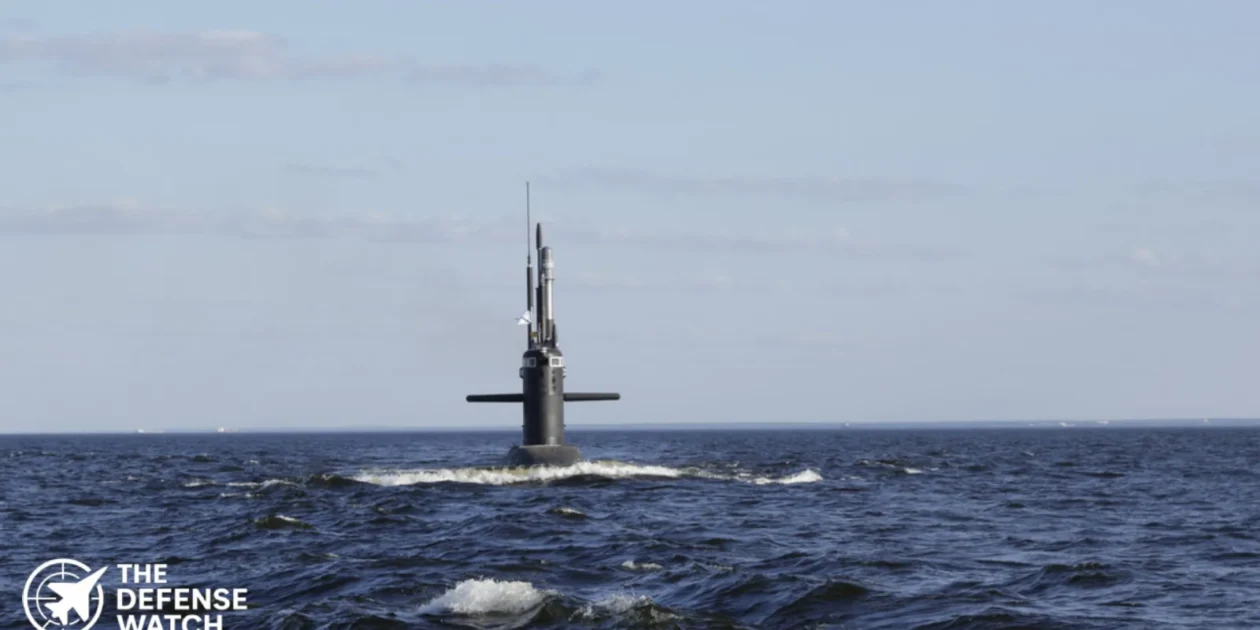
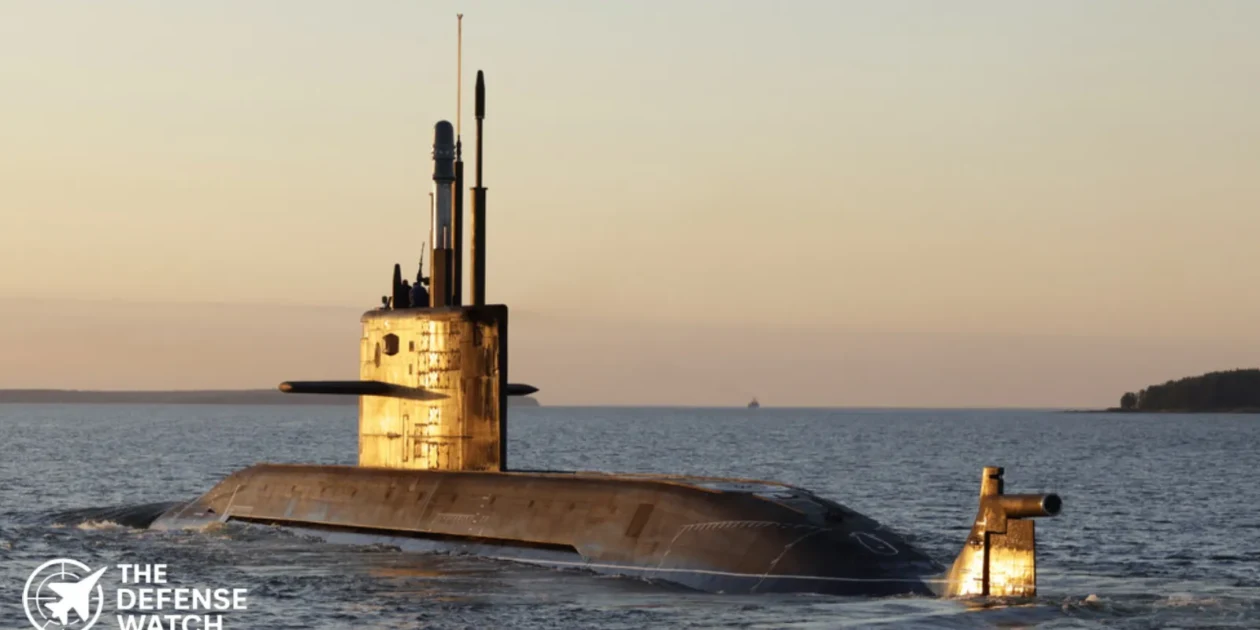
The Lada Class submarine represents Russia’s effort to field a quieter, more automated diesel electric attack submarine for modern naval warfare. Designed as a successor to the Kilo Class, the Lada Class focuses on stealth, reduced crew workload, and improved sensors for operations in contested waters.
Developed by the Rubin Design Bureau and built by Admiralty Shipyards, the submarine was conceived to strengthen Russia’s coastal defense, sea denial, and intelligence missions. It is optimized for operations in shallow and enclosed seas, including the Baltic and Black Sea regions.
Design and Performance
The Lada Class features a compact hull with advanced hydrodynamic shaping and extensive anechoic coating to reduce acoustic signatures. The submarine uses a diesel electric propulsion system, with early plans for air independent propulsion, although operational units currently rely on conventional batteries.
With submerged speeds exceeding 20 knots and an operational depth around 300 meters, the Lada Class is designed for silent patrols rather than high speed pursuit. Automation allows a smaller crew compared to older Russian submarines, improving endurance and reducing life cycle costs.
Weapons and Sensors
The submarine is armed with six 533 mm torpedo tubes capable of firing heavyweight torpedoes, anti ship missiles, and laying naval mines. Modern sonar arrays and a digital combat management system provide improved target detection and engagement compared to previous classes.
The Lada Class can support intelligence gathering, anti submarine warfare, and limited strike missions, making it a flexible asset for regional naval operations.
Operational Use
Although production has been limited, the Lada Class continues to serve as a technology testbed for future Russian non nuclear submarines. Lessons learned are expected to influence the improved Lada and Amur class designs.
Lada Class Submarine Price
There is no official export price available in the United States. Based on defense estimates, unit cost is believed to range between 300 and 400 million USD, depending on configuration, sensors, and weapons fit.
Get real time update about this post category directly on your device, subscribe now.
Disclaimer Note
The information provided on TheDefenseWatch.com is for general informational purposes only. While we strive to ensure the accuracy, completeness, and timeliness of our content regarding defense and aerospace products, technologies, and specifications, we cannot guarantee that all information is 100% accurate or up-to-date due to the evolving nature of military technology and classified data.TheDefenseWatch.com does not warrant the reliability, suitability, or availability of the information for any specific purpose. Users are advised to consult official sources, such as manufacturers, government publications, or defense agencies, for precise and verified data before making decisions based on our content.We are not affiliated with any defense manufacturers, governments, or military organizations mentioned. Opinions, reviews, and ratings reflect expert analysis but are subjective and should not be considered endorsements. TheDefenseWatch.com is not responsible for any errors, omissions, or consequences arising from the use of this website’s content.External links are provided for convenience and do not imply endorsement. TheDefenseWatch.com reserves the right to update or modify content without prior notice. By using this website, you agree to our Privacy & Cookies Policy.
More Defense Systems from Rubin Design Bureau Admiralty Shipyards
New Arrivals
Popular Comparisons
-
 Su-57 Fighter Jet vs J-20 Fighter Jet: Stealth and Air Combat Compared
View Comparison →
Su-57 Fighter Jet vs J-20 Fighter Jet: Stealth and Air Combat Compared
View Comparison → -
Mirage 2000 vs Tejas Mk1A: Legacy Combat Power vs Indigenous Modernization
View Comparison →
-
Rafale Fighter Jet vs F-22 Raptor: Which Air Dominance Fighter Has the Edge?
View Comparison →
-
Tejas Fighter Jet vs. Rafale Fighter Jet: India’s Indigenous Fighter Meets France’s Proven Multirole Combat Aircraft
View Comparison →
-
F-22 Raptor vs. F-35 Joint Strike Fighter: Which Fifth Generation Fighter Has the Edge?
View Comparison →
-
F-35A vs. F-22 Raptor: Which U.S. Stealth Fighter Dominates Modern Air Combat?
View Comparison →
-
AGM-114 Hellfire vs. AGM-179 JAGM: Which U.S. Precision Missile Is Better?
View Comparison →
-
Patriot (PAC-3) vs. THAAD: Complete Missile Defense System Comparison, Capabilities, Range, and Strategic Roles
View Comparison →
-
AIM-120 AMRAAM vs. AIM-9X Sidewinder: Complete Air-to-Air Missile Comparison, Range, Speed, and Combat Roles
View Comparison →
-
BGM-109 Tomahawk vs. AGM-158 JASSM: Which Long Range Precision Strike Missile Offers Greater Strategic Advantage?
View Comparison →
- Australia Declares JASSM-ER and LRASM Operational on F/A-18F Super Hornets

- GCAP Electronics Contract Advances Integrated Sensing And Communications For Sixth Generation Fighter
- Northrop Grumman Expands B-21 Raider Production With New Utah Facility
- Kongsberg Integrates Echodyne Radar With PROTECTOR Stations for Counter-UAS Missio
- Anthropic Says Yemen Weapons Cell Used Claude Code to Develop Missile Guidance Software
- Northrop Grumman Expands Air Defense and Weapons Collaboration Across Central Europe
- Rolls-Royce B-52 Engine Contract Rises To $3.04 Billion
- General Dynamics Secures $184.25 Million NGEAU Contract For Navy Growler Upgrades
- U.S. Space Academy Commission Begins Work As Washington Targets Next-Generation Space Workforce
- U.S. Moves to Close Air-Breathing Hypersonic Missile Gap With China