
- Home
- Defense Systems
- Defense Systems
- HQ-19 Defense Missile System
HQ-19 Defense Missile System
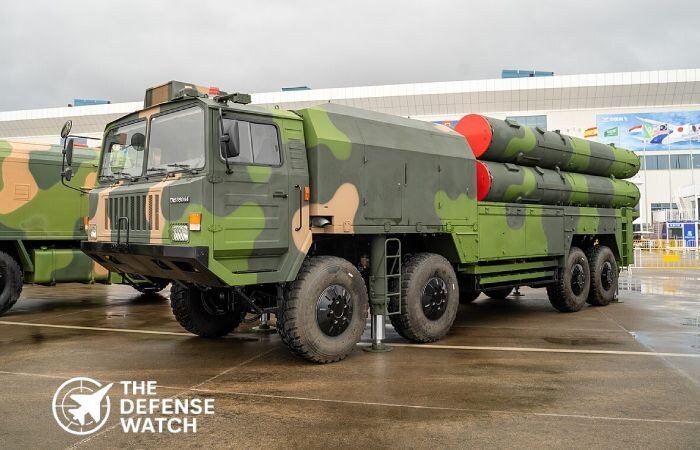
Defense Systems Full Specifications
1. General Information
| System Name | HQ-19 Missile Defense System |
| Manufacturer | China Aerospace Science & Technology Corp |
| Country of Origin | China |
| Type / Role | Long-Range Anti-Ballistic Missile System |
| In Service | Yes |
| Year Introduced | 2010s (Estimated) |
| Unit Cost | Estimated USD 800M–1.2B per battery |
2. Performance & Capabilities
| Maximum Engagement Range | 1,000+ km |
| Maximum Engagement Altitude | Exo-atmospheric capability |
| Target Types | Ballistic Missiles, Space Threats |
| Interception Probability | Classified (estimated high against MRBM threats) |
| Reaction Time | 8–20 seconds |
| Radar Detection Range | 1,500+ km |
3. Missile Specifications
| Missile Type | HQ-19 Interceptor |
| Missile Length | Approx. 7–9 m |
| Missile Weight | Classified |
| Warhead Type | Kinetic Hit-to-Kill Vehicle |
| Warhead Weight | N/A (kinetic kill) |
| Speed | Mach 6+ |
4. Radar & Fire Control
| Radar Type | AESA Phased-Array Radar |
| Radar Name | Unspecified (Strategic Early Warning Radar) |
| Detection Range | 1,200–1,500+ km |
| Tracking Capacity | Dozens of ballistic targets simultaneously |
| Guidance System | Inertial + Radar Terminal Guidance |
| Fire Control System | Automated Digital Battle Management System |
5. Launcher & Mobility
| Launcher Type | Mobile, Truck-Mounted |
| No. of Missiles per Launcher | 1–2 Interceptors |
| Reload Time | 45–90 minutes |
| Mobility Platform | 8×8 Heavy Transporter |
| Crew Required | 3–5 Personnel |
6. Command & Control
| C2 System | Integrated Strategic C2 Network |
| Connectivity | Secure Digital Data Link |
| Network Capability | Yes |
| Operation Mode | Networked / Autonomous / Manual |
7. Operational Use
| Primary Operator | China |
| Combat Proven | No confirmed combat history |
| Conflict History | Not publicly documented |
| Notable Feature | Upper-tier exo-atmospheric interception |
PROS
- Long-range, high-altitude ballistic missile interception
- AESA radar integration for extended detection
- Hit-to-kill technology for kinetic interception
- Networked command-and-control compatibility
- Enhances upper-tier missile defense capability
CONS
- Limited transparency regarding real-world performance
- No confirmed combat record
- High cost of deployment and maintenance
- Dependent on complex radar infrastructure
- Not optimized for low-altitude cruise missile threats
HQ-19 Strategic Missile Defense System
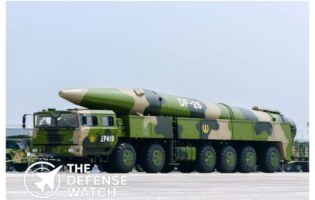
The HQ-19 is one of China’s most advanced long-range missile defense systems, designed to counter ballistic missile threats and enhance strategic air-and-missile defense coverage. Developed by the China Aerospace Science and Technology Corporation (CASC), the HQ-19 fills the upper-tier intercept role, functioning similarly in mission concept to systems like the U.S. THAAD. It represents China’s expanding investment in layered ballistic missile defense aimed at protecting high-value military and civilian infrastructure.
Design & Capabilities
Built for intercepting medium- and intermediate-range ballistic missiles, the HQ-19 relies on a combination of long-range tracking radars, hit-to-kill interceptors, and high-altitude engagement profiles. Although full performance data remains classified, open-source assessments indicate coverage extending hundreds of kilometers and engagement envelopes capable of exo-atmospheric interception.
Radar & Technology
At the heart of the HQ-19 system is a powerful AESA-based early warning and tracking radar network designed to detect incoming threats at long distances. The missile uses a high-velocity interceptor with a kinetic-kill vehicle, enabling it to neutralize ballistic threats in midcourse flight. The system integrates with China’s broader air-defense grid, improving situational awareness and multi-layer coverage.
Operational Use
The HQ-19 is deployed by the PLA Rocket Force and Air Force for strategic-level defense. Its mission focuses on countering ballistic missile attacks in regional scenarios, particularly in Western Pacific theaters. While combat use has not been publicly confirmed, its presence contributes significantly to China’s missile defense posture.
HQ-19 Defense Missile System Price in United State
While the HQ-19 is not exported to the United States, equivalent U.S. systems like THAAD range between USD 800 million to 1.5 billion per battery, offering context for estimated cost comparisons.
Disclaimer Note
The information provided on TheDefenseWatch.com is for general informational purposes only. While we strive to ensure the accuracy, completeness, and timeliness of our content regarding defense and aerospace products, technologies, and specifications, we cannot guarantee that all information is 100% accurate or up-to-date due to the evolving nature of military technology and classified data.TheDefenseWatch.com does not warrant the reliability, suitability, or availability of the information for any specific purpose. Users are advised to consult official sources, such as manufacturers, government publications, or defense agencies, for precise and verified data before making decisions based on our content.We are not affiliated with any defense manufacturers, governments, or military organizations mentioned. Opinions, reviews, and ratings reflect expert analysis but are subjective and should not be considered endorsements. TheDefenseWatch.com is not responsible for any errors, omissions, or consequences arising from the use of this website’s content.External links are provided for convenience and do not imply endorsement. TheDefenseWatch.com reserves the right to update or modify content without prior notice. By using this website, you agree to our Privacy & Cookies Policy.
New Arrivals



Popular Comparisons
-
 J-10C vs JF-17 Thunder: Which Fighter Is More Capable?
View Comparison →
J-10C vs JF-17 Thunder: Which Fighter Is More Capable?
View Comparison → -
Tejas vs Gripen: Key Differences and Capabilities
View Comparison →
-
Tejas vs MiG-21 Bison: How India Replaced Its Iconic Supersonic Fighter
View Comparison →
-
F-35 vs F-16: Stealth, Sensors and Combat Roles
View Comparison →
-
Tejas Fighter Jet vs F-16 Fighting Falcon: Capability Compared
View Comparison →
-
Rafale Fighter Jet vs F-16 Fighting Falcon : Which Fighter Has the Edge?
View Comparison →
-
Su-57 Fighter Jet vs J-20 Fighter Jet: Stealth and Air Combat Compared
View Comparison →
-
Mirage 2000 vs Tejas Mk1A: Legacy Combat Power vs Indigenous Modernization
View Comparison →
-
Rafale Fighter Jet vs F-22 Raptor: Which Air Dominance Fighter Has the Edge?
View Comparison →
-
Tejas Fighter Jet vs. Rafale Fighter Jet: India’s Indigenous Fighter Meets France’s Proven Multirole Combat Aircraft
View Comparison →


- Britain to Deploy RAF Chinooks and A400M Aircraft Against Wildfires

- China-Pakistan Military Drills Feature Drone-Resistant Type 08 Infantry Fighting Vehicle
- Department of War and Lockheed Martin Sign 10-Year F-35 Agreement With $7 Billion Investment Commitment
- Pentagon Approves Active Denial System for Potential U.S. Southern Border Use
- U.S. Air Force Plans Larger F-35 Role in 1,509-Aircraft Fighter Fleet
- Raytheon Wins Two-Year Extension for AN/TPY-2 Radar Support
- Space Force Selects Northrop Grumman, True Anomaly for New Orbital Reconnaissance Satellites
- Hegseth and Guyana’s President Establish Enhanced Military Partnership
- Ukrainian F-16 vs. Russian Su-35: What Happened, How the Engagement Unfolded and Why It Matters
- Canada’s Fighter Jet Fleet Faces a Critical Transition as F-35 Review Continues



Fighter Jets
-
 SU-57 Felon Stealth Fighter
-
Boeing F/A-XX Fighter
-
JF-17 Thunder Fighter Jet
-
F-47 Fighter Jet
-
MIG-31 Fighter Jet
-
J-10CE Fighter Jet
-
Chengdu J-10 Fighter Jet
-
Chengdu J-10C Fighter Jet
-
Gripen E Fighter Jet
-
Tejas Mk1A Fighter Jet
-
Tejas Mk‑2 Fighter Jet
-
F-16V Viper Block 70 Fighter Jet
-
F-15EX Eagle II Fighter
-
F-15E Strike Eagle Fighter
-
F/A-18E/F Super Hornet Fighter Jet
-
Saab Gripen F Fighter Jet
-
JAS 39E/F Gripen Fighter Jet
-
JAS 39 Gripen Fighter Jet
-
F-35A Lightning II Fighter Jet
-
F/A-18F Super Hornet
-
J-50 Fighter Jet
-
Spanish EF-18 Hornet Fighter
-
F-35i Adir Fighter Jet
-
F-16 Fighting Falcon






Recent Compares
-
J-10C vs JF-17 Thunder: Which Fighter Is More Capable?
View Comparison →
-
Tejas vs Gripen: Key Differences and Capabilities
View Comparison →
-
Tejas vs MiG-21 Bison: How India Replaced Its Iconic Supersonic Fighter
View Comparison →
-
F-35 vs F-16: Stealth, Sensors and Combat Roles
View Comparison →
-
Tejas Fighter Jet vs F-16 Fighting Falcon: Capability Compared
View Comparison →
Latest Defense Systems
10 Compares Defense Systems
-
J-10C vs JF-17 Thunder: Which Fighter Is More Capable?
View Comparison →
-
Tejas vs Gripen: Key Differences and Capabilities
View Comparison →
-
Tejas vs MiG-21 Bison: How India Replaced Its Iconic Supersonic Fighter
View Comparison →
-
F-35 vs F-16: Stealth, Sensors and Combat Roles
View Comparison →
-
Tejas Fighter Jet vs F-16 Fighting Falcon: Capability Compared
View Comparison →
-
Rafale Fighter Jet vs F-16 Fighting Falcon : Which Fighter Has the Edge?
View Comparison →
-
Su-57 Fighter Jet vs J-20 Fighter Jet: Stealth and Air Combat Compared
View Comparison →
-
Mirage 2000 vs Tejas Mk1A: Legacy Combat Power vs Indigenous Modernization
View Comparison →
-
Rafale Fighter Jet vs F-22 Raptor: Which Air Dominance Fighter Has the Edge?
View Comparison →
-
Tejas Fighter Jet vs. Rafale Fighter Jet: India’s Indigenous Fighter Meets France’s Proven Multirole Combat Aircraft
View Comparison →
- Britain to Deploy RAF Chinooks and A400M Aircraft Against Wildfires
- China-Pakistan Military Drills Feature Drone-Resistant Type 08 Infantry Fighting Vehicle
- Department of War and Lockheed Martin Sign 10-Year F-35 Agreement With $7 Billion Investment Commitment
- Pentagon Approves Active Denial System for Potential U.S. Southern Border Use
- U.S. Air Force Plans Larger F-35 Role in 1,509-Aircraft Fighter Fleet