











@2026 – All Right Reserved. TheDefenseWatch.com
- Home
- Defense Systems
- Tanks & Armored Vehicles
- ROGUE-Fires Carrier
ROGUE-Fires Carrier
Defense Systems Full Specifications
1. General Information
| Vehicle Name | ROGUE-Fires Autonomous Missile Carrier |
| Type / Role | Unmanned Precision Fires / Anti-Ship Launcher |
| Manufacturer | Oshkosh Defense (in partnership with USMC labs) |
| Country of Origin | United States |
| In Service | Limited early adoption / evaluation |
| Year Introduced | 2023 (prototype) |
| Unit Cost | Not officially disclosed |
| Crew | Unmanned / remotely operated |
2. Dimensions & Weight
| Length (Gun Forward) | 6.2 m |
| Width | 2.4 m |
| Height | 2.4 m (launcher stowed) |
| Weight | ~9–10 tons |
| Ground Clearance | 0.4 m |
| Chassis Material | Reinforced tactical steel |
3. Performance
| Engine Type | Diesel V-8 |
| Engine Power | 340 hp |
| Power-to-Weight Ratio | ~34 hp/ton |
| Transmission | Automatic |
| Maximum Speed (Road) | 110 km/h |
| Maximum Speed (Off-Road) | 60 km/h |
| Operational Range | 480 km |
| Suspension Type | Independent Tactical Suspension |
4. Armament
| Main Gun | Naval Strike Missile (NSM) |
| Ammunition Capacity | 1–2 missiles (variant dependent) |
| Secondary Armament | None |
| Fire Control System | Remote Targeting Integration |
| Stabilization | Launcher Stabilizing Supports |
| Rate of Fire | Single missile launch capability |
5. Protection & Armor
| Armor Type | Light tactical |
| Reactive Armor | No |
| Active Protection System (APS) | No |
| NBC Protection | Optional |
| Smoke Grenade Launchers | No |
| Fire Suppression System | Yes |
| Mine Protection | Limited |
6. Mobility & Capability
| Maximum Gradient | 60% |
| Side Slope | 40% |
| Trench Crossing | 1.8 m |
| Vertical Obstacle | 0.5 m |
| Fording Depth | 1.2 m |
| Turning Radius | Tight / Tactical |
| Amphibious Capability | No |
7. Sensors & Electronics
| Night Vision | Integrated |
| Communication System | Secure Tactical Link |
| Battlefield Management System | Compatible |
8. Operational Info
| Service Branch | U.S. Marine Corps |
| Primary Operator | USA |
| Combat Experience | None (testing only) |
| Upgrade Packages | Ongoing development |
| Export Status | Not available yet |
| Production Status | Prototype / Low-rate development |
PROS
- Unmanned launch capability reduces risk to personnel
- Compatible with Naval Strike Missile for anti-ship operations
- High mobility and rapid repositioning
- Ideal for distributed Indo-Pacific operations
- Uses proven JLTV-derived chassis
CONS
- Limited payload capacity per vehicle
- Dependent on secure communications links
- Still in developmental/early fielding stages
- No armor protection for direct combat environments
- Range and effects limited to carried missile type
ROGUE-Fires Autonomous Missile Carrier
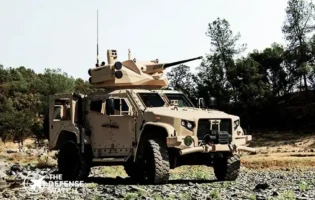
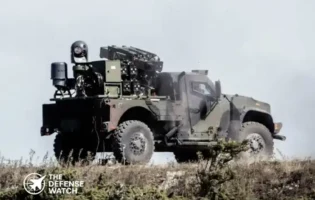
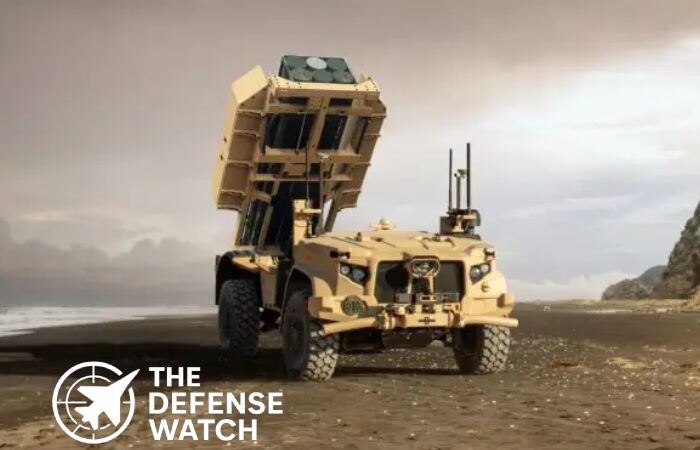
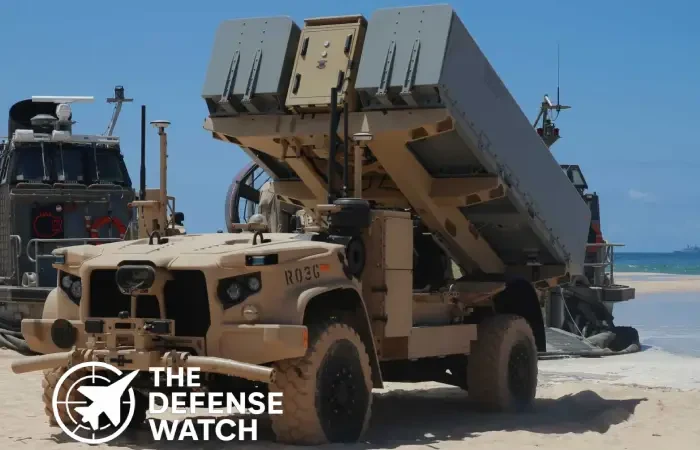
The ROGUE-Fires Autonomous Missile Carrier represents a transformational leap in U.S. Marine Corps expeditionary strike capability, combining unmanned ground mobility with long-range precision fires. Designed to support the Marine Corps Force Design 2030 vision, the system enables dispersed units to engage maritime and land targets without exposing warfighters to frontline danger.
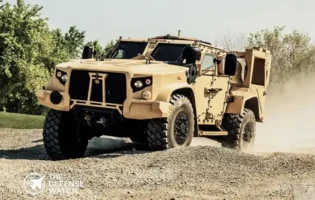
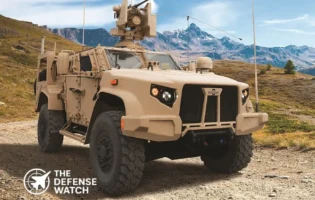
Developed as a collaboration between the U.S. Marine Corps Warfighting Lab and Oshkosh Defense, the ROGUE-Fires platform is based on the proven Joint Light Tactical Vehicle (JLTV) chassis but adapted for remote, autonomous, and semi-autonomous operation. Its primary purpose is to provide a mobile, survivable, and rapidly deployable launch solution for the Naval Strike Missile (NSM), giving Marines an organic anti-ship capability that previously required naval aviation or surface combatants.
Successful Employment Story
The system gained notable attention during PACIFIC ARCHER and RIMPAC-aligned test events, where prototype variants successfully launched NSM rounds against maritime targets while operated remotely. These demonstrations validated its potential for island-hopping operations—deploy, fire, relocate, and hide—supporting distributed maritime operations across the Indo-Pacific region.
Capabilities & Operational Advantages
ROGUE-Fires offers long-range precision strike capability exceeding 100 nautical miles, autonomous navigation, secure remote control, and rapid emplacement. Its low profile and mobility make it difficult to detect, and its compatibility with existing logistics networks ensures rapid field integration. As the U.S. military prioritizes stand-in forces capable of sea denial, the ROGUE-Fires platform enables a cost-effective, scalable deterrent that complicates adversary naval movement.
ROGUE-Fires Autonomous Missile Carrier Price
While official unit costs have not been publicly released, estimates based on JLTV platform pricing and missile integration place the ROGUE-Fires Autonomous Missile Carrier within a competitive range for expeditionary forces seeking precision coastal defense without the expense of traditional ship-launched systems.
Disclaimer Note
The information provided on TheDefenseWatch.com is for general informational purposes only. While we strive to ensure the accuracy, completeness, and timeliness of our content regarding defense and aerospace products, technologies, and specifications, we cannot guarantee that all information is 100% accurate or up-to-date due to the evolving nature of military technology and classified data.TheDefenseWatch.com does not warrant the reliability, suitability, or availability of the information for any specific purpose. Users are advised to consult official sources, such as manufacturers, government publications, or defense agencies, for precise and verified data before making decisions based on our content.We are not affiliated with any defense manufacturers, governments, or military organizations mentioned. Opinions, reviews, and ratings reflect expert analysis but are subjective and should not be considered endorsements. TheDefenseWatch.com is not responsible for any errors, omissions, or consequences arising from the use of this website’s content.External links are provided for convenience and do not imply endorsement. TheDefenseWatch.com reserves the right to update or modify content without prior notice. By using this website, you agree to our Privacy & Cookies Policy.
New Arrivals
Popular Comparisons
-
 Tejas Fighter Jet vs F-16 Fighting Falcon: Capability Compared
View Comparison →
Tejas Fighter Jet vs F-16 Fighting Falcon: Capability Compared
View Comparison → -
Rafale Fighter Jet vs F-16 Fighting Falcon : Which Fighter Has the Edge?
View Comparison →
-
Su-57 Fighter Jet vs J-20 Fighter Jet: Stealth and Air Combat Compared
View Comparison →
-
Mirage 2000 vs Tejas Mk1A: Legacy Combat Power vs Indigenous Modernization
View Comparison →
-
Rafale Fighter Jet vs F-22 Raptor: Which Air Dominance Fighter Has the Edge?
View Comparison →
-
Tejas Fighter Jet vs. Rafale Fighter Jet: India’s Indigenous Fighter Meets France’s Proven Multirole Combat Aircraft
View Comparison →
-
F-22 Raptor vs. F-35 Joint Strike Fighter: Which Fifth Generation Fighter Has the Edge?
View Comparison →
-
F-35A vs. F-22 Raptor: Which U.S. Stealth Fighter Dominates Modern Air Combat?
View Comparison →
-
AGM-114 Hellfire vs. AGM-179 JAGM: Which U.S. Precision Missile Is Better?
View Comparison →
-
Patriot (PAC-3) vs. THAAD: Complete Missile Defense System Comparison, Capabilities, Range, and Strategic Roles
View Comparison →
- Finland deepens European F-35 cooperation with first pilot flight in Europe

- Luxembourg Deploys Additional Detection Assets After Drone Sightings
- China’s J-XDS Prototype May Be Testing a New Radar
- L3Harris Pushes Modular, Distributed Architecture for Electronic Warfare
- Northrop Grumman to Deliver GHOST-R Prototype for U.S. Space Force
- Airborne Early Warning Aircraft Ranked: E-7 vs E-2D vs A-50
- Lockheed Martin Shifts Hypersonic Focus From Peak Speed to Sustained Flight and Production
- Spanish F-18s Conduct 15 Scrambles in Romania During First Month of NATO Mission
- South Korean Army Helicopter Crossed DMZ After Firefighting Mission Error
- Trump Announces Greenland Security Agreement With Denmark and Greenland