










@2026 – All Right Reserved. TheDefenseWatch.com
- Home
- Defense Systems
- Aircraft Carriers
- USS Carl Vinson (CVN-70) Aircraft Carrier
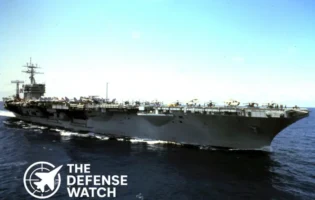
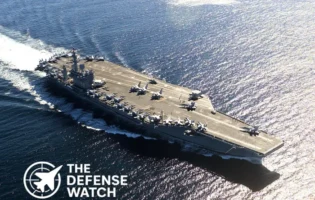
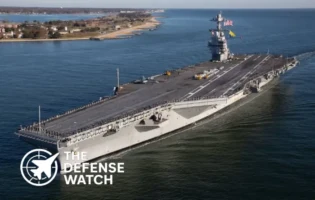
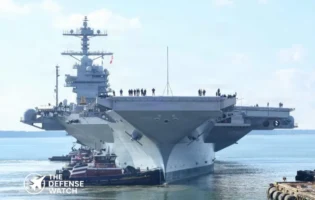
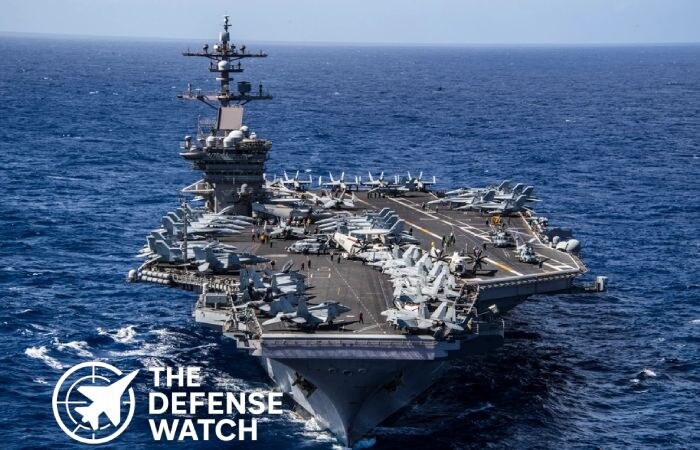
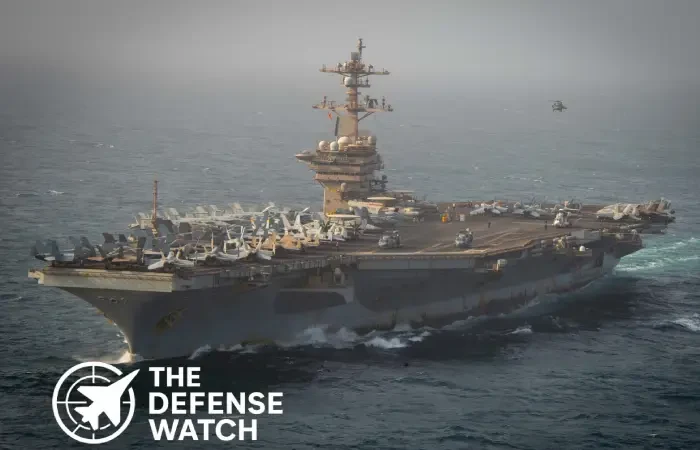
USS Carl Vinson (CVN-70) Aircraft Carrier
Defense Systems Full Specifications
1. Physical Characteristics
| Ship Type | Aircraft Carrier |
| Class | Nimitz-class |
| Length | 333 m |
| Beam (Width) | 77 m |
| Flight Deck Width | 76 m |
| Draft | 12 m |
| Displacement (Full Load) | 101,000 tons |
2. Propulsion & Performance
| Propulsion Type | Nuclear |
| Powerplant | 2 A4W nuclear reactors |
| Shafts | 4 |
| Maximum Speed | 30+ knots |
| Range | Unlimited |
| Endurance | 90+ days |
3. Flight Operations
| Aircraft Launch System | CATOBAR |
| Catapult Type | Steam |
| Recovery System | Arresting gear |
| Total Aircraft Capacity | 60–90+ |
| Hangar Capacity | Full-length |
| Aircraft Types Supported | Fighters, AEW, ASW helos, UAVs |
4. Sensors & Electronics
| Primary Radar | 3D air surveillance |
| Navigation Radar | Standard naval system |
| Fire Control Radar | CIWS and air defense integration |
| Electronic Warfare Suite | ESM, ECM, jammers |
| Communication Systems | SATCOM, Link-16 |
5. Weapons & Defense Systems
| CIWS | Phalanx |
| Short-Range SAMs | RAM |
| Missile Launchers | Surface-defense only |
| Decoy Systems | Chaff, flares, electronic decoys |
6. Command & Control
| Combat Management System | Integrated CMS |
| Combat Information Center (CIC) | Central command hub |
| Air Operations Center | Flight operations management |
| Data Links | Tactical & satellite communication |
7. Crew & Capacity
| Ship Crew | 3,200 |
| Air Wing Personnel | 1,800 |
| Total Complement | 5,000+ |
8. Construction & Cost
| Shipbuilder/Manufacturer | Huntington Ingalls Industries – Newport News |
| Construction Started | 1975 |
| Commissioned | 1982 |
| Estimated Cost | $4.5B–$5B |
PROS
- Nuclear propulsion provides near-unlimited range and endurance
- Capable of deploying 60–90+ aircraft simultaneously
- Advanced radar and electronic warfare systems
- Strong defensive systems for air and missile threats
- Proven operational reliability and global presence
CONS
- Extremely high construction and maintenance costs
- Large crew requirements (2,000–5,500+)
- Vulnerable to advanced anti-ship missile threats
- Limited stealth due to large size and radar signature
- Requires extensive support vessels for full operational efficiency
USS Carl Vinson (CVN-70): U.S. Nimitz-Class Nuclear Carrier
The USS Carl Vinson (CVN-70) stands as one of the U.S. Navy’s premier power projection platforms, epitomizing modern naval aviation and strategic deterrence. Commissioned in 1982, this Nimitz-class nuclear-powered aircraft carrier delivers unmatched endurance, operational flexibility, and multi-role capabilities in global maritime theaters. Built by Huntington Ingalls Industries – Newport News Shipbuilding, Carl Vinson exemplifies U.S. naval engineering, combining advanced technology, robust armament, and comprehensive command and control systems.
Powered by two nuclear reactors, CVN-70 can operate for over 20 years without refueling, supporting continuous deployment for extended missions. The carrier’s large flight deck accommodates a versatile air wing of 60–90 aircraft, including F/A-18E/F Super Hornets, E-2 Hawkeyes, EA-18G Growlers, MH-60R/S helicopters, and unmanned aerial systems, enabling strike, surveillance, electronic warfare, and anti-submarine operations.
Advanced systems onboard include CATOBAR launch capability with steam catapults, arresting gear for safe recovery, and an integrated Combat Information Center (CIC) for command, control, and tactical coordination. Its sensor suite combines 3D air surveillance radars, navigation radars, and electronic warfare systems, providing comprehensive situational awareness and threat mitigation.
Defensively, CVN-70 is equipped with Phalanx CIWS, RIM-116 Rolling Airframe Missiles (RAM), decoy systems, and layered electronic countermeasures, allowing self-protection against air and missile threats. The carrier’s nuclear propulsion, coupled with a top speed exceeding 30 knots, ensures rapid response across global hotspots.
The USS Carl Vinson has been pivotal in humanitarian relief, deterrence missions, and combat operations, demonstrating the strategic value of a nuclear aircraft carrier in both peacetime and wartime scenarios. It remains a symbol of U.S. naval supremacy, projecting air power far beyond American shores while maintaining unmatched endurance, versatility, and operational capability.
Disclaimer Note
The information provided on TheDefenseWatch.com is for general informational purposes only. While we strive to ensure the accuracy, completeness, and timeliness of our content regarding defense and aerospace products, technologies, and specifications, we cannot guarantee that all information is 100% accurate or up-to-date due to the evolving nature of military technology and classified data.TheDefenseWatch.com does not warrant the reliability, suitability, or availability of the information for any specific purpose. Users are advised to consult official sources, such as manufacturers, government publications, or defense agencies, for precise and verified data before making decisions based on our content.We are not affiliated with any defense manufacturers, governments, or military organizations mentioned. Opinions, reviews, and ratings reflect expert analysis but are subjective and should not be considered endorsements. TheDefenseWatch.com is not responsible for any errors, omissions, or consequences arising from the use of this website’s content.External links are provided for convenience and do not imply endorsement. TheDefenseWatch.com reserves the right to update or modify content without prior notice. By using this website, you agree to our Privacy & Cookies Policy.
New Arrivals
Popular Comparisons
-
 Tejas Fighter Jet vs F-16 Fighting Falcon: Capability Compared
View Comparison →
Tejas Fighter Jet vs F-16 Fighting Falcon: Capability Compared
View Comparison → -
Rafale Fighter Jet vs F-16 Fighting Falcon : Which Fighter Has the Edge?
View Comparison →
-
Su-57 Fighter Jet vs J-20 Fighter Jet: Stealth and Air Combat Compared
View Comparison →
-
Mirage 2000 vs Tejas Mk1A: Legacy Combat Power vs Indigenous Modernization
View Comparison →
-
Rafale Fighter Jet vs F-22 Raptor: Which Air Dominance Fighter Has the Edge?
View Comparison →
-
Tejas Fighter Jet vs. Rafale Fighter Jet: India’s Indigenous Fighter Meets France’s Proven Multirole Combat Aircraft
View Comparison →
-
F-22 Raptor vs. F-35 Joint Strike Fighter: Which Fifth Generation Fighter Has the Edge?
View Comparison →
-
F-35A vs. F-22 Raptor: Which U.S. Stealth Fighter Dominates Modern Air Combat?
View Comparison →
-
AGM-114 Hellfire vs. AGM-179 JAGM: Which U.S. Precision Missile Is Better?
View Comparison →
-
Patriot (PAC-3) vs. THAAD: Complete Missile Defense System Comparison, Capabilities, Range, and Strategic Roles
View Comparison →
- Bell Boeing Wins $19.8M V-22 Tactical Software Support Contract

- Honeywell Wins $53.9M Navy Contract for WSN-7 Gyro Components
- Lockheed Martin Wins $76.6M Trident II D5LE2 Development Contract
- Lockheed Martin Gets $871.2M F-35 Site Support Contract Increase
- Pete Hegseth Texas Enlistment Ceremony: Hegseth Tells Military Families, We Have Their Back
- U.S., Denmark and Greenland Reach Security Agreement to Expand American Military Presence
- SpaceX Wins Three More NASA Crew Missions in $946 Million ISS Contract
- U.S. Clears Potential $24.3 Billion F-35 Sale to Saudi Arabia
- Type 99B Tank Training Shows China’s Shift Toward Networked Armored Warfare
- JRC Integrated Systems Gets $47.4M SLCM-N Support Contract