












@2026 – All Right Reserved. TheDefenseWatch.com
- Home
- Defense Systems
- Defense Systems
- MIM-104 Patriot Missile System
MIM-104 Patriot Missile System


Defense Systems Full Specifications
1. General Information
| System Name | MIM-104 Patriot PAC-3 |
| Manufacturer | Raytheon Technologies |
| Country of Origin | United States |
| Type / Role | Surface-to-Air Missile (SAM) System |
| In Service | Yes |
| Year Introduced | 1981 |
| Unit Cost | USD 1 Billion (Estimated per Battery) |
2. Performance & Capabilities
| Maximum Engagement Range | 160 km |
| Maximum Engagement Altitude | 24 km |
| Target Types | Aircraft, Ballistic Missiles, Cruise Missiles, UAVs |
| Interception Probability | 90% (Short-Range Missiles) |
| Reaction Time | 9–15 seconds |
| Radar Detection Range | 150–300 km |
3. Missile Specifications
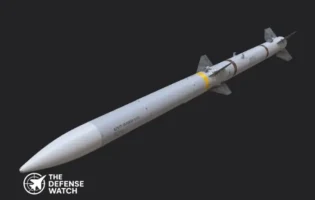
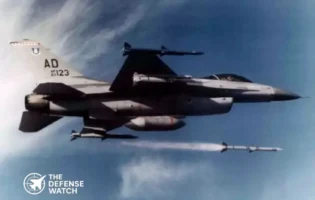
| Missile Type | PAC-3 MSE / GEM-T |
| Missile Length | 5.0 m |
| Missile Weight | 312 kg |
| Warhead Type | Fragmentation / Proximity Fuse |
| Warhead Weight | 90 kg |
| Speed | Mach 4.5 |
4. Radar & Fire Control
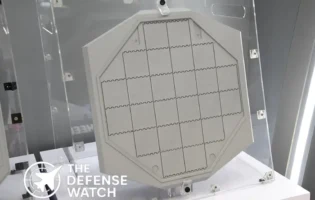
| Radar Type | AESA Radar |
| Radar Name | AN/MPQ-65 |
| Detection Range | 150–180 km |
| Tracking Capacity | 125+ Targets |
| Guidance System | Command + Semi-Active Radar Homing |
| Fire Control System | Automated Digital Fire Control System |
5. Launcher & Mobility
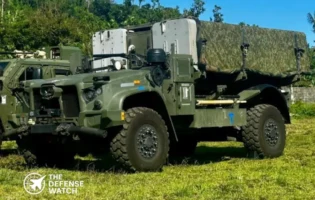
| Launcher Type | Mobile / Truck-Mounted |
| No. of Missiles per Launcher | 4–16 |
| Reload Time | 30–60 minutes |
| Mobility Platform | M983 HEMTT Truck / Tatra 8x8 |
| Crew Required | 3–5 personnel |
6. Command & Control
| C2 System | Integrated Battle Management Network |
| Connectivity | Link-16 / SATCOM / Secure Data Link |
| Network Capability | Yes (Multi-Layer Integration) |
| Operation Mode | Autonomous / Networked / Manual Override |
7. Operational Use
| Primary Operator | USA, Germany, Japan, Israel, South Korea |
| Combat Proven | Yes |
| Conflict History | Iraq War, Yemen, Ukraine |
| Notable Feature | Multi-Layered Defense Capability |
PROS
- Proven performance in real combat scenarios
- Long-range detection and interception capability
- AESA radar with high tracking capacity
- Mobile, truck-mounted launcher configuration
- Strong multi-layer integration with U.S. and NATO networks
CONS
- Very high procurement and sustainment costs
- Requires significant crew training and maintenance
- Large radar signature compared to newer systems
- Limited 360° coverage without additional components
- Complex logistics for deployment and resupply
Patriot MIM-104 Air Defense System
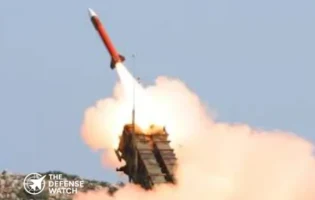
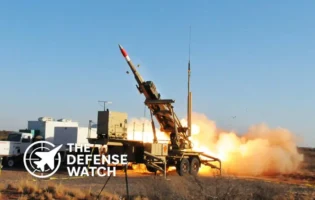
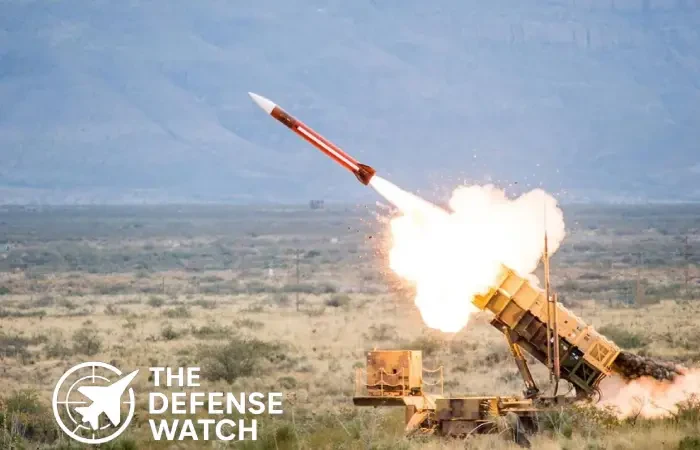
The MIM-104 Patriot is one of the United States’ most advanced and widely deployed air and missile defense systems, developed to counter evolving aerial threats ranging from tactical ballistic missiles to cruise missiles, UAVs, and high-performance aircraft. Manufactured by Raytheon Technologies, the Patriot has become a cornerstone of U.S. and allied integrated air defense architectures, with decades of modernization ensuring relevance in modern high-threat environments.
Overview & Capabilities
Originally introduced in 1981, the Patriot system has undergone multiple upgrades, culminating in the PAC-3 and PAC-3 MSE variants. These improvements deliver significant enhancements in accuracy, lethality, radar performance, and interception probability—particularly against ballistic missiles. The system’s primary radar, the AN/MPQ-65 AESA radar, offers long-range detection and multi-target tracking, supporting engagements in dense and contested airspace.
The Patriot’s engagement range of up to 160 km and altitude reach of 24 km allow it to provide wide-area defense for critical infrastructure, military bases, and strategic assets. Its missile interceptors reach speeds of Mach 4.5, enabling rapid response against high-speed incoming threats. Designed for mobility, Patriot batteries are mounted on heavy tactical trucks such as the M983 HEMTT, allowing quick repositioning in dynamic combat scenarios.
Operational Use
The Patriot has been widely used across conflict zones including the Iraq War, Yemen conflict, and the Ukraine war, demonstrating its value in intercepting advanced ballistic and cruise missile threats. Operators such as Germany, Israel, Japan, South Korea, and the U.S. continue to modernize their Patriot fleets, ensuring compatibility with multi-layered integrated air defense networks through systems like Link-16 and satellite communications.
Patriot MIM-104 Price
The price of a full Patriot MIM-104 battery varies by configuration, training, and support packages, but U.S. defense estimates place the cost at around USD 1 billion per battery, with individual interceptor missiles costing between USD 2–4 million depending on variant.
FAQs
What is the purpose of the MIM-104 Patriot system?
The MIM-104 Patriot is designed to provide long-range air and missile defense against aircraft, tactical ballistic missiles, cruise missiles, and UAVs. It protects military bases, critical infrastructure, and high-value assets by detecting, tracking, and intercepting incoming threats using an integrated radar, command system, and interceptor missiles.
What was the success rate of the MIM-104 Patriot?
Patriot success rates vary by variant, mission, and conflict. The PAC-3/PAC-3 MSE interceptors have demonstrated high effectiveness, with reported real-world performance often in the 80–90% range against short-range ballistic missiles, depending on engagement conditions. Earlier Patriot variants had lower and more inconsistent performance in past conflicts like the Gulf War.
Why did the Patriot missile fail?
Failures typically occurred due to legacy software issues, radar synchronization errors, limited early-generation tracking capabilities, or engagement complexities when facing high-speed ballistic or low-flying cruise missiles. Most failures are associated with older Patriot variants (pre-PAC-3 era), not the modernized Patriot configurations deployed today.
Can the Patriot shoot down an F-35?
In theory, the Patriot system can attempt to engage any aircraft within range, but the F-35’s stealth design, advanced electronic warfare systems, and low radar cross-section make detection and interception extremely difficult. In practical terms, an F-35 is highly unlikely to be successfully intercepted by a Patriot battery under real combat conditions.
Disclaimer Note
The information provided on TheDefenseWatch.com is for general informational purposes only. While we strive to ensure the accuracy, completeness, and timeliness of our content regarding defense and aerospace products, technologies, and specifications, we cannot guarantee that all information is 100% accurate or up-to-date due to the evolving nature of military technology and classified data.TheDefenseWatch.com does not warrant the reliability, suitability, or availability of the information for any specific purpose. Users are advised to consult official sources, such as manufacturers, government publications, or defense agencies, for precise and verified data before making decisions based on our content.We are not affiliated with any defense manufacturers, governments, or military organizations mentioned. Opinions, reviews, and ratings reflect expert analysis but are subjective and should not be considered endorsements. TheDefenseWatch.com is not responsible for any errors, omissions, or consequences arising from the use of this website’s content.External links are provided for convenience and do not imply endorsement. TheDefenseWatch.com reserves the right to update or modify content without prior notice. By using this website, you agree to our Privacy & Cookies Policy.
New Arrivals
-
 PAC-2 Patriot Missile System
-
Patriot PAC-3 Missile Defense System
-
EA-18G Growler
-
J-50 Fighter Jet
-
Northrop Grumman GHOST-R GEO Recon Satellite
-
A-50 Mainstay Aircraft
-
Spanish EF-18 Hornet Fighter
-
Trident II D5 Missile
-
B-21 Raider Bomber
-
F-47 Fighter Jet
-
F-35i Adir Fighter Jet
-
Type 99B Main Battle Tank
Popular Comparisons
-
 Tejas Fighter Jet vs F-16 Fighting Falcon: Capability Compared
View Comparison →
Tejas Fighter Jet vs F-16 Fighting Falcon: Capability Compared
View Comparison → -
Rafale Fighter Jet vs F-16 Fighting Falcon : Which Fighter Has the Edge?
View Comparison →
-
Su-57 Fighter Jet vs J-20 Fighter Jet: Stealth and Air Combat Compared
View Comparison →
-
Mirage 2000 vs Tejas Mk1A: Legacy Combat Power vs Indigenous Modernization
View Comparison →
-
Rafale Fighter Jet vs F-22 Raptor: Which Air Dominance Fighter Has the Edge?
View Comparison →
-
Tejas Fighter Jet vs. Rafale Fighter Jet: India’s Indigenous Fighter Meets France’s Proven Multirole Combat Aircraft
View Comparison →
-
F-22 Raptor vs. F-35 Joint Strike Fighter: Which Fifth Generation Fighter Has the Edge?
View Comparison →
-
F-35A vs. F-22 Raptor: Which U.S. Stealth Fighter Dominates Modern Air Combat?
View Comparison →
-
AGM-114 Hellfire vs. AGM-179 JAGM: Which U.S. Precision Missile Is Better?
View Comparison →
-
Patriot (PAC-3) vs. THAAD: Complete Missile Defense System Comparison, Capabilities, Range, and Strategic Roles
View Comparison →
- X-Planes in the Drone Era: Why Experimental Aircraft Still Matter

- France to Deploy Troops, Radar and Air Defense to Protect Saudi Yanbu Oil Hub
- Greek-Operated Patriot Intercepts Ballistic Missile and Drone Over Saudi Arabia
- Raytheon Wins $50.1 Million Navy Order for EA-18G Next Generation Jammer Repairs
- Stark Aerospace Wins $114 Million MK 41 VLS Canister Contract
- Northrop Grumman Wins $123.8M F-35 APG-85 Lot 7 Radar Contract
- Leonardo, Fincantieri Win €3.7B Contract for Two Italian Navy DDX Destroyers
- Finnish President Urges Musk to Expand Starlink Access for Ukraine to Target Russian Missile Launchers
- MV-22B Osprey Completes First Navy Sonobuoy Acceptance Test
- Saab expands Swedish space role through new partnerships with SSC Space, OHB Sweden and Ericsson