
















@2026 – All Right Reserved. TheDefenseWatch.com
- Home
- Defense Systems
- Radar and Jamming Systems
- AN/SPY‑6 Radar
AN/SPY‑6 Radar
Defense Systems Full Specifications
1. General Information
2. Technical Specifications
3. Functional Capabilities
4. Physical & Operational Characteristics
5. Software & Processing
6. Operational History
7. Export / Compliance Data
AN/SPY‑6 Radar (AMDR) – Next‑Gen Naval Defense
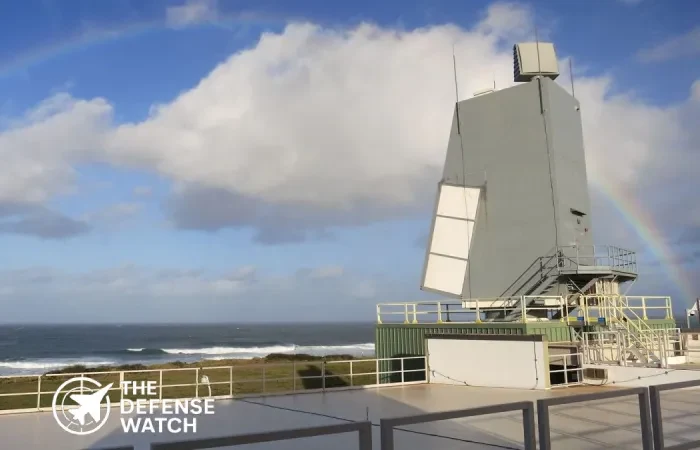
The AN/SPY‑6, also known as the Air and Missile Defense Radar (AMDR), is the U.S. Navy’s cutting-edge shipborne radar system designed to meet the increasing demands of modern surface warfare. A cornerstone of next-generation fleet protection, SPY‑6 brings unprecedented sensitivity, modularity, and advanced processing to the fight.
Manufactured by Raytheon Missiles & Defense, a division of RTX, the SPY-6 family originates in the United States and is engineered specifically for naval air and missile defense. Its primary mission is to defend against ballistic missiles, cruise missiles, aircraft, and surface threats—all simultaneously.
Major Capabilities
- Scalable Architecture: Built from modular building blocks known as Radar Modular Assemblies (RMAs), each a self-contained 2′ × 2′ × 2′ unit, the radar can be configured for different ship classes.
- High Sensitivity: Using gallium nitride (GaN) semiconductor technology, SPY‑6 offers up to +15 dB sensitivity over legacy SPY‑1 radars — meaning it can detect targets half the size at twice the distance.
- Active Electronically Scanned Array (AESA): Provides multi-beam capability and beam steering for fast, simultaneous tracking of numerous threats.
- Dual-Band Suite: Combines an S-band radar for volume search and missile discrimination with an X‑band radar for horizon search, precision tracking, and target illumination.
- Robust Integration: Works with the Aegis Combat System (ACB‑20), enabling tight integration with U.S. Navy surface combatants.
Operational Use
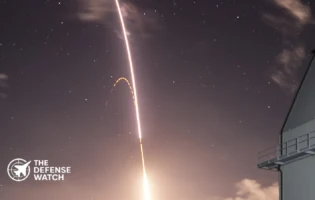
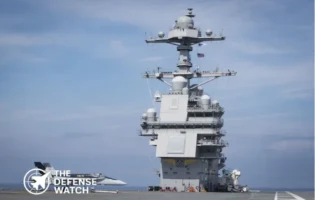
SPY‑6(V)1 is being deployed on Arleigh Burke Flight III destroyers. The system has been tested at the Pacific Missile Range Facility in Hawaii, where it demonstrated long-range missile tracking and multi-threat discrimination. The modular design also supports variants such as (V)2 for amphibious ships, (V)3 for carriers, and (V)4 for back-fit on older destroyers.
Powerful, flexible, and future-proof, the AN/SPY‑6 radar family represents a leap forward in maritime defense technology, equipping the U.S. Navy with the ability to detect and respond to evolving threats in high-threat environments.
AN/SPY‑6 Radar Price
As of now, publicly available cost data for a single AN/SPY‑6 radar unit is limited due to its complex integration with warships and classified procurement nature. Procurement contracts are negotiated at the ship‑system level, so there is no standalone “off‑the-shelf” retail price.
FAQs
What is the AN/SPY‑6 radar used for?
It is a multi-function naval radar used by the U.S. Navy to detect and track air, surface, and ballistic missile threats simultaneously.
Who manufactures the SPY‑6 radar?
It is developed and manufactured by Raytheon Missiles & Defense, part of RTX Corporation.
On which ships is the SPY‑6 installed?
The AN/SPY‑6(V)1 variant is installed on Arleigh Burke Flight III destroyers; other variants are intended for amphibious ships, carriers, and older destroyers.
How is SPY‑6 different from older radar like SPY‑1?
SPY‑6 uses modular Radar Modular Assemblies (RMAs), GaN transmit/receive modules, and AESA architecture, offering vastly higher sensitivity (+15 dB), more simultaneous tracking, and longer detection range than SPY‑1.
Is SPY‑6 exportable to other countries?
Yes, exportability is designed in. The system has export-friendly features, though it remains controlled under U.S. defense export regulations.
Disclaimer Note
The information provided on TheDefenseWatch.com is for general informational purposes only. While we strive to ensure the accuracy, completeness, and timeliness of our content regarding defense and aerospace products, technologies, and specifications, we cannot guarantee that all information is 100% accurate or up-to-date due to the evolving nature of military technology and classified data.TheDefenseWatch.com does not warrant the reliability, suitability, or availability of the information for any specific purpose. Users are advised to consult official sources, such as manufacturers, government publications, or defense agencies, for precise and verified data before making decisions based on our content.We are not affiliated with any defense manufacturers, governments, or military organizations mentioned. Opinions, reviews, and ratings reflect expert analysis but are subjective and should not be considered endorsements. TheDefenseWatch.com is not responsible for any errors, omissions, or consequences arising from the use of this website’s content.External links are provided for convenience and do not imply endorsement. TheDefenseWatch.com reserves the right to update or modify content without prior notice. By using this website, you agree to our Privacy & Cookies Policy.
New Arrivals
Popular Comparisons
-
 Tejas Fighter Jet vs F-16 Fighting Falcon: Capability Compared
View Comparison →
Tejas Fighter Jet vs F-16 Fighting Falcon: Capability Compared
View Comparison → -
Rafale Fighter Jet vs F-16 Fighting Falcon : Which Fighter Has the Edge?
View Comparison →
-
Su-57 Fighter Jet vs J-20 Fighter Jet: Stealth and Air Combat Compared
View Comparison →
-
Mirage 2000 vs Tejas Mk1A: Legacy Combat Power vs Indigenous Modernization
View Comparison →
-
Rafale Fighter Jet vs F-22 Raptor: Which Air Dominance Fighter Has the Edge?
View Comparison →
-
Tejas Fighter Jet vs. Rafale Fighter Jet: India’s Indigenous Fighter Meets France’s Proven Multirole Combat Aircraft
View Comparison →
-
F-22 Raptor vs. F-35 Joint Strike Fighter: Which Fifth Generation Fighter Has the Edge?
View Comparison →
-
F-35A vs. F-22 Raptor: Which U.S. Stealth Fighter Dominates Modern Air Combat?
View Comparison →
-
AGM-114 Hellfire vs. AGM-179 JAGM: Which U.S. Precision Missile Is Better?
View Comparison →
-
Patriot (PAC-3) vs. THAAD: Complete Missile Defense System Comparison, Capabilities, Range, and Strategic Roles
View Comparison →
- Northrop Grumman Wins $123.8M F-35 APG-85 Lot 7 Radar Contract

- Leonardo, Fincantieri Win €3.7B Contract for Two Italian Navy DDX Destroyers
- Finnish President Urges Musk to Expand Starlink Access for Ukraine to Target Russian Missile Launchers
- MV-22B Osprey Completes First Navy Sonobuoy Acceptance Test
- Saab expands Swedish space role through new partnerships with SSC Space, OHB Sweden and Ericsson
- Russian Mi-8 Briefly Enters Polish Airspace, Prompting Fighter Scramble
- Last A-10 Warthog Departs Nellis, Closing a 49-Year Close Air Support Era
- British Arms Broker Jailed 16 Years Over Illegal Missile and Fighter Jet Deals
- RAF Hawk T2 Crashes Near RAF Valley After Two Pilots Eject
- DeltaQuad Launches Evo-LE With Eight-Hour Endurance for Long-Range ISR