












@2026 – All Right Reserved. TheDefenseWatch.com
- Home
- Defense Systems
- Fighter Jets
- Shenyang J-15 Fighter Jet
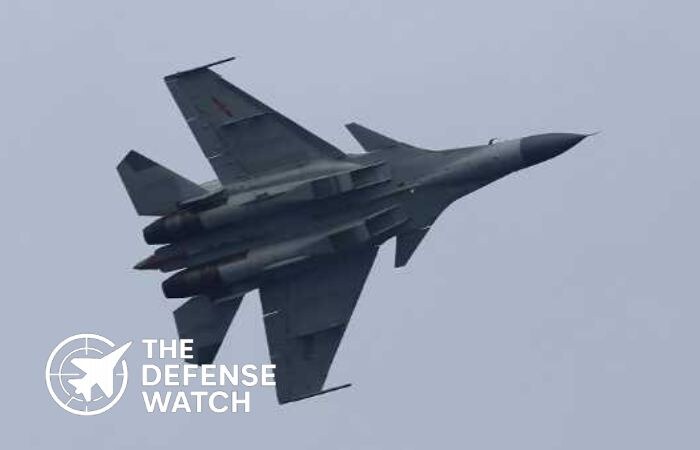
Shenyang J-15 Fighter Jet
Defense Systems Full Specifications
General Information
| Name | Shenyang J‑15 “Flying Shark” |
| Manufacturer | Shenyang Aircraft Corporation (AVIC) |
| Country of Origin | China |
| Type / Role | Carrier-based multirole fighter |
| Generation | 4.5 |
| Status | Active service |
| First Flight | 2009 |
| Introduction / In Service Since | 2013 |
| Number Built | ~76+ |
| Operators | People’s Liberation Army Naval Air Force |
Dimensions & Structure
| Length | 21.9 m |
| Wingspan | 14.7 m (folded: ~7.4 m) |
| Height | 5.9 m |
| Wing Area | 62.04 m² |
| Empty Weight | 17,500 kg |
| Maximum Takeoff Weight (MTOW) | 33,000 kg |
| Internal Weapons Bay | None (external hardpoints only) |
| External Hardpoints | 12 |
Performance
| Maximum Speed | Mach 2.4 (~2,550 km/h) |
| Range | 3,500 km |
| Combat Radius | ~1,270 km |
| Service Ceiling | 20,000 m |
| Rate of Climb | 325 m/s |
| Thrust-to-Weight Ratio | ~0.93 (WS-10) |
| G Limits | +8 g |
Powerplant
| Engine Type | Afterburning turbofan (WS-10A / AL-31 variants) |
| No. of Engines | 2 |
| Thrust (each) | ~135 kN (afterburner) |
| Thrust Vectoring | No |
| Fuel Capacity | ~9,800 kg internal |
Armament
| Gun | 30 mm GSh-30-1 cannon (150 rounds) |
| Missiles (Air-to-Air) | PL-12 / R-77, PL-9 / R-73, PL-15 (newer variants) |
| Missiles (Air-to-Ground) | Anti-ship missiles (YJ-62, YJ-91), standoff missiles |
| Bombs | Guided and unguided bombs, rockets |
| Hardpoints | 12 |
| Payload Capacity | Several tonnes |
Avionics & Systems
| Radar | PESA (early), AESA (J‑15T/D) |
| Radar Range | Classified |
| Electronic Warfare (EW) System | J‑15D variant specialized for EW |
| Targeting System | Standard targeting pods |
| Helmet Display | Not publicly disclosed |
| Navigation | Inertial / GPS |
| Autopilot / AI Assistance | Fly-by-wire |
| Communication | Military datalinks and radios |
Stealth & Technology
| Radar Cross Section (RCS) | Large, conventional design |
| Stealth Features | Minimal |
| Infrared Signature Reduction | Limited |
| Sensor Fusion | Emerging in J‑15T/D |
| Networking Capabilities | PLAN-integrated |
Variants
| Special Export Versions | - |
Operational History
| Major Conflicts / Deployments | Liaoning, Shandong, future Fujian carriers |
| Combat Proven? | No confirmed combat record |
| Mission Types | Air superiority, maritime strike, EW |
Cost & Program
| Unit Cost | ~$61 million |
| Development Cost | Not publicly disclosed |
| Program Name | J‑15 / J‑15T / J‑15D carrier fighter program |
| Funding Countries | China |
Additional Information
| Upgrades Planned | AESA radar, improved engines |
| Future Replacement | Shenyang J‑35 (carrier-based stealth fighter) |
| Export Restrictions | Not widely exported |
| Notable Achievements | Backbone of PLAN carrier aviation; first catapult-capable J‑15T deployed |
| Competitors | F/A-18E/F, Rafale M, future J‑35 |
PROS
- Highly capable carrier-based multirole fighter
- Long range (~3,500 km) enables extended maritime reach
- Heavy payload with 12 external hardpoints for varied missions
- Twin-engine design supports high speed, power, and redundancy
- Modern avionics and radar in upgraded variants (AESA for J‑15T/D)
CONS
- Very heavy jet compromises maneuverability compared to lighter fighters
- Ski-jump takeoff limits payload on older carrier types
- Early versions used less efficient older engines (AL-31 vs WS-10)
- Relatively large radar cross-section (non-stealth design)
- High maintenance and operational costs due to complexity
J‑15 “Flying Shark” Carrier Fighter
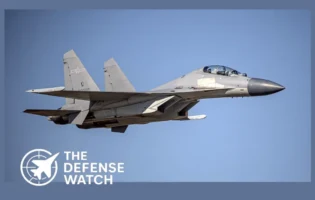
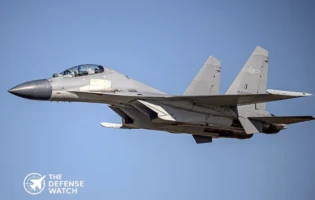
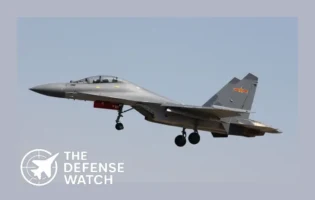
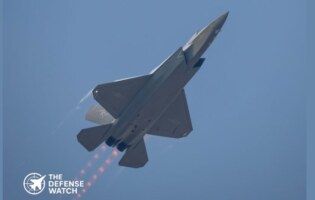
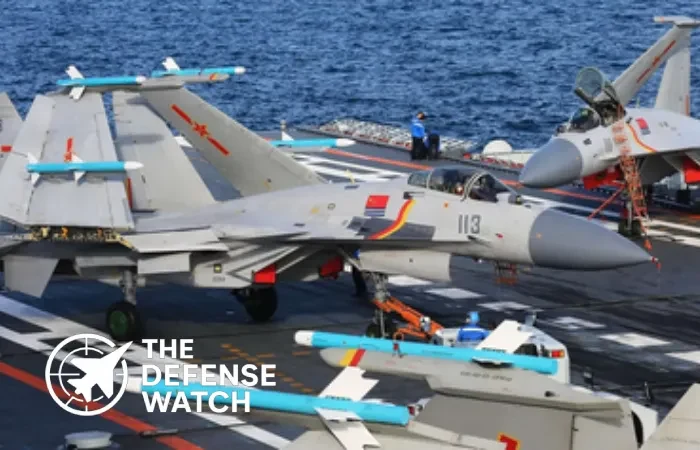
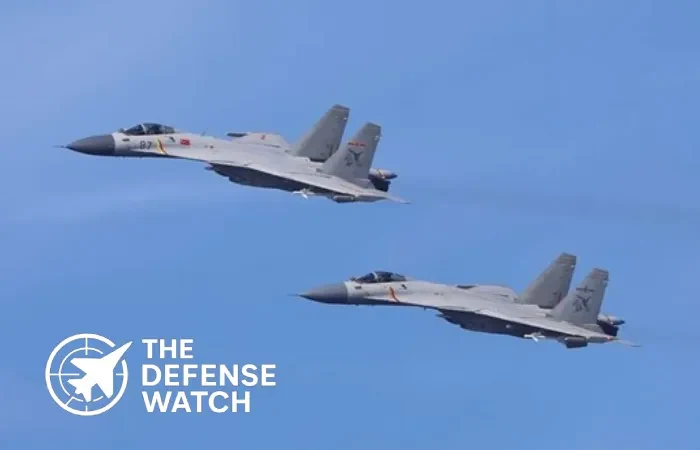
Developed from the Russian Su-33 and drawing on technology from the J-11B program, the J‑15 was designed specifically for China’s ski-jump–equipped aircraft carriers such as the Liaoning and Shandong. Its first flight came in 2009, and it entered active service around 2013. A new variant, the J-15T, is optimized for catapult-based takeoff from future carriers.
Performance & Capabilities
Powered by two indigenous WS-10‑series afterburning turbofan engines (though early models used Russian AL‑31 variants), the J‑15 can reach speeds up to approximately Mach 2.4. It boasts an estimated combat range of around 3,500 km. Its service ceiling goes as high as 20,000 m (approximately 65,700 ft), with a very high rate of climb (~325 m/s).
Armament
The J‑15 carries a 30 mm GSh-30-1 cannon with about 150 rounds. It supports a wide arsenal on its 12 external hardpoints: medium‑range PL-12 (or R-77) and short‑range PL-9 (or R-73) air-to-air missiles, long-range PL-15 on newer models, as well as anti-ship missiles (e.g., YJ-62, YJ-91), air‑to-ground bombs, rockets, and ECM pods.
Avionics & Systems
Some variants (such as J-15T / J-15D) reportedly feature an AESA radar (active electronically scanned array), especially under a modified radome. It employs a glass cockpit, fly-by-wire controls, MIL-STD-1553B data bus, and modern navigation, communication, and targeting systems.
Operational Use
In service with China’s PLAN Naval Air Force, the J‑15 flies from the Liaoning and Shandong carriers. The newer J‑15T variant, with catapult-launch capability, is being deployed on carriers with electromagnetic launch systems. The J-15D is a dedicated electronic warfare version, akin to the U.S. Navy’s EA-18G Growler.
J‑15 “Flying Shark” Price in US
The J‑15 “Flying Shark” is China’s premier carrier-based multirole fighter, developed by Shenyang Aircraft Corporation for the People’s Liberation Army Navy (PLAN). As a heavy, twin-engine “Flanker”-style jet, it forms the backbone of China’s naval aviation capability, combining long range, high payload, and all-weather combat flexibility.
FAQs: J‑15 Fighter Jet
Is the J‑15 better than the F/A‑18 Super Hornet?
The J‑15 and F/A‑18E/F Super Hornet serve similar carrier-based roles, but they differ in design philosophy. The J‑15 is heavier, with a larger payload and longer range (~3,500 km), making it ideal for long-range maritime strike missions. However, it is less agile and lacks stealth features compared to the Super Hornet, which benefits from advanced avionics, lower radar cross-section, and proven combat experience. Overall, each excels in its respective operational doctrine.
Is the F‑15 the best fighter jet in the world?
The F‑15 remains a highly capable air superiority fighter with an excellent track record in speed, payload, and combat experience. Modernized variants like the F‑15EX have cutting-edge avionics and weapons integration. While it is among the world’s top fighters, “best” depends on mission context; stealth jets like the F‑35 or Su‑57 may outperform the F‑15 in modern network-centric or low-observable warfare scenarios.
Is the X‑15 the fastest plane ever?
Yes, the North American X‑15, a hypersonic experimental aircraft from the 1960s, holds the record for the fastest manned aircraft. It reached Mach 6.7 (approximately 7,273 km/h) in flight tests, far exceeding conventional fighter speeds. The J‑15, F‑15, and F/A‑18 operate at conventional supersonic speeds, far below X‑15 records.
Is China’s air force better than the U.S.?
China’s People’s Liberation Army Air Force (PLAAF) and Naval Air Force are rapidly modernizing, with advanced fighters like the J‑20 and J‑15, improving training, and expanding carrier aviation. However, the U.S. Air Force and Navy maintain superior global reach, stealth aircraft, carrier power projection, logistics, and combat experience. In direct capability, the U.S. still has the technological and operational edge.
J‑15 Fighter Jet Price
The unit cost of a J‑15 is estimated around $61 million per aircraft. This figure can vary depending on variant, avionics, and equipment upgrades.
J‑15 fighter generation
The J‑15 is considered a 4.5-generation fighter. It is derived from the Russian Su‑33 “Flanker” and upgraded with modern Chinese avionics, radar, and weapons systems, bridging the gap between fourth-generation aircraft and next-generation designs.
Disclaimer Note
The information provided on TheDefenseWatch.com is for general informational purposes only. While we strive to ensure the accuracy, completeness, and timeliness of our content regarding defense and aerospace products, technologies, and specifications, we cannot guarantee that all information is 100% accurate or up-to-date due to the evolving nature of military technology and classified data.TheDefenseWatch.com does not warrant the reliability, suitability, or availability of the information for any specific purpose. Users are advised to consult official sources, such as manufacturers, government publications, or defense agencies, for precise and verified data before making decisions based on our content.We are not affiliated with any defense manufacturers, governments, or military organizations mentioned. Opinions, reviews, and ratings reflect expert analysis but are subjective and should not be considered endorsements. TheDefenseWatch.com is not responsible for any errors, omissions, or consequences arising from the use of this website’s content.External links are provided for convenience and do not imply endorsement. TheDefenseWatch.com reserves the right to update or modify content without prior notice. By using this website, you agree to our Privacy & Cookies Policy.
More Defense Systems from Shenyang Aircraft Corporation (SAC)
New Arrivals
Popular Comparisons
-
 Tejas Fighter Jet vs F-16 Fighting Falcon: Capability Compared
View Comparison →
Tejas Fighter Jet vs F-16 Fighting Falcon: Capability Compared
View Comparison → -
Rafale Fighter Jet vs F-16 Fighting Falcon : Which Fighter Has the Edge?
View Comparison →
-
Su-57 Fighter Jet vs J-20 Fighter Jet: Stealth and Air Combat Compared
View Comparison →
-
Mirage 2000 vs Tejas Mk1A: Legacy Combat Power vs Indigenous Modernization
View Comparison →
-
Rafale Fighter Jet vs F-22 Raptor: Which Air Dominance Fighter Has the Edge?
View Comparison →
-
Tejas Fighter Jet vs. Rafale Fighter Jet: India’s Indigenous Fighter Meets France’s Proven Multirole Combat Aircraft
View Comparison →
-
F-22 Raptor vs. F-35 Joint Strike Fighter: Which Fifth Generation Fighter Has the Edge?
View Comparison →
-
F-35A vs. F-22 Raptor: Which U.S. Stealth Fighter Dominates Modern Air Combat?
View Comparison →
-
AGM-114 Hellfire vs. AGM-179 JAGM: Which U.S. Precision Missile Is Better?
View Comparison →
-
Patriot (PAC-3) vs. THAAD: Complete Missile Defense System Comparison, Capabilities, Range, and Strategic Roles
View Comparison →
- Bell Boeing Wins $19.8M V-22 Tactical Software Support Contract

- Honeywell Wins $53.9M Navy Contract for WSN-7 Gyro Components
- Lockheed Martin Wins $76.6M Trident II D5LE2 Development Contract
- Lockheed Martin Gets $871.2M F-35 Site Support Contract Increase
- Pete Hegseth Texas Enlistment Ceremony: Hegseth Tells Military Families, We Have Their Back
- U.S., Denmark and Greenland Reach Security Agreement to Expand American Military Presence
- SpaceX Wins Three More NASA Crew Missions in $946 Million ISS Contract
- U.S. Clears Potential $24.3 Billion F-35 Sale to Saudi Arabia
- Type 99B Tank Training Shows China’s Shift Toward Networked Armored Warfare
- JRC Integrated Systems Gets $47.4M SLCM-N Support Contract