







@2026 – All Right Reserved. TheDefenseWatch.com
- Home
- Defense Systems
- Compare
- J-35 vs F-35: Stealth Fighter Showdown Side by Side
J-35 vs F-35: Stealth Fighter Showdown Side by Side
J-35 vs F-35: Stealth Fighter Comparison of China and U.S. Jets in 2025
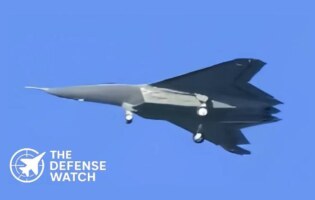
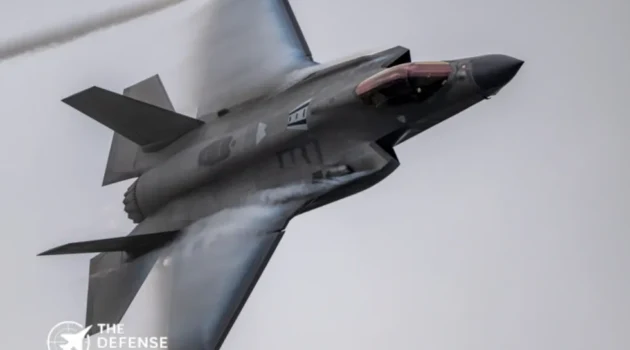
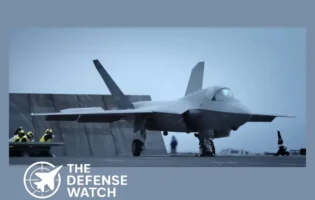
The J-35 and F-35 Lightning II are modern stealth fighters representing the cutting-edge aerospace capabilities of China and the United States. Developed by Shenyang Aircraft Corporation, the J-35 is China’s latest carrier-capable stealth fighter, designed for both air superiority and strike missions.
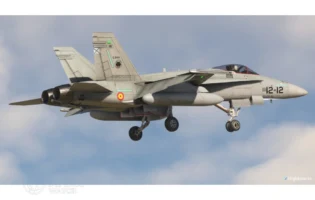
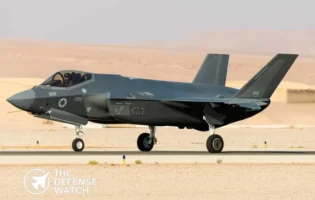
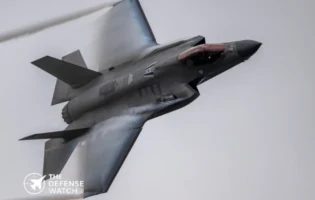
The F-35, developed by Lockheed Martin, is a multirole stealth aircraft widely adopted by the U.S. and allied forces, excelling in versatility and advanced sensor integration. As global air combat technology evolves rapidly, comparing these jets provides insight into future aerial dominance, operational strategies, and regional military balance. This analysis evaluates design, performance, stealth, and mission versatility, helping defense analysts and enthusiasts understand which fighter currently holds the edge in modern air warfare.
Performance Verdict
The F-35 Lightning II excels in multirole capabilities, sensor fusion, and networked battlefield awareness. Its advanced avionics, stealth features, and interoperability with allied forces make it highly versatile across air-to-air, air-to-ground, and electronic warfare missions. The J-35, on the other hand, showcases China’s growing aerospace expertise with carrier operations in mind. It is reportedly equipped with modern radar, stealth coatings, and precision strike capabilities, making it a formidable contender in regional air superiority scenarios.
In raw maneuverability and stealth design, the F-35 benefits from decades of U.S. aerospace refinement, but the J-35 demonstrates significant advancements in payload capacity and carrier suitability. Ultimately, the F-35 retains an edge in global networked operations and multirole flexibility, while the J-35 is emerging as a credible threat in the Asia-Pacific region. Mission priorities will determine which jet dominates: global multirole dominance favors the F-35, while carrier strike and regional air power increasingly highlight the J-35’s growing capabilities.

| |
| Price | |
| Our Rating | |
| Manufacturer | Shenyang Aircraft Corporation (SAC) Lockheed Martin |
| Category | Fighter Jets Fighter Jets |
General Information
| Name | J-35 (FC-31 Gyrfalcon) F-35 Lightning II |
| Manufacturer | Shenyang Aircraft Corporation (SAC) Lockheed Martin |
| Country of Origin | China United States |
| Type / Role | Multirole Stealth Fighter (Carrier-Based) Multirole Stealth Fighter |
| Generation | 5th 5th |
| Status | In Development / Testing In Service |
| First Flight | 2012 (Prototype), 2021 (Naval Variant) December 15, 2006 |
| Introduction / In Service Since | Expected mid-2020s 2015 |
| Number Built | Limited Prototypes 1,200+ (as of 2025) |
| Operators | People’s Liberation Army Navy (PLAN) USA, UK, Japan, Israel, Italy, Australia, and others |
Dimensions & Structure
| Length | ~16.9 m 51.2 ft (15.6 m) |
| Wingspan | ~11.5 m (folded for carrier ops) 35 ft (10.7 m) |
| Height | 4.8 m 14.4 ft (4.38 m) |
| Wing Area | 40 m² (est.) 460 sq ft (42.7 m²) |
| Empty Weight | ~17,000 kg 29,300 lb (13,300 kg) |
| Maximum Takeoff Weight (MTOW) | ~28,000 kg 70,000 lb (31,800 kg) |
| Internal Weapons Bay | Yes 2 (up to 5,700 lb payload) |
| External Hardpoints | 6 6–10 (up to 18,000 lb total) |
Performance
| Maximum Speed | Mach 1.8 Mach 1.6 |
| Range | 2,000 km (est.) 1,380 mi (2,220 km) |
| Combat Radius | 1,200 km ~670 mi (1,080 km) |
| Service Ceiling | 50,000 ft 50,000 ft (15,240 m) |
| Rate of Climb | 250 m/s 45,000 ft/min |
| Thrust-to-Weight Ratio | 1.05 0.87 |
| G Limits | +9 +9 |
Powerplant
| Engine Type | WS-13 / WS-19 Turbofan Pratt & Whitney F135-PW-100 |
| No. of Engines | 2 1 |
| Thrust (each) | 9,000–10,000 kgf 43,000 lbf |
| Thrust Vectoring | Planned (future) Yes (on F-35B variant) |
| Fuel Capacity | ~9,000 kg ~18,500 lb internal |
Armament
| Gun | Internal 30mm Cannon (optional) GAU-22/A 25mm cannon (F-35A) |
| Missiles (Air-to-Air) | PL-10, PL-15 AIM-120 AMRAAM, AIM-9X |
| Missiles (Air-to-Ground) | KD-88, LS-6 AGM-154 JSOW, AGM-158 JASSM |
| Bombs | Precision-guided bombs JDAM, Paveway II/III, SDB I/II |
| Hardpoints | 6 external + internal bays 6 external + 2 internal |
| Payload Capacity | ~8,000 kg ~18,000 lb |
Avionics & Systems
| Radar | AESA Radar AN/APG-81 AESA |
| Radar Range | 200+ km ~150+ km |
| Electronic Warfare (EW) System | Yes AN/ASQ-239 suite |
| Targeting System | IRST + EO Targeting EOTS (Electro-Optical Targeting System) |
| Helmet Display | Integrated HMD HMDS Gen III |
| Navigation | GPS/INS GPS/INS with terrain-following |
| Autopilot / AI Assistance | Partial AI Systems Advanced flight management |
| Communication | Encrypted Data Link MADL & Link 16 secure data links |
Stealth & Technology
| Radar Cross Section (RCS) | <0.5 m² (estimated) ~0.001 m² |
| Stealth Features | Shaping, RAM coating RAM coating, internal weapons bay, edge alignment |
| Infrared Signature Reduction | Yes Yes |
| Sensor Fusion | Multi-sensor integration Full 360° data integration |
| Networking Capabilities | Data-link enabled Distributed data-sharing with allied units |
Variants
| Special Export Versions | - F-35I (Israel), F-35A (Japan), etc. |
Operational History
| Major Conflicts / Deployments | None (testing stage) Middle East operations (Iraq, Syria) |
| Notable Operators | PLAN USAF, USN, USMC, RAF, IDF |
| Combat Proven? | No Yes |
| Mission Types | Air superiority, strike, interception Air superiority, strike, SEAD, ISR |
Cost & Program
| Unit Cost | ~$70–80 million (est.) $80–100 million (variant-dependent) |
| Development Cost | Classified ~$400 billion (program total) |
| Program Name | J-35/FC-31 Program Joint Strike Fighter (JSF) |
| Funding Countries | China USA, UK, Italy, Netherlands, Canada, Australia, etc. |
Additional Information
| Upgrades Planned | WS-19 engine, AI integration Block 4, Tech Refresh 3 |
| Future Replacement | J-15 in PLAN carrier fleet NGAD (2035+) |
| Export Restrictions | Available under FC-31 variant U.S. FMS approval required |
| Notable Achievements | China’s first stealth carrier jet Widest global fighter program in history |
| Competitors | F-35C, Su-57, KF-21 Su-57, J-20, Tempest, KF-21 |
|
Disclaimer Note
The information provided on TheDefenseWatch.com is for general informational purposes only. While we strive to ensure the accuracy, completeness, and timeliness of our content regarding defense and aerospace products, technologies, and specifications, we cannot guarantee that all information is 100% accurate or up-to-date due to the evolving nature of military technology and classified data.TheDefenseWatch.com does not warrant the reliability, suitability, or availability of the information for any specific purpose. Users are advised to consult official sources, such as manufacturers, government publications, or defense agencies, for precise and verified data before making decisions based on our content.We are not affiliated with any defense manufacturers, governments, or military organizations mentioned. Opinions, reviews, and ratings reflect expert analysis but are subjective and should not be considered endorsements. TheDefenseWatch.com is not responsible for any errors, omissions, or consequences arising from the use of this website’s content.External links are provided for convenience and do not imply endorsement. TheDefenseWatch.com reserves the right to update or modify content without prior notice. By using this website, you agree to our Privacy & Cookies Policy.
New Arrivals
Popular Comparisons
-
 Tejas Fighter Jet vs F-16 Fighting Falcon: Capability Compared
View Comparison →
Tejas Fighter Jet vs F-16 Fighting Falcon: Capability Compared
View Comparison → -
Rafale Fighter Jet vs F-16 Fighting Falcon : Which Fighter Has the Edge?
View Comparison →
-
Su-57 Fighter Jet vs J-20 Fighter Jet: Stealth and Air Combat Compared
View Comparison →
-
Mirage 2000 vs Tejas Mk1A: Legacy Combat Power vs Indigenous Modernization
View Comparison →
-
Rafale Fighter Jet vs F-22 Raptor: Which Air Dominance Fighter Has the Edge?
View Comparison →
-
Tejas Fighter Jet vs. Rafale Fighter Jet: India’s Indigenous Fighter Meets France’s Proven Multirole Combat Aircraft
View Comparison →
-
F-22 Raptor vs. F-35 Joint Strike Fighter: Which Fifth Generation Fighter Has the Edge?
View Comparison →
-
F-35A vs. F-22 Raptor: Which U.S. Stealth Fighter Dominates Modern Air Combat?
View Comparison →
-
AGM-114 Hellfire vs. AGM-179 JAGM: Which U.S. Precision Missile Is Better?
View Comparison →
-
Patriot (PAC-3) vs. THAAD: Complete Missile Defense System Comparison, Capabilities, Range, and Strategic Roles
View Comparison →
- DeltaQuad Launches Evo-LE With Eight-Hour Endurance for Long-Range ISR

- USS Farragut Completes Task Force Exercise Ahead of Global Deployment
- Army Begins Replacing Legacy WIN-T Network With Modern C2 Baseline at III Armored Corps
- Coyote Storm 26.2 Tests Air Force Expeditionary Wing 2.0 Readiness at Davis-Monthan
- USS Stout Departs Norfolk for Deployment Operations
- Britain Invests £6 Billion to Double Nuclear Submarine Production Capacity
- Raytheon Awarded $105.6 Million AMRAAM Parts Contract
- Pentagon Energy Expo Puts Resilient Power at Center of Future U.S. Military Operations
- F-16 Crashes at Spangdahlem Air Base in Germany, Pilot Ejects Safely
- FQ-42 Vengeance Flies With F-35 and F-15E as Air Force Advances CCA Teaming