
- Home
- Defense Systems
- Future / Concept Weapons
- Lockheed Martin SR-72
Lockheed Martin SR-72
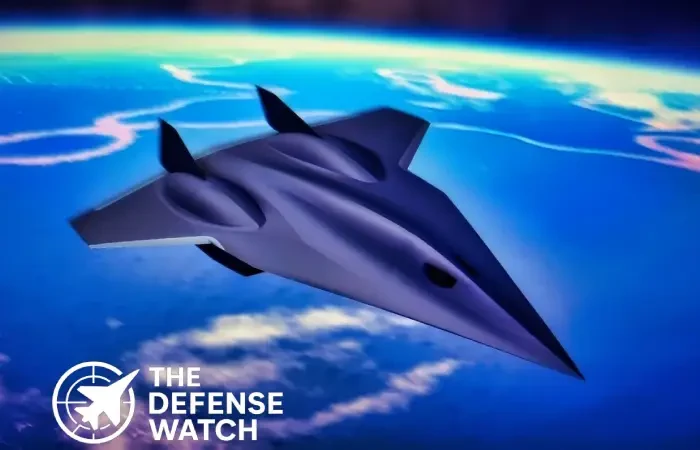
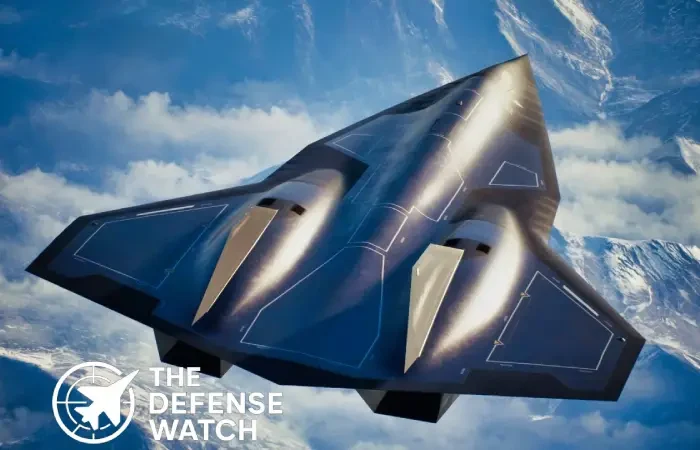
Defense Systems Full Specifications
1) Basic / Identification
| Name | SR-72 “Son of Blackbird” |
| Designation | SR-72 |
| Manufacturer / Developer | Lockheed Martin Skunk Works |
| Country / Lead partner | United States |
| Type / Role | Hypersonic Reconnaissance / Strike Aircraft |
| Status | Development / Prototype |
| Program Start | 2013 (concept reveal) |
| Estimated unit cost | est. $1 billion+ |
| Public Source / Reference | Lockheed Martin statements, defense journals |
2) Performance & Capabilities
| Operational Concept | High-speed ISR and strike missions in contested airspace |
| Effective Range / Engagement Envelope | >10,000 km (est.) |
| Speed / Response Time | Mach 6+ (approx. 7,400 km/h) |
| Endurance / Sustained Operation | Estimated 1–2 hours hypersonic flight duration |
| Precision / Accuracy | Sub-meter ISR resolution (projected) |
| Mobility / Basing | Airfield-based, potentially unmanned version planned |
3) Propulsion / Power / Energy
| Power Source | Jet turbine and scramjet hybrid |
| Power Output | Classified / multi-megawatt thermal output |
| Propulsion Type | Turbine-Based Combined Cycle (TBCC) |
| Fuel / Energy Storage | High-density jet fuel with thermal resistance |
4) Payload / Kill Mechanism
| Primary Effect | ISR, kinetic strike capability |
| Payload Mass / Warhead | 1,000–2,000 kg (est.) |
| Guidance / Targeting | AI-guided navigation, GPS/INS |
| Multi-mode Capability | Reconnaissance + kinetic precision strike |
5) Sensors, Avionics & Autonomy
| Sensors | EO/IR, synthetic aperture radar, multispectral imaging |
| Autonomy Level | Semi-autonomous with human oversight |
| AI Features | Threat recognition, adaptive routing, predictive mission planning |
| Communications & Datalinks | SATCOM, secure U.S. C2 network integration |
6) Survivability & Countermeasures
| Signature Reduction | Stealth shaping, thermal signature minimization |
| Defensive Systems | Electronic countermeasures, onboard decoys |
| Resilience | Redundant flight control, cyber protection layers |
7) Integration & Interoperability
| Integration | Integrated into U.S. ISR and C2 architectures |
| Suitable Platforms | Strategic air bases, future unmanned variants |
| Interoperability Standards | NATO-compatible data links |
| Upgrade Path | Modular avionics, open software architecture |
8) Legal / Ethical / Policy Notes
| Export Control | ITAR-restricted |
| Legal/Ethical Flags | None publicly noted |
| Policy Implications | Enhances U.S. strategic deterrence posture |
9) Operational / Program Notes
| Notable Tests / Milestones | Wind tunnel and propulsion tests (2023–2025) |
| Expected IOC (if given) | Late 2020s (projected) |
| Partners / Contractors | Lockheed Martin, Aerojet Rocketdyne |
| Remarks | Designed as a successor to SR-71 for 21st-century ISR missions |
PROS
- Unprecedented Mach 6 hypersonic speed
- Next-generation stealth and thermal signature management
- Dual-use capability (reconnaissance and strike)
- Integration with AI-based mission systems
- Strategic advantage for U.S. global ISR dominance
CONS
- Extremely high development and operational costs
- Technical risks in hypersonic propulsion reliability
- Limited payload capacity due to heat constraints
- Requires new materials and cooling technologies
- Operational secrecy limits public data and testing transparency
Lockheed Martin SR-72“Son of Blackbird” Hypersonic Reconnaissance Jet
The Lockheed Martin SR-72, often referred to as the “Son of Blackbird,” is Lockheed Martin’s ambitious hypersonic reconnaissance aircraft project intended to succeed the legendary SR-71. Developed by Lockheed Martin’s Skunk Works division in the United States, the SR-72 aims to redefine high-speed intelligence, surveillance, and reconnaissance (ISR) missions in an era of near-peer competition.
Powered by a turbine-based combined cycle (TBCC) engine, the SR-72 is designed to reach speeds exceeding Mach 6, allowing it to cover vast distances and penetrate defended airspace before adversaries can react. The aircraft reportedly integrates both turbofan and scramjet propulsion, enabling seamless transition from subsonic takeoff to sustained hypersonic flight.
Advanced Capabilities and Mission Profile
Intended primarily for strategic reconnaissance, the SR-72 could also serve as a hypersonic strike platform, capable of delivering precision-guided munitions or intelligence payloads at extreme speeds. With a projected operational ceiling above 80,000 feet, it would operate beyond the reach of most modern surface-to-air missile systems.
Featuring stealth shaping, radar-absorbing materials, and AI-assisted avionics, the SR-72 represents a leap forward in autonomous flight and battlefield awareness. Its integration into U.S. Air Force and space-based intelligence networks would enhance rapid decision-making and long-range threat monitoring.
While still in the development and prototype phase, the SR-72 is expected to make its first flight in the late 2020s, with an estimated cost per unit exceeding $1 billion. If realized, it would mark a new era in hypersonic reconnaissance and deterrence capabilities.
SR-72 Price in US
The Lockheed Martin SR-72 program’s estimated cost is around $1 billion per unit, reflecting its advanced propulsion system and hypersonic technologies. However, as the aircraft remains under development, official pricing has not been disclosed by Lockheed Martin or the U.S. Department of Defense.
FAQs
Can the SR-72 outrun a missile?
In theory, yes — to a degree.
If the SR-72 achieves its intended Mach 6 (over 7,400 km/h) speed, it could outrun or evade most surface-to-air and air-to-air missiles currently in service. Most modern long-range air defense missiles, such as the Russian S-400’s 40N6 or the U.S. AIM-120D, travel at Mach 4–5, which is slower than the SR-72’s projected speed.
Additionally, the SR-72’s high altitude (above 80,000 ft) and low radar cross-section (stealth) would make detection and interception extremely difficult.
That said, hypersonic flight introduces immense thermal and structural challenges, and interception technologies are rapidly evolving. Advanced hypersonic defense systems being developed by the U.S., Russia, and China could eventually threaten even Mach 6 aircraft.
So, while the SR-72 could outrun most missiles today, future hypersonic interceptors might narrow that advantage.
Will the SR-72 ever fly?
Most likely, yes — but not soon.
Lockheed Martin and the U.S. Air Force have both indicated plans for a prototype flight, potentially in the late 2020s. In 2022, Lockheed confirmed that progress on the propulsion system was “proceeding as planned,” and reports suggest a demonstrator may already exist under classified testing.
If development continues as expected, the first flight could occur by 2028–2030. Operational deployment, however, would likely take several more years, depending on funding, testing success, and defense priorities.
In short:
The SR-72 is not flying yet.
It is expected to fly within the next decade.
Its success will depend on breakthroughs in hypersonic propulsion and materials.
Is the SR-72 a real aircraft?
The SR-72 is a real project, but not yet an operational aircraft. It is a hypersonic reconnaissance aircraft concept being developed by Lockheed Martin’s Skunk Works division—the same team behind the SR-71 Blackbird. The company first confirmed the SR-72 concept publicly in 2013, describing it as a successor to the SR-71 capable of flying at speeds above Mach 6.
However, as of 2025, the SR-72 remains in the development and testing phase, with no full-scale prototype publicly confirmed. Lockheed Martin has hinted at engine and design progress, including successful tests of the turbine-based combined cycle (TBCC) propulsion system, but the aircraft itself has not yet entered flight testing or production.
So, while the SR-72 is real as a program, it does not yet exist as a flying aircraft.
Disclaimer Note
The information provided on TheDefenseWatch.com is for general informational purposes only. While we strive to ensure the accuracy, completeness, and timeliness of our content regarding defense and aerospace products, technologies, and specifications, we cannot guarantee that all information is 100% accurate or up-to-date due to the evolving nature of military technology and classified data.TheDefenseWatch.com does not warrant the reliability, suitability, or availability of the information for any specific purpose. Users are advised to consult official sources, such as manufacturers, government publications, or defense agencies, for precise and verified data before making decisions based on our content.We are not affiliated with any defense manufacturers, governments, or military organizations mentioned. Opinions, reviews, and ratings reflect expert analysis but are subjective and should not be considered endorsements. TheDefenseWatch.com is not responsible for any errors, omissions, or consequences arising from the use of this website’s content.External links are provided for convenience and do not imply endorsement. TheDefenseWatch.com reserves the right to update or modify content without prior notice. By using this website, you agree to our Privacy & Cookies Policy.
New Arrivals



Popular Comparisons
-
 J-10C vs JF-17 Thunder: Which Fighter Is More Capable?
View Comparison →
J-10C vs JF-17 Thunder: Which Fighter Is More Capable?
View Comparison → -
Tejas vs Gripen: Key Differences and Capabilities
View Comparison →
-
Tejas vs MiG-21 Bison: How India Replaced Its Iconic Supersonic Fighter
View Comparison →
-
F-35 vs F-16: Stealth, Sensors and Combat Roles
View Comparison →
-
Tejas Fighter Jet vs F-16 Fighting Falcon: Capability Compared
View Comparison →
-
Rafale Fighter Jet vs F-16 Fighting Falcon : Which Fighter Has the Edge?
View Comparison →
-
Su-57 Fighter Jet vs J-20 Fighter Jet: Stealth and Air Combat Compared
View Comparison →
-
Mirage 2000 vs Tejas Mk1A: Legacy Combat Power vs Indigenous Modernization
View Comparison →
-
Rafale Fighter Jet vs F-22 Raptor: Which Air Dominance Fighter Has the Edge?
View Comparison →
-
Tejas Fighter Jet vs. Rafale Fighter Jet: India’s Indigenous Fighter Meets France’s Proven Multirole Combat Aircraft
View Comparison →


- Department of War and Lockheed Martin Sign 10-Year F-35 Agreement With $7 Billion Investment Commitment

- Pentagon Approves Active Denial System for Potential U.S. Southern Border Use
- U.S. Air Force Plans Larger F-35 Role in 1,509-Aircraft Fighter Fleet
- Raytheon Wins Two-Year Extension for AN/TPY-2 Radar Support
- Space Force Selects Northrop Grumman, True Anomaly for New Orbital Reconnaissance Satellites
- Hegseth and Guyana’s President Establish Enhanced Military Partnership
- Ukrainian F-16 vs. Russian Su-35: What Happened, How the Engagement Unfolded and Why It Matters
- Canada’s Fighter Jet Fleet Faces a Critical Transition as F-35 Review Continues
- New Zealand Signs Deal for Five MH-60R Seahawk Helicopters
- U.S. Air Force Test Pilot School Adds Water Landings to Training




Fighter Jets
-
 SU-57 Felon Stealth Fighter
-
Boeing F/A-XX Fighter
-
JF-17 Thunder Fighter Jet
-
F-47 Fighter Jet
-
MIG-31 Fighter Jet
-
J-10CE Fighter Jet
-
Chengdu J-10 Fighter Jet
-
Chengdu J-10C Fighter Jet
-
Gripen E Fighter Jet
-
Tejas Mk1A Fighter Jet
-
Tejas Mk‑2 Fighter Jet
-
F-16V Viper Block 70 Fighter Jet
-
F-15EX Eagle II Fighter
-
F-15E Strike Eagle Fighter
-
F/A-18E/F Super Hornet Fighter Jet
-
Saab Gripen F Fighter Jet
-
JAS 39E/F Gripen Fighter Jet
-
JAS 39 Gripen Fighter Jet
-
F-35A Lightning II Fighter Jet
-
F/A-18F Super Hornet
-
J-50 Fighter Jet
-
Spanish EF-18 Hornet Fighter
-
F-35i Adir Fighter Jet
-
F-16 Fighting Falcon






Recent Compares
-
J-10C vs JF-17 Thunder: Which Fighter Is More Capable?
View Comparison →
-
Tejas vs Gripen: Key Differences and Capabilities
View Comparison →
-
Tejas vs MiG-21 Bison: How India Replaced Its Iconic Supersonic Fighter
View Comparison →
-
F-35 vs F-16: Stealth, Sensors and Combat Roles
View Comparison →
-
Tejas Fighter Jet vs F-16 Fighting Falcon: Capability Compared
View Comparison →
Latest Defense Systems
10 Compares Defense Systems
-
J-10C vs JF-17 Thunder: Which Fighter Is More Capable?
View Comparison →
-
Tejas vs Gripen: Key Differences and Capabilities
View Comparison →
-
Tejas vs MiG-21 Bison: How India Replaced Its Iconic Supersonic Fighter
View Comparison →
-
F-35 vs F-16: Stealth, Sensors and Combat Roles
View Comparison →
-
Tejas Fighter Jet vs F-16 Fighting Falcon: Capability Compared
View Comparison →
-
Rafale Fighter Jet vs F-16 Fighting Falcon : Which Fighter Has the Edge?
View Comparison →
-
Su-57 Fighter Jet vs J-20 Fighter Jet: Stealth and Air Combat Compared
View Comparison →
-
Mirage 2000 vs Tejas Mk1A: Legacy Combat Power vs Indigenous Modernization
View Comparison →
-
Rafale Fighter Jet vs F-22 Raptor: Which Air Dominance Fighter Has the Edge?
View Comparison →
-
Tejas Fighter Jet vs. Rafale Fighter Jet: India’s Indigenous Fighter Meets France’s Proven Multirole Combat Aircraft
View Comparison →
- Department of War and Lockheed Martin Sign 10-Year F-35 Agreement With $7 Billion Investment Commitment
- Pentagon Approves Active Denial System for Potential U.S. Southern Border Use
- U.S. Air Force Plans Larger F-35 Role in 1,509-Aircraft Fighter Fleet
- Raytheon Wins Two-Year Extension for AN/TPY-2 Radar Support
- Space Force Selects Northrop Grumman, True Anomaly for New Orbital Reconnaissance Satellites