









@2026 – All Right Reserved. TheDefenseWatch.com
- Home
- Defense Systems
- Missiles & Precision Weapons
- Tomahawk Cruise Missile
Tomahawk Cruise Missile

Defense Systems Full Specifications
1. General Information
| Name / Designation | BGM-109 Tomahawk |
| Type / Role | Land-Attack / Anti-Ship Cruise Missile |
| Country of Origin | United States |
| Manufacturer | Raytheon Technologies |
| Service Entry / Year Introduced | 1983 |
| Operational Status | Active |
2. Performance & Range
| Range | Up to 1,600 km |
| Speed | Mach 0.74–0.85 |
| Ceiling / Altitude Limit | 30–100 m cruise altitude (terrain-following) |
| Accuracy (CEP) | <10 meters |
| Warhead Type | High Explosive, Penetrator |
3. Guidance & Targeting
| Guidance System | GPS / INS / Terrain Contour Matching |
| Targeting Mode | Fire-and-Forget with in-flight updates |
| Launch Platform Compatibility | Naval Surface Ships, Submarines |
| Seeker Type | N/A (primarily GPS/INS guided) |
4. Physical Characteristics
| Length | 5.56 m |
| Diameter | 0.52 m |
| Wingspan | 2.67 m |
| Launch Weight | 1,300–1,500 kg |
| Propulsion | Turbofan (subsonic) |
5. Warhead & Payload
| Warhead Weight | 450 kg |
| Explosive Type | High Explosive / Penetrator |
| Detonation Mechanism | Impact / Delay Fuse |
| Payload Options | Conventional, Limited Nuclear Variants |
6. Operational Use & Capabilities
| Operational Range Type | Long-Range |
| Deployment Platform | Sea, Submarine |
| Target Types | Fortifications, Infrastructure, Naval Assets |
| Combat Proven | Yes |
| Users / Operators | USA, UK, Australia, Saudi Arabia, Others |
PROS
- Long-range precision strike capability
- Proven combat performance
- Advanced navigation and targeting systems
- Can engage both land and maritime targets
- Compatible with multiple launch platforms
CONS
- Subsonic speed makes it vulnerable to modern air defenses
- High production and maintenance costs
- Limited warhead payload options
- Requires real-time targeting data for moving targets
- Restricted to U.S. and select allied forces
Tomahawk Cruise Missile: Precision Strike Power for the U.S. Navy
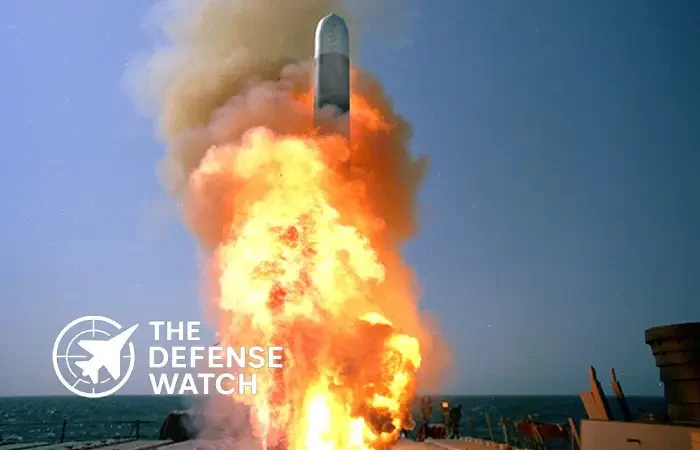
The Tomahawk Cruise Missile is one of America’s most battle-tested and reliable long-range precision strike weapons. Developed by Raytheon Technologies (now RTX Corporation), the Tomahawk has been a key asset in U.S. and allied naval arsenals since the 1980s. Designed for deep-strike missions, it allows ships and submarines to attack high-value land and sea targets from hundreds of miles away—without exposing personnel to enemy defenses.
Design and Capabilities
The Tomahawk is a subsonic, jet-powered cruise missile capable of traveling over 1,000 miles (1,600 km) at a speed of roughly 550 mph (Mach 0.74). It uses a turbofan engine and can fly at terrain-hugging altitudes to evade radar detection. Equipped with GPS, inertial, and terrain contour matching (TERCOM) guidance systems, it delivers exceptional accuracy—typically within a few meters of its target.
Variants include the Block IV (TLAM-E) and the latest Tomahawk Block V, which features improved navigation, communication links, and a maritime strike capability against moving targets at sea. Each missile carries either a 450 kg unitary warhead or a submunition payload, depending on mission requirements.
Operational Use
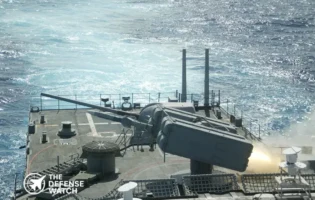
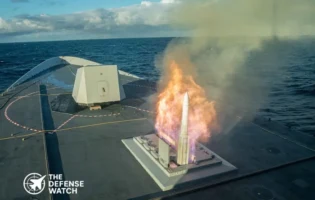
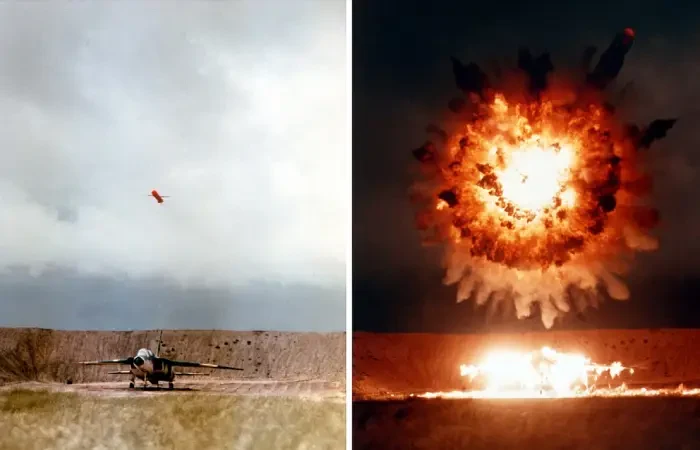
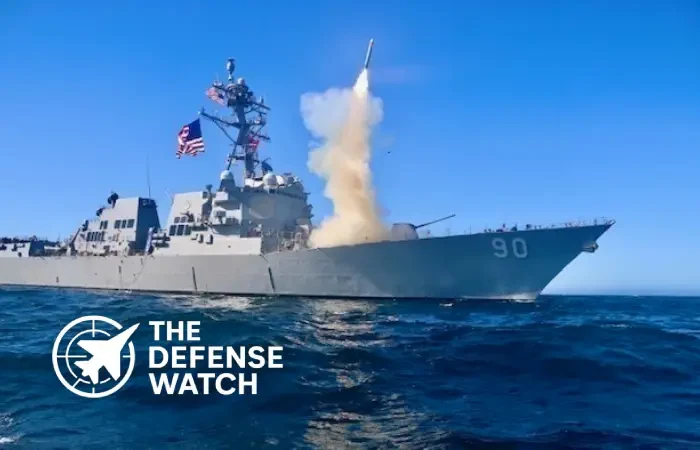
Tomahawk missiles have been extensively used in conflicts such as the 1991 Gulf War, Operation Iraqi Freedom, and Syria strikes (2017–2018). Their proven reliability and precision make them the preferred option for long-range conventional deterrence. Launchable from Mk 41 Vertical Launch Systems on surface ships or torpedo tubes aboard submarines, the Tomahawk remains central to U.S. Navy strike doctrine.
Tomahawk Cruise Missile Price
The Tomahawk Cruise Missile is one of the most advanced and reliable long-range precision strike weapons in the U.S. arsenal—and its cost reflects its sophisticated technology. As of 2025, the Tomahawk Block V variant is estimated to cost around $1.87 million per unit, depending on configuration and production lot. Earlier versions, such as the Block IV, are priced slightly lower, averaging $1.5–$1.6 million per missile.
This price includes the missile’s advanced guidance systems, mission planning software, and satellite communication capabilities. While the Tomahawk’s unit cost is higher than shorter-range munitions, its 1,000-mile range, pinpoint accuracy, and multi-platform compatibility make it a cost-effective solution for long-range conventional strike missions. The U.S. Navy continues to invest in upgraded variants through Raytheon’s ongoing modernization program, ensuring the missile remains a core component of America’s naval strike and deterrence capability well into the 2030s.
Disclaimer Note
The information provided on TheDefenseWatch.com is for general informational purposes only. While we strive to ensure the accuracy, completeness, and timeliness of our content regarding defense and aerospace products, technologies, and specifications, we cannot guarantee that all information is 100% accurate or up-to-date due to the evolving nature of military technology and classified data.TheDefenseWatch.com does not warrant the reliability, suitability, or availability of the information for any specific purpose. Users are advised to consult official sources, such as manufacturers, government publications, or defense agencies, for precise and verified data before making decisions based on our content.We are not affiliated with any defense manufacturers, governments, or military organizations mentioned. Opinions, reviews, and ratings reflect expert analysis but are subjective and should not be considered endorsements. TheDefenseWatch.com is not responsible for any errors, omissions, or consequences arising from the use of this website’s content.External links are provided for convenience and do not imply endorsement. TheDefenseWatch.com reserves the right to update or modify content without prior notice. By using this website, you agree to our Privacy & Cookies Policy.
New Arrivals
-
 PAC-2 Patriot Missile System
-
Patriot PAC-3 Missile Defense System
-
EA-18G Growler
-
J-50 Fighter Jet
-
Northrop Grumman GHOST-R GEO Recon Satellite
-
A-50 Mainstay Aircraft
-
Spanish EF-18 Hornet Fighter
-
Trident II D5 Missile
-
B-21 Raider Bomber
-
F-47 Fighter Jet
-
F-35i Adir Fighter Jet
-
Type 99B Main Battle Tank
Popular Comparisons
-
 Tejas Fighter Jet vs F-16 Fighting Falcon: Capability Compared
View Comparison →
Tejas Fighter Jet vs F-16 Fighting Falcon: Capability Compared
View Comparison → -
Rafale Fighter Jet vs F-16 Fighting Falcon : Which Fighter Has the Edge?
View Comparison →
-
Su-57 Fighter Jet vs J-20 Fighter Jet: Stealth and Air Combat Compared
View Comparison →
-
Mirage 2000 vs Tejas Mk1A: Legacy Combat Power vs Indigenous Modernization
View Comparison →
-
Rafale Fighter Jet vs F-22 Raptor: Which Air Dominance Fighter Has the Edge?
View Comparison →
-
Tejas Fighter Jet vs. Rafale Fighter Jet: India’s Indigenous Fighter Meets France’s Proven Multirole Combat Aircraft
View Comparison →
-
F-22 Raptor vs. F-35 Joint Strike Fighter: Which Fifth Generation Fighter Has the Edge?
View Comparison →
-
F-35A vs. F-22 Raptor: Which U.S. Stealth Fighter Dominates Modern Air Combat?
View Comparison →
-
AGM-114 Hellfire vs. AGM-179 JAGM: Which U.S. Precision Missile Is Better?
View Comparison →
-
Patriot (PAC-3) vs. THAAD: Complete Missile Defense System Comparison, Capabilities, Range, and Strategic Roles
View Comparison →
- X-Planes in the Drone Era: Why Experimental Aircraft Still Matter

- France to Deploy Troops, Radar and Air Defense to Protect Saudi Yanbu Oil Hub
- Greek-Operated Patriot Intercepts Ballistic Missile and Drone Over Saudi Arabia
- Raytheon Wins $50.1 Million Navy Order for EA-18G Next Generation Jammer Repairs
- Stark Aerospace Wins $114 Million MK 41 VLS Canister Contract
- Northrop Grumman Wins $123.8M F-35 APG-85 Lot 7 Radar Contract
- Leonardo, Fincantieri Win €3.7B Contract for Two Italian Navy DDX Destroyers
- Finnish President Urges Musk to Expand Starlink Access for Ukraine to Target Russian Missile Launchers
- MV-22B Osprey Completes First Navy Sonobuoy Acceptance Test
- Saab expands Swedish space role through new partnerships with SSC Space, OHB Sweden and Ericsson