













@2026 – All Right Reserved. TheDefenseWatch.com
- Home
- Defense Systems
- Fighter Jets
- Shenyang J-50 Fighter Jet
Shenyang J-50 Fighter Jet
Defense Systems Full Specifications
General Information
| Name | Shenyang J-50 (J-XD / J-XDS) |
| Manufacturer | Shenyang Aircraft Corporation (SAC) |
| Country of Origin | China |
| Type / Role | Stealth air superiority / interceptor / multirole |
| Generation | Sixth generation (experimental) |
| Status | Prototype / flight test |
| First Flight | Reported late December 2024 |
| Introduction / In Service Since | None (not operational yet) |
| Number Built | 1 confirmed prototype |
| Operators | None (future PLAAF / PLA Naval Air Force potential) |
Dimensions & Structure
| Length | ~ 22 m (estimated) |
| Wingspan | ~ 22 m (lambda wing) |
| Height | Unconfirmed |
| Wing Area | ~ 145 m² (some reports) |
| Empty Weight | Unconfirmed |
| Maximum Takeoff Weight (MTOW) | ~ 40 tons (approx) |
| Internal Weapons Bay | Two ventral internal bays + possible side bays |
| External Hardpoints | Potential side panels, minimal external use |
Performance
| Maximum Speed | ~ Mach 2.0 (≈ 2,469 km/h) |
| Range | ~ 2,200 km (combat radius) |
| Combat Radius | ~ 2,200 km (open-source spec) |
| Service Ceiling | Unconfirmed |
| Rate of Climb | Unknown |
| Thrust-to-Weight Ratio | Unknown |
| G Limits | Unknown |
Powerplant
| Engine Type | Next-generation low-observable turbofan (likely WS-15 variant) (speculative) |
| No. of Engines | 2 |
| Thrust (each) | Classified / estimated (speculative) |
| Thrust Vectoring | Yes — vectoring nozzles observed |
| Fuel Capacity | Unconfirmed |
Armament
| Gun | None confirmed publicly |
| Missiles (Air-to-Air) | PL-15, PL-17 (long-range BVR) reported in press sources |
| Missiles (Air-to-Ground) | YJ-12 anti-ship (reported) |
| Bombs | Smart bombs / precision munitions likely (not confirmed) |
| Hardpoints | Internal bays, possible side panels |
| Payload Capacity | Unconfirmed |
Avionics & Systems
| Radar | Classified (likely advanced AESA / hybrid radar) |
| Radar Range | Unknown |
| Electronic Warfare (EW) System | Expected to host modern EW / countermeasure suite |
| Targeting System | Chin-mounted EOTS turret |
| Helmet Display | Unconfirmed |
| Navigation | Likely high-end INS/GNSS and datalink systems |
| Autopilot / AI Assistance | AI-assisted systems anticipated |
| Communication | Secure datalink and beyond-line-of-sight comms likely |
Stealth & Technology
| Radar Cross Section (RCS) | Classified / minimized via tailless design |
| Stealth Features | Tailless configuration, angular shaping, internal bays |
| Infrared Signature Reduction | Flat exhausts, embedded fuselage, vectoring nozzles |
| Sensor Fusion | Designed for high-level fusion of sensors |
| Networking Capabilities | Likely to control & coordinate loyal wingman drones |
Variants
| Special Export Versions | None currently known — export unlikely yet |
Operational History
| Major Conflicts / Deployments | None (not combat proven) |
| Notable Operators | None (future PLA / PLAN) |
| Combat Proven? | No |
| Mission Types | Air dominance, interception, deep strike, drone control |
Cost & Program
| Unit Cost | Unknown / speculative |
| Development Cost | Classified / high investment likely |
| Program Name | J-50 / J-XD / J-XDS project |
| Funding Countries | China (domestic funding) |
Additional Information
| Upgrades Planned | Iterative avionics, stealth improvements, drone linkages |
| Future Replacement | May evolve into production 6th-gen force beyond J-50 |
| Export Restrictions | Likely tightly controlled at least initially |
| Notable Achievements | First public 6th-gen Chinese prototype made visible |
| Competitors | U.S. NGAD / F-47, European FCAS / Tempest, Russian PAK DP |
PROS
- Stealth-optimized design (tailless, lambda wing) improves survivability
- Thrust vectoring enhances agility and maneuver performance
- Advanced sensor fusion and AI integration reduce pilot workload
- Internal weapons bays support low-observable loadouts
- Potential to command unmanned “loyal wingman” drones
CONS
- Still in prototype stage; many specs remain speculative
- Likely high development risk and cost overruns
- Unknown sustainment, maintenance and logistics readiness
- Tradeoffs in stealth vs maneuverability due to tailless design
- Export restrictions and export reluctance may limit global use
Shenyang J-50 Stealth Sixth-Gen Fighter
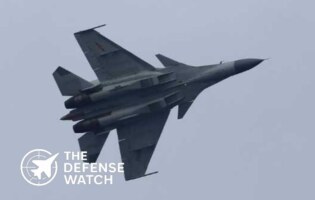
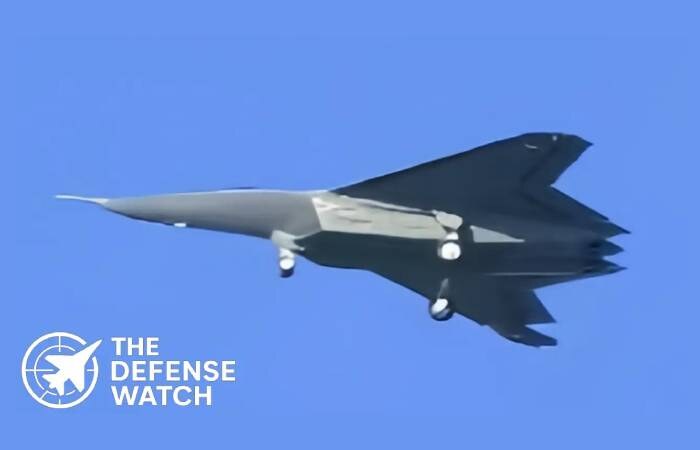
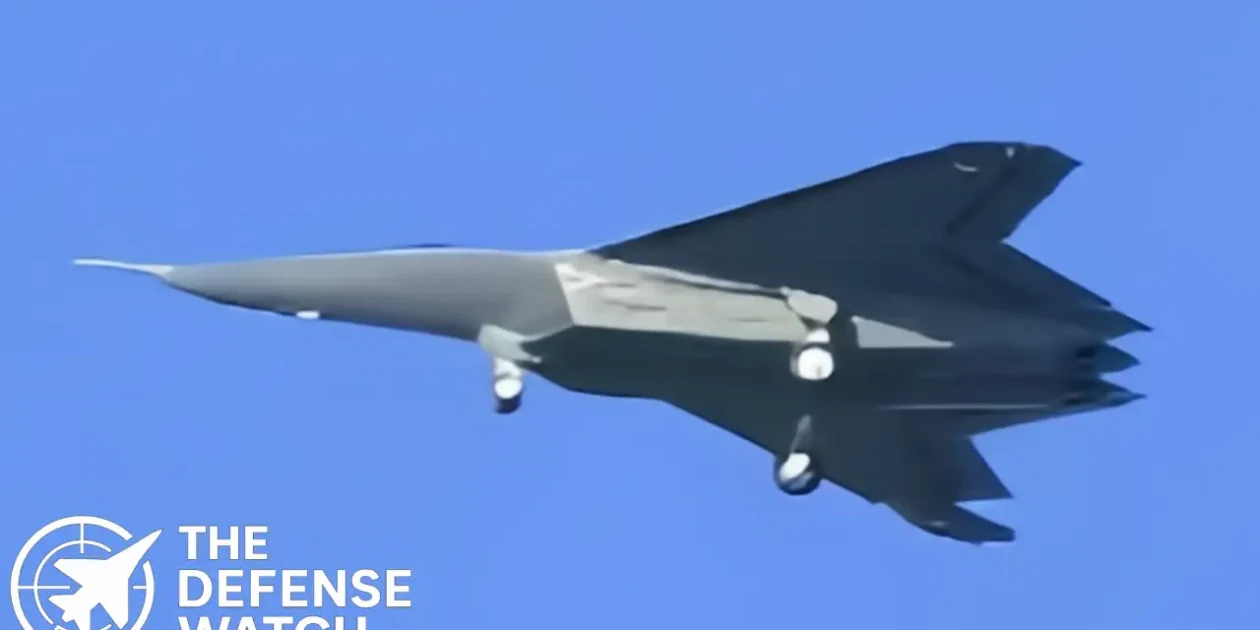
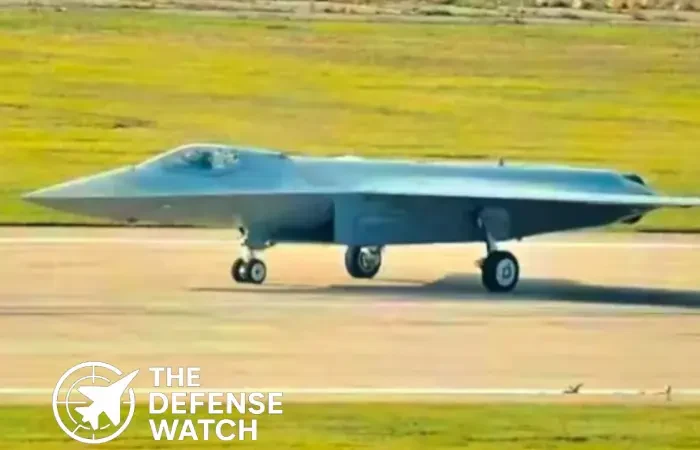
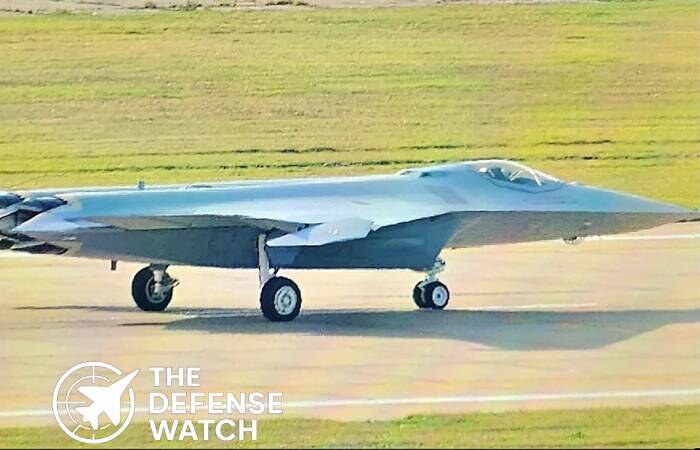
An ominous silhouette in the skies: the Shenyang J-50 emerges as China’s most ambitious stealth-fighter prototype, widely viewed as a contender in the next generation of air superiority platforms. Developed by Shenyang Aircraft Corporation (SAC), the J-50 (also referred to as J-XD or J-XDS) is an experimental twin-engine, tailless lambda-wing design aimed at redefining China’s aerial deterrence and power projection.
Purpose & Role
The J-50 is intended for air dominance, interception, and deep strike missions, built to compete with U.S. and allied sixth-generation concepts like NGAD/F-47. Its design suggests deployment in contested airspace, possibly even carrier operations for the PLA Naval Air Force.
Design & Technologies
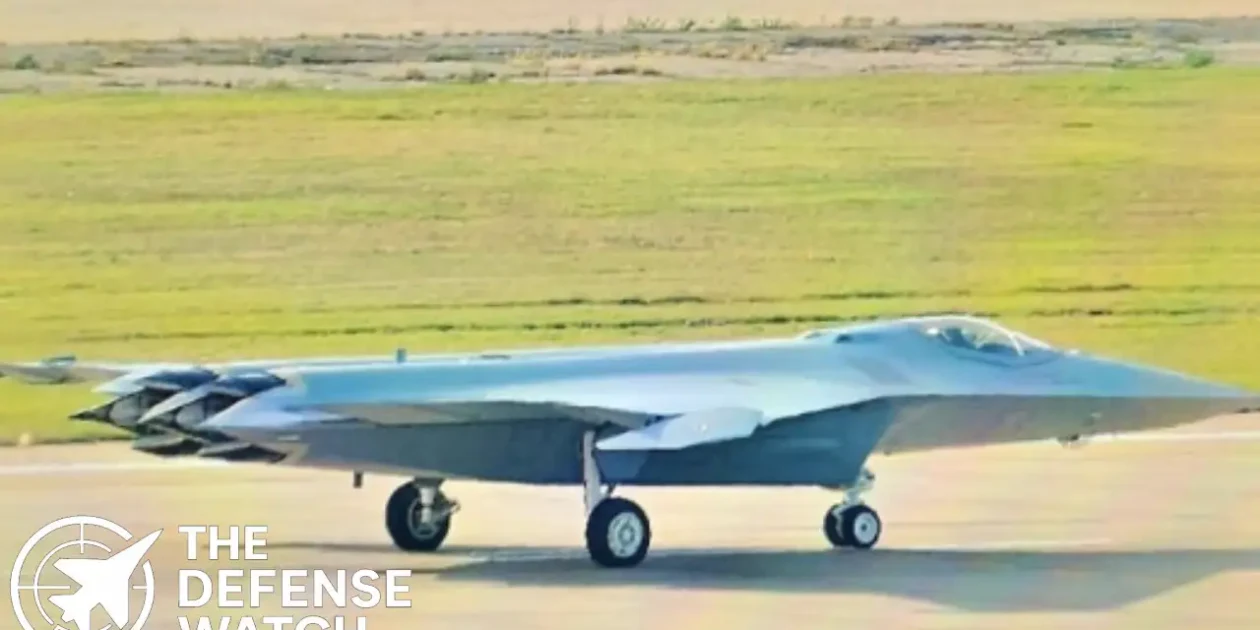
Visually striking, the J-50 features a tailless lambda wing with swivelable wing tips replacing vertical stabilizers to reduce radar signature and enhance maneuverability. Ventral diverterless supersonic inlets (DSI) feed twin engines embedded in a blended fuselage, which ends in flat, thrust-vectoring exhaust nozzles intended to lower its infrared signature. A pronounced electro-optical targeting turret (EOTS) sits beneath the nose, supported by side panels and sensor pods.
Although official performance data remain unconfirmed, open-source analysis suggests a maximum speed of Mach 2.0, a combat radius of ~2,200 km, and a maximum takeoff weight near 40 tons. Analysts also posit integration of AI-assisted mission systems, sensor fusion, optionally manned or drone-command roles, and advanced electronic warfare capabilities.
Operational Use
As of 2025, only one prototype has been confirmed, undergoing flight tests around SAC’s Liaoning facility. Multiple sightings, particularly in late 2024 and spring 2025, show the aircraft taxiing, flying low, and operating in chase formation with J-16 jets. If matured, the J-50 could enter limited service in the early to mid-2030s, complementing or succeeding China’s existing fifth-generation fleet.
Variants
| Field | Example / Note |
|---|---|
| F-35A | (U.S. variant) |
| F-35B | — STOVL variant (U.S.) |
| F-35C | — Carrier variant (U.S.) |
| Special Export Versions | None currently known — export unlikely yet |
Disclaimer Note
The information provided on TheDefenseWatch.com is for general informational purposes only. While we strive to ensure the accuracy, completeness, and timeliness of our content regarding defense and aerospace products, technologies, and specifications, we cannot guarantee that all information is 100% accurate or up-to-date due to the evolving nature of military technology and classified data.TheDefenseWatch.com does not warrant the reliability, suitability, or availability of the information for any specific purpose. Users are advised to consult official sources, such as manufacturers, government publications, or defense agencies, for precise and verified data before making decisions based on our content.We are not affiliated with any defense manufacturers, governments, or military organizations mentioned. Opinions, reviews, and ratings reflect expert analysis but are subjective and should not be considered endorsements. TheDefenseWatch.com is not responsible for any errors, omissions, or consequences arising from the use of this website’s content.External links are provided for convenience and do not imply endorsement. TheDefenseWatch.com reserves the right to update or modify content without prior notice. By using this website, you agree to our Privacy & Cookies Policy.
More Defense Systems from Shenyang Aircraft Corporation (SAC)
New Arrivals
Popular Comparisons
-
 Tejas Fighter Jet vs F-16 Fighting Falcon: Capability Compared
View Comparison →
Tejas Fighter Jet vs F-16 Fighting Falcon: Capability Compared
View Comparison → -
Rafale Fighter Jet vs F-16 Fighting Falcon : Which Fighter Has the Edge?
View Comparison →
-
Su-57 Fighter Jet vs J-20 Fighter Jet: Stealth and Air Combat Compared
View Comparison →
-
Mirage 2000 vs Tejas Mk1A: Legacy Combat Power vs Indigenous Modernization
View Comparison →
-
Rafale Fighter Jet vs F-22 Raptor: Which Air Dominance Fighter Has the Edge?
View Comparison →
-
Tejas Fighter Jet vs. Rafale Fighter Jet: India’s Indigenous Fighter Meets France’s Proven Multirole Combat Aircraft
View Comparison →
-
F-22 Raptor vs. F-35 Joint Strike Fighter: Which Fifth Generation Fighter Has the Edge?
View Comparison →
-
F-35A vs. F-22 Raptor: Which U.S. Stealth Fighter Dominates Modern Air Combat?
View Comparison →
-
AGM-114 Hellfire vs. AGM-179 JAGM: Which U.S. Precision Missile Is Better?
View Comparison →
-
Patriot (PAC-3) vs. THAAD: Complete Missile Defense System Comparison, Capabilities, Range, and Strategic Roles
View Comparison →
- Bell Boeing Wins $19.8M V-22 Tactical Software Support Contract

- Honeywell Wins $53.9M Navy Contract for WSN-7 Gyro Components
- Lockheed Martin Wins $76.6M Trident II D5LE2 Development Contract
- Lockheed Martin Gets $871.2M F-35 Site Support Contract Increase
- Pete Hegseth Texas Enlistment Ceremony: Hegseth Tells Military Families, We Have Their Back
- U.S., Denmark and Greenland Reach Security Agreement to Expand American Military Presence
- SpaceX Wins Three More NASA Crew Missions in $946 Million ISS Contract
- U.S. Clears Potential $24.3 Billion F-35 Sale to Saudi Arabia
- Type 99B Tank Training Shows China’s Shift Toward Networked Armored Warfare
- JRC Integrated Systems Gets $47.4M SLCM-N Support Contract