

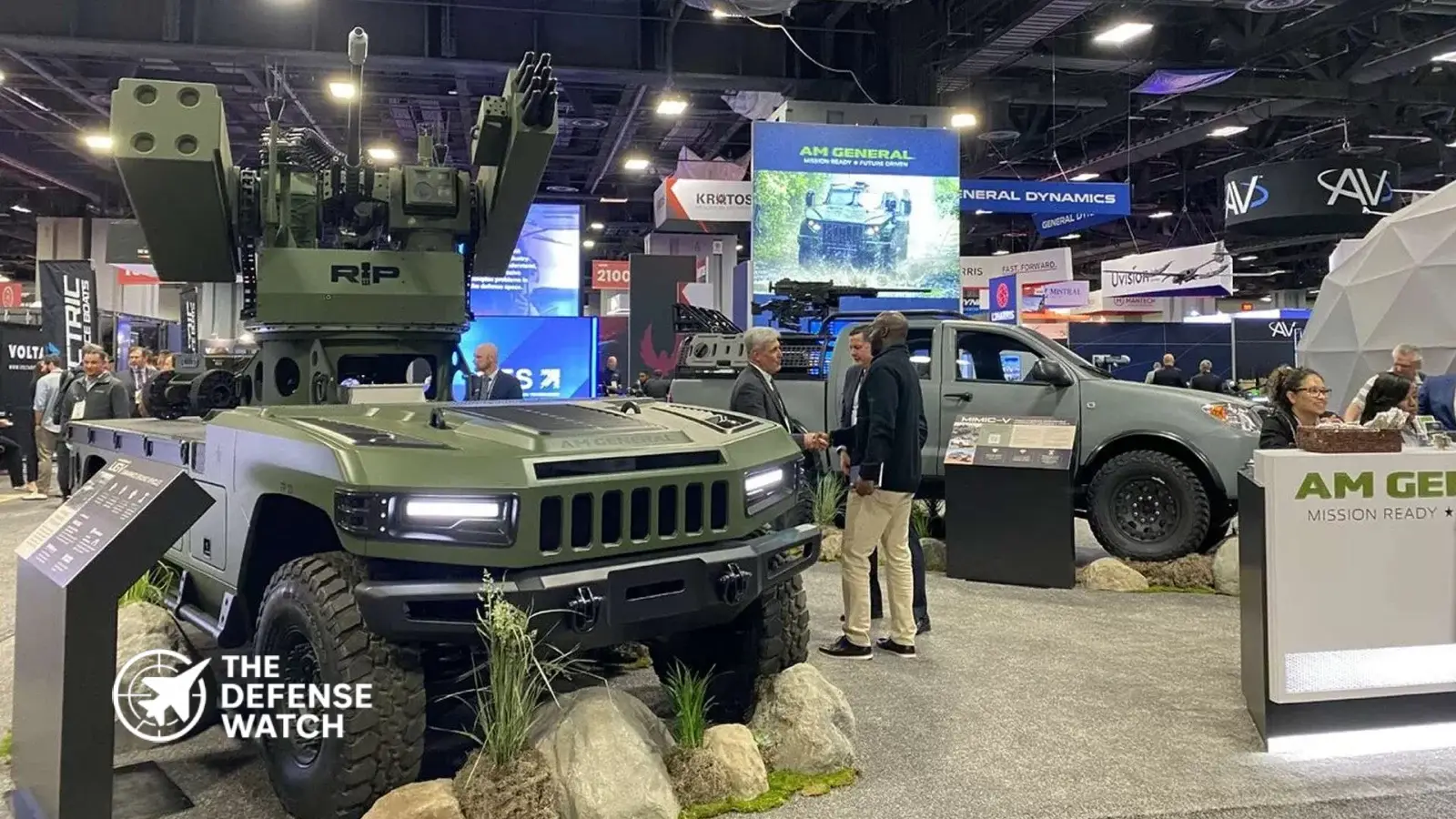
U.S. Armed UGV Counter Drone Warfare Gains Momentum
The armed UGV counter drone warfare concept is gaining traction as the U.S. military evaluates a new robotic ground platform equipped with a 30mm cannon and Coyote and Stinger missiles, according to reporting by Army Recognition.
The proposed system combines direct-fire capability with short-range air defense, creating a mobile, layered response to drones and low-flying threats. This reflects a broader Pentagon effort to adapt ground forces to a battlefield increasingly shaped by unmanned systems.
- The U.S. military is exploring an armed UGV equipped with a 30mm cannon and Stinger missiles for counter-drone missions.
- The system integrates kinetic and missile-based intercept options against low-altitude aerial threats.
- Coyote and Stinger missiles provide layered defense against drones, loitering munitions, and helicopters.
- The concept reflects growing urgency to counter small UAVs observed in recent conflicts.
- The platform supports autonomous or remote operations, reducing risk to frontline troops.
Recent conflicts, including those in Ukraine and the Middle East, have shown how inexpensive drones can disrupt armored units, artillery positions, and logistics networks. The U.S. response is now shifting toward integrated counter-drone solutions that can operate close to frontline units.
Multi-Layered Firepower Against Evolving Threats
At the core of the system is a 30mm autocannon, capable of engaging small drones, light vehicles, and infantry targets. This kinetic option provides a cost-effective way to counter low-end threats without relying solely on expensive missiles.
Complementing the cannon are Coyote interceptors and Stinger missiles. The Coyote system is designed specifically for counter-UAS missions, including intercepting small drones and loitering munitions. Stinger missiles extend the engagement envelope, allowing the platform to target helicopters and higher-speed aerial threats.
This layered approach reflects a key lesson from modern warfare: no single system can address the full spectrum of aerial threats. Instead, combining guns and missiles improves engagement flexibility and cost efficiency.
Operational Flexibility And Risk Reduction
The armed UGV is designed for remote or semi-autonomous operation, allowing forces to deploy it in high-risk environments without exposing personnel. This aligns with ongoing U.S. Army efforts to expand robotic combat vehicle programs.
By removing crews from the platform, commanders can push these systems forward into contested areas, including urban zones or exposed terrain where drone attacks are frequent. This also supports distributed operations, where smaller units operate independently but remain protected against aerial threats.
From an operational standpoint, the platform could serve as a mobile air defense node, escorting convoys, protecting forward operating bases, or supporting maneuver units.
Strategic Context: The Drone Threat Is Scaling Fast
The push for armed UGV counter drone warfare capabilities comes amid a rapid increase in drone usage across multiple theaters. Commercial off-the-shelf drones, modified for military use, have become widely available and difficult to counter using traditional air defense systems.
Small drones often fly at low altitude and slow speeds, making them hard to detect and engage with conventional radar-guided systems. This has exposed a capability gap in short-range air defense, particularly at the tactical level.
The U.S. military’s focus on combining kinetic and missile-based solutions within a single unmanned platform suggests a shift toward more adaptable and scalable defenses.
Analysis: Bridging The Tactical Air Defense Gap
The development of an armed UGV with integrated counter-drone capabilities highlights a broader transformation in ground warfare.
First, it addresses a clear vulnerability. Traditional armored vehicles and infantry units lack organic defenses against small drones. Adding a mobile, unmanned air defense layer helps close this gap.
Second, it reflects cost considerations. Engaging low-cost drones with high-cost missiles is not sustainable. A 30mm cannon provides a cheaper alternative for many targets, reserving missiles for higher-value threats.
Third, the system supports future force structure concepts. As the U.S. military moves toward more networked and distributed operations, autonomous systems will play a larger role in both offense and defense.
However, challenges remain. Integrating sensors, fire control systems, and autonomy into a single platform is complex. Ensuring reliable target identification, especially in cluttered environments, is critical to avoid fratricide or wasted intercepts.
Technology Integration And Future Outlook
The success of this concept will depend heavily on sensor integration and command-and-control networks. Detecting and tracking small drones requires advanced radar, electro-optical systems, and data fusion.
The U.S. Army has already invested in counter-UAS technologies, including directed energy weapons and electronic warfare systems. The armed UGV could serve as a complementary platform within this broader ecosystem.
Looking ahead, such systems may evolve to include AI-driven targeting, swarm coordination, and integration with aerial drones for layered defense. This would further enhance battlefield awareness and response speed.
Conclusion
The U.S. military’s exploration of an armed UGV counter drone warfare platform marks a significant step in adapting to modern threats. By combining a 30mm cannon with Coyote and Stinger missiles, the system offers a flexible, layered approach to countering drones and low-altitude threats.
As drone warfare continues to evolve, the ability to deploy mobile, unmanned air defense systems could become a critical advantage on future battlefields.
