Anduril YFQ-44A Combat Drone Production Timeline: What We Know and What’s at Stake
The United States Air Force’s push to field autonomous combat aircraft has entered its most consequential phase, with Anduril Industries’ YFQ-44A combat drone production timeline now drawing intense scrutiny from defense planners, industry analysts, and rival powers alike. Selected as a finalist for the Air Force’s landmark Collaborative Combat Aircraft (CCA) program in early 2025, Anduril is racing to transform a bold concept — an AI-driven unmanned wingman — into a deployable weapons system capable of operating in contested airspace against near-peer adversaries.
- Anduril Industries was selected by the U.S. Air Force in March 2025 as one of two contractors for the Collaborative Combat Aircraft (CCA) program, alongside General Atomics.
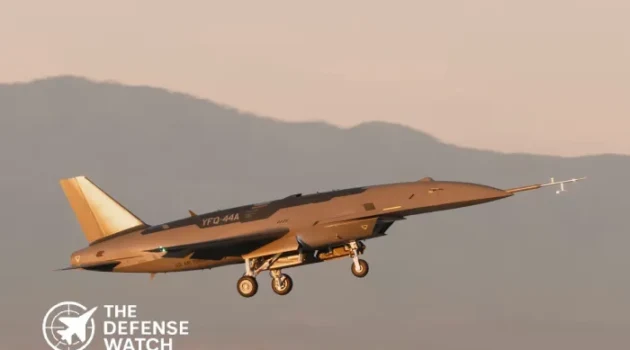
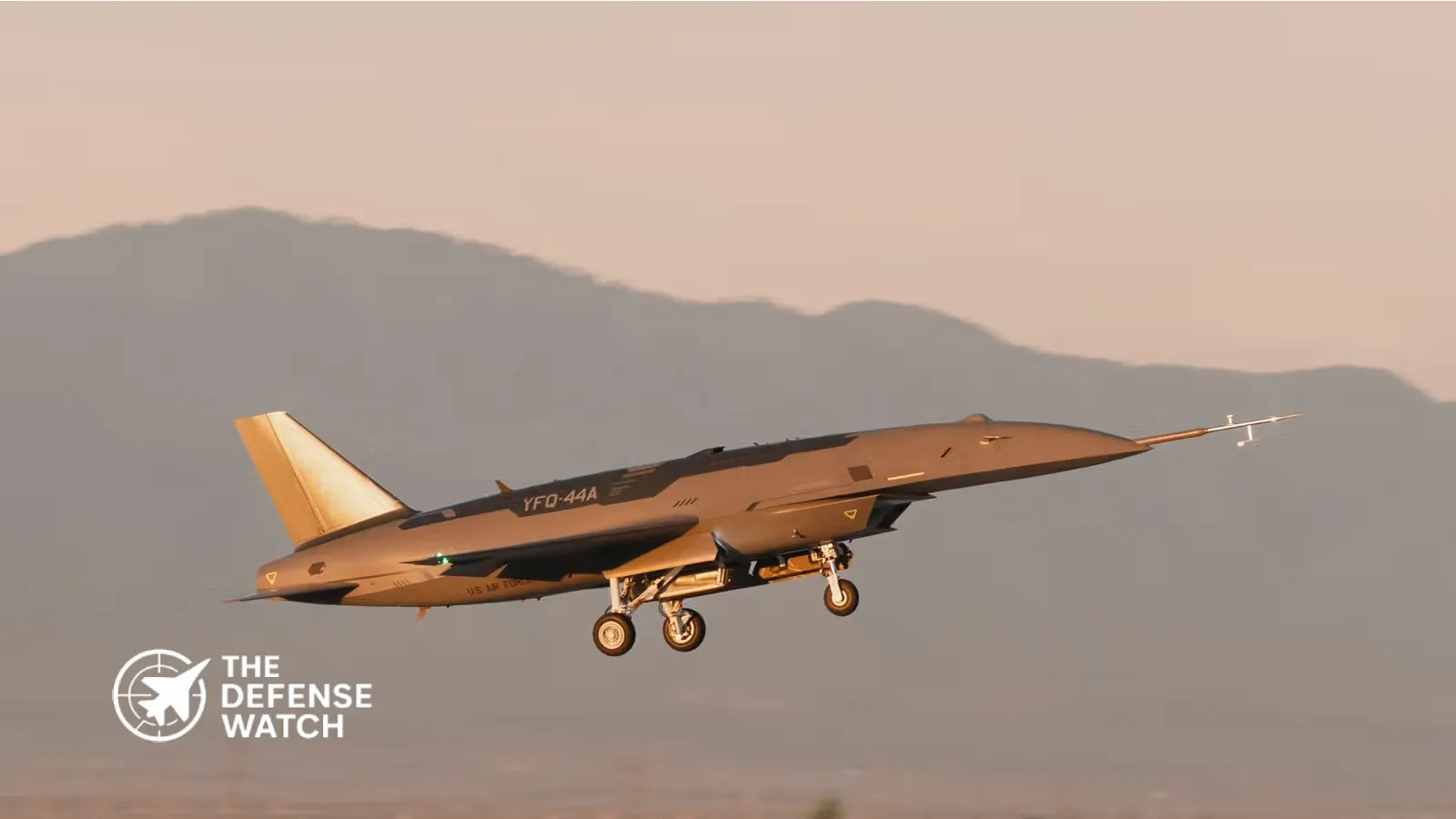
- Anduril’s entry is designated the YFQ-44A — a combat-capable autonomous drone designed to fly alongside crewed fighters such as the F-35 and F-22.
- The Air Force aims to field an initial CCA operational capability by the late 2020s, with full-rate production targeted in the early 2030s.
- The YFQ-44A is powered by Anduril’s Lattice AI autonomy platform, enabling real-time mission adaptation without continuous human input.
- The Pentagon has signaled intent to procure over 1,000 CCAs across both contractors, making this one of the largest unmanned combat aircraft programs in U.S. history.
This is no incremental upgrade to existing drone technology. The YFQ-44A represents a generational shift in how the United States intends to fight and win in the skies over the Pacific and beyond.
What Is the YFQ-44A? Understanding Anduril’s Autonomous Wingman
The YFQ-44A is Anduril’s candidate aircraft for the Air Force’s CCA Increment 1 program — a competition designed to develop low-cost, attritable autonomous aircraft that can accompany crewed fighters into high-threat environments. The “Y” prefix in its designation denotes a prototype development stage, while “FQ” indicates an unmanned fighter category — a designation class that did not exist in official U.S. military nomenclature until recently, underscoring just how new this entire domain is.
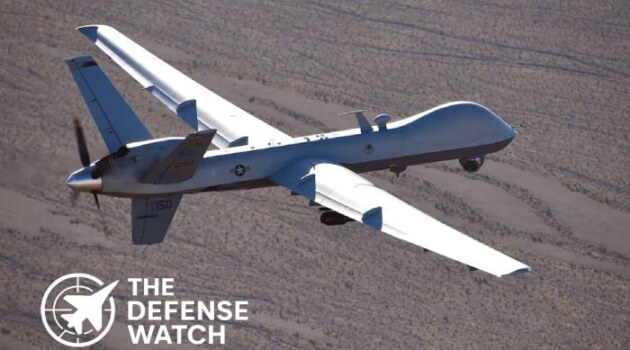
Unlike legacy remotely piloted aircraft such as the MQ-9 Reaper, which require continuous human control from a ground station, the YFQ-44A is designed for autonomous mission execution. It runs on Anduril’s proprietary Lattice AI operating system — the same platform that underpins the company’s Fury unmanned aircraft and its integrated defense network solutions. Lattice allows the YFQ-44A to process sensor data, identify threats, and execute tactical maneuvers without waiting for a human command input on every action.
The aircraft is intended to be affordable and producible at scale — a deliberate design philosophy in direct contrast to the eye-watering per-unit costs of the F-35. Pentagon planners have made clear they want a drone that can be purchased in the hundreds or thousands, accepting some degree of mission loss rather than designing an irreplaceable platform.
The CCA Program: How the YFQ-44A Fits the Bigger Picture
The Collaborative Combat Aircraft program is the Air Force’s answer to a strategic problem that has been building for years: the United States simply cannot afford — in time, money, or industrial capacity — to replace every aging crewed fighter with a next-generation manned platform fast enough to meet the pace of China’s military modernization.
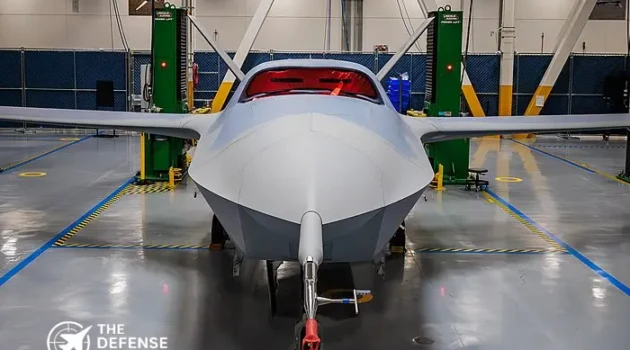
In March 2025, the Air Force awarded CCA Increment 1 development contracts to Anduril Industries and General Atomics, selecting them over competing proposals from Boeing and Lockheed Martin in a decision that sent shockwaves through the traditional defense industrial base. General Atomics’ entry carries the designation YFQ-42A, making the two programs direct competitors for what could become a combined procurement of over 1,000 aircraft.
The Air Force’s decision to go with Anduril — a defense technology startup founded in 2017 — over legacy primes was a deliberate signal that the Pentagon is willing to restructure how it buys advanced weapons systems. Anduril’s ability to move faster and iterate software more rapidly than traditional contractors appears to have been a decisive factor.
The broader CCA vision calls for these autonomous wingmen to perform a range of missions including electronic warfare support, ISR (intelligence, surveillance, and reconnaissance), weapons carriage and release, and aerial attrition in contested environments — essentially acting as force multipliers for crewed aircraft like the F-35A and the next-generation F-47.
YFQ-44A Production Timeline: Key Milestones
While the Air Force and Anduril have not published a fully detailed, public production schedule, information gathered from Congressional testimony, industry briefings, and defense reporting allows for a reasonable reconstruction of the program’s trajectory.
2024–2025: Competitive Development Phase
Anduril conducted extensive ground testing and early flight evaluations of its CCA design during this period. The company’s Costa Mesa, California headquarters and its manufacturing facilities served as the nerve center for rapid prototyping. The contract award in March 2025 formalized what had been an aggressive development push, locking in Anduril as one of two official CCA developers.
2025–2027: Prototype Refinement and Operational Testing
Following the contract award, Anduril entered a phase of intensive prototype refinement. This includes integration testing with Air Force operational systems, Lattice AI software maturation, and early evaluations by Air Combat Command. Developmental testing flights are expected to occur at Edwards Air Force Base, California — the traditional home of U.S. flight test operations — as well as classified test ranges in the Nevada desert.
The Air Force is expected to conduct a Milestone B decision during this window, which formally authorizes entry into Engineering and Manufacturing Development (EMD) — a critical program gate that unlocks significant additional funding and production preparation activities.
2027–2029: Low-Rate Initial Production (LRIP)
If the program proceeds on schedule, Low-Rate Initial Production of the YFQ-44A could begin as early as 2027 to 2028. LRIP units will be used for operational testing with operational units, allowing pilots and mission commanders to develop the tactics, techniques, and procedures (TTPs) needed to integrate autonomous wingmen into actual combat formations. Early LRIP deliveries may go to Air Force test and evaluation units before transitioning to frontline squadrons.
Late 2020s to Early 2030s: Initial Operating Capability (IOC)
The Air Force has publicly signaled a desire to achieve Initial Operating Capability for the CCA program by the late 2020s, though official milestone dates have not been disclosed for classification reasons. IOC would mean at least one operational unit is equipped, trained, and certified to deploy the YFQ-44A in a combat scenario. Full-Rate Production, which would enable the large-scale fleet numbers Pentagon planners envision, is broadly projected for the early 2030s.
Anduril’s Industrial Strategy: Can It Deliver at Scale?
One of the most important — and underreported — dimensions of the YFQ-44A story is whether Anduril possesses the industrial infrastructure to actually manufacture these aircraft at the volumes the Air Force requires. Building a handful of prototypes in a modern machine shop is a very different challenge from standing up a production line capable of producing hundreds of combat aircraft per year.
Anduril has been investing heavily in manufacturing capacity. The company announced plans for a large-scale Arsenal facility in Columbus, Ohio — a purpose-built manufacturing campus intended to produce autonomous systems at volume. The Arsenal concept is central to Anduril’s pitch to the Pentagon: that it can deliver not just innovative technology, but the production capacity to back it up at wartime scale.
This industrial positioning matters enormously given the stated lessons from the war in Ukraine, where attrition rates for unmanned systems have been extraordinarily high. A combat drone that costs tens of millions of dollars and takes years to manufacture offers far less strategic value than one that can be built quickly, cheaply, and in quantity.
Strategic Analysis: Why the YFQ-44A Timeline Is Being Watched Globally
The pace at which Anduril brings the YFQ-44A to operational status carries implications well beyond U.S. Air Force force structure planning.
China’s People’s Liberation Army Air Force is actively developing its own loyal wingman concepts, most notably the GJ-11 stealth unmanned combat aerial vehicle. Beijing has demonstrated a consistent ability to move from development to deployment with disconcerting speed. If the YFQ-44A program encounters significant delays — a realistic risk given the technical and programmatic complexity of what is being attempted — the U.S. risks ceding an early mover advantage in autonomous air combat that may be difficult to recover.
There is also a deterrence value to a credible production timeline. An adversary that believes the United States will field 1,000+ autonomous combat aircraft within a defined window must factor that capability into its own strategic calculations today, not merely when the aircraft arrive at Kadena or Andersen Air Force Base. This means Anduril’s ability to demonstrate credible progress — through test flights, production contracts, and Congressional briefings — carries real geopolitical weight.
The YFQ-44A program also sets a precedent for how defense acquisition will function in the coming decade. If a seven-year-old startup can win and execute a major combat aircraft program, it validates a model of defense procurement built around speed, software-first design, and commercial manufacturing methods — a model that stands in sharp contrast to the cost-plus contracting structures that produced the F-35 at roughly $80 million per unit.
The Road Ahead
The Anduril YFQ-44A combat drone production timeline remains a closely held program, but the strategic logic driving it is unmistakable. The United States Air Force has concluded that future high-end conflict — particularly in the Pacific — will demand more combat aircraft than the nation can afford to build in the traditional manned fighter model. Autonomous wingmen, available in large numbers, flying into contested environments where human pilots cannot reasonably be sent, are no longer a speculative concept. They are a procurement priority.
Whether Anduril can execute — delivering a mature, producible, combat-ready aircraft on the timeline the Air Force needs — is the central question facing the program. The answer will significantly shape American airpower through the 2030s and beyond.
FAQs
What is the Anduril YFQ-44A?The YFQ-44A is Anduril Industries’ prototype autonomous combat drone developed for the U.S. Air Force’s Collaborative Combat Aircraft (CCA) program. It is designed to fly alongside crewed fighters as an AI-driven unmanned wingman.
When will the YFQ-44A enter service?The Air Force is targeting Initial Operating Capability for the CCA program by the late 2020s, with full-rate production expected in the early 2030s, though official milestone dates remain classified.
How does the YFQ-44A differ from the YFQ-42A?The YFQ-42A is General Atomics’ competing CCA entry. Both aircraft are developing under parallel Air Force contracts. The Air Force may ultimately select one or both for production based on performance and cost.
What AI system powers the YFQ-44A?The YFQ-44A operates on Anduril’s Lattice AI platform, which enables autonomous mission execution, real-time threat processing, and adaptive tactical decision-making.
How many CCAs does the Air Force plan to buy?Pentagon officials have indicated a desire to procure over 1,000 Collaborative Combat Aircraft across the program, though final procurement numbers will be subject to Congressional authorization and appropriations.
Get real time update about this post category directly on your device, subscribe now.