Anduril YFQ-44A Combat Drone Production Timeline: What We Know and What’s at Stake
The United States Air Force’s push to field autonomous combat aircraft has entered its most consequential phase, with Anduril Industries’ YFQ-44A combat drone production timeline now drawing intense scrutiny from defense planners, industry analysts, and rival powers alike. Selected as a finalist for the Air Force’s landmark Collaborative Combat Aircraft (CCA) program in early 2025, Anduril is racing to transform a bold concept — an AI-driven unmanned wingman — into a deployable weapons system capable of operating in contested airspace against near-peer adversaries.
- Anduril Industries was selected by the U.S. Air Force in March 2025 as one of two contractors for the Collaborative Combat Aircraft (CCA) program, alongside General Atomics.
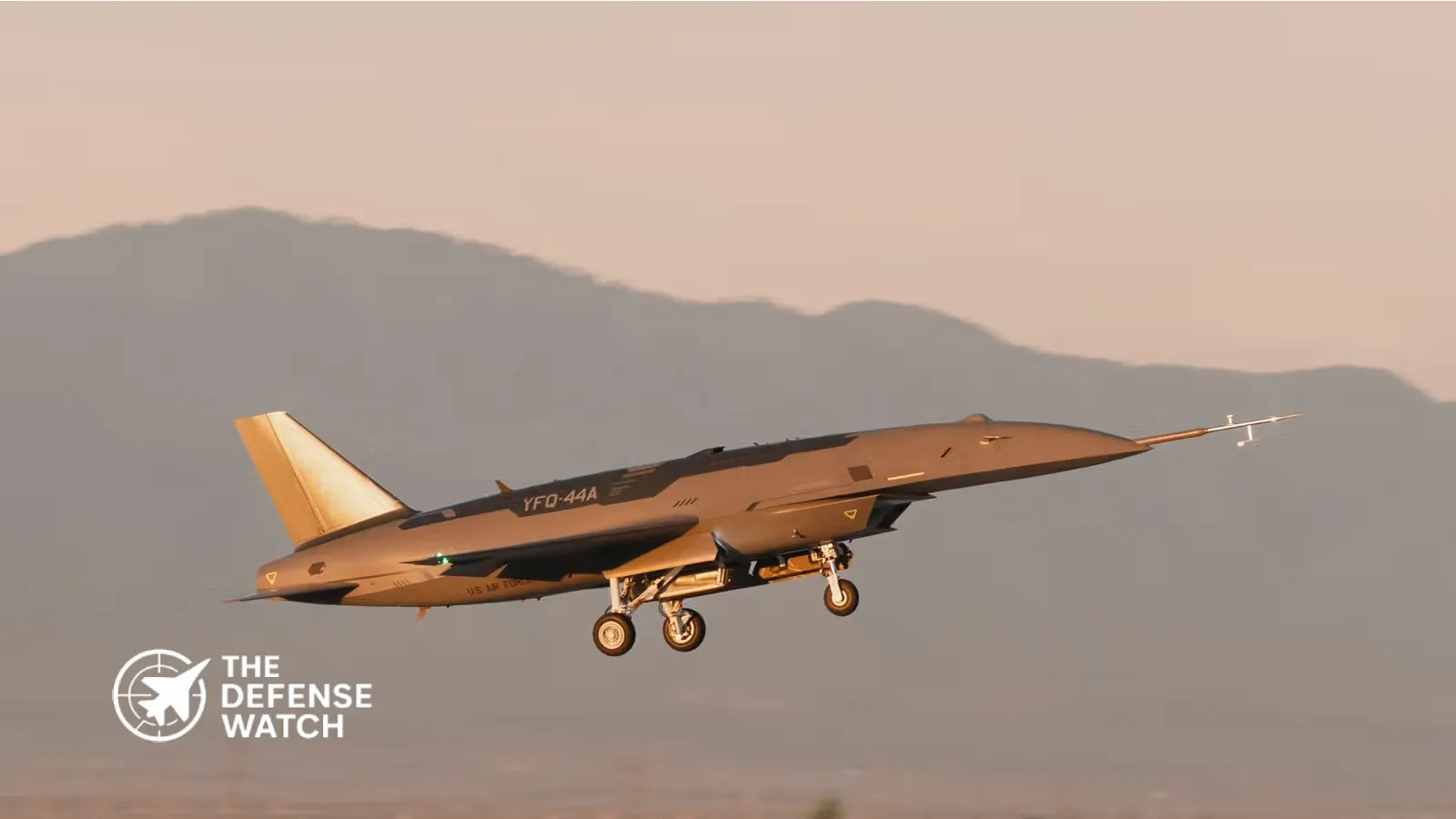
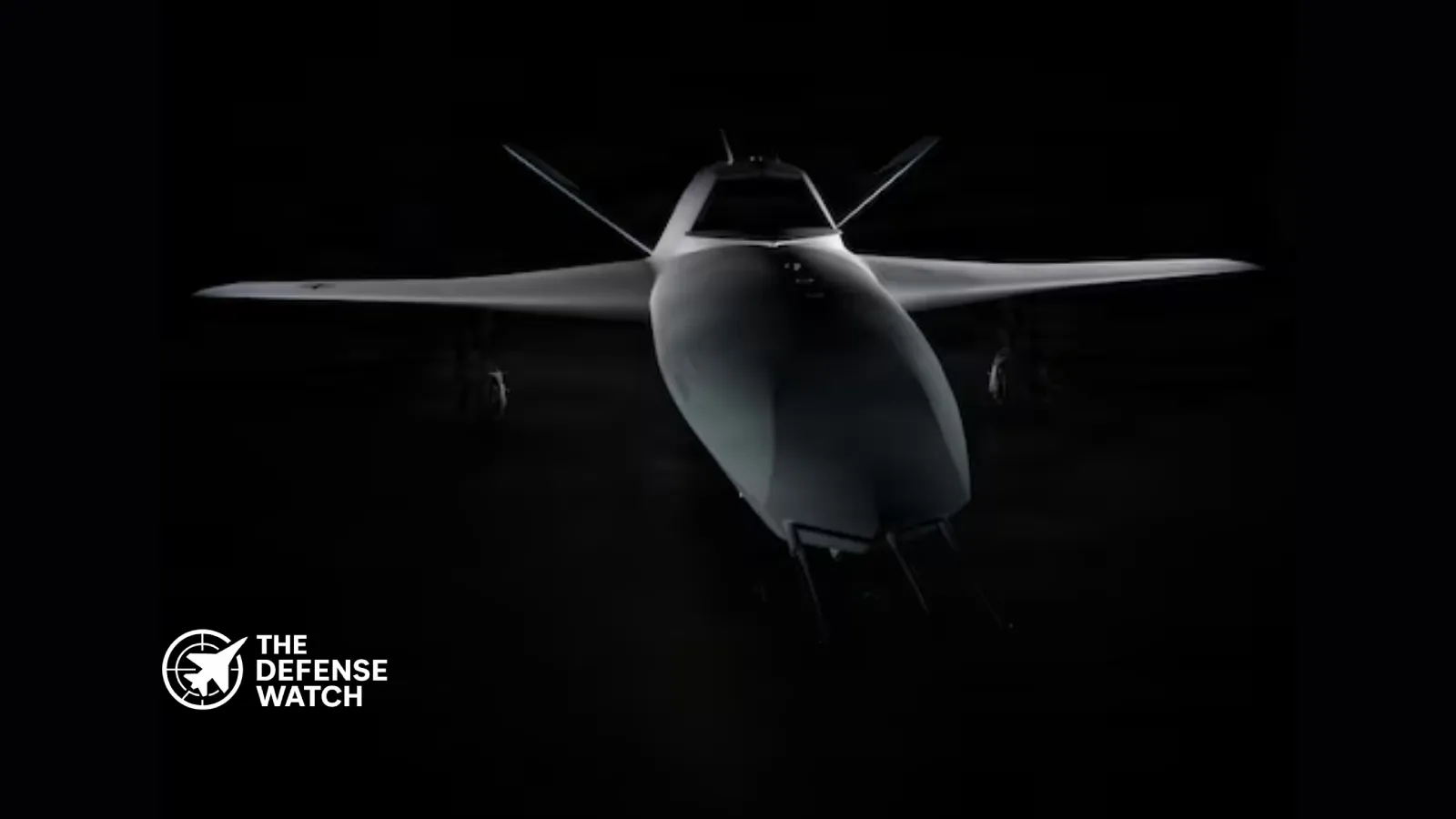
- Anduril’s entry is designated the YFQ-44A — a combat-capable autonomous drone designed to fly alongside crewed fighters such as the F-35 and F-22.
- The Air Force aims to field an initial CCA operational capability by the late 2020s, with full-rate production targeted in the early 2030s.
- The YFQ-44A is powered by Anduril’s Lattice AI autonomy platform, enabling real-time mission adaptation without continuous human input.
- The Pentagon has signaled intent to procure over 1,000 CCAs across both contractors, making this one of the largest unmanned combat aircraft programs in U.S. history.
This is no incremental upgrade to existing drone technology. The YFQ-44A represents a generational shift in how the United States intends to fight and win in the skies over the Pacific and beyond.
What Is the YFQ-44A? Understanding Anduril’s Autonomous Wingman
The YFQ-44A is Anduril’s candidate aircraft for the Air Force’s CCA Increment 1 program — a competition designed to develop low-cost, attritable autonomous aircraft that can accompany crewed fighters into high-threat environments. The “Y” prefix in its designation denotes a prototype development stage, while “FQ” indicates an unmanned fighter category — a designation class that did not exist in official U.S. military nomenclature until recently, underscoring just how new this entire domain is.
Unlike legacy remotely piloted aircraft such as the MQ-9 Reaper, which require continuous human control from a ground station, the YFQ-44A is designed for autonomous mission execution. It runs on Anduril’s proprietary Lattice AI operating system — the same platform that underpins the company’s Fury unmanned aircraft and its integrated defense network solutions. Lattice allows the YFQ-44A to process sensor data, identify threats, and execute tactical maneuvers without waiting for a human command input on every action.
The aircraft is intended to be affordable and producible at scale — a deliberate design philosophy in direct contrast to the eye-watering per-unit costs of the F-35. Pentagon planners have made clear they want a drone that can be purchased in the hundreds or thousands, accepting some degree of mission loss rather than designing an irreplaceable platform.
The CCA Program: How the YFQ-44A Fits the Bigger Picture
The Collaborative Combat Aircraft program is the Air Force’s answer to a strategic problem that has been building for years: the United States simply cannot afford — in time, money, or industrial capacity — to replace every aging crewed fighter with a next-generation manned platform fast enough to meet the pace of China’s military modernization.
In March 2025, the Air Force awarded CCA Increment 1 development contracts to Anduril Industries and General Atomics, selecting them over competing proposals from Boeing and Lockheed Martin in a decision that sent shockwaves through the traditional defense industrial base. General Atomics’ entry carries the designation YFQ-42A, making the two programs direct competitors for what could become a combined procurement of over 1,000 aircraft.
The Air Force’s decision to go with Anduril — a defense technology startup founded in 2017 — over legacy primes was a deliberate signal that the Pentagon is willing to restructure how it buys advanced weapons systems. Anduril’s ability to move faster and iterate software more rapidly than traditional contractors appears to have been a decisive factor.
The broader CCA vision calls for these autonomous wingmen to perform a range of missions including electronic warfare support, ISR (intelligence, surveillance, and reconnaissance), weapons carriage and release, and aerial attrition in contested environments — essentially acting as force multipliers for crewed aircraft like the F-35A and the next-generation F-47.
YFQ-44A Production Timeline: Key Milestones
While the Air Force and Anduril have not published a fully detailed, public production schedule, information gathered from Congressional testimony, industry briefings, and defense reporting allows for a reasonable reconstruction of the program’s trajectory.
2024–2025: Competitive Development Phase
Anduril conducted extensive ground testing and early flight evaluations of its CCA design during this period. The company’s Costa Mesa, California headquarters and its manufacturing facilities served as the nerve center for rapid prototyping. The contract award in March 2025 formalized what had been an aggressive development push, locking in Anduril as one of two official CCA developers.
2025–2027: Prototype Refinement and Operational Testing
Following the contract award, Anduril entered a phase of intensive prototype refinement. This includes integration testing with Air Force operational systems, Lattice AI software maturation, and early evaluations by Air Combat Command. Developmental testing flights are expected to occur at Edwards Air Force Base, California — the traditional home of U.S. flight test operations — as well as classified test ranges in the Nevada desert.
The Air Force is expected to conduct a Milestone B decision during this window, which formally authorizes entry into Engineering and Manufacturing Development (EMD) — a critical program gate that unlocks significant additional funding and production preparation activities.
2027–2029: Low-Rate Initial Production (LRIP)
If the program proceeds on schedule, Low-Rate Initial Production of the YFQ-44A could begin as early as 2027 to 2028. LRIP units will be used for operational testing with operational units, allowing pilots and mission commanders to develop the tactics, techniques, and procedures (TTPs) needed to integrate autonomous wingmen into actual combat formations. Early LRIP deliveries may go to Air Force test and evaluation units before transitioning to frontline squadrons.
Late 2020s to Early 2030s: Initial Operating Capability (IOC)
The Air Force has publicly signaled a desire to achieve Initial Operating Capability for the CCA program by the late 2020s, though official milestone dates have not been disclosed for classification reasons. IOC would mean at least one operational unit is equipped, trained, and certified to deploy the YFQ-44A in a combat scenario. Full-Rate Production, which would enable the large-scale fleet numbers Pentagon planners envision, is broadly projected for the early 2030s.
Anduril’s Industrial Strategy: Can It Deliver at Scale?
One of the most important — and underreported — dimensions of the YFQ-44A story is whether Anduril possesses the industrial infrastructure to actually manufacture these aircraft at the volumes the Air Force requires. Building a handful of prototypes in a modern machine shop is a very different challenge from standing up a production line capable of producing hundreds of combat aircraft per year.
Anduril has been investing heavily in manufacturing capacity. The company announced plans for a large-scale Arsenal facility in Columbus, Ohio — a purpose-built manufacturing campus intended to produce autonomous systems at volume. The Arsenal concept is central to Anduril’s pitch to the Pentagon: that it can deliver not just innovative technology, but the production capacity to back it up at wartime scale.
This industrial positioning matters enormously given the stated lessons from the war in Ukraine, where attrition rates for unmanned systems have been extraordinarily high. A combat drone that costs tens of millions of dollars and takes years to manufacture offers far less strategic value than one that can be built quickly, cheaply, and in quantity.
Strategic Analysis: Why the YFQ-44A Timeline Is Being Watched Globally
The pace at which Anduril brings the YFQ-44A to operational status carries implications well beyond U.S. Air Force force structure planning.
China’s People’s Liberation Army Air Force is actively developing its own loyal wingman concepts, most notably the GJ-11 stealth unmanned combat aerial vehicle. Beijing has demonstrated a consistent ability to move from development to deployment with disconcerting speed. If the YFQ-44A program encounters significant delays — a realistic risk given the technical and programmatic complexity of what is being attempted — the U.S. risks ceding an early mover advantage in autonomous air combat that may be difficult to recover.
There is also a deterrence value to a credible production timeline. An adversary that believes the United States will field 1,000+ autonomous combat aircraft within a defined window must factor that capability into its own strategic calculations today, not merely when the aircraft arrive at Kadena or Andersen Air Force Base. This means Anduril’s ability to demonstrate credible progress — through test flights, production contracts, and Congressional briefings — carries real geopolitical weight.
The YFQ-44A program also sets a precedent for how defense acquisition will function in the coming decade. If a seven-year-old startup can win and execute a major combat aircraft program, it validates a model of defense procurement built around speed, software-first design, and commercial manufacturing methods — a model that stands in sharp contrast to the cost-plus contracting structures that produced the F-35 at roughly $80 million per unit.
The Road Ahead
The Anduril YFQ-44A combat drone production timeline remains a closely held program, but the strategic logic driving it is unmistakable. The United States Air Force has concluded that future high-end conflict — particularly in the Pacific — will demand more combat aircraft than the nation can afford to build in the traditional manned fighter model. Autonomous wingmen, available in large numbers, flying into contested environments where human pilots cannot reasonably be sent, are no longer a speculative concept. They are a procurement priority.
Whether Anduril can execute — delivering a mature, producible, combat-ready aircraft on the timeline the Air Force needs — is the central question facing the program. The answer will significantly shape American airpower through the 2030s and beyond.
FAQs
What is the Anduril YFQ-44A?The YFQ-44A is Anduril Industries’ prototype autonomous combat drone developed for the U.S. Air Force’s Collaborative Combat Aircraft (CCA) program. It is designed to fly alongside crewed fighters as an AI-driven unmanned wingman.
When will the YFQ-44A enter service?The Air Force is targeting Initial Operating Capability for the CCA program by the late 2020s, with full-rate production expected in the early 2030s, though official milestone dates remain classified.
How does the YFQ-44A differ from the YFQ-42A?The YFQ-42A is General Atomics’ competing CCA entry. Both aircraft are developing under parallel Air Force contracts. The Air Force may ultimately select one or both for production based on performance and cost.
What AI system powers the YFQ-44A?The YFQ-44A operates on Anduril’s Lattice AI platform, which enables autonomous mission execution, real-time threat processing, and adaptive tactical decision-making.
How many CCAs does the Air Force plan to buy?Pentagon officials have indicated a desire to procure over 1,000 Collaborative Combat Aircraft across the program, though final procurement numbers will be subject to Congressional authorization and appropriations.
US Air Force Designates YFQ-48 Unmanned Aircraft in Collaborative Combat Aircraft Program
The US Air Force has officially designated the YFQ-48 unmanned aircraft prototype under its Collaborative Combat Aircraft (CCA) program, advancing efforts to field semi-autonomous drones that can operate with manned fighters. This designation underscores progress in the broader effort to expand manned-unmanned teaming and distributed air operations.
YFQ-48 Emerges as Next Prototype in CCA Push
The YFQ-48, internally known as Project Talon, was quietly designated as a Mission Design Series aircraft by the Air Force in late December 2025. The move formalizes Northrop Grumman’s prototype in the CCA initiative, tasked with developing unmanned systems to work alongside platforms such as the F-35 and future fighters.
Details on specifications remain limited, but service and industry sources say the design emphasizes semi-autonomous operation, modular systems, and the flexibility to carry sensors or mission-specific payloads. These aircraft are intended for strike, sensing, and electronic warfare support in contested environments where lowering risk to human pilots is a priority.
CCA Strategy and Companion Efforts
The Collaborative Combat Aircraft program aims to expand combat mass and survivability by pairing loyal wingman style drones with crewed aircraft. Early designations within the program include the General Atomics YFQ-42A and Anduril YFQ-44A, both moving through ground and flight testing phases.
This strategy fits within the Air Force’s Next Generation Air Dominance portfolio, which integrates autonomy, secure networking, and new acquisition models meant to field systems more quickly and at lower cost than traditional fighters.
Outlook and Broader Context
While the program’s timeline for operational fielding remains tied to further testing and evaluation, the YFQ-48 designation marks a clear step toward expanding unmanned combat roles. Similar efforts by other nations in manned-unmanned teaming reflect a global shift in airpower concepts.
In a major unveiling on October 22 2025, U.S. defence-technology company Shield AI revealed the X-BAT, a next-generation unmanned, vertical-take-off-and-landing (VTOL) fighter-class aircraft powered by its proprietary autonomy software “Hivemind”.
Designed for runway-independent operations and missions in denied or degraded environments, X-BAT is pitched as both a standalone combat aircraft and a “loyal wingman” unmanned asset operating alongside crewed fighters.What is the X-BAT?
Key capabilities and design
According to Shield AI’s announcement:
- X-BAT offers VTOL launch and recovery, enabling operations from ships, islands, container-vessels or forward sites without runways.
- The aircraft is said to achieve over 2,000 nautical miles of range while carrying a full mission payload.
- Designed for multi-role missions: air-to-air, air-to-surface strike, electronic warfare (EW), intelligence-surveillance-reconnaissance (ISR) and drone wingman tasks.
- Fueled by Shield AI’s Hivemind autonomy software, enabling operations in GPS- and communications-degraded or denied environments.
- Compact footprint: Shield AI claims that three X-BATs can fit into the deck space of one legacy fighter or helicopter.
- The company positions the price point significantly lower than legacy crewed fighters — approximately $27–30 million per unit is cited by some sources.

Shield AI said the X-BAT is designed to take off in remote locations. Shield AI Development roadmap
Shield AI indicates first VTOL flights are slated for around 2026, with full mission-capability production expected by 2028–2029.
Why this matters for U.S. defence and global airpower
Autonomy and attritable force structure
The U.S. military’s interest in “loyal wingman” or unmanned combat aircraft (UCA) is well established. Programs such as the Collaborative Combat Aircraft (CCA) initiative seek to pair unmanned platforms with crewed jets for distributed operations. The X-BAT enters this field with several differentiators: runway-free VTOL, long-range, multi-mission flexibility and full autonomy capability.
From a U.S. defence perspective, this represents a shift: enabling more distributed, lower-cost airpower that can absorb losses (attritability) and extend reach in contested theatres. The lower cost and autonomous nature reduce the risk to pilots and traditional infrastructure.
Challenges to contested environments
In a high-end peer adversary scenario—especially in the Indo-Pacific where basing and logistics are vulnerable—the ability to launch combat aircraft from austere locations or ships without full runway infrastructure becomes highly advantageous. Shield AI describes the concept as “airpower without runways … the holy grail of deterrence”. The X-BAT’s autonomy to operate in GPS/communications-denied environments further supports operations in heavily contested spaces where traditional platforms may struggle.
Technology trends and strategic implications
The unveiling of X-BAT underscores several broader technology trends:
- The increasing centrality of artificial intelligence, autonomy and machine-speed decision making in air combat. For example, Shield AI’s autonomy software previously controlled a modified F-16 in a dog-fight exercise.
- The move toward smaller, more versatile platforms rather than ever larger, more expensive systems. X-BAT aims to deliver “fighter-class” performance at a fraction of traditional fifth-generation fighter cost.
- The convergence of airborne strike, ISR, electronic warfare and teaming missions into a unified, modular platform rather than specialised siloed systems.
Analysis: What the development means
For the United States, the X-BAT signals a potential leap in how airpower might be structured for future wars. Instead of relying solely on expensive, manned fifth-gen fighters and large airbases, this approach offers a distributed fleet of lower-cost, unmanned jets that can swarm, operate from austere sites, and penetrate contested air-defence zones with reduced risk to pilots.
However, major hurdles remain. Autonomy at this scale for lethal operations raises doctrinal, legal and ethical questions—especially around human control of kill decisions. Production-scale logistics, sustainment, adversary counter-measures (such as anti-access/area-denial systems) and certification of autonomous platforms remain significant challenges. Additionally, while X-BAT is compelling as a concept, it is still a concept model and does not yet carry a signed government contract.
In global context, peer competitors such as China are already investing heavily in unmanned combat aircraft and autonomy; thus, the U.S. adoption of systems such as X-BAT may be critical to maintaining air-dominance. For allies and partners, deployable, runway-free platforms offer new options for regional deterrence and crisis response.Conclusion
The X-BAT unveiled by Shield AI represents a bold step toward autonomous, distributed airpower—one that could reshape how the U.S. and its allies project dominance in future contested environments. Over the next few years, the critical tests will be transition from concept to contract, demonstration of autonomy under mission-realistic conditions, and integration into existing force structure and doctrine. If successful, X-BAT could become a cornerstone of 21st-century air warfare—setting new performance, cost and deployment paradigms for combat aviation.