

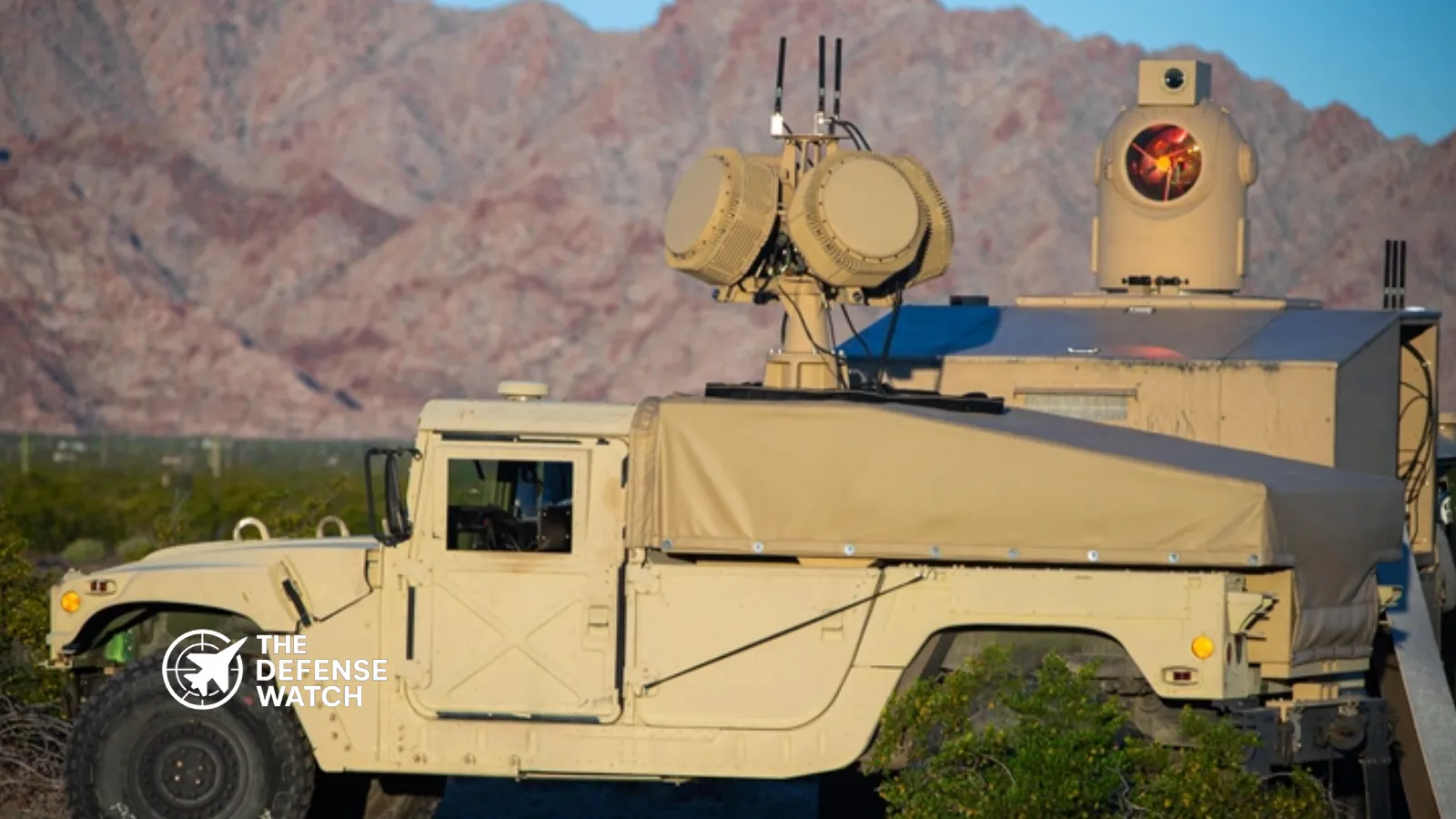
- Pentagon and FAA conducting joint tests of a high energy anti drone laser system at White Sands Missile Range in New Mexico.
- Tests will evaluate aircraft safety, aircrew eye protection, and automated shutdown mechanisms for laser systems.
- Initiative follows recent incidents near the Texas border involving laser use against suspected drones.
- Testing conducted by the Pentagon’s Joint Interagency Task Force 401 in coordination with the Federal Aviation Administration.
- Results could shape future operational rules for deploying counter drone laser weapons inside U.S. airspace.
High Energy Anti Drone Laser System Tests Begin In New Mexico
The high energy anti drone laser system is undergoing joint safety testing by the Pentagon and the Federal Aviation Administration at White Sands Missile Range in New Mexico. The trials aim to evaluate the safety and operational procedures needed to integrate directed energy counter drone technology into U.S. airspace.
The testing follows recent incidents near the U.S. southern border in which laser based counter drone systems triggered airspace restrictions and raised concerns about coordination between defense and aviation authorities.
The Pentagon said the trials will focus on evaluating how high energy lasers interact with aircraft materials, verifying automated safety shutoff features, and assessing potential risks to aircrew vision.
The Big Picture
Counter drone defense has become a major priority for the U.S. military as small unmanned aerial systems increasingly appear in conflicts and domestic security environments.
Low cost commercial drones have demonstrated the ability to conduct reconnaissance, smuggling, and even precision strikes. U.S. military planners now view small drones as a persistent threat to bases, border security operations, and critical infrastructure.
Directed energy weapons, including the high energy anti drone laser system, represent one of the most promising technologies for addressing that threat.
Unlike missile based interceptors or gun systems, lasers can engage small unmanned aircraft with minimal cost per shot and without expending physical ammunition. A concentrated beam of energy heats the drone’s structure or electronics until it fails in flight.
The Pentagon has invested heavily in directed energy research over the past decade as part of broader efforts to modernize U.S. air and missile defense capabilities.
What’s Happening
The Department of Defense is conducting the new tests in cooperation with the FAA to address aviation safety concerns related to the high energy anti drone laser system.
The trials are being carried out at White Sands Missile Range, one of the U.S. military’s primary testing facilities for advanced weapons and missile defense technologies.
Officials say the evaluation will focus on three major safety areas:
• Effects of laser energy on aircraft materials using surrogate models
• Eye safety for aircrews operating near laser engagements
• Verification of automated safety shutdown systems
These safeguards are critical if counter drone lasers are to operate near civilian aviation corridors.
The tests are being conducted by the Pentagon’s Joint Interagency Task Force 401, which oversees U.S. counter unmanned aircraft initiatives across multiple agencies.
Why It Matters
Recent incidents along the U.S. southern border highlighted the operational challenges of deploying advanced counter drone technologies in domestic airspace.
In February, a laser system used near Fort Hancock, Texas, mistakenly shot down a drone operated by U.S. Customs and Border Protection. The event triggered new airspace restrictions and drew attention from lawmakers concerned about interagency coordination.
Earlier in the month, the FAA briefly shut down airspace around El Paso after an anti drone laser was used without prior coordination with aviation authorities.
These incidents exposed a key operational challenge. Counter drone systems designed for battlefield use must operate safely in complex civilian airspace environments when deployed domestically.
The joint testing effort aims to establish standardized procedures that allow military units to employ directed energy weapons without disrupting commercial aviation.
Strategic Implications
The development of the high energy anti drone laser system reflects a broader shift toward directed energy weapons across the U.S. military.
Laser systems offer several strategic advantages.
First, they dramatically reduce the cost of intercepting small drones. Traditional missile interceptors can cost tens or hundreds of thousands of dollars per engagement. A laser shot costs only the electricity required to generate the beam.
Second, lasers provide nearly instantaneous engagement against small aerial targets. This makes them particularly effective against drone swarms or rapidly maneuvering unmanned aircraft.
Third, directed energy weapons allow sustained defensive operations because they do not rely on finite ammunition stocks.
These advantages make laser systems increasingly attractive for homeland defense missions such as border security, base protection, and protection of critical infrastructure.
Competitor View
Strategic competitors are also investing heavily in directed energy weapons.
China has unveiled mobile laser based air defense systems designed to intercept low altitude drones and other aerial threats. Russia has similarly explored laser systems for air defense and counter drone missions.
The U.S. military’s continued development and testing of counter drone laser technologies signals an intent to maintain technological leadership in directed energy weapons.
At the same time, the safety testing underway in New Mexico underscores a unique challenge for the United States. Unlike battlefield deployments, domestic counter drone operations must operate within one of the world’s busiest civilian aviation systems.
Capability Gap
Small unmanned aircraft represent a growing vulnerability for military installations and border security operations.
Traditional air defense systems were designed to defeat large aircraft or ballistic missiles. They are often too expensive or inefficient for engaging low cost drones.
The high energy anti drone laser system addresses this gap by offering a scalable and low cost solution for neutralizing small unmanned aircraft.
However, the technology still faces limitations.
Laser weapons require clear atmospheric conditions for maximum effectiveness. Dust, fog, or heavy rain can reduce beam strength. Additionally, lasers generally engage one target at a time, which can limit their effectiveness against large drone swarms.
Despite these constraints, directed energy remains one of the most promising solutions for countering the growing drone threat.
What To Watch Next
The results of the New Mexico testing could shape how the U.S. government deploys directed energy counter drone systems in the future.
Officials expect the tests to generate data that will help establish operational safety standards between the Pentagon and the FAA.
If the testing proves successful, the next steps could include:
• Expanded testing programs with operational military units
• Integration into border security operations
• Development of permanent operational guidelines for laser use in U.S. airspace
The Pentagon is also exploring the procurement of additional laser systems designed to defeat multiple classes of unmanned aircraft.
The Bottom Lin
Joint Pentagon and FAA testing of the high energy anti drone laser system marks a key step toward integrating directed energy counter drone defenses into real world operations while protecting civilian airspace.
