
- Home
- Defense Systems
- Future / Concept Weapons
- Mitsubishi F-X Fighter Jet
Mitsubishi F-X Fighter Jet
Defense Systems Full Specifications
1) Basic / Identification
| Name | Mitsubishi F-X |
| Designation | F-X |
| Manufacturer / Developer | Mitsubishi Heavy Industries |
| Country / Lead partner | Japan, UK, Italy |
| Type / Role | Sixth generation air superiority fighter |
| Status | Development |
| Program Start | 2018 |
| Estimated unit cost | USD 120M est. |
| Public Source / Reference | Japan Ministry of Defense releases |
2) Performance & Capabilities
| Operational Concept | Air dominance, long range interception, networked strike |
| Effective Range / Engagement Envelope | Long range, maritime focused |
| Speed / Response Time | Mach 2 plus est. |
| Endurance / Sustained Operation | Extended patrol capability |
| Precision / Accuracy | High, network guided weapons |
| Mobility / Basing | Land based airfields |
3) Propulsion / Power / Energy
| Power Source | Turbofan engines |
| Power Output | Classified |
| Propulsion Type | Twin engine turbofan |
| Fuel / Energy Storage | Internal fuel with external options |
4) Payload / Kill Mechanism
| Primary Effect | Kinetic |
| Payload Mass / Warhead | Classified |
| Guidance / Targeting | AESA radar, IR sensors, data links |
| Multi-mode Capability | Air to air and air to surface |
5) Sensors, Avionics & Autonomy
| Sensors | AESA radar, EO IR, EW suite |
| Autonomy Level | Human supervised AI |
| AI Features | Threat recognition, decision support |
| Communications & Datalinks | Secure allied data links |
6) Survivability & Countermeasures
| Signature Reduction | Stealth shaping and materials |
| Defensive Systems | Electronic warfare and decoys |
| Resilience | Redundant mission systems |
7) Integration & Interoperability
| Integration | Allied C2 and sensor networks |
| Suitable Platforms | Air force operations |
| Interoperability Standards | Allied tactical data links |
| Upgrade Path | Modular open architecture |
8) Legal / Ethical / Policy Notes
| Export Control | Strict national controls |
| Legal/Ethical Flags | AI assisted combat use |
| Policy Implications | Regional deterrence balance |
9) Operational / Program Notes
| Notable Tests / Milestones | Prototype development ongoing |
| Expected IOC (if given) | Mid 2030s |
| Partners / Contractors | MHI, BAE Systems, Leonardo |
| Remarks | Specifications subject to change |
PROS
- Advanced stealth and sensor fusion
- Designed for long range Indo-Pacific operations
- Strong interoperability with U.S. and NATO allies
- AI assisted decision support systems
- Future proof open architecture design
CONS
- Very high development and unit cost
- Program complexity with multinational partners
- Long timeline before full operational service
- Final capabilities still classified or evolving
- Limited export potential due to policy controls
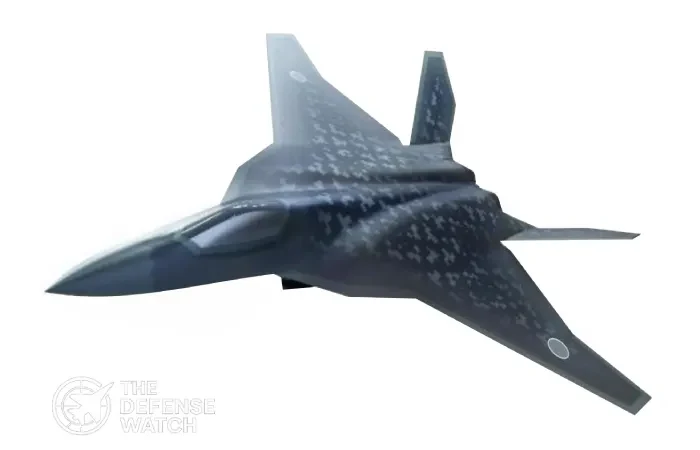
The Mitsubishi F-X is Japan’s next generation air superiority fighter, developed to replace the aging F-2 fleet and counter advanced regional threats in the Indo-Pacific. Designed with a strong focus on stealth, sensor fusion, and networked warfare, the F-X reflects Japan’s shift toward high end air combat and long range defense. The aircraft is central to Japan’s future air power and is expected to operate alongside U.S. and allied platforms.
Manufacturer and Origin
The F-X is led by Mitsubishi Heavy Industries under Japan’s Air Development and Test Wing, with major support from the Japan Ministry of Defense. The program is now merged into the Global Combat Air Programme with the United Kingdom and Italy, combining Japan’s F-X with the UK Tempest effort. This partnership aims to reduce cost, share technology, and ensure interoperability with allied forces.
Speed and Range
While final figures remain classified, the F-X is expected to reach speeds above Mach 2, with a combat radius exceeding current fourth generation fighters. Extended range is a key design goal, allowing long patrols over maritime areas and deep strike missions without heavy reliance on tankers.
Cost and Program Outlook
The estimated unit cost is projected to exceed USD 120 million per aircraft, reflecting its sixth generation technologies. Japan plans initial operational capability around the mid 2030s, with full deployment later in the decade.
Technology and Capabilities
The F-X is expected to feature advanced stealth shaping, an indigenous AESA radar, AI assisted battle management, and manned unmanned teaming with loyal wingman drones. It is optimized for air dominance, missile warfare, and network centric operations in contested environments.
Disclaimer Note
The information provided on TheDefenseWatch.com is for general informational purposes only. While we strive to ensure the accuracy, completeness, and timeliness of our content regarding defense and aerospace products, technologies, and specifications, we cannot guarantee that all information is 100% accurate or up-to-date due to the evolving nature of military technology and classified data.TheDefenseWatch.com does not warrant the reliability, suitability, or availability of the information for any specific purpose. Users are advised to consult official sources, such as manufacturers, government publications, or defense agencies, for precise and verified data before making decisions based on our content.We are not affiliated with any defense manufacturers, governments, or military organizations mentioned. Opinions, reviews, and ratings reflect expert analysis but are subjective and should not be considered endorsements. TheDefenseWatch.com is not responsible for any errors, omissions, or consequences arising from the use of this website’s content.External links are provided for convenience and do not imply endorsement. TheDefenseWatch.com reserves the right to update or modify content without prior notice. By using this website, you agree to our Privacy & Cookies Policy.
More Defense Systems from Mitsubishi Heavy Industries

New Arrivals

Popular Comparisons
-
 J-10C vs JF-17 Thunder: Which Fighter Is More Capable?
View Comparison →
J-10C vs JF-17 Thunder: Which Fighter Is More Capable?
View Comparison → -
Tejas vs Gripen: Key Differences and Capabilities
View Comparison →
-
Tejas vs MiG-21 Bison: How India Replaced Its Iconic Supersonic Fighter
View Comparison →
-
F-35 vs F-16: Stealth, Sensors and Combat Roles
View Comparison →
-
Tejas Fighter Jet vs F-16 Fighting Falcon: Capability Compared
View Comparison →
-
Rafale Fighter Jet vs F-16 Fighting Falcon : Which Fighter Has the Edge?
View Comparison →
-
Su-57 Fighter Jet vs J-20 Fighter Jet: Stealth and Air Combat Compared
View Comparison →
-
Mirage 2000 vs Tejas Mk1A: Legacy Combat Power vs Indigenous Modernization
View Comparison →
-
Rafale Fighter Jet vs F-22 Raptor: Which Air Dominance Fighter Has the Edge?
View Comparison →
-
Tejas Fighter Jet vs. Rafale Fighter Jet: India’s Indigenous Fighter Meets France’s Proven Multirole Combat Aircraft
View Comparison →


- DIA 2026 Space Report Warns China May Field Orbital Directed-Energy Weapons by Late 2020s

- Boeing Advances Second MQ-25 Stingray Toward Testing for U.S. Navy
- Saab Unveils Sea Giraffe AMB D Radar With 250-Kilometer Air Surveillance Range
- Most Advanced Fighter Jet in the World in 2026: F-22 vs. F-35 vs. J-20
- Lockheed Martin Wins $88.6 Million Navy Contract for Radiant Mercury Systems
- Pentagon Uses Department of War Name to Reinforce Message to Adversaries
- Israel’s Military Chief Reportedly Opposed Pre-Election Strike on Iran
- Canada Receives First Two F-35 Fighters as Review of 72 Aircraft Continues
- Lockheed Martin Completes $3.45 Billion Ultra Maritime Acquisition
- Lockheed Martin Advances Ramjet-Powered PrSM Increment 4 Missile




Fighter Jets
-
 F-100 Super Sabre
-
North American F-86 Sabre
-
Northrop YF-23 Fighter
-
Rafale F5 Fighter
-
SU-57 Felon Stealth Fighter
-
Boeing F/A-XX Fighter
-
JF-17 Thunder Fighter Jet
-
F-47 Fighter Jet
-
MIG-31 Fighter Jet
-
J-10CE Fighter Jet
-
Chengdu J-10 Fighter Jet
-
Chengdu J-10C Fighter Jet
-
Gripen E Fighter Jet
-
Tejas Mk1A Fighter Jet
-
Tejas Mk‑2 Fighter Jet
-
F-16V Viper Block 70 Fighter Jet
-
F-15EX Eagle II Fighter
-
F-15E Strike Eagle Fighter
-
F/A-18E/F Super Hornet Fighter Jet
-
Saab Gripen F Fighter Jet
-
JAS 39E/F Gripen Fighter Jet
-
JAS 39 Gripen Fighter Jet
-
F-35A Lightning II Fighter Jet
-
F/A-18F Super Hornet







Recent Compares
-
J-10C vs JF-17 Thunder: Which Fighter Is More Capable?
View Comparison →
-
Tejas vs Gripen: Key Differences and Capabilities
View Comparison →
-
Tejas vs MiG-21 Bison: How India Replaced Its Iconic Supersonic Fighter
View Comparison →
-
F-35 vs F-16: Stealth, Sensors and Combat Roles
View Comparison →
-
Tejas Fighter Jet vs F-16 Fighting Falcon: Capability Compared
View Comparison →
Latest Defense Systems
10 Compares Defense Systems
-
J-10C vs JF-17 Thunder: Which Fighter Is More Capable?
View Comparison →
-
Tejas vs Gripen: Key Differences and Capabilities
View Comparison →
-
Tejas vs MiG-21 Bison: How India Replaced Its Iconic Supersonic Fighter
View Comparison →
-
F-35 vs F-16: Stealth, Sensors and Combat Roles
View Comparison →
-
Tejas Fighter Jet vs F-16 Fighting Falcon: Capability Compared
View Comparison →
-
Rafale Fighter Jet vs F-16 Fighting Falcon : Which Fighter Has the Edge?
View Comparison →
-
Su-57 Fighter Jet vs J-20 Fighter Jet: Stealth and Air Combat Compared
View Comparison →
-
Mirage 2000 vs Tejas Mk1A: Legacy Combat Power vs Indigenous Modernization
View Comparison →
-
Rafale Fighter Jet vs F-22 Raptor: Which Air Dominance Fighter Has the Edge?
View Comparison →
-
Tejas Fighter Jet vs. Rafale Fighter Jet: India’s Indigenous Fighter Meets France’s Proven Multirole Combat Aircraft
View Comparison →
- DIA 2026 Space Report Warns China May Field Orbital Directed-Energy Weapons by Late 2020s
- Boeing Advances Second MQ-25 Stingray Toward Testing for U.S. Navy
- Saab Unveils Sea Giraffe AMB D Radar With 250-Kilometer Air Surveillance Range
- Most Advanced Fighter Jet in the World in 2026: F-22 vs. F-35 vs. J-20
- Lockheed Martin Wins $88.6 Million Navy Contract for Radiant Mercury Systems