- Home
- Catalog
- Fighter Jets
- Su-30SM Fighter Jet
Su-30SM Fighter Jet


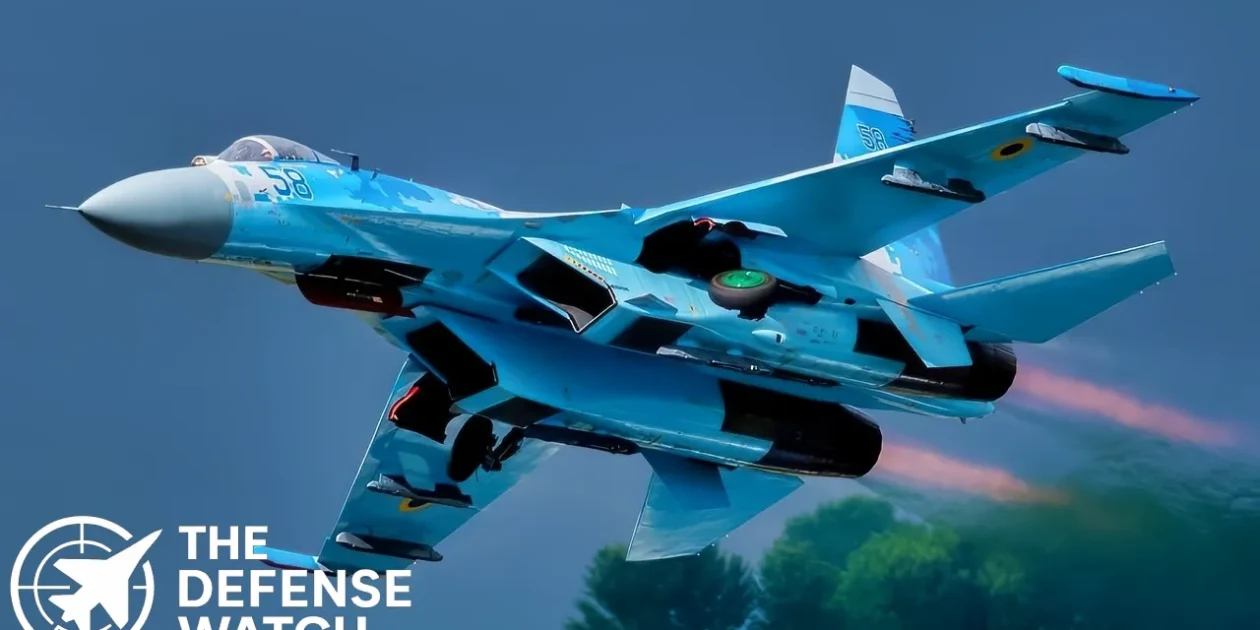
Full Specifications
General Information
| Name | Su-30SM |
| Manufacturer | Sukhoi / Irkut Corporation |
| Country of Origin | Russia |
| Type / Role | Multirole Fighter |
| Generation | 4.5 |
| Status | In Service |
| First Flight | September 2012 |
| Introduction / In Service Since | 2013 |
| Number Built | 150+ |
| Operators | Russia, Belarus, Kazakhstan, Armenia |
Dimensions & Structure
| Length | 21.9 m (71.8 ft) |
| Wingspan | 14.7 m (48.2 ft) |
| Height | 6.4 m (21 ft) |
| Wing Area | 62.0 m² |
| Empty Weight | 17,700 kg |
| Maximum Takeoff Weight (MTOW) | 34,500 kg |
| Internal Weapons Bay | None |
| External Hardpoints | 12 |
Performance
| Maximum Speed | Mach 2.0 |
| Range | 3,000 km |
| Combat Radius | 1,500 km |
| Service Ceiling | 17,300 |
| Rate of Climb | 230 m/s |
| Thrust-to-Weight Ratio | 0.95 |
| G Limits | +9g |
Powerplant
| Engine Type | AL-31FP afterburning turbofan |
| No. of Engines | 2 |
| Thrust (each) | 27,500 lbf |
| Thrust Vectoring | Yes |
| Fuel Capacity | ~9,400 kg internal |
Armament
| Gun | 30mm GSh-30-1 cannon |
| Missiles (Air-to-Air) | R-77, R-73, R-27 |
| Missiles (Air-to-Ground) | Kh-31, Kh-29, Kh-59 |
| Bombs | KAB-500, FAB series |
| Hardpoints | 12 |
| Payload Capacity | 8,000 kg |
Avionics & Systems
| Radar | N011M Bars-R |
| Radar Range | ~400 km |
| Electronic Warfare (EW) System | KNIRTI SAP-518 ECM |
| Targeting System | OLS-30 IRST |
| Helmet Display | Yes |
| Navigation | GLONASS/INS |
| Autopilot / AI Assistance | Advanced FBW |
| Communication | Encrypted VHF/UHF |
Stealth & Technology
| Radar Cross Section (RCS) | ~15 m² |
| Stealth Features | Minimal shaping, radar-absorbent coatings |
| Infrared Signature Reduction | Partial engine shielding |
| Sensor Fusion | Limited |
| Networking Capabilities | Tactical data link (Russian standard) |
Variants
| Special Export Versions | Su-30MKI, Su-30MKA, Su-30SM2, Su-30MKV |
Operational History
| Major Conflicts / Deployments | Syria, Ukraine |
| Notable Operators | Russia, Belarus, Kazakhstan |
| Combat Proven? | Yes |
| Mission Types | Air superiority, strike, escort, interception |
Cost & Program
| Unit Cost | $35–50 million |
| Development Cost | Classified |
| Program Name | Su-30SM Modernization Program |
| Funding Countries | Russia |
Additional Information
| Upgrades Planned | Su-30SM2 with new radar and engines |
| Future Replacement | Su-57 (partial) |
| Export Restrictions | None beyond sanctions |
| Notable Achievements | Backbone of Russian tactical aviation |
| Competitors | F-15EX, Rafale, Eurofighter Typhoon |
PROS
- High maneuverability with thrust vectoring engines
- Long combat range and multirole capability
- Proven air-to-ground and air-to-air versatility
- Advanced radar and targeting systems
- Twin-seat configuration for flexible mission control
CONS
- High operational and maintenance costs
- Lacks true stealth features
- Older avionics compared to Western 5th-gen fighters
- Dependent on Russian logistics and parts supply
- Large radar signature reduces survivability in modern warfare
Russian Su-30SM Multirole Fighter Jet
The Sukhoi Su-30SM is a highly maneuverable, twin-seat, multirole fighter derived from the Su-30MKI platform, tailored for the Russian Air Force. Developed by Sukhoi and produced by Irkut Corporation, it integrates advanced avionics, thrust-vectoring engines, and long-range weapon systems, making it a formidable opponent in both air-to-air and air-to-surface combat.
First flown in 2012, the Su-30SM incorporates AL-31FP afterburning turbofan engines with thrust vector control, granting it exceptional agility and sustained supersonic flight up to Mach 2.0. It features a range exceeding 1,500 km (combat radius) and can carry up to 8,000 kg of ordnance across 12 hardpoints.
Its avionics suite includes the N011M Bars-R radar, capable of tracking up to 15 targets simultaneously and engaging 4 at once. The cockpit is equipped with glass displays, helmet-mounted sights, and digital fly-by-wire controls, allowing for networked operations and multirole flexibility.
The Su-30SM’s versatility allows it to perform interception, escort, maritime strike, and ground-attack missions. It has seen operational use in Syria and various Russian military exercises, proving its reliability and adaptability under combat conditions.
Su-30SM Fighter Jet Price in US
While not operated by the United States, the Su-30SM’s estimated export price ranges from $35–$50 million per unit depending on configuration and support package. Designed by Russia’s Sukhoi Design Bureau, the Su-30SM is a 4.5-generation multirole fighter built for air superiority and precision ground-attack missions. It remains a key asset in the Russian Aerospace Forces and a symbol of Moscow’s airpower projection.
FAQs
The Su-30SM stands out for its exceptional maneuverability, long-range capability, and multirole versatility. Equipped with thrust-vectoring engines and advanced avionics, it can perform both air superiority and precision strike missions. Its twin-seat configuration also allows real-time tactical coordination between pilot and weapon systems officer, giving it a major edge in complex missions.
The Su-30SM and F-16 serve different operational philosophies. The Su-30SM is a heavy, twin-engine multirole fighter with longer range, higher payload capacity, and superior agility thanks to thrust vectoring. The F-16, by contrast, is a lightweight, single-engine fighter optimized for agility and cost efficiency. While the Su-30SM excels in endurance and heavy payload missions, the F-16 offers greater reliability and advanced Western avionics integration.
The closest American equivalent to the Su-30SM is the F-15EX Eagle II. Both are twin-engine, long-range multirole fighters capable of carrying a large weapons load, performing air superiority missions, and executing deep strike operations. However, the F-15EX benefits from superior avionics, radar, and networking capabilities, while the Su-30SM emphasizes maneuverability and endurance.
As of 2025, Russia operates approximately 130–150 Su-30SM and Su-30SM2 aircraft across its Aerospace Forces and Naval Aviation. The fleet continues to grow under modernization efforts, with the Su-30SM2 variant featuring new AL-41F1S engines and upgraded avionics derived from the Su-35.
The estimated unit price of the Su-30SM ranges between $35 million and $50 million, depending on configuration, support package, and export terms. The cost varies for international customers based on avionics, weapons integration, and after-sales support contracts.
Get real time update about this post category directly on your device, subscribe now.
Reviews
Disclaimer Note
The information provided on TheDefenseWatch.com is for general informational purposes only. While we strive to ensure the accuracy, completeness, and timeliness of our content regarding defense and aerospace products, technologies, and specifications, we cannot guarantee that all information is 100% accurate or up-to-date due to the evolving nature of military technology and classified data.TheDefenseWatch.com does not warrant the reliability, suitability, or availability of the information for any specific purpose. Users are advised to consult official sources, such as manufacturers, government publications, or defense agencies, for precise and verified data before making decisions based on our content.We are not affiliated with any defense manufacturers, governments, or military organizations mentioned. Opinions, reviews, and ratings reflect expert analysis but are subjective and should not be considered endorsements. TheDefenseWatch.com is not responsible for any errors, omissions, or consequences arising from the use of this website’s content.External links are provided for convenience and do not imply endorsement. TheDefenseWatch.com reserves the right to update or modify content without prior notice. By using this website, you agree to our Privacy & Cookies Policy.


New Arrivals

Popular Comparisons
-
 SIG XM7 Rifle vs M4: Key Differences and Performance Comparison
View Comparison →
SIG XM7 Rifle vs M4: Key Differences and Performance Comparison
View Comparison → -
Eurofighter Typhoon vs Rafale vs F-35: Fighter Jet Comparison
View Comparison →
-
J-20 vs F-22: Stealth Fighter Showdown Explained
View Comparison →
-
F-14 Tomcat vs Su-57: Can a Legend Challenge Russia’s Stealth Fighter?
View Comparison →
-
Su-35 vs Su-57: Russia’s Top Fighter Jets Compared
View Comparison →
-
Eurofighter Typhoon vs Su-57: Ultimate Fighter Jet Comparison
View Comparison →
-
Rafale vs Su-57: 4.5 Gen vs 5th Gen Fighter Jet Comparison
View Comparison →
-
Su-57 vs F-16 Fighting Falcon: Stealth vs Speed
View Comparison →
-
China vs Russia: J-20 Mighty Dragon vs Su-57 Felon Comparison
View Comparison →
-
Su-57 Felon vs F-22 Raptor: Stealth Air Superiority Face-Off
View Comparison →


- Iran-US Ceasefire Negotiations Stall as Strait of Hormuz Standoff Deepens

- US Deploys Uncrewed Drone Boats In Conflict With Iran As Maritime Tensions Escalate
- Raytheon Expands Alabama Missile Integration Facility To Boost U.S. Defense Production Capacity
- Australian-Built Boxer Combat Reconnaissance Vehicles Roll Off Production Line, Boosting Land 400 Program
- U.S. Army To Begin M1E3 Abrams Prototype Operational Testing In Summer 2026
- Raytheon Secures $773.5M Contract Boost For AN/TPY-2 Radar Development Through 2030
- Javelin Missile Production Ramp Accelerates as Lockheed Martin Overhauls Supply Chain for High-Volume Output
- Indian Army To Buy 800 Km Plus Range BrahMos Supersonic Cruise Missiles
- US Navy Iwo Jima Amphibious Ready Group Expands Caribbean Anti-Trafficking Push
- Chinas Laser Air Defense Systems Light Arrow 21A And Light Arrow 11E Form Layered Counter Drone Shield