TF-2000 Next-Gen Air-Defense Destroyer
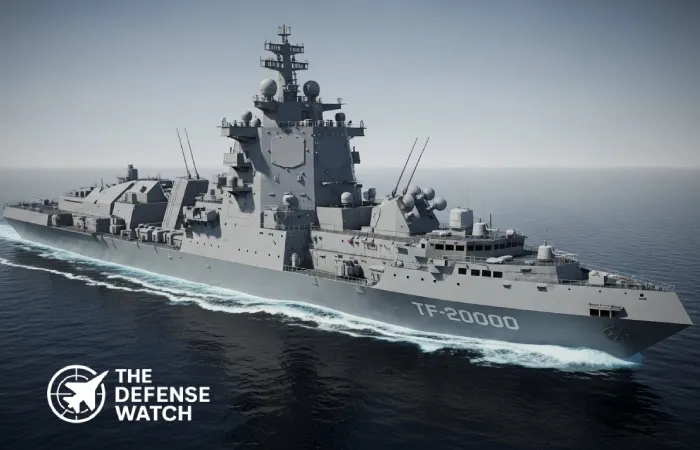
The TF-2000 destroyer represents Turkey’s leap into next-generation naval warfare, designed to strengthen long-range air defense and protect fleet assets in contested maritime environments. Developed by STM and Turkish Naval Forces, the TF-2000 focuses on countering high-speed aircraft, cruise missiles, and ballistic threats—making it a key future asset in the Turkish Navy’s blue-water ambitions.
Design & Purpose
Planned as a 7,000+-ton air-defense destroyer, the TF-2000 will feature cutting-edge radar systems, advanced propulsion, and an extensive weapons suite. Its primary mission is area air-defense, ensuring protection for task groups operating in the Mediterranean, Black Sea, and beyond. For U.S. defense analysts, the TF-2000 is frequently compared to AEGIS-equipped destroyers due to its layered combat systems and sensor architecture.
Sensors & Combat Systems
Central to the ship’s capability is Turkey’s indigenous CAF RADAR, an AESA-based multi-function radar designed to track stealth aircraft, drones, and high-speed missiles. Integrated with the GENESIS Combat Management System, the destroyer will support simultaneous tracking of hundreds of targets—providing real-time situational awareness.
Weapon Systems
The TF-2000 is expected to host:
- 64–96 VLS cells for surface-to-air missiles (SIPER, ESSM, or future long-range interceptors)
- Anti-ship missiles such as Atmaca
- 76 mm naval gun, CIWS, and torpedo tubes
- Helicopter deck & hangar supporting S-70 or UAV operations
With an estimated long-range air-defense reach of 100–150 km, the platform is engineered to deter advanced aerial threats while offering strike, ASW, and ASuW versatility.
Propulsion & Range
A combined gas turbine and diesel propulsion system is planned, enabling speeds above 28 knots and endurance suitable for extended deployments.
TF-2000 Destroyer Price
While the TF-2000 is not exported to the United States, an estimated equivalent cost—based on similar air-defense destroyers—would fall between USD 1.2–1.5 billion per ship, depending on configuration and sensor suite.