- Home
- Catalog
- Missiles & Precision Weapons
- GMLRS Missile
GMLRS Missile
Full Specifications
1. General Information
| Name / Designation | GMLRS (Guided Multiple Launch Rocket System) |
| Type / Role | Precision Guided Artillery Rocket |
| Country of Origin | United States |
| Manufacturer | Lockheed Martin |
| Service Entry / Year Introduced | 2005 |
| Operational Status | Active |
2. Performance & Range
| Range | 70 to 84 km (Standard) / Up to ~150 km (Extended Range variant) |
| Speed | Mach 2+ |
| Ceiling / Altitude Limit | High ballistic trajectory (exact altitude not publicly specified) |
| Accuracy (CEP) | Around 10 meters |
| Warhead Type | High Explosive Unitary or Alternative Warhead (fragmentation) |
3. Guidance & Targeting
| Guidance System | GPS and Inertial Navigation |
| Targeting Mode | Fire and Forget |
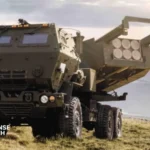
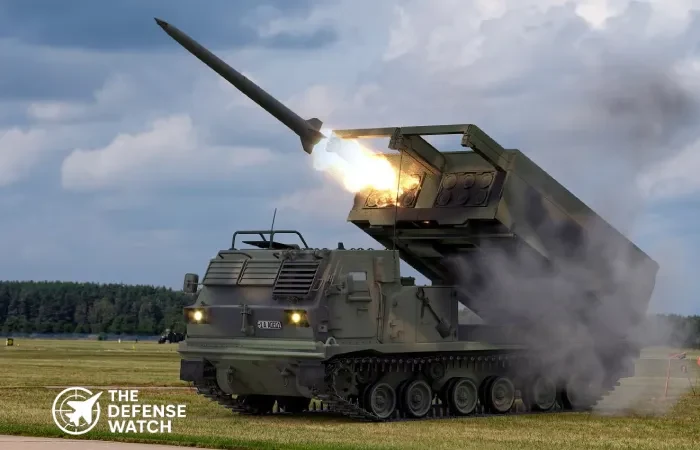
| Launch Platform Compatibility | Ground Launchers (HIMARS, MLRS) |
| Seeker Type | Satellite guided navigation (GPS assisted) |
4. Physical Characteristics
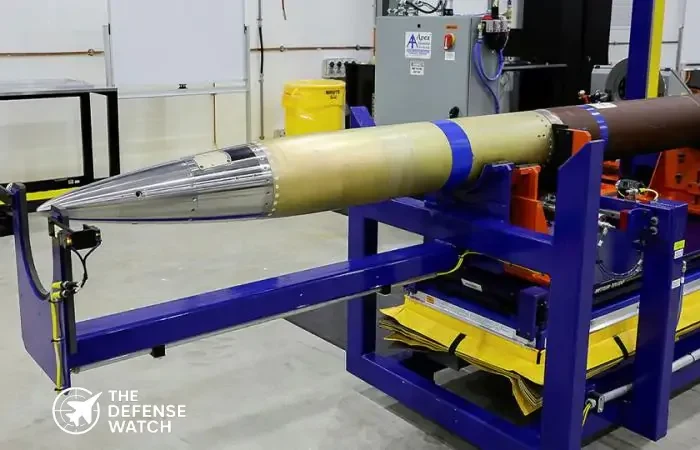
| Length | ~3.94 m |
| Diameter | 227 mm |
| Wingspan | Deployable stabilizing fins |
| Launch Weight | ~307 kg |
| Propulsion | Solid fuel rocket motor |
5. Warhead & Payload
| Warhead Weight | ~90 kg |
| Explosive Type | High Explosive or Fragmentation |
| Detonation Mechanism | Impact or programmable fuse |
| Payload Options | Unitary High Explosive or Alternative Warhead |
6. Operational Use & Capabilities
| Operational Range Type | Medium |
| Deployment Platform | Ground |
| Target Types | Command posts, vehicles, air defenses, logistics sites |
| Combat Proven | Yes |
| Users / Operators | United States, United Kingdom, Poland, Ukraine, and several NATO allies |
PROS
- High precision GPS guided strike capability
- Compatible with HIMARS and MLRS launch systems
- Reduced collateral damage compared with unguided rockets
- Rapid launch capability for multiple targets
- Combat proven in multiple operational theaters
CONS
- Higher cost than traditional artillery rockets
- Dependence on GPS signals for optimal accuracy
- Limited payload compared with larger missiles
- Requires advanced launch platforms
- Stockpile consumption can be high in sustained conflict
GMLRS Precision Guided Artillery Rocket
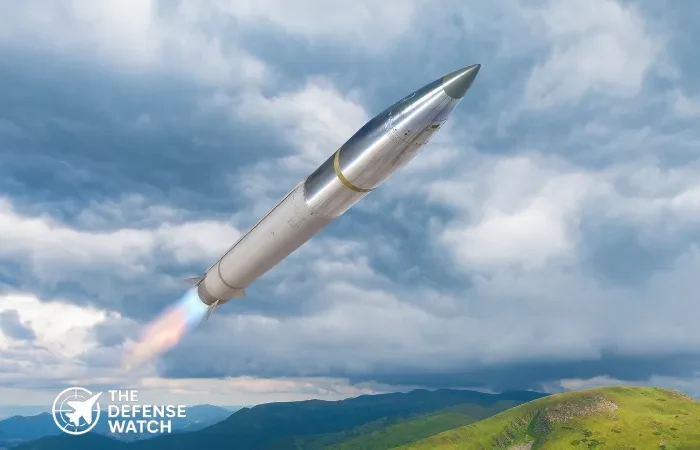
The Guided Multiple Launch Rocket System, commonly known as GMLRS, is a precision guided artillery rocket developed to provide accurate long range strike capability for modern ground forces. Designed for use with the M270 MLRS and M142 HIMARS launchers, GMLRS offers the ability to engage high value targets such as command posts, ammunition depots, air defense sites, and enemy troop formations with high precision.
Unlike traditional unguided artillery rockets, GMLRS uses advanced satellite navigation and inertial guidance systems to strike targets with significantly improved accuracy. The system has become a key component of modern artillery doctrine, enabling rapid strikes at distances far beyond conventional tube artillery. GMLRS has been widely used by U.S. and allied forces in multiple conflicts and remains a cornerstone of precision fires capability.
Manufacturer
GMLRS rockets are manufactured primarily by Lockheed Martin Missiles and Fire Control in the United States. Development of the system began in the late 1990s as an upgrade to the original MLRS rockets. The program focused on improving accuracy, reducing collateral damage, and expanding operational flexibility.
The system entered service with the U.S. Army in the early 2000s and has since been exported to numerous allied nations. Continuous upgrades have improved range, reliability, and targeting capabilities.
Speed and Range
The GMLRS rocket can reach speeds exceeding Mach 2 during flight. Standard variants have an operational range of approximately 70 to 84 kilometers depending on the version. Extended range variants introduced in recent years can reach distances up to roughly 150 kilometers.
Its GPS and inertial navigation guidance allow the rocket to achieve high precision with a circular error probable of around 10 meters or less.
Cost / Price
The unit cost of a standard GMLRS rocket is estimated to range between $150,000 and $170,000 depending on configuration and production contracts. Costs vary based on warhead type, export agreements, and production volumes.
Despite the relatively high price compared with conventional rockets, the system is considered cost effective because fewer rockets are required to achieve mission objectives due to its precision guidance.
Get real time update about this post category directly on your device, subscribe now.
Reviews
Disclaimer Note
The information provided on TheDefenseWatch.com is for general informational purposes only. While we strive to ensure the accuracy, completeness, and timeliness of our content regarding defense and aerospace products, technologies, and specifications, we cannot guarantee that all information is 100% accurate or up-to-date due to the evolving nature of military technology and classified data.TheDefenseWatch.com does not warrant the reliability, suitability, or availability of the information for any specific purpose. Users are advised to consult official sources, such as manufacturers, government publications, or defense agencies, for precise and verified data before making decisions based on our content.We are not affiliated with any defense manufacturers, governments, or military organizations mentioned. Opinions, reviews, and ratings reflect expert analysis but are subjective and should not be considered endorsements. TheDefenseWatch.com is not responsible for any errors, omissions, or consequences arising from the use of this website’s content.External links are provided for convenience and do not imply endorsement. TheDefenseWatch.com reserves the right to update or modify content without prior notice. By using this website, you agree to our Privacy & Cookies Policy.
More Products from Lockheed Martin

New Arrivals






Popular Comparisons
-
 SIG XM7 Rifle vs M4: Key Differences and Performance Comparison
View Comparison →
SIG XM7 Rifle vs M4: Key Differences and Performance Comparison
View Comparison → -
Eurofighter Typhoon vs Rafale vs F-35: Fighter Jet Comparison
View Comparison →
-
J-20 vs F-22: Stealth Fighter Showdown Explained
View Comparison →
-
F-14 Tomcat vs Su-57: Can a Legend Challenge Russia’s Stealth Fighter?
View Comparison →
-
Su-35 vs Su-57: Russia’s Top Fighter Jets Compared
View Comparison →
-
Eurofighter Typhoon vs Su-57: Ultimate Fighter Jet Comparison
View Comparison →
-
Rafale vs Su-57: 4.5 Gen vs 5th Gen Fighter Jet Comparison
View Comparison →
-
Su-57 vs F-16 Fighting Falcon: Stealth vs Speed
View Comparison →
-
China vs Russia: J-20 Mighty Dragon vs Su-57 Felon Comparison
View Comparison →
-
Su-57 Felon vs F-22 Raptor: Stealth Air Superiority Face-Off
View Comparison →


- Iran’s Fattah-2 Hypersonic Missile: Is Tehran Targeting Israeli Command Infrastructure?

- U.S. Deploys B-52H Stratofortress Bombers To UK Ahead Of Potential Iran Strike Operations
- Indonesia Signs Deal To Acquire BrahMos Missile System From India In $200–350 Million Defense Agreement
- DARPA SPRINT X-76 X-Plane Clears Critical Design Review As Bell Moves Toward High Speed VTOL Flight
- Australia Launches Domestic GMLRS Production With Goal Of Building 4,000 Missiles Annually By 2029
- Lockheed Martin Awarded $700 Million F-35 Contract Modification To Support Denmark And Global Partners
- U.S. Army Brigadier General Nominations Announced In March 9 General Officer Announcement
- US War Against Iran Cost $6 Billion In First Week, Pentagon Reveals
- Turkey Deploys F-16 Fighter Jets To Northern Cyprus Amid Rising Eastern Mediterranean Tensions
- Israel Strikes Iranian Missile Sites And Security Force Headquarters In New Wave Of IDF Operations