- Home
- Catalog
- Missiles & Precision Weapons
- Fattah-1 Hypersonic Missile
Fattah-1 Hypersonic Missile
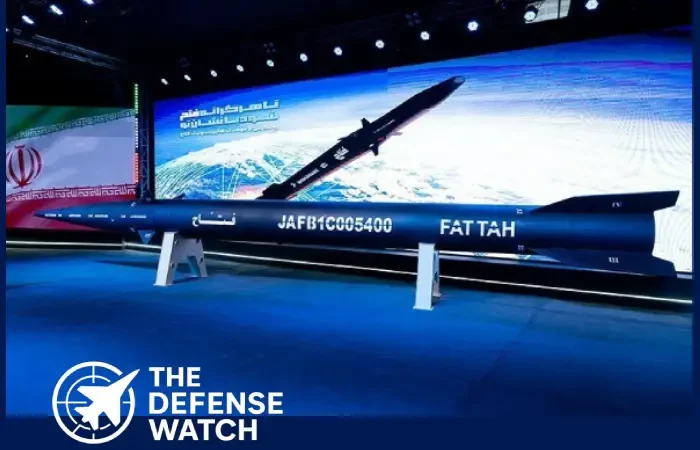
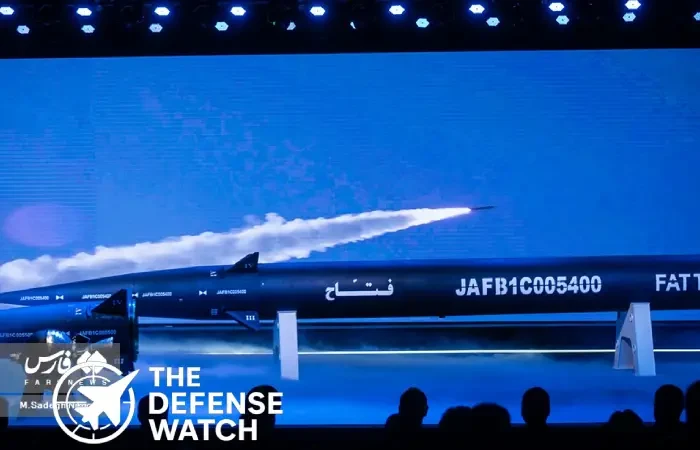
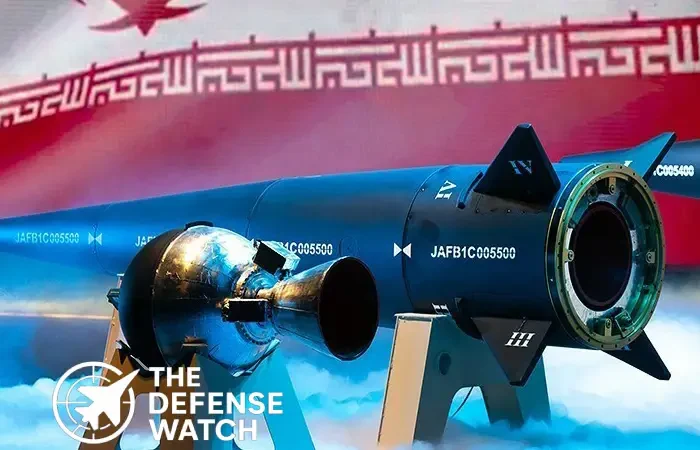

Full Specifications
1. General Information
| Name / Designation | Fattah-1 Hypersonic Missile |
| Type / Role | Hypersonic Strike Missile |
| Country of Origin | Iran |
| Manufacturer | IRGC Aerospace Force |
| Service Entry / Year Introduced | 2023 (Estimated) |
| Operational Status | In Development / Limited Deployment |
2. Performance & Range
| Range | ~1,300–1,400 km |
| Speed | Mach 13–15 (claimed) |
| Ceiling / Altitude Limit | High-altitude ballistic/hypersonic profile |
| Accuracy (CEP) | Unknown / unverified |
| Warhead Type | Conventional, Penetrator |
3. Guidance & Targeting
| Guidance System | INS with terminal maneuvering |
| Targeting Mode | Pre-programmed strike |
| Launch Platform Compatibility | Ground-based mobile launcher |
| Seeker Type | Not publicly disclosed |
4. Physical Characteristics
| Length | Not disclosed |
| Diameter | Not disclosed |
| Wingspan | N/A |
| Launch Weight | Not disclosed |
| Propulsion | Solid-fuel rocket |
5. Warhead & Payload
| Warhead Weight | Estimated 300–500 kg |
| Explosive Type | Penetrator / fragmentation |
| Detonation Mechanism | Likely impact or delay fuse |
| Payload Options | Conventional |
6. Operational Use & Capabilities
| Operational Range Type | Medium / Long |
| Deployment Platform | Ground |
| Target Types | Infrastructure, hardened sites |
| Combat Proven | No |
| Users / Operators | Iran |
PROS
- Hypersonic speeds significantly complicate interception
- Maneuverable reentry vehicle improves survivability
- Solid-fuel propulsion enables rapid launch readiness
- Extended regional-range strike capability
- Mobile launch options enhance operational flexibility
CONS
- Performance claims lack independent verification
- Limited known guidance precision compared to Western hypersonics
- Restricted payload options
- High technological complexity limits mass production
- Regional use increases escalation risks
Fattah-1 Hypersonic Missile: Iran’s Evolving Strike Capability
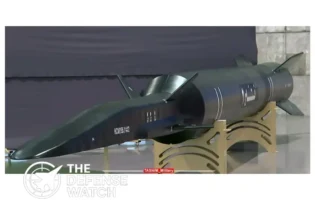
The Fattah-1 hypersonic missile represents one of Iran’s most significant advancements in long-range strike technology, marking the country’s entry into the global competition for maneuverable, ultra-high-speed weapons. Introduced by Iran’s Islamic Revolutionary Guard Corps (IRGC) Aerospace Force, the system is designed to challenge advanced missile-defense architectures by combining hypersonic velocity with complex flight-path maneuverability.
Developed domestically within Iran’s expanding missile industry, the Fattah-1 is primarily intended for strategic deterrence, long-range precision strikes, and penetrating heavily defended targets. Although exact specifications remain limited, Iranian defense officials claim the missile is capable of reaching speeds around Mach 13–15, placing it within the upper tier of global hypersonic weapon development. Its maneuvering reentry vehicle (MaRV) design reportedly enables high-G evasive maneuvers, making interception significantly more difficult compared to traditional ballistic missiles.
Range estimates vary, but most assessments place the Fattah-1’s reach at approximately 1,300–1,400 km, giving it regional strike coverage across the Middle East. The missile is believed to use a solid-fuel propulsion system, allowing for faster launch readiness and simplified storage requirements. Its warhead section is expected to support various conventional payload configurations, optimized for hardened or fortified targets.
The guidance architecture likely integrates inertial navigation (INS) with terminal-stage maneuvering, although Iran has suggested the inclusion of advanced sensors for end-phase precision. Operational deployment appears oriented toward mobile, ground-based launch platforms, aligning with Iran’s emphasis on survivability and rapid dispersal.
While independent verification of performance claims is limited, the Fattah-1 underscores Iran’s strategic intent to push its missile capabilities into more technologically advanced domains. For U.S. defense observers, it represents a noteworthy development within the evolving landscape of hypersonic threats and regional power projection.
Fattah-1 Hypersonic Missile Price
As a foreign and restricted strategic missile system, the Fattah-1 is not commercially sold and has no legal price or export valuation within the United States. Any references to cost remain speculative due to sanctions and international restrictions.
FAQs
Iran claims the Fattah-1 hypersonic missile can reach speeds between Mach 13 and Mach 15, placing it among the fastest hypersonic systems publicly announced. However, these performance figures have not been independently verified by external defense agencies.
While exact speeds vary by program and classification level, some of the fastest known or reported systems include Russia’s Avangard hypersonic glide vehicle, which reportedly exceeds Mach 20, and China’s research platforms that have showcased extremely high-speed test flights. Much of the data remains classified, making definitive ranking difficult.
As of publicly available information, Israel has not fielded an operational hypersonic missile. The country focuses heavily on missile-defense technologies and precision-strike systems but has not announced an active, deployed hypersonic weapon program. Research in advanced propulsion and glide vehicles is ongoing, but no operational capability has been confirmed.
Iran has not released verified accuracy data for the Fattah-1. Most estimates suggest the missile uses an inertial navigation system with terminal maneuvering, but its CEP (Circular Error Probable) remains unknown. Analysts note that, without satellite guidance, accuracy may be lower than Western hypersonic systems.
The Fattah-1 is a strategic, non-export missile system, meaning it is not commercially available and does not have a public price. Due to sanctions, restricted technology, and Iran’s domestic production model, no credible cost data has been released. Any estimates would be speculative.
Get real time update about this post category directly on your device, subscribe now.
Reviews
Disclaimer Note
The information provided on TheDefenseWatch.com is for general informational purposes only. While we strive to ensure the accuracy, completeness, and timeliness of our content regarding defense and aerospace products, technologies, and specifications, we cannot guarantee that all information is 100% accurate or up-to-date due to the evolving nature of military technology and classified data.TheDefenseWatch.com does not warrant the reliability, suitability, or availability of the information for any specific purpose. Users are advised to consult official sources, such as manufacturers, government publications, or defense agencies, for precise and verified data before making decisions based on our content.We are not affiliated with any defense manufacturers, governments, or military organizations mentioned. Opinions, reviews, and ratings reflect expert analysis but are subjective and should not be considered endorsements. TheDefenseWatch.com is not responsible for any errors, omissions, or consequences arising from the use of this website’s content.External links are provided for convenience and do not imply endorsement. TheDefenseWatch.com reserves the right to update or modify content without prior notice. By using this website, you agree to our Privacy & Cookies Policy.
More Products from IRGC Aerospace Force
New Arrivals



Popular Comparisons
-
 SIG XM7 Rifle vs M4: Key Differences and Performance Comparison
View Comparison →
SIG XM7 Rifle vs M4: Key Differences and Performance Comparison
View Comparison → -
Eurofighter Typhoon vs Rafale vs F-35: Fighter Jet Comparison
View Comparison →
-
J-20 vs F-22: Stealth Fighter Showdown Explained
View Comparison →
-
F-14 Tomcat vs Su-57: Can a Legend Challenge Russia’s Stealth Fighter?
View Comparison →
-
Su-35 vs Su-57: Russia’s Top Fighter Jets Compared
View Comparison →
-
Eurofighter Typhoon vs Su-57: Ultimate Fighter Jet Comparison
View Comparison →
-
Rafale vs Su-57: 4.5 Gen vs 5th Gen Fighter Jet Comparison
View Comparison →
-
Su-57 vs F-16 Fighting Falcon: Stealth vs Speed
View Comparison →
-
China vs Russia: J-20 Mighty Dragon vs Su-57 Felon Comparison
View Comparison →
-
Su-57 Felon vs F-22 Raptor: Stealth Air Superiority Face-Off
View Comparison →


- Iran-US Ceasefire Negotiations Stall as Strait of Hormuz Standoff Deepens

- US Deploys Uncrewed Drone Boats In Conflict With Iran As Maritime Tensions Escalate
- Raytheon Expands Alabama Missile Integration Facility To Boost U.S. Defense Production Capacity
- Australian-Built Boxer Combat Reconnaissance Vehicles Roll Off Production Line, Boosting Land 400 Program
- U.S. Army To Begin M1E3 Abrams Prototype Operational Testing In Summer 2026
- Raytheon Secures $773.5M Contract Boost For AN/TPY-2 Radar Development Through 2030
- Javelin Missile Production Ramp Accelerates as Lockheed Martin Overhauls Supply Chain for High-Volume Output
- Indian Army To Buy 800 Km Plus Range BrahMos Supersonic Cruise Missiles
- US Navy Iwo Jima Amphibious Ready Group Expands Caribbean Anti-Trafficking Push
- Chinas Laser Air Defense Systems Light Arrow 21A And Light Arrow 11E Form Layered Counter Drone Shield