











@2026 – All Right Reserved. TheDefenseWatch.com
- Home
- Defense Systems
- Fighter Jets
- X-62A VISTA Fighter
X-62A VISTA Fighter
Defense Systems Full Specifications
General Information
| Name | X 62A VISTA |
| Manufacturer | Lockheed Martin, Calspan |
| Country of Origin | United States |
| Type / Role | Experimental AI Test Aircraft |
| Generation | Fourth Generation |
| Status | Active |
| First Flight | 1988 (as VISTA) |
| Introduction / In Service Since | 2022 (designated X 62A) |
| Number Built | 1 |
| Operators | US Air Force Test Pilot School |
Dimensions & Structure
| Length | 49 ft (14.9 m) |
| Wingspan | 32 ft 8 in (9.96 m) |
| Height | 16 ft (4.9 m) |
| Wing Area | 300 sq ft |
| Empty Weight | Approx 19,200 lb |
| Maximum Takeoff Weight (MTOW) | Approx 42,300 lb |
| Internal Weapons Bay | None |
| External Hardpoints | None |
Performance
| Maximum Speed | Mach 2 |
| Range | Approx 2,000 miles |
| Combat Radius | Not applicable |
| Service Ceiling | 50,000 ft |
| Rate of Climb | Approx 50,000 ft per minute |
| Thrust-to-Weight Ratio | Approx 1.1 |
| G Limits | +9 G |
Powerplant
| Engine Type | Pratt and Whitney F100 Turbofan |
| No. of Engines | 1 |
| Thrust (each) | Up to 29,000 lbf |
| Thrust Vectoring | No |
| Fuel Capacity | Internal, F 16 standard |
Armament
| Gun | None |
| Missiles (Air-to-Air) | Simulated only |
| Missiles (Air-to-Ground) | Simulated only |
| Bombs | Simulated only |
| Hardpoints | None |
| Payload Capacity | Not applicable |
Avionics & Systems
| Radar | Simulated radar environment |
| Radar Range | Test dependent |
| Electronic Warfare (EW) System | Experimental and simulated |
| Targeting System | Virtual targeting systems |
| Helmet Display | Test pilot helmet systems |
| Navigation | INS and GPS |
| Autopilot / AI Assistance | Advanced AI autonomy |
| Communication | Secure USAF data links |
Stealth & Technology
| Radar Cross Section (RCS) | Standard F 16 level |
| Stealth Features | None |
| Infrared Signature Reduction | Limited |
| Sensor Fusion | Software based |
| Networking Capabilities | Network centric test architecture |
Variants
| Special Export Versions | AI autonomy and flight control test variant |
Operational History
| Major Conflicts / Deployments | None |
| Notable Operators | USAF Test Pilot School |
| Combat Proven? | No |
| Mission Types | AI testing, autonomy research |
Cost & Program
| Unit Cost | Not publicly disclosed |
| Development Cost | US government funded R and D |
| Program Name | VISTA, ACE |
| Funding Countries | United States |
Additional Information
| Upgrades Planned | Expanded AI combat and autonomy trials |
| Future Replacement | None planned |
| Export Restrictions | Not for export |
| Notable Achievements | First AI controlled air combat tests |
| Competitors | None |
PROS
- Proven F 16 airframe with known performance
- Real world testing of AI flight systems
- Supports rapid software experimentation
- Enhances pilot training and autonomy research
- Direct relevance to future US fighter programs
CONS
- Not a combat capable aircraft
- Very limited production numbers
- High operating and test costs
- Classified systems limit public data
- Role restricted to experimental use
X-62A VISTA AI Test Fighter Jet
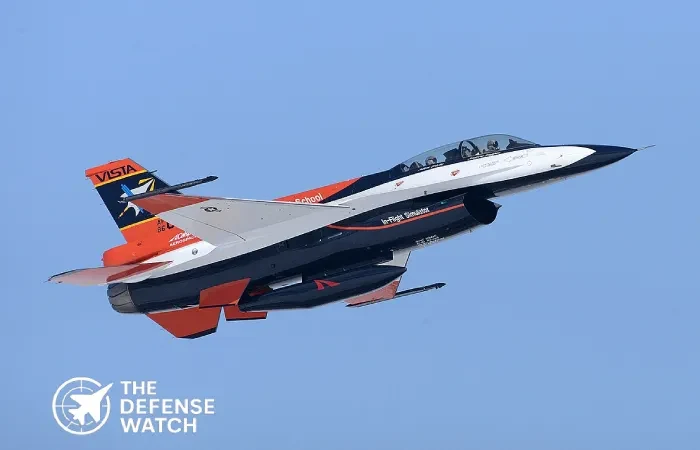
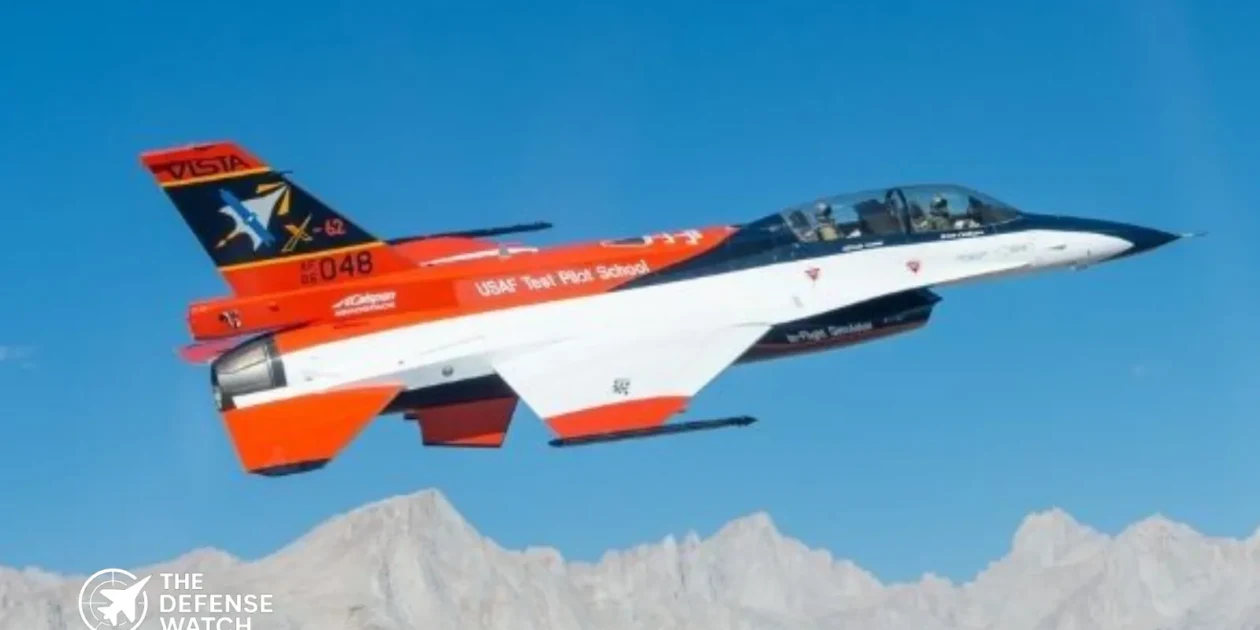
The X-62A VISTA is one of the most important experimental aircraft in the US Air Force inventory. Designed as a flying laboratory, it plays a central role in testing artificial intelligence, autonomy, and next generation combat flight software under real world conditions.
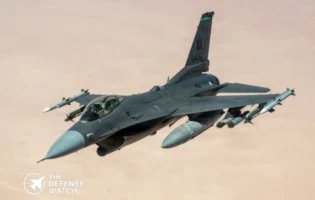
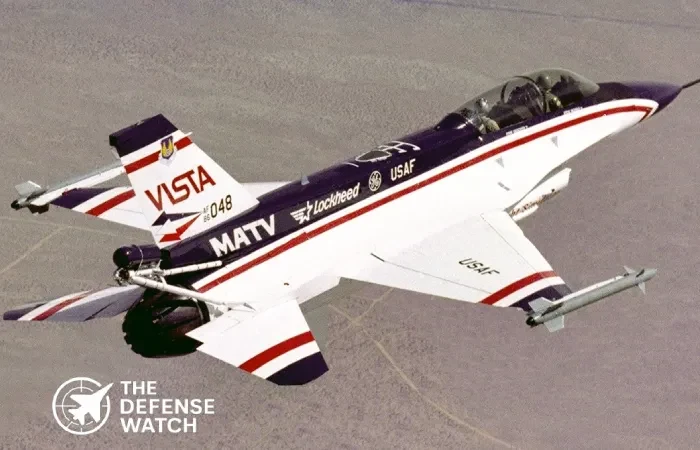
Developed from a modified F 16D airframe, the X 62A VISTA, which stands for Variable In flight Simulator Test Aircraft, is operated by the US Air Force Test Pilot School in partnership with DARPA. The aircraft allows rapid switching between traditional pilot control and AI driven autonomy while airborne, a capability that sets it apart from conventional fighters.
Role and Capabilities
The primary mission of the X 62A VISTA is to evaluate advanced flight control laws, autonomous combat maneuvers, and human machine teaming concepts. In recent tests, the aircraft has successfully flown using AI agents during beyond visual range scenarios, demonstrating how future fighters may cooperate with pilots rather than replace them.
The jet retains the performance of the F 16 platform, including supersonic speed, high G maneuvering, and long range operations. It is not intended for combat deployment and carries no live weapons. Instead, it uses simulated sensors and virtual weapons to safely test complex air combat scenarios.
Technology and Operational Use
The aircraft features a software defined avionics architecture, allowing engineers to upload new AI models quickly. Its open systems design supports experimentation with autonomy, sensor fusion, and adaptive decision making. Lessons learned from the X 62A VISTA are expected to influence future programs such as Collaborative Combat Aircraft and Next Generation Air Dominance.
X 62A VISTA Price
As an experimental platform, the X 62A VISTA has no commercial sale price. Program costs are covered through US Air Force and DARPA research budgets, with individual aircraft values estimated in the tens of millions of dollars based on F 16 conversions and specialized avionics.
Disclaimer Note
The information provided on TheDefenseWatch.com is for general informational purposes only. While we strive to ensure the accuracy, completeness, and timeliness of our content regarding defense and aerospace products, technologies, and specifications, we cannot guarantee that all information is 100% accurate or up-to-date due to the evolving nature of military technology and classified data.TheDefenseWatch.com does not warrant the reliability, suitability, or availability of the information for any specific purpose. Users are advised to consult official sources, such as manufacturers, government publications, or defense agencies, for precise and verified data before making decisions based on our content.We are not affiliated with any defense manufacturers, governments, or military organizations mentioned. Opinions, reviews, and ratings reflect expert analysis but are subjective and should not be considered endorsements. TheDefenseWatch.com is not responsible for any errors, omissions, or consequences arising from the use of this website’s content.External links are provided for convenience and do not imply endorsement. TheDefenseWatch.com reserves the right to update or modify content without prior notice. By using this website, you agree to our Privacy & Cookies Policy.
New Arrivals
Popular Comparisons
-
 Tejas Fighter Jet vs F-16 Fighting Falcon: Capability Compared
View Comparison →
Tejas Fighter Jet vs F-16 Fighting Falcon: Capability Compared
View Comparison → -
Rafale Fighter Jet vs F-16 Fighting Falcon : Which Fighter Has the Edge?
View Comparison →
-
Su-57 Fighter Jet vs J-20 Fighter Jet: Stealth and Air Combat Compared
View Comparison →
-
Mirage 2000 vs Tejas Mk1A: Legacy Combat Power vs Indigenous Modernization
View Comparison →
-
Rafale Fighter Jet vs F-22 Raptor: Which Air Dominance Fighter Has the Edge?
View Comparison →
-
Tejas Fighter Jet vs. Rafale Fighter Jet: India’s Indigenous Fighter Meets France’s Proven Multirole Combat Aircraft
View Comparison →
-
F-22 Raptor vs. F-35 Joint Strike Fighter: Which Fifth Generation Fighter Has the Edge?
View Comparison →
-
F-35A vs. F-22 Raptor: Which U.S. Stealth Fighter Dominates Modern Air Combat?
View Comparison →
-
AGM-114 Hellfire vs. AGM-179 JAGM: Which U.S. Precision Missile Is Better?
View Comparison →
-
Patriot (PAC-3) vs. THAAD: Complete Missile Defense System Comparison, Capabilities, Range, and Strategic Roles
View Comparison →
- Type 99B Tank Training Shows China’s Shift Toward Networked Armored Warfare

- JRC Integrated Systems Gets $47.4M SLCM-N Support Contract
- GE Aerospace Says CPP Deal Is Not a Blueprint for Broader Integration
- Lockheed Martin Receives First PAC-3 MSE Components From GM Defense
- NORAD F-16s Deploy From Alaska to High North Under Arctic Vanguard
- Lockheed Martin and U.S. move to accelerate AIM-260 production
- Operation Epic Fury Exposes U.S. Munitions Shortfalls and Industrial Bottlenecks
- General Dynamics Wins $13.8M Navy Undersea Warfare Contract
- Lockheed Martin Wins $19.3M H-1 Helicopter Electronics Contract
- Saab Secures $51.45 Million U.S. Navy Deal For Multi-Mode Radar