India Achieves Hypersonic Milestone With Multiple Advanced Systems
India’s Defense Research and Development Organization has unveiled significant progress in hypersonic weapons technology through 2025, with successful tests and unveilings positioning the country among global hypersonic powers. The nation’s ambitious hypersonic portfolio now includes operational testing of scramjet-powered cruise missiles, advanced glide vehicles, and joint development programs targeting speeds exceeding Mach 8.
The ET-LDHCM hypersonic cruise missile reportedly achieved Mach 8 speeds during testing in July 2025 from India’s eastern coast, marking a significant technological leap. This achievement places India alongside the United States, Russia, and China in possessing indigenous hypersonic cruise missile capabilities. The successful test validated critical technologies including scramjet propulsion, thermal management systems capable of withstanding temperatures above 2,000°C, and precision guidance under extreme aerodynamic conditions.
The hypersonic program represents more than individual missile systems. DRDO is developing 12 distinct hypersonic missile variants under programs like Project Vishnu, encompassing Hypersonic Glide Vehicles, Hypersonic Cruise Missiles, and anti-hypersonic defense systems. This comprehensive approach addresses land, air, and maritime strike requirements while building defensive capabilities against emerging hypersonic threats from regional adversaries.
ET-LDHCM: India’s Scramjet-Powered Game Changer
The Extended Trajectory-Long Duration Hypersonic Cruise Missile represents DRDO’s most advanced operational hypersonic system currently in testing. ET-LDHCM uses scramjet propulsion technology that draws oxygen from the atmosphere for combustion, enabling sustained hypersonic flight while eliminating onboard oxidizers. This air-breathing propulsion architecture provides significant advantages in fuel efficiency and flight duration compared to traditional rocket-powered systems.
Performance specifications demonstrate formidable capabilities. The missile can strike targets at ranges exceeding 1,500 kilometers, with potential extension to 2,500 kilometers in certain configurations, carrying payloads between 1,000-2,000 kilograms. The system supports both conventional and nuclear warheads, providing strategic flexibility across mission profiles.

Critical technological breakthroughs enabled the ET-LDHCM’s development. In April 2025, DRDO’s Defense Research and Development Laboratory conducted a successful ground test sustaining scramjet combustion for over 1,000 seconds. This extended-duration test validated the active cooling system, which circulates kerosene-based fuel through combustor wall channels to manage extreme thermal loads. The heated fuel then enters the combustion chamber where it ignites more efficiently, simultaneously improving cooling performance and combustion effectiveness.
The missile’s survivability features address modern defensive systems. Low-altitude flight profiles and mid-course maneuverability make trajectories unpredictable and difficult to intercept. During high-speed travel, air ionization around the missile produces plasma effects that absorb radar waves, contributing to reduced radar cross-section. Combined with precision targeting capabilities, these characteristics enable engagement of hardened military structures, command centers, radar installations, and naval vessels.
Multi-platform integration expands operational flexibility. The ET-LDHCM can deploy from land-based transporter-erector-launchers, naval surface combatants, and fighter aircraft including the Su-30MKI and Rafale. According to DRDO Chief Samir V. Kamat in June 2025, official approval for full-scale development remains pending, with operational readiness projected by 2030 following five to seven years of development.
Long-Range Anti-Ship Missile: Naval Deterrence at Hypersonic Speed
India’s Long-Range Anti-Ship Missile program addresses maritime strike requirements in the Indo-Pacific region. DRDO unveiled the Hypersonic Glide Vehicle and Transporter Erector Launcher for the LR-ASHM program in February 2025, showcasing hardware that builds upon earlier technology demonstrations.
The LR-ASHM employs a boost-glide configuration distinct from scramjet-powered cruise missiles. The missile features a delta-wing hypersonic glide vehicle mounted on a solid-propellant rocket booster that launches it partially into orbit before the glide vehicle performs terminal maneuvers along complex, adaptive flight paths. This trajectory profile presents significant interception challenges for naval air defense systems.
The November 2024 test demonstrated range capabilities exceeding 1,500 kilometers, with Defense Minister Rajnath Singh describing it as a historic moment. The successful test positioned India among select nations—alongside the United States, Russia, China, and North Korea—with demonstrated long-range hypersonic capabilities. The missile’s ability to execute terminal maneuvers enhances survivability against advanced defensive systems protecting high-value naval targets.
Strategic imperatives drive LR-ASHM development. Analysts view the system as addressing China’s evolving mid-course defense capabilities and providing options against adversary aircraft carriers in the Bay of Bengal and Arabian Sea. The shore-based anti-ship variant currently undergoing trials will be followed by ship-launched versions and land-attack variants for the proposed Integrated Rocket Force.
Dhvani: Next-Generation Glide Vehicle Technology
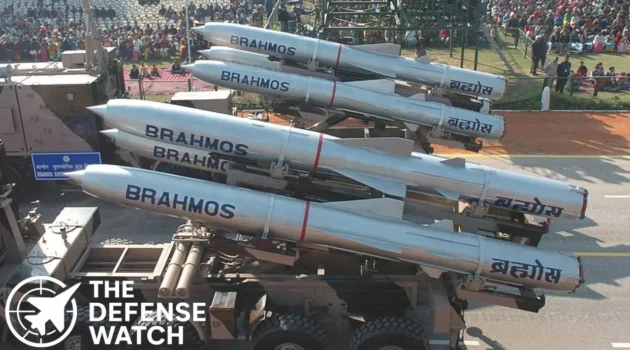
The Dhvani hypersonic glide vehicle represents DRDO’s parallel development track focusing on boost-glide architectures. DRDO plans to conduct a landmark flight trial of Dhvani by the end of 2025, with the system designed to achieve speeds up to Mach 6—equivalent to 7,400 kilometers per hour. This velocity surpasses the BrahMos supersonic cruise missile by a significant margin.
Engineering solutions address hypersonic flight challenges. Dhvani’s composite airframe incorporates heat-resistant ceramics and ablative coatings to withstand extreme thermal stresses during re-entry and sustained hypersonic flight. The system maintains payload integrity for both conventional and nuclear warheads across its projected 1,500-kilometer strike range.
Operational advantages distinguish Dhvani from existing systems. The low-observable design and unpredictable glide path minimize detection windows, contrasting with more predictable cruise missile profiles. Integration possibilities include platforms such as the AMCA fifth-generation fighter or Agni-VI ballistic missile boosters, extending standoff engagement ranges.
Development timelines align with strategic requirements. Successful 2025 testing would enable user trials with the Strategic Forces Command by 2027, with operational induction targeted for 2029-30. The program reflects Atmanirbhar Bharat principles with over 80% indigenous content, including solid-fuel boosters from Vikram Sarabhai Space Centre and guidance seekers from Research Centre Imarat.
BrahMos-II: Indo-Russian Hypersonic Collaboration
The BrahMos-II program continues the successful Indo-Russian partnership that produced the BrahMos supersonic cruise missile now deployed across all three Indian military services. BrahMos-II is expected to achieve speeds of Mach 8 with a range of 1,500 kilometers, using scramjet air-breathing propulsion. Initial range restrictions under Missile Technology Control Regime limitations no longer apply following India’s MTCR membership in 2016.
Technology transfer discussions continue between New Delhi and Moscow. Former BrahMos Aerospace Director General Atul Rane stated in July 2025 that groundwork is being laid for a hypersonic variant potentially leveraging Russia’s 3M22 Zircon technology. The Zircon, with reported Mach 9 speeds and 1,000-kilometer range, has demonstrated effectiveness in operational use during Russia’s conflict with Ukraine.
Formal program approval is expected by the end of 2025, enabling prototype assembly and ground testing through 2026, with initial flight trials scheduled for 2027-28. Production readiness is projected by 2030, with first deliveries to the Indian Navy and Strategic Forces Command around 2031. The system will feature multi-platform compatibility spanning land, sea, and submarine launches.
Weight reductions improve operational flexibility compared to current BrahMos variants. The missile is projected to weigh approximately 1.33 tonnes—about half the weight of current air-launched BrahMos missiles at 2.65 tonnes. This lighter configuration enables integration with additional fighter platforms including the indigenous Light Combat Aircraft Tejas, expanding tactical employment options.
Hypersonic Technology Foundation: HSTDV and Infrastructure
India’s operational hypersonic systems build upon two decades of technology development. The Hypersonic Technology Demonstrator Vehicle program provided critical validation of core technologies. The HSTDV first tested successfully in September 2020, demonstrating scramjet propulsion at Mach 6 for 22-23 seconds. This test validated aerodynamic configurations, thermal management approaches, and scramjet engine performance under realistic flight conditions.
Testing infrastructure supports rapid development cycles. India operates 12 hypersonic wind tunnels including a ₹400 crore facility at Dr. APJ Abdul Kalam Missile Complex capable of simulating speeds from Mach 5 to Mach 13. The Hypervelocity Expansion Tunnel at IIT Kanpur complements DRDO facilities, replicating conditions for ballistic missile launches, scramjet flights, and atmospheric re-entry at speeds from Mach 8 to Mach 29.
Materials science breakthroughs enable sustained hypersonic flight. DRDO has developed ceramic matrix composites and carbon-fiber-based materials alongside advanced thermal barrier coatings capable of withstanding temperatures exceeding 2,000°C. These indigenous materials address intense aerodynamic heating while maintaining structural integrity throughout flight profiles.
Fuel chemistry innovations solve combustion challenges. Endothermic fuels developed for high-temperature applications absorb heat while flowing through cooling channels before entering combustion chambers. This dual-purpose approach manages thermal loads while improving combustion efficiency—a capability one DRDO official compared to keeping a candle lit in a hurricane.
Strategic Context: Regional Hypersonic Competition
Regional security dynamics drive India’s hypersonic investments. China’s DF-17 hypersonic glide vehicle, with range of 1,800-2,500 kilometers and speeds up to Mach 10, poses significant challenges given its ability to carry conventional and nuclear warheads. The 2023 China Military Power Report highlighted the DF-17’s transformative impact on People’s Liberation Army missile capabilities.
India’s November 2024 long-range hypersonic missile test occurred just days after China showcased its GDF-600 hypersonic glide vehicle at the Zhuhai air show, underscoring competitive dynamics. Pakistan’s development of advanced missile systems including the Fatah-II adds another dimension to regional threat calculations.
Global hypersonic proliferation accelerates development timelines. Russia has deployed its Avangard and Kinzhal hypersonic systems, with Kinzhal having been used operationally. The United States has significantly increased hypersonic weapons funding with Air Force and Navy programs pursuing multiple variants. These developments create urgency for India to field effective offensive and defensive hypersonic capabilities.
Comparison with international programs reveals capabilities and challenges. The U.S. Long-Range Hypersonic Weapon uses boost-glide technology with approximately 2,776-kilometer range and speeds reaching Mach 17, integrated with satellite tracking and networked strike architectures. India’s ET-LDHCM offers advantages including greater payload capacity up to 2,000 kilograms, low-altitude cruise profiles, and multi-platform launch flexibility, though with different range characteristics and later deployment timelines than some U.S. systems.
Defense Implications and Future Trajectory
India’s hypersonic program advances strategic deterrence objectives while supporting self-reliance goals. The indigenous development approach reduces foreign technology dependencies while building domestic defense industrial capacity. DRDO collaborates with Indian private defense companies and small-to-medium enterprises consistent with national policies to expand the domestic defense-industrial base.
Employment of hypersonic weapons would significantly impact regional military calculations. The combination of high speed, maneuverability, and reduced radar signatures challenges existing air defense architectures. Time-critical targeting becomes feasible as hypersonic missiles can reach targets hundreds or thousands of kilometers distant within minutes, compressing decision cycles for adversaries.
Multi-domain integration expands tactical options. Air-launched variants from Su-30MKI and Rafale fighters provide standoff strike capabilities. Ship-launched versions enhance naval surface action group offensive power. Land-based systems offer flexible positioning to address evolving threat axes. Submarine-launched variants under development would provide survivable second-strike capabilities.
Defensive applications complement offensive systems. DRDO’s 12-system development plan includes anti-hypersonic defense capabilities designed to counter hypersonic threats from adversaries. Integration with India’s existing ballistic missile defense framework provides layered protection against multiple threat types.
Technology spillover benefits extend beyond military applications. Advancements in scramjet propulsion, heat-resistant materials, and precision guidance systems may benefit civilian aerospace programs including satellite launches and high-speed transport. Academic collaborations with institutions like IIT Kanpur support workforce development in advanced aerospace technologies.
Export potential exists for mature systems. India signed two BrahMos export contracts valued at approximately $455 million during October 2025, demonstrating international demand for Indian missile technology. Hypersonic variants could generate additional export opportunities as allied nations seek advanced strike capabilities.
Challenges and Development Timelines
Technical hurdles remain despite significant progress. Sustained scramjet combustion requires precise fuel-air mixing and flame stabilization at supersonic velocities. Thermal management systems must function reliably across flight envelopes spanning subsonic acceleration through hypersonic cruise to terminal approach phases. Guidance and control at hypersonic speeds demands robust sensors and actuators capable of high-frequency corrections.
Manufacturing complexity affects production readiness. Advanced materials including ceramic matrix composites and thermal barrier coatings require specialized fabrication techniques. Quality control becomes critical as minor defects can cause catastrophic failures under extreme flight conditions. Scaling from prototypes to serial production demands investment in specialized manufacturing infrastructure.
Testing timelines extend development cycles. Flight test programs must validate performance across diverse scenarios including varying altitudes, speeds, and engagement geometries. Each test provides data for refinement but requires extensive preparation. Integration testing with launch platforms adds further time requirements before operational deployment.
Funding requirements shape program trajectories. Dhvani development draws from a ₹25,000 crore hypersonic research and development budget, reflecting substantial government commitment. Competing priorities within defense budgets require sustained political support to maintain funding through multi-year development cycles.
Projected operational dates vary by system. ET-LDHCM targets 2030 operational status pending full development approval. Dhvani aims for 2029-30 induction following 2025 testing and 2027 user trials. BrahMos-II looks toward 2031 initial deployments. These timelines assume continued funding, successful testing, and resolution of technical challenges.
Regional Security and Strategic Deterrence
Hypersonic capabilities reshape regional military balances by complicating adversary defensive planning. The combination of speed, maneuverability, and reduced warning time forces opponents to maintain higher readiness levels and invest in advanced sensors and interceptors. This defensive burden imposes costs while creating uncertainty about interception success rates.
Indo-Pacific maritime security gains particular attention given naval applications. Long-range anti-ship hypersonic missiles threaten surface action groups hundreds of kilometers from launch points. Aircraft carriers—traditionally able to operate with impunity at standoff ranges—face increased vulnerability. This shifts calculations about naval power projection and sea control in contested waters.
Land-based systems affect continental military dynamics. Hypersonic land-attack missiles enable strikes against time-critical targets including mobile missile launchers, command centers, and air defense nodes. The compressed engagement timelines reduce options for target relocation or defensive responses. This capability enhances deterrence by denial—making adversary offensive operations riskier and potentially less effective.
Nuclear stability considerations arise from dual-capable systems. Missiles capable of carrying conventional or nuclear warheads create ambiguity during crisis periods. Launch detection cannot immediately determine warhead type, potentially triggering escalatory responses based on worst-case assumptions. Clear signaling and confidence-building measures become important for managing escalation risks.
Alliance dynamics evolve as hypersonic capabilities proliferate. Countries lacking indigenous hypersonic systems may seek access through partnerships or technology transfers. Regional arms competition could accelerate as nations respond to neighbors’ hypersonic deployments. International forums may address hypersonic weapons in future arms control discussions, though current political environments make near-term agreements unlikely.
Conclusion
India’s hypersonic missile program has achieved significant milestones through 2025, transitioning from technology demonstration to operational testing of multiple system types. The ET-LDHCM scramjet cruise missile, LR-ASHM boost-glide vehicle, Dhvani advanced glide vehicle, and BrahMos-II collaborative program collectively position India among nations with comprehensive hypersonic capabilities.
Technical achievements in scramjet propulsion, thermal management, and precision guidance provide foundations for operational systems. Infrastructure investments in wind tunnels and testing facilities support continued development. Indigenous materials and manufacturing capabilities reduce foreign dependencies while building domestic aerospace expertise.
Strategic imperatives drive continued investments as regional competitors advance their own hypersonic programs. The combination of offensive strike capabilities and defensive systems addresses evolving threat environments. Multi-platform integration across land, air, and naval forces provides operational flexibility.
Challenges remain in transitioning prototypes to production systems, managing complex testing programs, and sustaining funding commitments. Development timelines extending into the 2030s require persistent effort across technical, industrial, and political dimensions. Success will depend on continued innovation, effective program management, and sustained national commitment to hypersonic technology development.
FAQs
What makes hypersonic missiles different from traditional missiles?Hypersonic missiles travel at speeds exceeding Mach 5 (five times the speed of sound) and can maneuver during flight, unlike ballistic missiles which follow predictable trajectories. This combination of extreme speed and unpredictable flight paths makes them extremely difficult to detect and intercept with current defense systems.
When will India’s hypersonic missiles become operational?Different systems have varying timelines. The ET-LDHCM hypersonic cruise missile targets 2030 operational status, the Dhvani hypersonic glide vehicle aims for 2029-30 induction, and the BrahMos-II joint Indo-Russian program projects first deliveries around 2031. These dates depend on successful testing and government approvals.
How does India’s hypersonic technology compare to China and Russia?India has demonstrated capabilities comparable to established hypersonic powers. China’s DF-17 reaches Mach 10 with 1,800-2,500 km range, while Russia’s Zircon achieves Mach 9. India’s ET-LDHCM reaches Mach 8 with 1,500-2,500 km range. India focuses on multi-platform flexibility and indigenous development rather than purely matching speed records.
What is scramjet technology and why is it important?Scramjet (supersonic combustion ramjet) engines draw oxygen from the atmosphere rather than carrying oxidizers onboard, enabling sustained hypersonic flight with greater fuel efficiency. India’s April 2025 test sustained scramjet combustion for over 1,000 seconds—a critical breakthrough enabling long-duration hypersonic cruise missiles.
Can hypersonic missiles be intercepted?Current air defense systems struggle to intercept hypersonic missiles due to their extreme speed, low-altitude flight profiles, and mid-course maneuverability. India is developing anti-hypersonic defense systems as part of its 12-system hypersonic program to counter threats, but interception remains technically challenging for all nations.