What Makes a Missile “Hypersonic”?
Understanding how hypersonic missiles work begins with a deceptively simple threshold: speed. Any vehicle traveling above Mach 5 — roughly 3,800 mph at sea level — is classified as hypersonic. But raw velocity is only part of the story. What separates the new generation of hypersonic weapons from Cold War-era ballistic missiles is their ability to maneuver throughout the entire flight path, operating in an atmospheric corridor that existing radar networks and missile defenses were never designed to cover.
- Hypersonic missiles travel at Mach 5 or faster — at least five times the speed of sound — and can maneuver in flight, unlike traditional ballistic missiles.
- Two primary types exist: Hypersonic Glide Vehicles (HGVs) boosted by rockets, and Hypersonic Cruise Missiles (HCMs) powered by air-breathing scramjet engines.
- The U.S. Pentagon’s FY2026 budget allocated $3.9 billion for hypersonic weapons development, reflecting maturing programs across Army, Navy, and Air Force.
- In April 2026, the U.S. Army’s Dark Eagle hypersonic missile was placed under USSTRATCOM command — on par with nuclear-capable delivery systems.
- Russia’s Avangard HGV reportedly reaches Mach 20–27; China’s DF-17 has an estimated range of 1,800–2,500 km and can strike regional targets within minutes.
Traditional intercontinental ballistic missiles (ICBMs) arc high into space and follow predictable parabolic trajectories. Ground-based radars can plot an ICBM’s path within seconds of launch and calculate an impact point with high confidence. As aerospace engineers have noted, hypersonic weapons fly much higher than subsonic cruise missiles but much lower than ICBMs — occupying a “sweet spot” in the atmosphere where neither air-defense batteries nor space-based interceptors currently operate effectively.
That combination of extreme speed and unpredictable maneuvering is what makes understanding how hypersonic missiles work so strategically important in 2026.
The Two Architectures: HGVs vs. Scramjet Cruise Missiles
Modern hypersonic weapons fall into two distinct engineering families, each with different propulsion physics, flight profiles, and operational trade-offs.
Hypersonic Glide Vehicles (HGVs)
A Hypersonic Glide Vehicle is a warhead-like payload mounted atop a conventional rocket booster. The rocket accelerates the vehicle to the upper atmosphere — sometimes briefly exiting into near-space — before releasing it. From that point, the glide vehicle uses aerodynamic lift and its own momentum to navigate toward its target, performing sharp lateral maneuvers that can defeat intercept geometry.
The physics behind HGV flight involve a technique called skip reentry: the vehicle enters and briefly exits the upper atmosphere multiple times, extending its effective range while keeping its altitude far below what missile defense tracking systems anticipate. According to defense analysts, this non-ballistic glide trajectory limits detection windows and makes impact prediction nearly impossible until the final seconds of flight.
Russia’s Avangard — mounted atop modified SS-19 ICBMs — is the most-cited example, reportedly sustaining speeds between Mach 20 and Mach 27. China’s DF-ZF glide vehicle, carried by the DF-17 ballistic missile, entered PLA Rocket Force service and was publicly unveiled at a military parade in 2019.
Hypersonic Cruise Missiles (HCMs) and Scramjet Propulsion
The second category — and the more technically demanding one — is the Hypersonic Cruise Missile. Where an HGV coasts unpowered after booster separation, an HCM sustains hypersonic flight using an air-breathing engine. That engine is a scramjet: a Supersonic Combustion Ramjet.
A conventional jet engine uses rotating compressor blades to slow incoming air before combustion. A scramjet eliminates those moving parts entirely. Instead, it relies on the vehicle’s own forward speed to compress incoming air. At Mach 5 and above, air enters the engine intake at supersonic velocity, mixes with fuel — typically liquid hydrogen or a hydrocarbon — and ignites in a combustion chamber where airflow never slows below supersonic speeds. The resulting exhaust generates thrust. Defense researchers describe scramjets as elegant in concept but extraordinarily difficult in practice: fuel and air spend mere milliseconds together before exiting the engine, demanding ultra-precise injection and ignition timing at conditions that replicate a small controlled explosion on a repeating cycle at hypersonic velocity.
Because scramjets cannot generate thrust from a standing start, HCMs must first be accelerated to near-hypersonic speeds using a rocket booster before the air-breathing engine can ignite. Once active, however, a scramjet-powered missile can sustain its speed over longer distances than an HGV can glide.
Analyst Take: The scramjet’s fundamental limitation — it must be moving fast before it can start — is also the reason scramjet HCMs are operationally complex to deploy. They require launch platforms that can themselves reach supersonic speed, such as aircraft or naval vertical-launch systems with high-energy boosters. This creates an asymmetry: nations with robust fast-launch infrastructure (carrier-based aircraft, nuclear submarines) can field HCMs more flexibly, while nations relying on ground-based launch pads face longer reaction timelines. In practice, that distinction is reshaping how navies think about hypersonic strike range and survivability.
The Physics of Surviving Hypersonic Flight
At Mach 5 and above, aerodynamic heating becomes an existential engineering challenge. Air molecules striking the vehicle’s leading edges cannot dissipate heat fast enough, generating surface temperatures that can exceed 2,000°C (3,600°F) — hotter than many metals will withstand. Managing that thermal environment is one of the primary reasons hypersonic programs take decades and billions of dollars to mature.
Modern hypersonic weapons use ultra-high-temperature ceramics (UHTCs), carbon-carbon composites, and ablative coatings to survive reentry-like heating during sustained atmospheric flight. These same materials must simultaneously remain structurally stable under the immense aerodynamic loads generated by maneuvering at hypersonic velocity — forces that can exceed hundreds of G-equivalents on structural components.
The plasma sheath that forms around a hypersonic vehicle at peak velocity also creates a secondary problem: communications blackout. Ionized gas absorbs and reflects radio frequencies, temporarily cutting the missile off from GPS signals and uplink commands. Current programs are developing frequency-selective antenna designs and alternative mid-course guidance solutions — including inertial navigation with terminal sensor updates — to maintain accuracy through this blackout window.
Global Hypersonic Race: Status in 2026
Country System Type Speed Status (2026) Russia Avangard HGV Mach 20–27 Operational (ICBM-boosted) Russia Zircon (3M22) HCM (Scramjet) Mach 8–9 Operational (frigates/submarines) China DF-17 / DF-ZF HGV Mach 5–10 Operational (PLA Rocket Force) China YJ-21 HGV (anti-ship) Mach 6+ Operational (carrier-launched) China CJ-1000 HCM (Scramjet) ~Mach 6 Unveiled 2025; development phase United States Dark Eagle (LRHW) HGV Mach 5+ STRATCOM-authorized, Apr 2026 United States HACM HCM (Scramjet) Mach 5+ Targeted deployment FY2027 United States HAVOC (Ursa Major) HCM (Liquid rocket) Mach 5+ Debuted Feb 2026; multi-platform The United States: Playing Catch-Up With New Architecture
The U.S. spent much of the early 2020s absorbing costly program setbacks. The AGM-183A ARRW suffered multiple test failures before its cancellation in 2023. The Navy’s Conventional Prompt Strike (CPS) program, pairing a solid-rocket booster with a Common Hypersonic Glide Body (C-HGB), only achieved its first full success in June 2024, followed by a second successful test in December 2024. A joint Army-Navy test in March 2026 validated a shared booster architecture — a sign that Washington is finally moving from development to fielding.
In a significant command restructuring, a congressional report dated April 7, 2026 confirmed that Dark Eagle now operates under a direct chain from national leadership through USSTRATCOM — the same oversight framework used for nuclear systems — reflecting how seriously planners view the weapon’s strategic weight despite its conventional warhead. Each Dark Eagle battery fields eight missiles, though production remains constrained to an estimated one to two missiles per month, forcing strict target prioritization.
On the industrial side, Colorado-based Ursa Major debuted the HAVOC missile system in February 2026, a liquid-rocket-powered hypersonic weapon designed for multi-platform deployment including fighter aircraft, bombers, ground launchers, and even space-based delivery. The system’s ability to alter speed mid-flight and interface with a range of propulsion options signals a deliberate push toward modular, scalable hypersonic architecture.
China: Broadening the Threat Portfolio
Beijing’s hypersonic program is characterized by diversity and operational urgency. The DF-17 and its DF-ZF glide body are already assigned to the PLA Rocket Force as conventional strike tools targeting regional military infrastructure. The YJ-21 — a carrier-launched anti-ship hypersonic missile — adds a naval dimension, with analysts warning it directly threatens U.S. carrier strike groups operating in the Western Pacific.
In 2025, China unveiled the CJ-1000, a long-range scramjet-powered cruise missile believed capable of sustaining approximately Mach 6 across thousands of kilometers. Simultaneously, Beijing completed the JF-22 hypersonic wind tunnel in Huairou District — reportedly the fastest in the world, capable of simulating speeds up to Mach 30 — signaling long-term investment in next-generation aerodynamic research that will feed future hypersonic designs.
Russia: Operational Reality and Performance Questions
Russia maintains the longest operational hypersonic track record. The Avangard HGV entered service aboard UR-100N UTTH ICBMs and represents the most mature boost-glide system in any national inventory. The Zircon scramjet cruise missile was deployed aboard the Admiral Gorshkov frigate in 2023 and has reportedly been used in strikes on Ukrainian infrastructure in 2024. Western analysts note, however, that Russian performance claims are frequently overstated and that sanctions-driven component shortages have complicated production timelines.
Strategic Analysis: The hypersonic arms race is not simply a speed competition — it is fundamentally a contest over reaction time and deterrence stability. When a hypersonic missile can close on a high-value target in under ten minutes with no predictable trajectory, the decision window for political leadership compresses to near zero. This creates a dangerous structural pressure toward launch-on-warning postures and automated response doctrines. The April 2026 U.S. decision to place Dark Eagle under STRATCOM command — typically reserved for nuclear systems — reflects an acknowledgment that hypersonic conventional weapons have crossed into strategic deterrence territory, blurring the line between conventional and nuclear escalation in ways arms control frameworks have not yet addressed.
The Interception Problem: Why Defenses Are Struggling
Current missile defense architecture was designed around two known threat profiles: slow cruise missiles (which fly low and straight) and ballistic missiles (which arc through space on predictable paths). Hypersonic weapons confound both tracking paradigms simultaneously.
Ground-based radar networks have inherent horizon limitations — a hypersonic glide vehicle flying at 40–60 km altitude is invisible to surface radar until it is dangerously close to its target. Space-based infrared satellites can detect the rocket booster at launch but typically lose track once the glide vehicle separates and its thermal signature drops. Persistent tracking through the full flight envelope requires a proliferated low-Earth orbit sensor layer — exactly what the U.S. Space Development Agency is building, but which will not be fully operational until the late 2020s.
Even with continuous tracking, intercepting a maneuvering vehicle traveling at Mach 5–10 in the near-space corridor is geometrically brutal: an interceptor would require exceptional closing speed and prediction accuracy across a rapidly shrinking engagement window.
Emerging Propulsion: Solid-Fuel Ramjets and Multi-Mode Engines
Not all hypersonic development is centered on scramjets. GE Aerospace’s ATLAS program completed the first supersonic flight tests of a solid-fuel ramjet over Kennedy Space Center in 2025, mounted to an F-104 Starfighter. Engineers consider solid-fuel ramjets more practical for near-term tactical weapons because they eliminate the plumbing complexity of liquid-fuel systems while still providing the range and speed improvements over conventional solid-rocket missiles.
Combined-cycle engines — which integrate a turbine mode for low-speed operation with a scramjet or ramjet mode at high speed — represent the next frontier. These “turbine-based combined cycle” (TBCC) concepts could eventually allow hypersonic weapons to operate from conventional runways or slow-moving ships without requiring an initial rocket boost, dramatically broadening the operational options available to military planners.
FAQs
What is the minimum speed required for a missile to be classified as hypersonic?A missile must sustain speeds greater than Mach 5 — approximately 3,800 mph at sea level — to be classified as hypersonic. The critical distinction from mere high-speed weapons is the ability to maneuver at those speeds throughout the flight path, not just briefly exceed the threshold during a terminal dive.
How does a scramjet engine differ from a conventional jet engine?A conventional jet engine uses spinning compressor blades to slow and compress incoming air before combustion. A scramjet has no moving parts — it relies entirely on the vehicle’s forward speed to compress air, and combustion takes place in a supersonic airflow environment. This makes scramjets far simpler mechanically but requires the vehicle to already be traveling at near-hypersonic speeds before the engine can ignite.
Can existing missile defense systems intercept a hypersonic missile?Not reliably with current architecture. Ground-based radars cannot track hypersonic glide vehicles until they are very close to their targets due to Earth’s curvature and the vehicles’ low flight altitude. Space-based sensors lose track after booster separation. A new proliferated satellite sensor layer combined with directed-energy or kinetic interceptors specifically designed for the near-space corridor is the most credible near-term solution — but it remains years from full deployment.
What is the U.S. Dark Eagle, and why was it placed under STRATCOM command in 2026?The Dark Eagle, formally the Long Range Hypersonic Weapon (LRHW), is the U.S. Army’s first operational hypersonic boost-glide missile system. Despite carrying a conventional (non-nuclear) warhead, it was placed under USSTRATCOM command authority in April 2026 because its speed and global reach make it a strategic asset. The new command chain requires national-level authorization for every strike, aligning it with oversight protocols previously reserved for nuclear delivery systems.
Which country currently leads the hypersonic missile race?Russia and China currently lead in terms of operational deployed systems. Russia fields the Avangard HGV and the Zircon scramjet cruise missile; China operates the DF-17/DF-ZF and YJ-21. The United States has closed the operational gap significantly through 2025–2026, with Dark Eagle achieving STRATCOM authorization and multiple new programs accelerating toward deployment, but Washington is widely assessed as trailing Beijing and Moscow in sheer numbers of fielded hypersonic weapons.
- â–º Hypersonix Launch Systems’ DART AE completed its first-ever flight in late February 2025, reaching speeds exceeding Mach 5 after launch from NASA’s Wallops Island facility in Virginia.
- ► The 3.5-meter autonomous vehicle is powered by the SPARTAN scramjet — a fully 3D-printed, hydrogen-fueled engine capable of sustained thrust up to Mach 7 with zero CO₂ emissions.
- â–º The mission, named “That’s Not A Knife” by Rocket Lab and “Cassowary Vex” by the U.S. Defense Innovation Unit, was conducted under the Pentagon’s HyCAT hypersonic testing program.
- â–º DART AE was boosted into the upper atmosphere by Rocket Lab’s HASTE rocket from Launch Complex 2 at the Mid-Atlantic Regional Spaceport before its SPARTAN engine ignited for hypersonic flight.
- â–º The flight followed Hypersonix’s A$46 million Series A funding round backed by Australia’s National Reconstruction Fund Corporation, Saab, High Tor Capital, and other investors.
Australia’s DART AE Completes First Hypersonic Flight In Landmark Test For U.S. Defense Program
Hypersonix Launch Systems has completed the first flight of its DART AE hypersonic aircraft, which reached speeds above Mach 5 after launching from NASA’s Wallops Island facility in Virginia. The achievement marks a pivotal moment not only for the Brisbane-based aerospace firm, but for the broader U.S.-allied hypersonic development ecosystem — and signals that allied industry is increasingly capable of delivering cutting-edge test platforms to American defense programs.
For a sector long dominated by U.S. and Chinese state programs, an Australian startup achieving sustained hypersonic scramjet flight under a Pentagon contract is no small matter.
The Mission: “That’s Not A Knife”
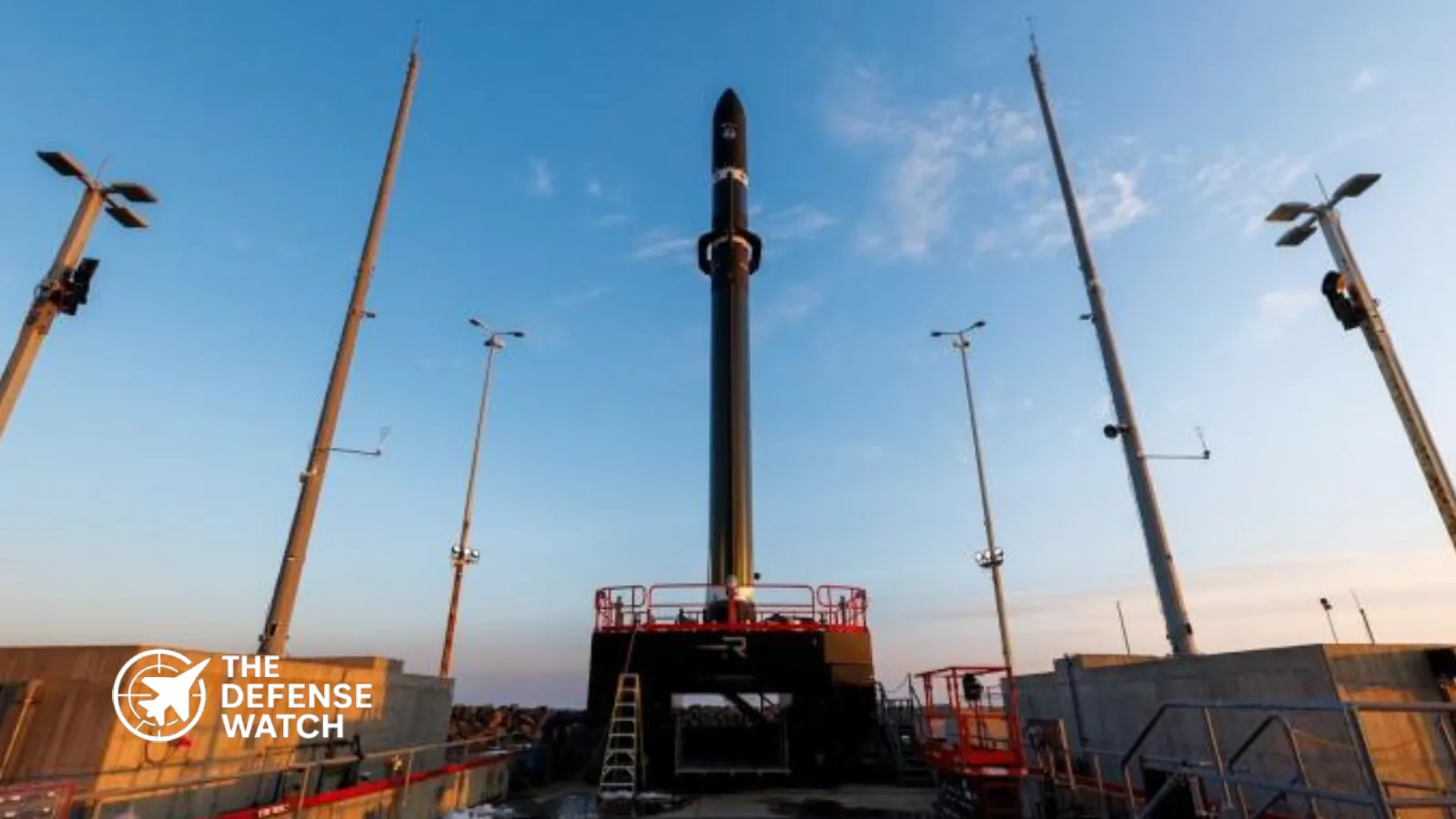
The mission saw DART AE carried into the upper atmosphere aboard Rocket Lab’s HASTE rocket, purpose-built for hypersonic test missions. At the planned deployment point, DART AE separated and the SPARTAN engine ignited, powering the aircraft through its hypersonic flight profile.
The flight was conducted under the U.S. Department of Defense’s Defense Innovation Unit, with Rocket Lab’s HASTE launch vehicle lifting off from Rocket Lab Launch Complex 2 at the Virginia Spaceport Authority’s Mid-Atlantic Regional Spaceport on Wallops Island.
The dual mission names reflect the collaborative nature of the program — “Cassowary Vex” designated by the DIU and “That’s Not A Knife” chosen by Rocket Lab, a nod to the Australian cultural reference that underscores the flight’s national significance.
What Is DART AE?
DART AE is an autonomous 3D-printed, hydrogen-fueled scramjet technology demonstrator and is the world’s first entirely 3D-printed airframe of a hypersonic launch vehicle. Its SPARTAN scramjet engine, powered by green hydrogen, provides the necessary thrust to propel DART at hypersonic speeds. This air-breathing engine emits zero COâ‚‚ during flight.
The DART AE hypersonic system is 3.5 meters long and can travel up to a range of 1,000 kilometers at a speed of Mach 7. It can be launched via an unguided sounding rocket, a guided rocket, or air-launched.
Unlike solid-fuel or liquid-fuel ballistic test vehicles, DART AE’s scramjet design requires the vehicle to be accelerated to Mach 5 before the engine can sustain combustion — a key technical threshold that distinguishes scramjet-powered hypersonics from conventional boost-glide systems. The SPARTAN engine’s ability to self-ignite, throttle, and restart mid-flight represents a meaningful engineering advancement over prior scramjet demonstrators.
Why This Flight Matters For U.S. Defense
The launch is part of the Pentagon’s Defense Innovation Unit HyCAT program, which aims to develop affordable test platforms for hypersonic technologies. Hypersonix was selected for the program in March 2023, beating out more than 60 applicants.
The DIU’s HyCAT initiative reflects a deliberate shift in American defense acquisition strategy: rather than relying exclusively on large prime contractors for expensive, one-of-a-kind hypersonic demonstrators, the program seeks high-cadence, cost-efficient test assets from allied commercial industry. DART AE fits that model precisely.
Three flights are planned under the HyCAT program, with additional orders available without competitive tender once the technology is proven in flight. Kratos has committed to acquiring up to 20 DART AE systems from Hypersonix as part of an agreement following the successful demonstration.
That pipeline — backed by a U.S. defense contractor of Kratos’s stature — suggests DART AE is positioned not merely as a science experiment but as a candidate for operational-scale hypersonic test support in the years ahead.
The Technology Edge: Hydrogen-Fueled Scramjet
What distinguishes DART AE from competing hypersonic demonstrators is its propulsion architecture. The SPARTAN scramjet is 3D-printed and is designed to fly at speeds up to Mach 7. The aircraft will serve as a testbed for emerging and high-performance technologies.
Unlike conventional kerosene-fueled scramjets, SPARTAN is hydrogen-powered and designed to operate without moving parts. The absence of rotating components in the engine simplifies manufacturing, reduces failure points, and lowers the cost-per-flight — a critical consideration for a program designed around high-cadence testing.
The environmental angle also carries strategic weight. As defense establishments across NATO and the Indo-Pacific face increasing scrutiny over carbon footprints, a scramjet that produces only water vapor as exhaust offers both operational and political utility.
Co-founder Dr. Michael Smart, a former NASA research scientist and former Chair of Hypersonic Propulsion at the University of Queensland, emphasized that flight data is irreplaceable at these speeds. “At these speeds and temperatures, there is no substitute for flight data,” Smart said, noting that the flight allowed the team to test propulsion, materials, and control systems in real hypersonic conditions.
Funding and Industrial Scale-Up
The mission followed Hypersonix’s $46 million Series A funding round, backed by Australia’s National Reconstruction Fund Corporation and Queensland Investment Corporation. The round was led by High Tor Capital, a UK investor in national security and frontier technology, with European defense company Saab and Polish family office RKKVC also supporting the raise.
The composition of the investor group is telling. High Tor Capital’s focus on national security technology, Saab’s participation as a defense prime, and Australia’s sovereign manufacturing fund all signal that DART AE is viewed as strategically significant — not simply commercially interesting.
Hypersonix has linked the funding to expansion plans in Queensland and a faster flight-test cadence, and is also developing its next platform, VISR — Velos Intelligence, Surveillance and Reconnaissance. The company employs more than 50 people in Brisbane across aerospace engineering, advanced manufacturing, and testing roles.
What Comes Next: VISR and Delta Velos
Hypersonix is not stopping at DART AE. The company’s plans include developing the VISR and Delta Velos hypersonic vehicles. The 16-meter Delta Velos is designed to reach speeds between Mach 5 and 12 and can be used for satellite launches and low-Earth orbit resupply missions. The 8-meter VISR is designed to fly at speeds between Mach 5 and 10 and can land on a standard runway, intended for multiple applications including long-range military surveillance and high-speed cargo transport.
VISR in particular has direct military relevance. A reusable, runway-landing hypersonic surveillance platform capable of Mach 5–10 flight would address a critical gap in persistent high-speed ISR coverage — a capability that current satellite and subsonic ISR platforms cannot replicate in contested airspace.
Analysis: A Strategic Win for the U.S.-Australia Alliance
The DART AE first flight is more than a technical milestone — it is a data point in the broader strategic realignment of the Indo-Pacific defense industrial base. The AUKUS partnership has placed enormous emphasis on advanced capabilities, including hypersonics, as a pillar of deterrence. Australia’s ability to independently develop, manufacture, and fly hypersonic test vehicles — and do so under a U.S. DoD contract — demonstrates a degree of sovereign capability that strengthens the alliance’s collective deterrence posture.
For U.S. defense planners, access to allied hypersonic test assets diversifies the supply chain for critical test infrastructure. For Australia, it establishes a commercial pathway into the U.S. defense market that could generate significant export revenue and deepen technological interoperability.
The DART AE dataset will inform the design of Hypersonix’s next vehicles, with further flight tests expected as the company expands manufacturing and development in Queensland.
With two more HyCAT flights still on the schedule and a growing order pipeline through Kratos, Hypersonix is now firmly on the map as a credible hypersonic systems developer — one with direct ties to the U.S. defense innovation ecosystem.
India Achieves Hypersonic Milestone With Multiple Advanced Systems
India’s Defense Research and Development Organization has unveiled significant progress in hypersonic weapons technology through 2025, with successful tests and unveilings positioning the country among global hypersonic powers. The nation’s ambitious hypersonic portfolio now includes operational testing of scramjet-powered cruise missiles, advanced glide vehicles, and joint development programs targeting speeds exceeding Mach 8.
The ET-LDHCM hypersonic cruise missile reportedly achieved Mach 8 speeds during testing in July 2025 from India’s eastern coast, marking a significant technological leap. This achievement places India alongside the United States, Russia, and China in possessing indigenous hypersonic cruise missile capabilities. The successful test validated critical technologies including scramjet propulsion, thermal management systems capable of withstanding temperatures above 2,000°C, and precision guidance under extreme aerodynamic conditions.
The hypersonic program represents more than individual missile systems. DRDO is developing 12 distinct hypersonic missile variants under programs like Project Vishnu, encompassing Hypersonic Glide Vehicles, Hypersonic Cruise Missiles, and anti-hypersonic defense systems. This comprehensive approach addresses land, air, and maritime strike requirements while building defensive capabilities against emerging hypersonic threats from regional adversaries.
ET-LDHCM: India’s Scramjet-Powered Game Changer
The Extended Trajectory-Long Duration Hypersonic Cruise Missile represents DRDO’s most advanced operational hypersonic system currently in testing. ET-LDHCM uses scramjet propulsion technology that draws oxygen from the atmosphere for combustion, enabling sustained hypersonic flight while eliminating onboard oxidizers. This air-breathing propulsion architecture provides significant advantages in fuel efficiency and flight duration compared to traditional rocket-powered systems.
Performance specifications demonstrate formidable capabilities. The missile can strike targets at ranges exceeding 1,500 kilometers, with potential extension to 2,500 kilometers in certain configurations, carrying payloads between 1,000-2,000 kilograms. The system supports both conventional and nuclear warheads, providing strategic flexibility across mission profiles.

Critical technological breakthroughs enabled the ET-LDHCM’s development. In April 2025, DRDO’s Defense Research and Development Laboratory conducted a successful ground test sustaining scramjet combustion for over 1,000 seconds. This extended-duration test validated the active cooling system, which circulates kerosene-based fuel through combustor wall channels to manage extreme thermal loads. The heated fuel then enters the combustion chamber where it ignites more efficiently, simultaneously improving cooling performance and combustion effectiveness.
The missile’s survivability features address modern defensive systems. Low-altitude flight profiles and mid-course maneuverability make trajectories unpredictable and difficult to intercept. During high-speed travel, air ionization around the missile produces plasma effects that absorb radar waves, contributing to reduced radar cross-section. Combined with precision targeting capabilities, these characteristics enable engagement of hardened military structures, command centers, radar installations, and naval vessels.
Multi-platform integration expands operational flexibility. The ET-LDHCM can deploy from land-based transporter-erector-launchers, naval surface combatants, and fighter aircraft including the Su-30MKI and Rafale. According to DRDO Chief Samir V. Kamat in June 2025, official approval for full-scale development remains pending, with operational readiness projected by 2030 following five to seven years of development.
Long-Range Anti-Ship Missile: Naval Deterrence at Hypersonic Speed
India’s Long-Range Anti-Ship Missile program addresses maritime strike requirements in the Indo-Pacific region. DRDO unveiled the Hypersonic Glide Vehicle and Transporter Erector Launcher for the LR-ASHM program in February 2025, showcasing hardware that builds upon earlier technology demonstrations.
The LR-ASHM employs a boost-glide configuration distinct from scramjet-powered cruise missiles. The missile features a delta-wing hypersonic glide vehicle mounted on a solid-propellant rocket booster that launches it partially into orbit before the glide vehicle performs terminal maneuvers along complex, adaptive flight paths. This trajectory profile presents significant interception challenges for naval air defense systems.
The November 2024 test demonstrated range capabilities exceeding 1,500 kilometers, with Defense Minister Rajnath Singh describing it as a historic moment. The successful test positioned India among select nations—alongside the United States, Russia, China, and North Korea—with demonstrated long-range hypersonic capabilities. The missile’s ability to execute terminal maneuvers enhances survivability against advanced defensive systems protecting high-value naval targets.
Strategic imperatives drive LR-ASHM development. Analysts view the system as addressing China’s evolving mid-course defense capabilities and providing options against adversary aircraft carriers in the Bay of Bengal and Arabian Sea. The shore-based anti-ship variant currently undergoing trials will be followed by ship-launched versions and land-attack variants for the proposed Integrated Rocket Force.
Dhvani: Next-Generation Glide Vehicle Technology
The Dhvani hypersonic glide vehicle represents DRDO’s parallel development track focusing on boost-glide architectures. DRDO plans to conduct a landmark flight trial of Dhvani by the end of 2025, with the system designed to achieve speeds up to Mach 6—equivalent to 7,400 kilometers per hour. This velocity surpasses the BrahMos supersonic cruise missile by a significant margin.
Engineering solutions address hypersonic flight challenges. Dhvani’s composite airframe incorporates heat-resistant ceramics and ablative coatings to withstand extreme thermal stresses during re-entry and sustained hypersonic flight. The system maintains payload integrity for both conventional and nuclear warheads across its projected 1,500-kilometer strike range.
Operational advantages distinguish Dhvani from existing systems. The low-observable design and unpredictable glide path minimize detection windows, contrasting with more predictable cruise missile profiles. Integration possibilities include platforms such as the AMCA fifth-generation fighter or Agni-VI ballistic missile boosters, extending standoff engagement ranges.
Development timelines align with strategic requirements. Successful 2025 testing would enable user trials with the Strategic Forces Command by 2027, with operational induction targeted for 2029-30. The program reflects Atmanirbhar Bharat principles with over 80% indigenous content, including solid-fuel boosters from Vikram Sarabhai Space Centre and guidance seekers from Research Centre Imarat.
BrahMos-II: Indo-Russian Hypersonic Collaboration
The BrahMos-II program continues the successful Indo-Russian partnership that produced the BrahMos supersonic cruise missile now deployed across all three Indian military services. BrahMos-II is expected to achieve speeds of Mach 8 with a range of 1,500 kilometers, using scramjet air-breathing propulsion. Initial range restrictions under Missile Technology Control Regime limitations no longer apply following India’s MTCR membership in 2016.
Technology transfer discussions continue between New Delhi and Moscow. Former BrahMos Aerospace Director General Atul Rane stated in July 2025 that groundwork is being laid for a hypersonic variant potentially leveraging Russia’s 3M22 Zircon technology. The Zircon, with reported Mach 9 speeds and 1,000-kilometer range, has demonstrated effectiveness in operational use during Russia’s conflict with Ukraine.
Formal program approval is expected by the end of 2025, enabling prototype assembly and ground testing through 2026, with initial flight trials scheduled for 2027-28. Production readiness is projected by 2030, with first deliveries to the Indian Navy and Strategic Forces Command around 2031. The system will feature multi-platform compatibility spanning land, sea, and submarine launches.
Weight reductions improve operational flexibility compared to current BrahMos variants. The missile is projected to weigh approximately 1.33 tonnes—about half the weight of current air-launched BrahMos missiles at 2.65 tonnes. This lighter configuration enables integration with additional fighter platforms including the indigenous Light Combat Aircraft Tejas, expanding tactical employment options.
Hypersonic Technology Foundation: HSTDV and Infrastructure
India’s operational hypersonic systems build upon two decades of technology development. The Hypersonic Technology Demonstrator Vehicle program provided critical validation of core technologies. The HSTDV first tested successfully in September 2020, demonstrating scramjet propulsion at Mach 6 for 22-23 seconds. This test validated aerodynamic configurations, thermal management approaches, and scramjet engine performance under realistic flight conditions.
Testing infrastructure supports rapid development cycles. India operates 12 hypersonic wind tunnels including a ₹400 crore facility at Dr. APJ Abdul Kalam Missile Complex capable of simulating speeds from Mach 5 to Mach 13. The Hypervelocity Expansion Tunnel at IIT Kanpur complements DRDO facilities, replicating conditions for ballistic missile launches, scramjet flights, and atmospheric re-entry at speeds from Mach 8 to Mach 29.
Materials science breakthroughs enable sustained hypersonic flight. DRDO has developed ceramic matrix composites and carbon-fiber-based materials alongside advanced thermal barrier coatings capable of withstanding temperatures exceeding 2,000°C. These indigenous materials address intense aerodynamic heating while maintaining structural integrity throughout flight profiles.
Fuel chemistry innovations solve combustion challenges. Endothermic fuels developed for high-temperature applications absorb heat while flowing through cooling channels before entering combustion chambers. This dual-purpose approach manages thermal loads while improving combustion efficiency—a capability one DRDO official compared to keeping a candle lit in a hurricane.
Strategic Context: Regional Hypersonic Competition
Regional security dynamics drive India’s hypersonic investments. China’s DF-17 hypersonic glide vehicle, with range of 1,800-2,500 kilometers and speeds up to Mach 10, poses significant challenges given its ability to carry conventional and nuclear warheads. The 2023 China Military Power Report highlighted the DF-17’s transformative impact on People’s Liberation Army missile capabilities.
India’s November 2024 long-range hypersonic missile test occurred just days after China showcased its GDF-600 hypersonic glide vehicle at the Zhuhai air show, underscoring competitive dynamics. Pakistan’s development of advanced missile systems including the Fatah-II adds another dimension to regional threat calculations.
Global hypersonic proliferation accelerates development timelines. Russia has deployed its Avangard and Kinzhal hypersonic systems, with Kinzhal having been used operationally. The United States has significantly increased hypersonic weapons funding with Air Force and Navy programs pursuing multiple variants. These developments create urgency for India to field effective offensive and defensive hypersonic capabilities.
Comparison with international programs reveals capabilities and challenges. The U.S. Long-Range Hypersonic Weapon uses boost-glide technology with approximately 2,776-kilometer range and speeds reaching Mach 17, integrated with satellite tracking and networked strike architectures. India’s ET-LDHCM offers advantages including greater payload capacity up to 2,000 kilograms, low-altitude cruise profiles, and multi-platform launch flexibility, though with different range characteristics and later deployment timelines than some U.S. systems.
Defense Implications and Future Trajectory
India’s hypersonic program advances strategic deterrence objectives while supporting self-reliance goals. The indigenous development approach reduces foreign technology dependencies while building domestic defense industrial capacity. DRDO collaborates with Indian private defense companies and small-to-medium enterprises consistent with national policies to expand the domestic defense-industrial base.
Employment of hypersonic weapons would significantly impact regional military calculations. The combination of high speed, maneuverability, and reduced radar signatures challenges existing air defense architectures. Time-critical targeting becomes feasible as hypersonic missiles can reach targets hundreds or thousands of kilometers distant within minutes, compressing decision cycles for adversaries.
Multi-domain integration expands tactical options. Air-launched variants from Su-30MKI and Rafale fighters provide standoff strike capabilities. Ship-launched versions enhance naval surface action group offensive power. Land-based systems offer flexible positioning to address evolving threat axes. Submarine-launched variants under development would provide survivable second-strike capabilities.
Defensive applications complement offensive systems. DRDO’s 12-system development plan includes anti-hypersonic defense capabilities designed to counter hypersonic threats from adversaries. Integration with India’s existing ballistic missile defense framework provides layered protection against multiple threat types.
Technology spillover benefits extend beyond military applications. Advancements in scramjet propulsion, heat-resistant materials, and precision guidance systems may benefit civilian aerospace programs including satellite launches and high-speed transport. Academic collaborations with institutions like IIT Kanpur support workforce development in advanced aerospace technologies.
Export potential exists for mature systems. India signed two BrahMos export contracts valued at approximately $455 million during October 2025, demonstrating international demand for Indian missile technology. Hypersonic variants could generate additional export opportunities as allied nations seek advanced strike capabilities.
Challenges and Development Timelines
Technical hurdles remain despite significant progress. Sustained scramjet combustion requires precise fuel-air mixing and flame stabilization at supersonic velocities. Thermal management systems must function reliably across flight envelopes spanning subsonic acceleration through hypersonic cruise to terminal approach phases. Guidance and control at hypersonic speeds demands robust sensors and actuators capable of high-frequency corrections.
Manufacturing complexity affects production readiness. Advanced materials including ceramic matrix composites and thermal barrier coatings require specialized fabrication techniques. Quality control becomes critical as minor defects can cause catastrophic failures under extreme flight conditions. Scaling from prototypes to serial production demands investment in specialized manufacturing infrastructure.
Testing timelines extend development cycles. Flight test programs must validate performance across diverse scenarios including varying altitudes, speeds, and engagement geometries. Each test provides data for refinement but requires extensive preparation. Integration testing with launch platforms adds further time requirements before operational deployment.
Funding requirements shape program trajectories. Dhvani development draws from a ₹25,000 crore hypersonic research and development budget, reflecting substantial government commitment. Competing priorities within defense budgets require sustained political support to maintain funding through multi-year development cycles.
Projected operational dates vary by system. ET-LDHCM targets 2030 operational status pending full development approval. Dhvani aims for 2029-30 induction following 2025 testing and 2027 user trials. BrahMos-II looks toward 2031 initial deployments. These timelines assume continued funding, successful testing, and resolution of technical challenges.
Regional Security and Strategic Deterrence
Hypersonic capabilities reshape regional military balances by complicating adversary defensive planning. The combination of speed, maneuverability, and reduced warning time forces opponents to maintain higher readiness levels and invest in advanced sensors and interceptors. This defensive burden imposes costs while creating uncertainty about interception success rates.
Indo-Pacific maritime security gains particular attention given naval applications. Long-range anti-ship hypersonic missiles threaten surface action groups hundreds of kilometers from launch points. Aircraft carriers—traditionally able to operate with impunity at standoff ranges—face increased vulnerability. This shifts calculations about naval power projection and sea control in contested waters.
Land-based systems affect continental military dynamics. Hypersonic land-attack missiles enable strikes against time-critical targets including mobile missile launchers, command centers, and air defense nodes. The compressed engagement timelines reduce options for target relocation or defensive responses. This capability enhances deterrence by denial—making adversary offensive operations riskier and potentially less effective.
Nuclear stability considerations arise from dual-capable systems. Missiles capable of carrying conventional or nuclear warheads create ambiguity during crisis periods. Launch detection cannot immediately determine warhead type, potentially triggering escalatory responses based on worst-case assumptions. Clear signaling and confidence-building measures become important for managing escalation risks.
Alliance dynamics evolve as hypersonic capabilities proliferate. Countries lacking indigenous hypersonic systems may seek access through partnerships or technology transfers. Regional arms competition could accelerate as nations respond to neighbors’ hypersonic deployments. International forums may address hypersonic weapons in future arms control discussions, though current political environments make near-term agreements unlikely.
Conclusion
India’s hypersonic missile program has achieved significant milestones through 2025, transitioning from technology demonstration to operational testing of multiple system types. The ET-LDHCM scramjet cruise missile, LR-ASHM boost-glide vehicle, Dhvani advanced glide vehicle, and BrahMos-II collaborative program collectively position India among nations with comprehensive hypersonic capabilities.
Technical achievements in scramjet propulsion, thermal management, and precision guidance provide foundations for operational systems. Infrastructure investments in wind tunnels and testing facilities support continued development. Indigenous materials and manufacturing capabilities reduce foreign dependencies while building domestic aerospace expertise.
Strategic imperatives drive continued investments as regional competitors advance their own hypersonic programs. The combination of offensive strike capabilities and defensive systems addresses evolving threat environments. Multi-platform integration across land, air, and naval forces provides operational flexibility.
Challenges remain in transitioning prototypes to production systems, managing complex testing programs, and sustaining funding commitments. Development timelines extending into the 2030s require persistent effort across technical, industrial, and political dimensions. Success will depend on continued innovation, effective program management, and sustained national commitment to hypersonic technology development.
FAQs
What makes hypersonic missiles different from traditional missiles?Hypersonic missiles travel at speeds exceeding Mach 5 (five times the speed of sound) and can maneuver during flight, unlike ballistic missiles which follow predictable trajectories. This combination of extreme speed and unpredictable flight paths makes them extremely difficult to detect and intercept with current defense systems.
When will India’s hypersonic missiles become operational?Different systems have varying timelines. The ET-LDHCM hypersonic cruise missile targets 2030 operational status, the Dhvani hypersonic glide vehicle aims for 2029-30 induction, and the BrahMos-II joint Indo-Russian program projects first deliveries around 2031. These dates depend on successful testing and government approvals.
How does India’s hypersonic technology compare to China and Russia?India has demonstrated capabilities comparable to established hypersonic powers. China’s DF-17 reaches Mach 10 with 1,800-2,500 km range, while Russia’s Zircon achieves Mach 9. India’s ET-LDHCM reaches Mach 8 with 1,500-2,500 km range. India focuses on multi-platform flexibility and indigenous development rather than purely matching speed records.
What is scramjet technology and why is it important?Scramjet (supersonic combustion ramjet) engines draw oxygen from the atmosphere rather than carrying oxidizers onboard, enabling sustained hypersonic flight with greater fuel efficiency. India’s April 2025 test sustained scramjet combustion for over 1,000 seconds—a critical breakthrough enabling long-duration hypersonic cruise missiles.
Can hypersonic missiles be intercepted?Current air defense systems struggle to intercept hypersonic missiles due to their extreme speed, low-altitude flight profiles, and mid-course maneuverability. India is developing anti-hypersonic defense systems as part of its 12-system hypersonic program to counter threats, but interception remains technically challenging for all nations.
The pursuit of hypersonic flight—speeds exceeding Mach 5—represents one of the most ambitious technological challenges in modern aerospace engineering. While no confirmed flight tests have occurred for the SR-72 and it remains a design concept, the broader field of hypersonic aircraft development is advancing rapidly, with multiple programs demonstrating breakthrough capabilities that could revolutionize military operations and strategic deterrence.
Defining Hypersonic Speed: The Mach 5 Threshold
Hypersonic speed is universally defined as any velocity exceeding Mach 5, or five times the speed of sound. At sea level, this translates to approximately 3,800 miles per hour or 6,116 kilometers per hour. This threshold represents more than just a numerical milestone—it marks the point where a range of physical effects start becoming a significant engineering challenge, fundamentally changing how aircraft must be designed and operated.
The extreme velocities generate massive heat flux as vehicles travel through dense atmospheric layers, creating temperatures that can exceed 2,000 degrees Celsius on leading edges and structural surfaces. This thermal environment, combined with complex aerodynamic phenomena, distinguishes hypersonic flight from merely supersonic operations and requires revolutionary engineering solutions.
The SR-72 Concept: Son of Blackbird
The Lockheed Martin SR-72, often dubbed “Son of Blackbird” as the proposed successor to the legendary SR-71 Blackbird reconnaissance aircraft, represents the cutting edge of hypersonic aircraft design. It was proposed privately in 2013 by Lockheed Martin with speculation persisting about potential service entry in the 2030s, though the program faces significant technical and financial hurdles.
Unlike its manned predecessor, the SR-72 is envisioned as an unmanned, reusable aircraft capable of autonomous missions at speeds exceeding Mach 6. With an anticipated length of over 100 feet, the aircraft would mirror the dimensions of the SR-71 but introduce fundamentally different propulsion architecture designed for sustained hypersonic flight.
Recent speculation in 2025 suggests Lockheed Martin could finalize a prototype of SR-72 by the end of 2025, though these remain unconfirmed projections. The program’s alignment with U.S. Air Force hypersonic roadmaps indicates a notional in-service date around 2030, contingent on overcoming substantial propulsion, thermal management, and materials challenges.

How Hypersonic Aircraft Work: Revolutionary Propulsion Systems
The heart of hypersonic flight lies in advanced propulsion technologies that operate efficiently at extreme velocities. Traditional turbojet and turbofan engines become impractical beyond Mach 3 due to the extreme temperatures and pressures generated by compressing incoming air at such speeds.
Scramjet Technology: Air-Breathing Hypersonics
A scramjet (supersonic combustion ramjet) is a variant of a ramjet airbreathing jet engine in which combustion takes place in supersonic airflow. Unlike conventional engines, scramjets have no moving parts—no compressor blades, no turbines. Instead, they rely entirely on the vehicle’s forward velocity to compress incoming air before mixing it with fuel and igniting it while maintaining supersonic flow throughout the engine.
The X-51 Waverider program demonstrated the viability of this technology, achieving a speed of Mach 5.1 and flying for 210 seconds until running out of fuel during its final test in May 2013. This represented the longest air-breathing hypersonic flight ever achieved and provided critical data informing current hypersonic weapons development.
Turbine-Based Combined Cycle (TBCC) Propulsion
For aircraft like the proposed SR-72, a more sophisticated approach is required: the Turbine-Based Combined Cycle (TBCC) propulsion system. This revolutionary design merges a traditional turbofan engine—used during subsonic operations like takeoff and landing—with a scramjet capable of sustaining speeds above Mach 5.
The TBCC system employs shared air intakes and nozzles but maintains distinct airflow conduits, optimizing performance across a wide operational envelope. This dual-mode configuration is not merely a performance enhancement but an operational necessity, as no single engine type can efficiently cover the entire speed range from takeoff to hypersonic cruise.
Operational Hypersonic Systems: What’s Actually Flying
While the SR-72 remains conceptual, several hypersonic systems are approaching or achieving operational capability in 2025:
Stratolaunch Talon-A: Breakthrough Testing Platform
Stratolaunch’s Talon-A2 vehicle conducted flights in December 2024 and March 2025 as part of the Pentagon’s Multi-Service Advanced Capability Hypersonic Test Bed (MACH-TB) program, marking the first reusable hypersonic aircraft operations since the X-15 program ended in 1968. Both flights exceeded Mach 5 with the fully autonomous vehicle landing successfully at Vandenberg Space Force Base, demonstrating unprecedented precision in hypersonic testing.
Army Long-Range Hypersonic Weapon (LRHW)
The U.S. Army’s 3rd Multi-Domain Task Force has successfully deployed a Long-Range Hypersonic Weapon system outside the continental U.S. for the first time, marking a significant milestone in operational hypersonic capability. The LRHW, also known as Dark Eagle, leverages the common hypersonic glide body and represents a new class of ultrafast, maneuverable long-range missiles launched from ground mobile platforms.
Air Force Hypersonic Programs
The U.S. Air Force is pursuing multiple hypersonic weapon systems. The Air Force wants to spend $387.1 million in fiscal 2026 to acquire its first hypersonic missile known as the AGM-183A Air-Launched Rapid Response Weapon (ARRW), officially transitioning the weapon from development into procurement after a troubled testing phase.
Additionally, the Hypersonic Attack Cruise Missile (HACM), developed by Raytheon and Northrop Grumman, employs scramjet propulsion and is expected to begin extensive flight testing in 2025, with operational capability targeted for 2027.
Technical Challenges: The Engineering Gauntlet
Sustained hypersonic flight presents extraordinary engineering challenges across multiple domains:
Thermal Management
Hypersonic velocities generate extreme heat loads that threaten airframe integrity, with the SR-72 incorporating advanced thermal protection systems including ceramic matrix composites and ablative coatings capable of withstanding temperatures exceeding 2,000°C. These materials, similar to those used in intercontinental ballistic missiles, ensure structural stability during prolonged hypersonic flight.
Materials Science
Developing materials that can withstand the punishing thermal and structural loads of hypersonic flight while remaining lightweight enough for efficient operation represents a critical bottleneck. Advanced composites combining carbon, ceramic, and metallic elements are essential for managing heat while maintaining structural integrity.
Propulsion Stability
Achieving reliable ignition and sustained combustion in supersonic airflow has been likened to “lighting a match in a hurricane.” The extreme velocities create turbulent, high-pressure conditions where fuel must be precisely injected, mixed, and ignited within milliseconds while maintaining stable thrust production.
Strategic Implications: Why Hypersonic Aircraft Change Warfare
Hypersonic aircraft and weapons fundamentally alter strategic military calculations in several critical ways:
Defeating Advanced Air Defenses
The SR-72’s ability to operate at altitudes above 80,000 feet and speeds beyond Mach 6 positions it beyond the reach of most current interceptors, providing a decisive intelligence advantage. Modern air defense systems like Russia’s S-500 and China’s HQ-19 are designed to intercept threats, but hypersonic vehicles traveling at Mach 6+ significantly reduce engagement windows and increase interception difficulty.
Rapid Global Reach
Hypersonic aircraft could traverse intercontinental distances in hours rather than the current timeframe of many hours or days. This rapid global reach enhances intelligence collection and strike capabilities, enabling commanders to respond to emerging crises with unprecedented speed.
Multi-Domain Strike Capability
The SR-72’s potential to carry hypersonic weapons such as the High-Speed Strike Weapon (HSSW) amplifies its battlefield impact, with the integration aligning with the U.S. Department of Defense’s 2025 National Defense Strategy emphasizing multi-domain operations. This combination of reconnaissance and strike capabilities in a single platform represents a force-multiplier for military operations.
Current Funding and Development Status
The Pentagon has significantly increased investment in hypersonic technologies. The 2025 budget request for hypersonic research totaled $6.9 billion, up from $4.7 billion in 2023, reflecting growing prioritization of these capabilities as China and Russia field operational hypersonic systems.
GE Aerospace announced remarkable propulsion and avionics milestones at the 2025 Air, Space & Cyber Conference, successfully demonstrating two rotating detonation combustion (RDC) engines: a missile-scale ramjet and a dual-mode ramjet for high-speed aircraft. The test campaign exceeded expectations, demonstrating a threefold increase in engine airflow compared to previously flight-tested hypersonic engines.
The Path Forward: 2025-2030
While the SR-72 remains in the concept and development phase, the broader hypersonic ecosystem is maturing rapidly. Multiple test programs are demonstrating critical technologies, operational weapons systems are entering service, and industrial capacity is expanding.
The next five years will likely see:
- Continued testing of reusable hypersonic test vehicles like Talon-A
- Initial operational deployment of hypersonic weapons including LRHW and potentially ARRW
- Maturation of scramjet and TBCC propulsion technologies
- Development of advanced thermal protection systems and materials
- Possible first flights of demonstrator aircraft incorporating SR-72-class technologies
Whether the SR-72 itself materializes as envisioned or evolves into a different configuration, the underlying technologies being developed are transforming aerospace capabilities and reshaping strategic military planning for decades to come.
FAQs
Is the SR-72 currently operational?No. The SR-72 remains a concept aircraft with no confirmed flight tests as of late 2025. While Lockheed Martin has conducted research and development work, the aircraft has not been built or flown, and speculation about a 2025 prototype remains unconfirmed.
What is the difference between the SR-71 and SR-72?The SR-71 Blackbird was a manned reconnaissance aircraft that flew at Mach 3.2 and was retired in 1998. The proposed SR-72 would be unmanned, fly at Mach 6+, and use entirely different propulsion technology (TBCC versus conventional turbojets). The SR-72 would approximately double the SR-71’s speed while operating autonomously.
How does scramjet propulsion workA scramjet (supersonic combustion ramjet) compresses incoming air using the vehicle’s forward velocity rather than mechanical compressors. It maintains supersonic airflow throughout the engine, mixing fuel with compressed air and igniting it while maintaining supersonic combustion—a process that only works efficiently above Mach 4-5.
What hypersonic weapons are currently operational?As of late 2025, the U.S. Army has deployed the Long-Range Hypersonic Weapon (LRHW/Dark Eagle) system, marking the first operational U.S. ground-launched hypersonic capability. The Air Force’s AGM-183A ARRW is transitioning to procurement phase with planned acquisition in fiscal 2026. Russia and China have fielded operational hypersonic systems including the Kinzhal, Avangard, and DF-ZF.
When might hypersonic passenger aircraft become available?Commercial hypersonic passenger aircraft remain decades away from operational service. While companies like Boom Supersonic are developing supersonic (not hypersonic) aircraft targeted for the late 2020s, true hypersonic passenger service faces enormous technical, safety, regulatory, and economic challenges that will require extensive research and development well into the 2030s and beyond.
A Leap Toward Mach 12 with Clean Propulsion
In a pivotal advancement for aerospace engineering, Hypersonix Launch Systems, an Australian innovator based in Brisbane, has unveiled plans for the world’s first hydrogen-powered hypersonic jet. This cutting-edge vehicle, propelled by the company’s proprietary SPARTAN scramjet engine, aims to achieve speeds of up to Mach 12—approximately 12 times the speed of sound. The development, announced amid a surge in global investments in sustainable high-speed flight, positions Australia at the forefront of hypersonic technology. With demonstration flights slated for early 2026, this hydrogen-powered hypersonic jet promises to redefine rapid transit and strategic operations.
The project gained momentum in late October 2025 when Hypersonix secured a $46 million Series A funding round, including a $10 million equity investment from Australia’s National Reconstruction Fund Corporation (NRFC). This capital infusion supports testing and manufacturing under the U.S. Defense Innovation Unit’s (DIU) HyCAT program, with NASA backing the initial launch of the DART AE testbed.
Background: From Scramjet Pioneers to Hydrogen Horizons
Australia’s storied legacy in scramjet research sets the stage for this hydrogen-powered hypersonic jet. The nation achieved the world’s first successful scramjet flight in 2002 through the HyShot program, a collaboration with the University of Queensland’s Centre for Hypersonics. This milestone demonstrated supersonic combustion in flight conditions, paving the way for sustained hypersonic propulsion.

Over the subsequent two decades, Australia conducted more than 6,000 ground tests in facilities like the T4 shock tunnel and participated in 11 sub-orbital flights via the HIFiRE initiative with the U.S. Air Force. These efforts addressed core challenges in hypersonic flight, such as extreme heat management and air-breathing efficiency. Traditional hypersonic vehicles have relied on hydrocarbon fuels like kerosene, limiting speeds to Mach 5-8 due to combustion constraints.
Enter hydrogen propulsion: With 2.5 times the energy density of kerosene, green hydrogen enables higher Mach numbers while emitting only water vapor. Hypersonix builds on this by integrating 3D-printing for rapid iteration, a technique first applied to a fixed-geometry scramjet in 2021. The company’s focus on reusability addresses the disposability of past test vehicles, aiming for commercial viability in both civilian and defense sectors.
Core Details: The SPARTAN Engine and Platform Innovations
At the heart of Hypersonix’s hydrogen-powered hypersonic jet lies the SPARTAN engine, the world’s first fully 3D-printed scramjet. This air-breathing system features a fixed geometry with no moving parts, reducing complexity and enhancing reliability. Measuring compact for integration, SPARTAN ingests atmospheric air at hypersonic velocities, mixes it with hydrogen, and ignites combustion in milliseconds—self-igniting without external aids.
Technical specifications underscore its prowess. Powered by green hydrogen derived from renewable sources like solar electrolysis of seawater, SPARTAN delivers high thrust for extended flight durations. Its exhaust? Pure H2O, achieving zero CO2 emissions and minimizing environmental impact. Materials include high-temperature alloys for the core structure and ceramic matrix composites (CMCs) for thermal resilience, capable of withstanding temperatures exceeding 2,000 degrees Celsius. These CMCs offer superior strength-to-weight ratios and shock resistance, crucial for reusable operations.
Hypersonix’s platform lineup demonstrates scalability. The DART AE, a 3.5-meter-long demonstrator, serves as the initial testbed, targeting Mach 7 speeds in its Q1 2026 NASA-supported launch. This vehicle validates SPARTAN’s performance in real atmospheric conditions. Scaling up, the VISR platform—an 8-meter reusable aircraft for intelligence, surveillance, and reconnaissance (ISR)—integrates four SPARTAN engines to operate at Mach 5-10. Designed for defense missions, VISR employs CMCs throughout to endure sustained hypersonic stresses.
Further afield, the Delta Velos system extends SPARTAN’s application to space access. This next-generation launcher, also hydrogen-fueled, eyes Mach 12 for high-cadence, reusable orbital insertions, potentially slashing launch costs by enabling rapid turnaround.
Official data from Hypersonix highlights the engine’s pedigree: Over 100 recent ground tests confirm its hypersonic flight readiness, building on decades of R&D. The $46 million raise, closed in October 2025, includes contributions from strategic investors eyeing dual-use potential. As per NRFC statements, the $10 million commitment accelerates scramjet manufacturing in Queensland, creating jobs and bolstering national security tech.
Dr. Michael Smart, Hypersonix co-founder and scramjet expert, emphasized the engine’s transformative potential: “The SPARTAN is more than a propulsion system—it’s a breakthrough in reusable hypersonic flight.” This sentiment echoes in DIU announcements, which selected Hypersonix for HyCAT to prototype hypersonic capabilities for U.S. allies.
Challenges and Technical Analysis: Navigating Hypersonic Hurdles
Developing a hydrogen-powered hypersonic jet involves formidable engineering feats. Hypersonic speeds generate intense heat from air friction, risking material dissociation and structural fatigue. SPARTAN mitigates this through advanced cooling via hydrogen’s endothermic properties—fuel absorbs heat before combustion—and CMC linings that prevent oxidation.
Hydrogen storage poses another hurdle: Its low density requires cryogenic systems, adding weight and insulation needs. Hypersonix counters with optimized tank designs and non-toxic fuel handling, where leaks vent upward harmlessly. Aerodynamic control at Mach 12 demands precise shockwave management, addressed by SPARTAN’s simple intake geometry.
Comparatively, U.S. and Chinese hypersonic programs, like the AGM-183A ARRW, use rocket-boosted gliders with hydrocarbon scramjets, capping at Mach 5-7. Hypersonix’s air-breathing, hydrogen approach enables atmospheric loitering without boosters, offering endurance advantages for ISR. Ground tests since 2019, including the first hydrogen-fueled 3D scramjet firing, validate these edges, though full-flight reusability remains unproven until DART AE.
Expert Perspectives: Defense Implications and Policy Alignment
Industry experts view this hydrogen-powered hypersonic jet as a game-changer for geopolitical strategy. Dr. Sarah Johnson, a hypersonics analyst at the Australian Strategic Policy Institute, notes, “Hypersonix’s reusable design could democratize hypersonic access, shifting from expendable weapons to persistent platforms.” This aligns with U.S.-Australia AUKUS pacts, emphasizing shared tech for Indo-Pacific deterrence.

From a policy standpoint, the NRFC investment signals Australia’s pivot toward green defense tech. As climate imperatives intersect with security, hydrogen propulsion supports net-zero goals without sacrificing speed. DIU’s HyCAT involvement underscores interoperability, potentially integrating VISR into allied ISR networks. However, experts caution on proliferation risks, urging export controls akin to those for missile tech.
Conclusion: Reshaping Skies and Strategies Ahead
The advent of Hypersonix’s hydrogen-powered hypersonic jet heralds profound shifts. For civilians, it envisions Sydney-to-London flights in under an hour, slashing emissions in ultra-long-haul aviation. In defense, Mach 12 ISR platforms could outpace adversaries, enabling real-time global monitoring and rapid response.
Looking ahead, DART AE’s 2026 flight will be a litmus test, with VISR and Delta Velos following in subsequent years. Backed by $46 million and tripartite partnerships, Hypersonic eyes commercialization by decade’s end. As hypersonic proliferation accelerates—witness Russia’s Avangard or China’s DF-17—this Australian innovation underscores sustainable superiority. The world may soon witness not just faster flight, but cleaner conquests of the atmosphere.