














@2026 – All Right Reserved. TheDefenseWatch.com
- Home
- Defense Systems
- Missiles & Precision Weapons
- Fattah-2 Hypersonic Missile
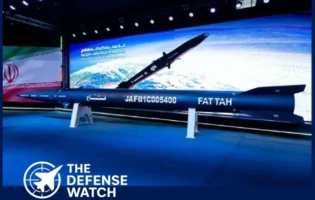
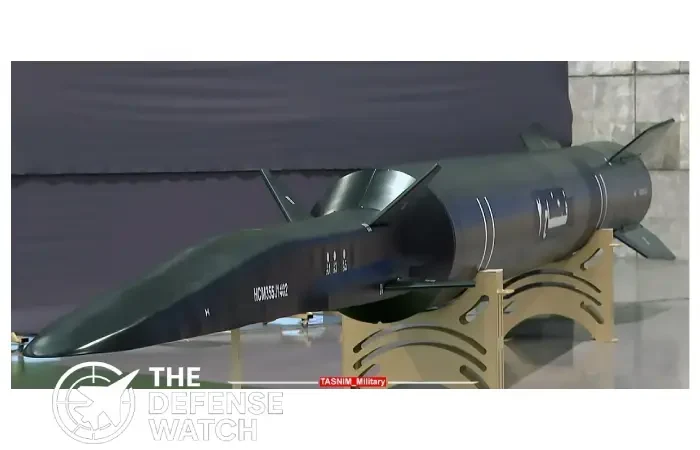
Fattah-2 Hypersonic Missile
Defense Systems Full Specifications
1. General Information
| Name / Designation | Fattah-2 |
| Type / Role | Hypersonic Strike Missile |
| Country of Origin | Iran |
| Manufacturer | IRGC Aerospace Force |
| Service Entry / Year Introduced | 2023–2024 (Reported) |
| Operational Status | In Development / Limited Deployment |
2. Performance & Range
| Range | Estimated 1,000–1,500 km |
| Speed | Hypersonic (Mach 10+ estimated) |
| Ceiling / Altitude Limit | Classified |
| Accuracy (CEP) | Unknown / Not disclosed |
| Warhead Type | High-Explosive / Penetrator |
3. Guidance & Targeting
| Guidance System | INS / Potential satellite updates |
| Targeting Mode | Pre-programmed |
| Launch Platform Compatibility | Road-mobile missile launcher |
| Seeker Type | None / Not publicly disclosed |
4. Physical Characteristics
| Length | Not disclosed |
| Diameter | Approx. 1 m (est.) |
| Wingspan | Not applicable (HGV design) |
| Launch Weight | Estimated 3,000–4,000 kg |
| Propulsion | Solid-fuel rocket + HGV |
5. Warhead & Payload
| Warhead Weight | Estimated 300–500 kg |
| Explosive Type | HE / Penetrator |
| Detonation Mechanism | HE / Penetrator |
| Payload Options | Impact / Delay |
6. Operational Use & Capabilities
| Operational Range Type | Long-range |
| Deployment Platform | Ground-based mobile launcher |
| Target Types | Strategic sites, infrastructure |
| Combat Proven | No |
| Users / Operators | Iran |
PROS
- High-speed hypersonic performance
- Enhanced maneuverability via glide-vehicle design
- Solid-fuel propulsion for rapid launch readiness
- Potentially capable of penetrating advanced missile defenses
- Long-range strike capability supporting strategic deterrence
CONS
- Limited verified data on real performance
- Not combat-proven
- Relies on developing Iranian navigation infrastructure
- High production cost and complex manufacturing
- Potential vulnerability during boost phase
Fattah-2 Strategic Hypersonic Strike Missile
The Fattah-2 represents Iran’s latest step into the rapidly evolving hypersonic weapons domain, building on the foundation established by the earlier Fattah-1. As a next-generation long-range hypersonic glide-capable missile, the system is designed to penetrate modern air-defense networks and deliver high-speed, precision strikes against high-value targets. For defense analysts and U.S. audiences tracking global missile developments, the Fattah-2 provides insight into Iran’s expanding strategic capabilities.
Developed by Iran’s Islamic Revolutionary Guard Corps Aerospace Force (IRGC-ASF), the Fattah-2 reportedly features enhanced maneuverability, improved guidance, and higher survivability against ballistic missile defense systems. While official specifications remain limited, the missile is believed to integrate a hypersonic glide vehicle (HGV) capable of performing mid-course evasive maneuvers beyond the reach of traditional interception systems.
Design & Capabilities
The Fattah-2 is assessed to reach hypersonic speeds potentially exceeding Mach 10, enabling rapid striking ability across regional distances. Its effective range is expected to fall within the 1,000–1,500 km class, allowing it to target strategic infrastructure and military installations. The missile’s solid-fuel propulsion system supports rapid launch readiness, reducing pre-launch detection windows.
The warhead section is believed to incorporate advanced penetration and high-explosive technologies, optimized for hardened or critical targets. Guidance is expected to rely on a combination of inertial navigation (INS) and potentially satellite-aided enhancements, though Iran’s indigenous navigation capabilities remain limited.
Operational Role
The Fattah-2’s intended mission is strategic deterrence, providing Iran with a weapon capable of bypassing conventional missile defenses. Although not combat proven, it reflects Tehran’s focus on asymmetric tools to challenge technologically superior adversaries.
Fattah-2 Hypersonic Missile Price
The Fattah-2 is not available for foreign military sale, and no official price exists. However, based on comparable hypersonic research programs, a unit cost—if produced in the U.S.—could range from tens to hundreds of millions of dollars per missile due to advanced materials, propulsion, and guidance technologies.
FAQs
Is Fattah-2 a supersonic missile?
No. The Fattah-2 is not just a supersonic missile—it is classified as a hypersonic missile, meaning it can travel at speeds exceeding Mach 5, far faster than standard supersonic weapons.
How fast is the Fattah-2 missile?
Exact verified figures are not publicly available, but Iranian sources claim the Fattah-2 can reach speeds of Mach 10 or higher, placing it within the upper tier of global hypersonic weapons.
What is a Fattah-2 missile?
The Fattah-2 is a next-generation Iranian hypersonic missile equipped with a hypersonic glide vehicle (HGV). Designed by the IRGC Aerospace Force, it is intended for long-range precision strikes, high maneuverability, and penetration of modern air-defense systems.
Fattah-2 hypersonic missile cost
The Fattah-2 is not sold internationally, and Iran has not released a public cost estimate. However, based on global hypersonic development metrics, a comparable missile could cost tens to hundreds of millions of dollars per unit if manufactured in an advanced defense industry.
What is the difference between Fattah-1 and Fattah-2?
Fattah-1 is Iran’s first-generation hypersonic missile, relying primarily on aerodynamic body maneuverability.
Fattah-2 incorporates a hypersonic glide vehicle (HGV), enabling more advanced mid-course maneuvering, higher survivability, and improved ability to evade missile defenses.
Overall, Fattah-2 represents a significant technological leap over Fattah-1.
Disclaimer Note
The information provided on TheDefenseWatch.com is for general informational purposes only. While we strive to ensure the accuracy, completeness, and timeliness of our content regarding defense and aerospace products, technologies, and specifications, we cannot guarantee that all information is 100% accurate or up-to-date due to the evolving nature of military technology and classified data.TheDefenseWatch.com does not warrant the reliability, suitability, or availability of the information for any specific purpose. Users are advised to consult official sources, such as manufacturers, government publications, or defense agencies, for precise and verified data before making decisions based on our content.We are not affiliated with any defense manufacturers, governments, or military organizations mentioned. Opinions, reviews, and ratings reflect expert analysis but are subjective and should not be considered endorsements. TheDefenseWatch.com is not responsible for any errors, omissions, or consequences arising from the use of this website’s content.External links are provided for convenience and do not imply endorsement. TheDefenseWatch.com reserves the right to update or modify content without prior notice. By using this website, you agree to our Privacy & Cookies Policy.
More Defense Systems from IRGC Aerospace Force
New Arrivals
-
 PAC-2 Patriot Missile System
-
Patriot PAC-3 Missile Defense System
-
EA-18G Growler
-
J-50 Fighter Jet
-
Northrop Grumman GHOST-R GEO Recon Satellite
-
A-50 Mainstay Aircraft
-
Spanish EF-18 Hornet Fighter
-
Trident II D5 Missile
-
B-21 Raider Bomber
-
F-47 Fighter Jet
-
F-35i Adir Fighter Jet
-
Type 99B Main Battle Tank
Popular Comparisons
-
 Tejas Fighter Jet vs F-16 Fighting Falcon: Capability Compared
View Comparison →
Tejas Fighter Jet vs F-16 Fighting Falcon: Capability Compared
View Comparison → -
Rafale Fighter Jet vs F-16 Fighting Falcon : Which Fighter Has the Edge?
View Comparison →
-
Su-57 Fighter Jet vs J-20 Fighter Jet: Stealth and Air Combat Compared
View Comparison →
-
Mirage 2000 vs Tejas Mk1A: Legacy Combat Power vs Indigenous Modernization
View Comparison →
-
Rafale Fighter Jet vs F-22 Raptor: Which Air Dominance Fighter Has the Edge?
View Comparison →
-
Tejas Fighter Jet vs. Rafale Fighter Jet: India’s Indigenous Fighter Meets France’s Proven Multirole Combat Aircraft
View Comparison →
-
F-22 Raptor vs. F-35 Joint Strike Fighter: Which Fifth Generation Fighter Has the Edge?
View Comparison →
-
F-35A vs. F-22 Raptor: Which U.S. Stealth Fighter Dominates Modern Air Combat?
View Comparison →
-
AGM-114 Hellfire vs. AGM-179 JAGM: Which U.S. Precision Missile Is Better?
View Comparison →
-
Patriot (PAC-3) vs. THAAD: Complete Missile Defense System Comparison, Capabilities, Range, and Strategic Roles
View Comparison →
- X-Planes in the Drone Era: Why Experimental Aircraft Still Matter

- France to Deploy Troops, Radar and Air Defense to Protect Saudi Yanbu Oil Hub
- Greek-Operated Patriot Intercepts Ballistic Missile and Drone Over Saudi Arabia
- Raytheon Wins $50.1 Million Navy Order for EA-18G Next Generation Jammer Repairs
- Stark Aerospace Wins $114 Million MK 41 VLS Canister Contract
- Northrop Grumman Wins $123.8M F-35 APG-85 Lot 7 Radar Contract
- Leonardo, Fincantieri Win €3.7B Contract for Two Italian Navy DDX Destroyers
- Finnish President Urges Musk to Expand Starlink Access for Ukraine to Target Russian Missile Launchers
- MV-22B Osprey Completes First Navy Sonobuoy Acceptance Test
- Saab expands Swedish space role through new partnerships with SSC Space, OHB Sweden and Ericsson