












@2026 – All Right Reserved. TheDefenseWatch.com
- Home
- Defense Systems
- Attack & Multirole Drones (UAVs)
- Chinese GJ-11 Stealth Drone
Chinese GJ-11 Stealth Drone
Defense Systems Full Specifications
1. General Information
| Manufacturer | Chengdu Aircraft Industry Group |
| Country of Origin | China |
| Type / Role | Stealth Attack / Reconnaissance UAV |
| First Flight / Introduced | 2013 |
| Status | In Service / Limited Deployment |
| Unit Cost | Classified |
2. Performance
| Maximum Speed | ~1,000 km/h |
| Cruise Speed | ~700 km/h |
| Operational Range | 1,500+ km |
| Endurance | 6–8 hours |
| Service Ceiling | 15,000 m (~49,000 ft) |
3. Dimensions
| Length | ~8 m |
| Wingspan | ~12 m |
| Height | ~1.8 m |
| Maximum Takeoff Weight (MTOW) | ~4,500 kg |
4. Payload & Armament
| Payload Capacity | 400–500 kg |
| Hardpoints | Internal bays |
| Weapons | Precision-guided missiles & bombs |
| Sensors | EO/IR, SAR, laser designator |
| Avionics | Satellite link, GPS/INS, targeting pod |
5. Propulsion
| Engine Type | Turbofan (Exact type classified) |
| Engine Power | Estimated 2,000–2,500 kgf thrust |
6. Communication & Control
| Control Type | Remote / Autonomous |
| Data Link Range | Satellite beyond line-of-sight |
| Navigation | GPS / INS |
7. Operational Use
| Primary Users | PLAAF |
| Combat Proven | Limited |
| Notable Operations | Classified / Testing Phase |
PROS
- Low-observable stealth design
- Long-range strike capability
- Advanced sensor and ISR suite
- Autonomous and manned-control operation modes
- Integration with fifth-generation fighter jets
CONS
- Limited operational history and combat-proven data
- Subsonic speeds may restrict rapid response
- High development and production costs
- Reliance on satellite communication vulnerable to jamming
- Payload capacity lower than larger UCAVs
GJ-11 Stealth Drone: China’s Advanced Unmanned Strike Platform
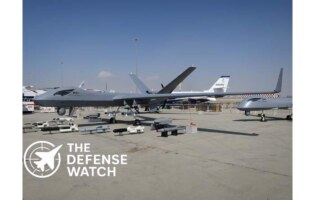
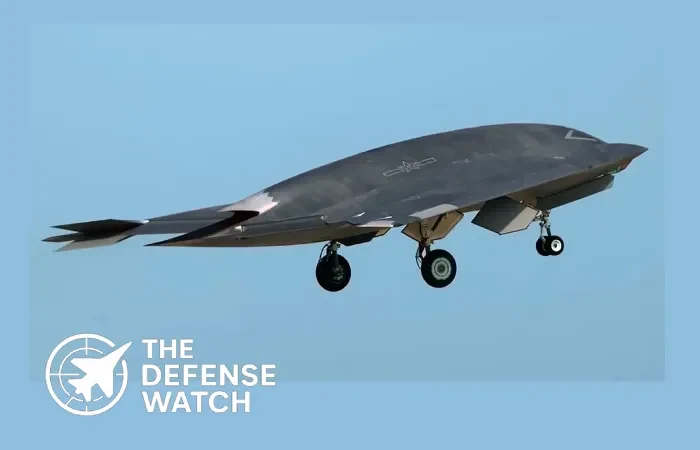
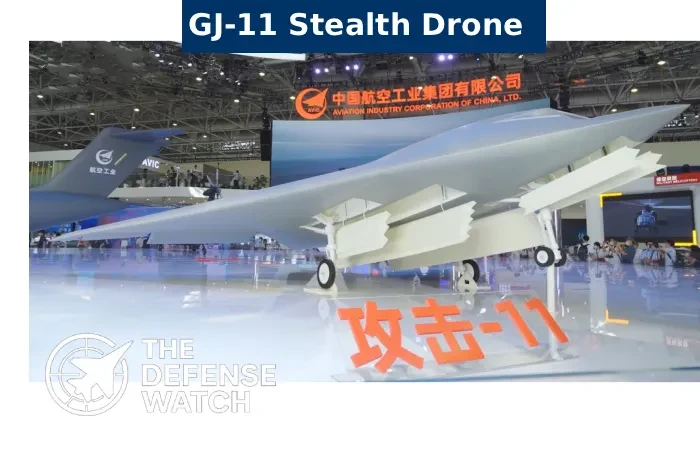
The Chinese GJ-11 Stealth Drone, also known as the “Sharp Sword,” represents China’s cutting-edge foray into stealth unmanned aerial vehicles (UAVs) designed for precision strike and reconnaissance missions. Developed by the Chengdu Aircraft Industry Group, the GJ-11 integrates low-observable airframe design, advanced sensors, and autonomous operational capabilities, making it a key asset for modern asymmetric warfare.
Manufacturer and Origin
- Manufacturer: Chengdu Aircraft Industry Group
- Country of Origin: China
- Purpose: Long-range strike, reconnaissance, and support for manned fighter jets like the J-20.
Capabilities and Performance
The Chinese GJ-11 Stealth Drone is optimized for deep penetration into contested airspace. Featuring a tailless, flying-wing design, it minimizes radar signature while carrying a variety of precision-guided munitions. Its estimated operational range exceeds 1,500 km, with a subsonic cruise speed allowing extended mission endurance. The drone can be deployed both autonomously and via remote control, enabling flexible operational profiles.
Technology and Armament
Equipped with advanced EO/IR sensors, synthetic aperture radar (SAR), and satellite communication links, the GJ-11 can conduct both intelligence gathering and precision strikes. Its internal weapons bay supports guided missiles and bombs, maintaining stealth while delivering combat payloads. The platform is compatible with drone swarm operations and networked warfare strategies, reflecting China’s emphasis on integrated unmanned systems.
Operational Use
Though primarily operated by the People’s Liberation Army Air Force (PLAAF), the GJ-11 is expected to supplement China’s fifth-generation fighter fleet. Its missions include suppression of enemy air defenses, strategic strikes, and reconnaissance in contested environments.
Disclaimer Note
The information provided on TheDefenseWatch.com is for general informational purposes only. While we strive to ensure the accuracy, completeness, and timeliness of our content regarding defense and aerospace products, technologies, and specifications, we cannot guarantee that all information is 100% accurate or up-to-date due to the evolving nature of military technology and classified data.TheDefenseWatch.com does not warrant the reliability, suitability, or availability of the information for any specific purpose. Users are advised to consult official sources, such as manufacturers, government publications, or defense agencies, for precise and verified data before making decisions based on our content.We are not affiliated with any defense manufacturers, governments, or military organizations mentioned. Opinions, reviews, and ratings reflect expert analysis but are subjective and should not be considered endorsements. TheDefenseWatch.com is not responsible for any errors, omissions, or consequences arising from the use of this website’s content.External links are provided for convenience and do not imply endorsement. TheDefenseWatch.com reserves the right to update or modify content without prior notice. By using this website, you agree to our Privacy & Cookies Policy.
New Arrivals
Popular Comparisons
-
 Tejas Fighter Jet vs F-16 Fighting Falcon: Capability Compared
View Comparison →
Tejas Fighter Jet vs F-16 Fighting Falcon: Capability Compared
View Comparison → -
Rafale Fighter Jet vs F-16 Fighting Falcon : Which Fighter Has the Edge?
View Comparison →
-
Su-57 Fighter Jet vs J-20 Fighter Jet: Stealth and Air Combat Compared
View Comparison →
-
Mirage 2000 vs Tejas Mk1A: Legacy Combat Power vs Indigenous Modernization
View Comparison →
-
Rafale Fighter Jet vs F-22 Raptor: Which Air Dominance Fighter Has the Edge?
View Comparison →
-
Tejas Fighter Jet vs. Rafale Fighter Jet: India’s Indigenous Fighter Meets France’s Proven Multirole Combat Aircraft
View Comparison →
-
F-22 Raptor vs. F-35 Joint Strike Fighter: Which Fifth Generation Fighter Has the Edge?
View Comparison →
-
F-35A vs. F-22 Raptor: Which U.S. Stealth Fighter Dominates Modern Air Combat?
View Comparison →
-
AGM-114 Hellfire vs. AGM-179 JAGM: Which U.S. Precision Missile Is Better?
View Comparison →
-
Patriot (PAC-3) vs. THAAD: Complete Missile Defense System Comparison, Capabilities, Range, and Strategic Roles
View Comparison →
- Bell Boeing Wins $19.8M V-22 Tactical Software Support Contract

- Honeywell Wins $53.9M Navy Contract for WSN-7 Gyro Components
- Lockheed Martin Wins $76.6M Trident II D5LE2 Development Contract
- Lockheed Martin Gets $871.2M F-35 Site Support Contract Increase
- Pete Hegseth Texas Enlistment Ceremony: Hegseth Tells Military Families, We Have Their Back
- U.S., Denmark and Greenland Reach Security Agreement to Expand American Military Presence
- SpaceX Wins Three More NASA Crew Missions in $946 Million ISS Contract
- U.S. Clears Potential $24.3 Billion F-35 Sale to Saudi Arabia
- Type 99B Tank Training Shows China’s Shift Toward Networked Armored Warfare
- JRC Integrated Systems Gets $47.4M SLCM-N Support Contract