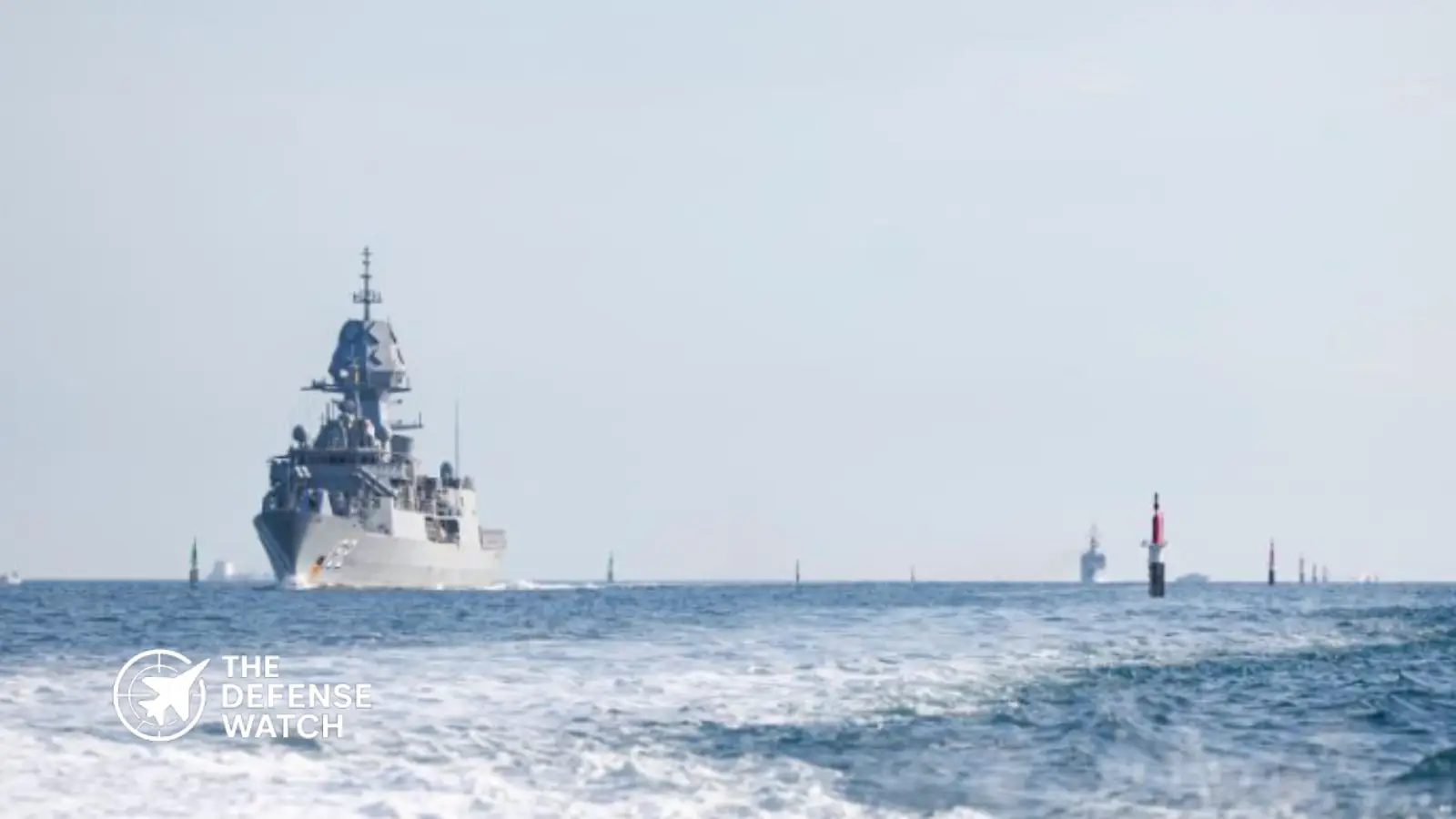
- Malaysia and Australia concluded the latest MASTEX naval exercise in Western Australia.
- The exercise featured Royal Malaysian Navy frigate KD Lekir and Royal Australian Navy frigate HMAS Warramunga.
- Training included gunnery drills, anti-submarine warfare, and coordinated maritime operations.
- MASTEX has been held since 2002 to enhance interoperability between the two navies.
- The activity supports broader Indo-Pacific maritime security cooperation.
MASTEX Naval Exercise Strengthens Australia Malaysia Defense Cooperation
The MASTEX naval exercise Australia Malaysia concluded recently in Western Australia, underscoring the growing operational alignment between the two Indo-Pacific partners. The arrival of KD Lekir and HMAS Warramunga at HMAS Stirling marked the final phase of the biennial maritime engagement.
The exercise, conducted between the Royal Malaysian Navy and the Royal Australian Navy, focused on improving interoperability, operational coordination, and mutual trust through structured maritime training.
Operational Training Focus And Maritime Readiness
The latest iteration of the MASTEX naval exercise Australia Malaysia followed a two-phase format, beginning with a harbor phase and transitioning into complex at-sea operations. Training activities included:
- Advanced ship handling maneuvers
- Live gunnery drills
- Anti-submarine warfare exercises
- Communication and coordination serials
These activities are designed to simulate real-world maritime scenarios, allowing both navies to refine tactical responses and improve joint operational effectiveness.
Commander Ken Brown, Commanding Officer of Warramunga, emphasized that MASTEX goes beyond routine drills. According to official statements, the exercise reflects a longstanding defense partnership built on shared history and sustained cooperation.
From the Malaysian perspective, Commanding Officer Commander Megat Mohamed Sofwan Firdaus bin Megat Mohamad Yunus highlighted the importance of continuity. Since its inception in 2002, MASTEX has evolved into a cornerstone engagement that strengthens readiness for potential contingencies.
Strategic Importance In The Indo-Pacific
The MASTEX naval exercise Australia Malaysia takes place against a backdrop of increasing strategic competition in the Indo-Pacific. While the exercise itself is not directed at any specific threat, its focus on interoperability and maritime domain awareness aligns with broader regional security priorities.
Australia and Malaysia are both key stakeholders in maintaining freedom of navigation and stability across critical sea lanes. Joint exercises like MASTEX contribute to:
- Enhancing maritime situational awareness
- Improving response coordination in crises
- Strengthening coalition-based naval operations
Defense analysts note that such bilateral engagements complement multilateral frameworks, including ASEAN-led initiatives and broader Indo-Pacific security partnerships.
Interoperability As A Force Multiplier
A central objective of the MASTEX naval exercise Australia Malaysia is interoperability. This concept extends beyond technical compatibility to include shared doctrine, communication protocols, and decision-making processes.
Exercises involving coordinated surface warfare and maritime interdiction operations help both navies operate as a unified force when required. This is particularly relevant in scenarios such as humanitarian assistance, disaster relief, and maritime security operations.
The participation of platforms like KD Lekir and HMAS Warramunga also demonstrates the ability of different naval systems to integrate effectively during joint missions.
A Partnership Built On Decades Of Cooperation
The exercise reflects more than 70 years of diplomatic and defense ties between Australia and Malaysia. Over time, this relationship has expanded from basic cooperation to more advanced military collaboration.
The MASTEX naval exercise Australia Malaysia serves as a practical mechanism to sustain this relationship, ensuring that both nations remain aligned in their operational approaches.
Importantly, the emphasis on people-to-people ties, highlighted by both commanding officers, reinforces the human dimension of military cooperation. Trust and familiarity between crews are critical factors in successful joint operations.
Regional Security Outlook
While MASTEX remains a bilateral exercise, its implications extend across the Indo-Pacific. The ability of regional navies to operate together enhances collective security and supports a rules-based maritime order.
In an environment where maritime challenges include piracy, illegal fishing, and strategic competition, consistent engagement through exercises like MASTEX provides a stabilizing effect.
The continued evolution of the MASTEX naval exercise Australia Malaysia suggests that both nations are committed to maintaining a credible and cooperative maritime presence in the region.