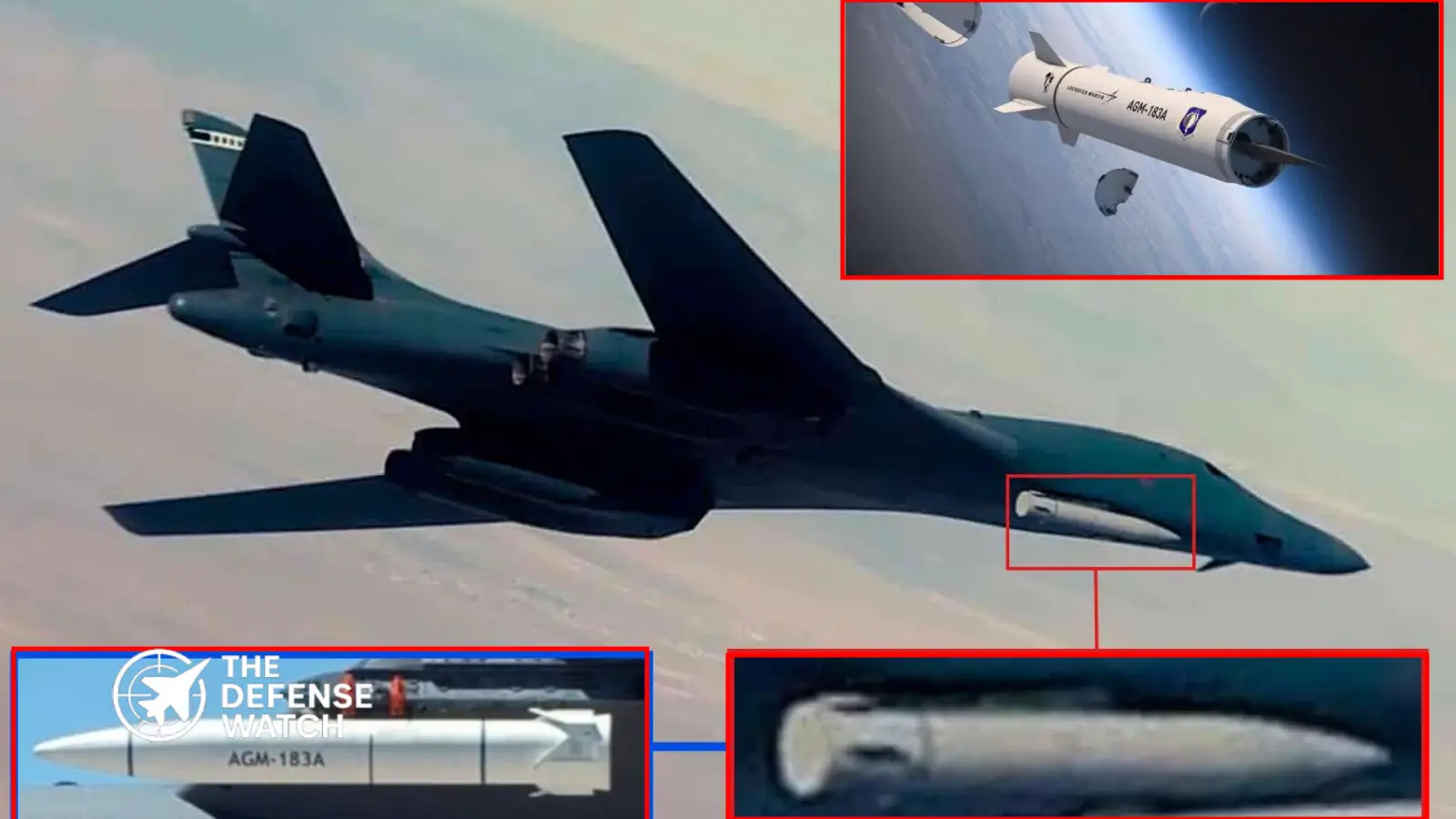
B-1B Lancer Hypersonic Loadout Signals Shift In U.S. Strike Capability
The B-1B Lancer hypersonic loadout revealed by the U.S. Air Force marks a notable step in integrating next-generation weapons into legacy bomber platforms. The configuration, featuring the AGM-183 ARRW, highlights a renewed focus on rapid, long-range strike options designed to penetrate advanced air defenses.
- Iran and Russia reportedly signed a secret 500 million missile deal in December 2025, according to the Financial Times.
- The pact covers delivery of 500 Verba man portable air defense launch units and 2,500 9M336 missiles through 2027 to 2029.
- The Verba systems are infrared guided MANPADS designed to target low altitude threats including drones and cruise missiles.
- The deal follows damage to Iran s air defense network during the 2025 conflict with Israel.
- The agreement reflects deepening military cooperation between Tehran and Moscow.
The updated loadout demonstrates how the B-1B Lancer could carry multiple hypersonic missiles externally, significantly expanding its operational flexibility. The ARRW is designed to reach speeds above Mach 5, enabling it to strike high-value targets with minimal warning.
From Conventional Bomber To Hypersonic Carrier
The B-1B has long served as a conventional strike bomber, optimized for carrying large payloads of guided and unguided munitions. This new B-1B Lancer hypersonic loadout represents a shift toward high-speed precision strike missions.
Unlike stealth bombers such as the B-2, the B-1B relies on speed, payload, and stand-off weapons. Integrating ARRW allows the aircraft to launch from outside heavily defended zones, reducing exposure to modern air defense systems.
This evolution aligns with broader U.S. efforts to adapt existing platforms for hypersonic warfare, rather than waiting for next-generation systems like the B-21 to fully mature.
AGM-183 ARRW: Capability And Challenges
The AGM-183 ARRW program has faced technical hurdles in recent years, including test inconsistencies. However, its core concept remains central to U.S. hypersonic strategy.
The missile uses a boost-glide vehicle, launched by a rocket booster before gliding at hypersonic speeds toward its target. This flight profile complicates interception by traditional missile defense systems.
The introduction of the B-1B Lancer hypersonic loadout suggests continued confidence in ARRW or at least in the broader concept of air-launched hypersonic weapons.
From an operational standpoint, pairing ARRW with the B-1B offers several advantages:
- Rapid deployment from forward bases
- Large payload capacity
- Flexibility in targeting across multiple theaters
Strategic Context: Why It Matters Now
The timing of this reveal is significant. The United States is accelerating efforts to counter hypersonic developments by near-peer competitors, particularly China and Russia.
Both countries have already fielded or tested hypersonic systems, raising concerns about gaps in U.S. strike and deterrence capabilities. The B-1B Lancer hypersonic loadout directly addresses this gap by providing a near-term delivery platform.
This approach reflects a broader Pentagon strategy of incremental modernization. Instead of relying solely on future platforms, the U.S. is upgrading existing assets to maintain operational readiness.
Operational Impact And Future Outlook
If fully operational, the B-1B Lancer hypersonic loadout could reshape how the U.S. conducts long-range strike missions. The ability to launch hypersonic weapons from a proven bomber platform adds a layer of unpredictability and speed to U.S. military planning.
However, several factors will determine its effectiveness:
- Successful maturation of ARRW technology
- Integration with targeting and command systems
- Availability of sufficient missile inventory
There is also the question of survivability. While the B-1B can launch from stand-off distances, it lacks stealth characteristics, which may limit its use in highly contested environments.
Analysis: Bridging The Capability Gap
The decision to equip the B-1B with hypersonic weapons is less about transforming the aircraft and more about bridging a capability gap.
It reflects a pragmatic approach. Instead of waiting for next-generation systems, the U.S. is leveraging what it already has. This reduces risk and accelerates deployment timelines.
At the same time, it underscores the urgency of the hypersonic race. The B-1B Lancer hypersonic loadout is not just a technical upgrade. It is a signal that the U.S. is adapting its force structure to keep pace with evolving threats.