
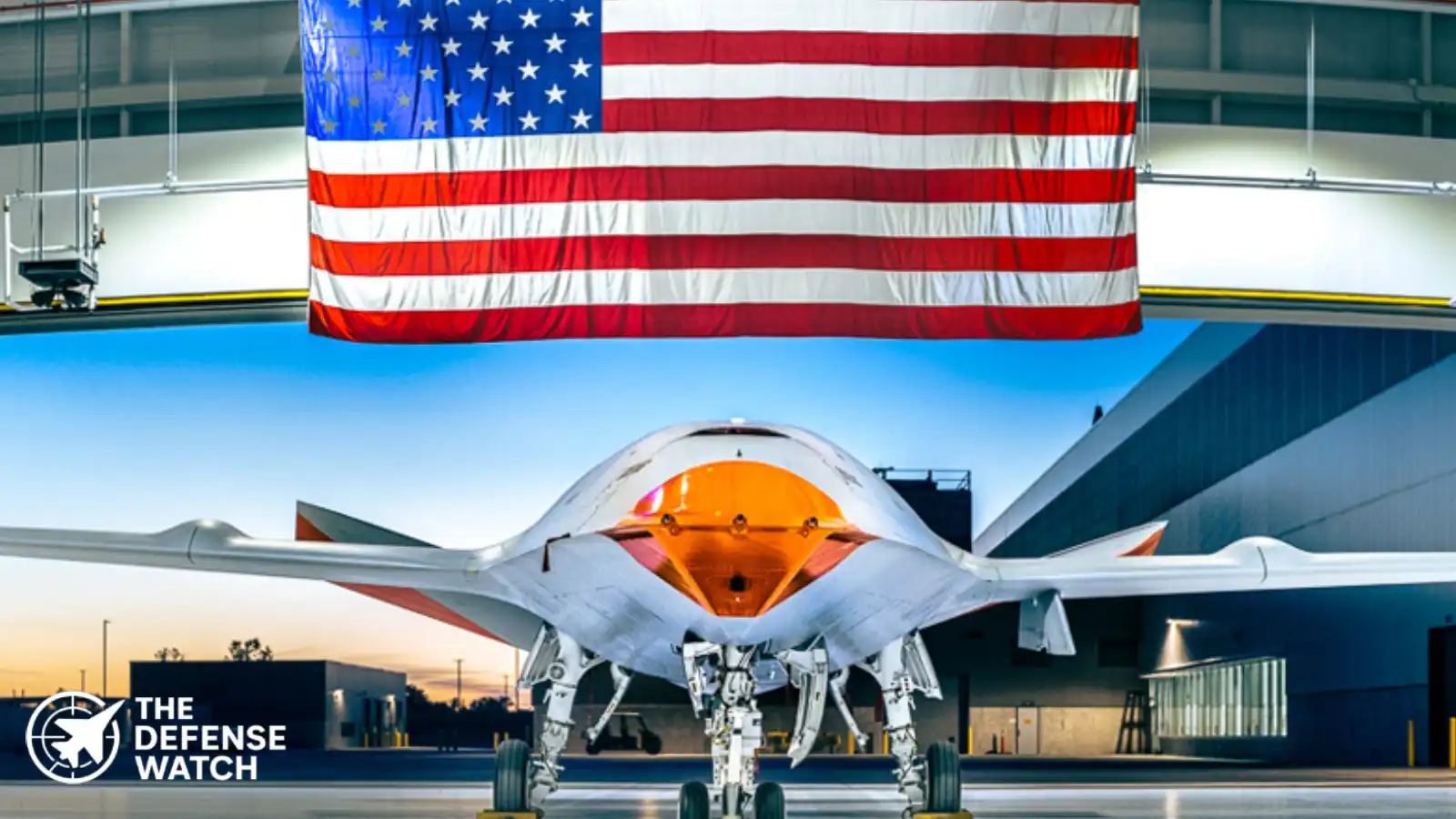
U.S. Navy MQ-25A Stingray Reaches Major Flight Milestone
The MQ-25A Stingray completed its first flight, marking one of the most important recent steps in U.S. Navy carrier aviation modernization. The Boeing-built unmanned aircraft flew on April 25 from MidAmerica St. Louis Airport, where the company manufactures the platform. The sortie signals that the Navy’s first carrier-based operational drone tanker is moving closer to fleet service.
The MQ-25A Stingray is not just another unmanned aircraft. It is designed to solve a long-running operational problem for the Navy, the heavy use of frontline fighters as airborne tankers.
- The first production-representative U.S. Navy MQ-25A Stingray completed its maiden flight on April 25, 2026.
- The aircraft flew from MidAmerica St. Louis Airport near Boeing’s MQ-25 production site.
- MQ-25A is designed to refuel carrier aircraft including F/A-18E/F Super Hornet and F-35C fighters.
- The Navy plans to acquire 76 MQ-25 aircraft, with initial operational capability targeted for 2027.
- The program could reshape carrier operations by freeing manned fighters from tanker missions.
For years, F/A-18E/F Super Hornets have performed buddy refueling missions that consume airframe life and reduce the number of fighters available for strike or air defense missions. The MQ-25A is intended to take over that task.
Why The MQ-25A Matters
The arrival of the MQ-25A Stingray could significantly extend the combat reach of U.S. aircraft carriers.
Modern threats, particularly long-range anti-ship missiles and dense air defense networks, have pushed carriers to operate farther from hostile coastlines. That distance reduces the striking range of carrier aircraft. By providing organic aerial refueling, the MQ-25A can help restore lost reach for aircraft such as the F-35C Lightning II and F/A-18E/F Super Hornet.
Boeing and Navy officials have previously stated the aircraft is expected to offload around 15,000 pounds of fuel at operationally relevant distances. That makes the system a force multiplier rather than a simple support aircraft.
From Demonstrator To Fleet Asset
Earlier MQ-25 development used the T1 demonstrator, which proved core capabilities including unmanned aerial refueling. This latest aircraft is the first production-representative version, meaning it is much closer to the configuration the fleet will eventually operate.
That distinction matters because it moves the program from technology demonstration into real acquisition and operational testing.
The Navy currently plans to procure 76 MQ-25 aircraft, with initial operational capability expected in 2027.
Strategic Analysis
The MQ-25A Stingray reflects a broader Pentagon shift toward human-machine teaming. Rather than replacing crewed fighters, it supports them, expands their range, and preserves valuable pilot hours.
This is a practical model for unmanned integration. It avoids the political and technical friction of replacing combat aircraft outright while still delivering immediate gains.
If successful, the MQ-25A could open the door for future carrier-based unmanned systems focused on surveillance, strike, and electronic warfare.
What Comes Next
The next major hurdles include deck handling trials, catapult launches, arrested recoveries, and carrier integration testing. Those steps are especially demanding because carrier operations remain among the most complex environments in military aviation.
Still, with first flight complete, the MQ-25A Stingray has crossed a key threshold.
For the U.S. Navy, it may become one of the most consequential carrier aviation programs of the decade.
Get real time update about this post category directly on your device, subscribe now.

