U.S. Navy MQ-25A Stingray Reaches Major Flight Milestone
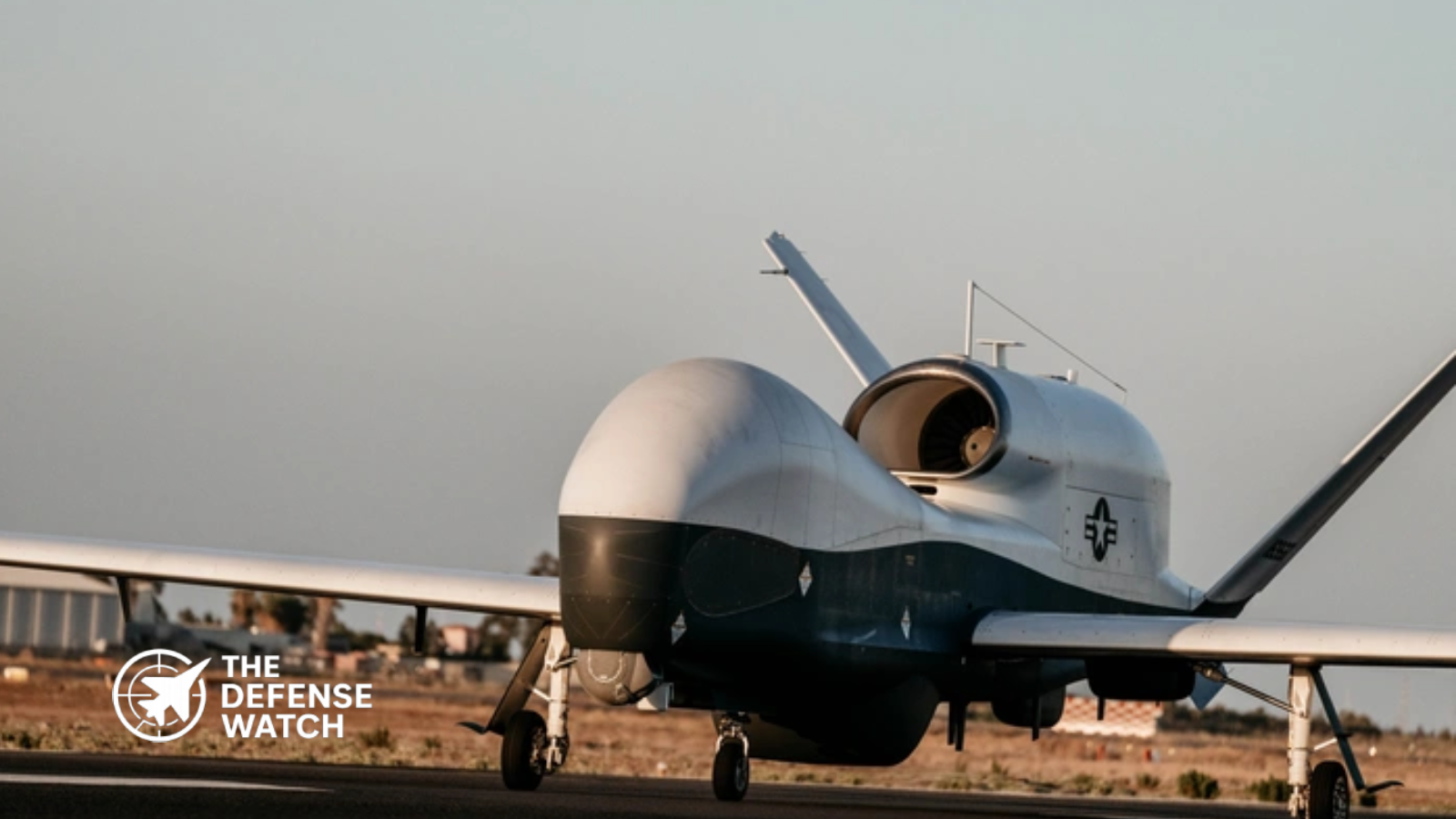
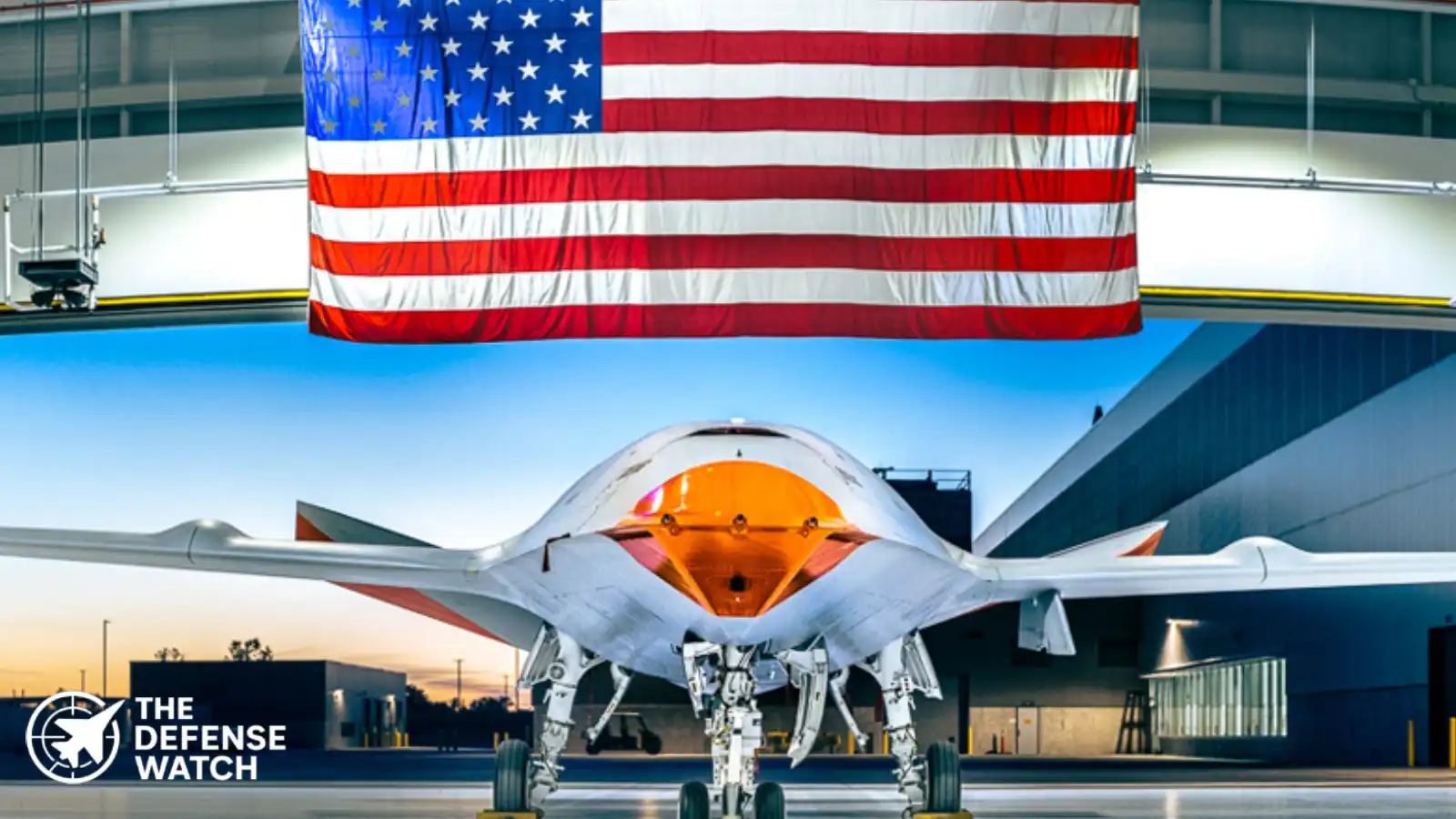
The MQ-25A Stingray completed its first flight, marking one of the most important recent steps in U.S. Navy carrier aviation modernization. The Boeing-built unmanned aircraft flew on April 25 from MidAmerica St. Louis Airport, where the company manufactures the platform. The sortie signals that the Navy’s first carrier-based operational drone tanker is moving closer to fleet service.
The MQ-25A Stingray is not just another unmanned aircraft. It is designed to solve a long-running operational problem for the Navy, the heavy use of frontline fighters as airborne tankers.
- The first production-representative U.S. Navy MQ-25A Stingray completed its maiden flight on April 25, 2026.
- The aircraft flew from MidAmerica St. Louis Airport near Boeing’s MQ-25 production site.
- MQ-25A is designed to refuel carrier aircraft including F/A-18E/F Super Hornet and F-35C fighters.
- The Navy plans to acquire 76 MQ-25 aircraft, with initial operational capability targeted for 2027.
- The program could reshape carrier operations by freeing manned fighters from tanker missions.
For years, F/A-18E/F Super Hornets have performed buddy refueling missions that consume airframe life and reduce the number of fighters available for strike or air defense missions. The MQ-25A is intended to take over that task.
Why The MQ-25A Matters
The arrival of the MQ-25A Stingray could significantly extend the combat reach of U.S. aircraft carriers.
Modern threats, particularly long-range anti-ship missiles and dense air defense networks, have pushed carriers to operate farther from hostile coastlines. That distance reduces the striking range of carrier aircraft. By providing organic aerial refueling, the MQ-25A can help restore lost reach for aircraft such as the F-35C Lightning II and F/A-18E/F Super Hornet.
Boeing and Navy officials have previously stated the aircraft is expected to offload around 15,000 pounds of fuel at operationally relevant distances. That makes the system a force multiplier rather than a simple support aircraft.
From Demonstrator To Fleet Asset
Earlier MQ-25 development used the T1 demonstrator, which proved core capabilities including unmanned aerial refueling. This latest aircraft is the first production-representative version, meaning it is much closer to the configuration the fleet will eventually operate.
That distinction matters because it moves the program from technology demonstration into real acquisition and operational testing.
The Navy currently plans to procure 76 MQ-25 aircraft, with initial operational capability expected in 2027.
Strategic Analysis
The MQ-25A Stingray reflects a broader Pentagon shift toward human-machine teaming. Rather than replacing crewed fighters, it supports them, expands their range, and preserves valuable pilot hours.
This is a practical model for unmanned integration. It avoids the political and technical friction of replacing combat aircraft outright while still delivering immediate gains.
If successful, the MQ-25A could open the door for future carrier-based unmanned systems focused on surveillance, strike, and electronic warfare.
What Comes Next
The next major hurdles include deck handling trials, catapult launches, arrested recoveries, and carrier integration testing. Those steps are especially demanding because carrier operations remain among the most complex environments in military aviation.
Still, with first flight complete, the MQ-25A Stingray has crossed a key threshold.
For the U.S. Navy, it may become one of the most consequential carrier aviation programs of the decade.
- China’s Changying-8 cargo UAV completed its maiden flight in Zhengzhou, Henan Province.
- The UAV has a maximum takeoff weight of 7 tonnes and a payload capacity of 3.5 tonnes.
- It features a large cargo bay with a volume of 18 cubic meters.
- The aircraft offers a range exceeding 3,000 kilometers for long-distance logistics missions.
- Designed for logistics, emergency response, and operations in remote or complex terrain.
China Changying-8 Cargo UAV Completes Maiden Flight
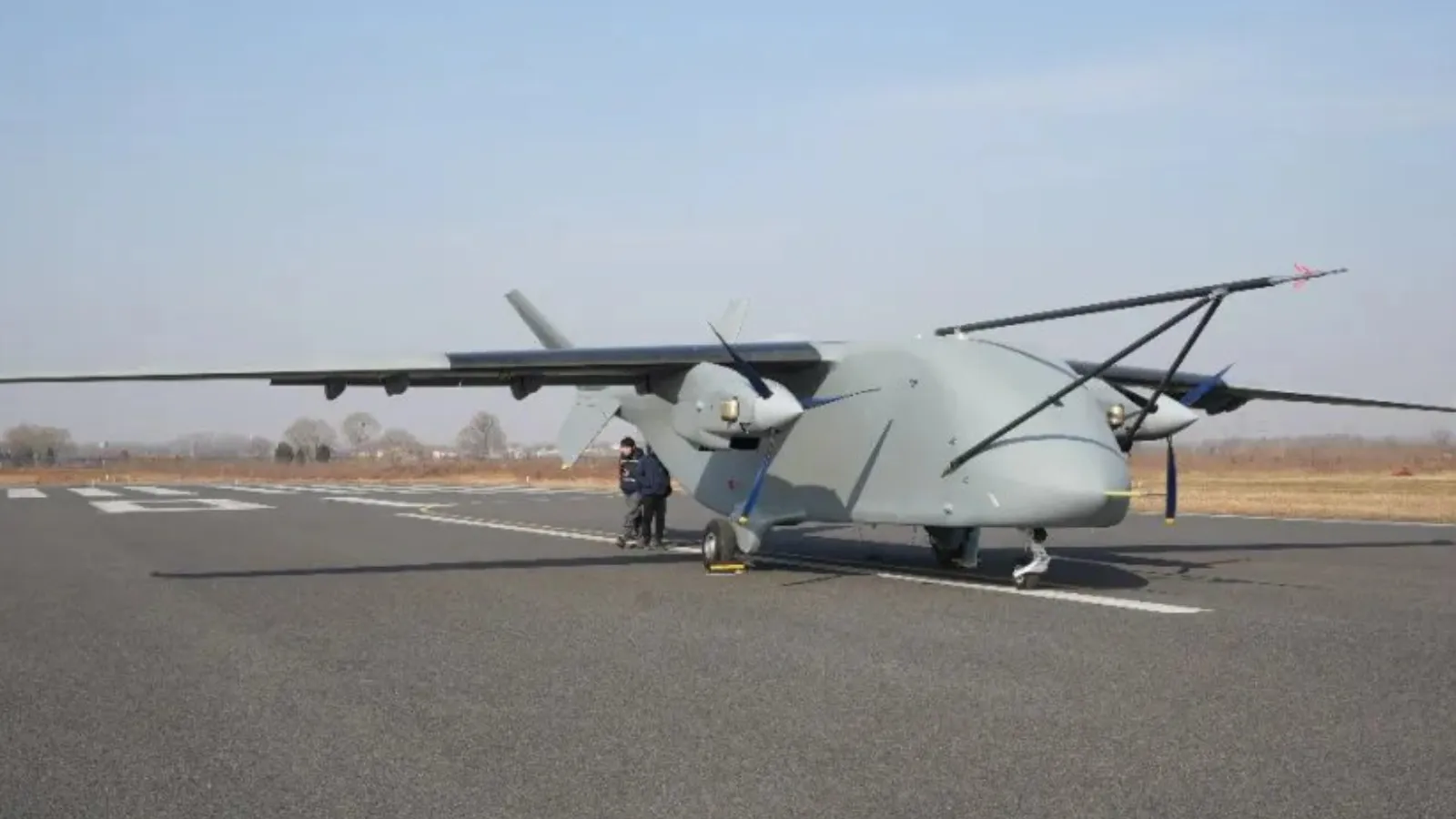
China’s Changying-8 cargo UAV has successfully completed its maiden flight, marking a notable step in the country’s push to expand unmanned logistics capabilities. The flight took place at an airport in Zhengzhou, located in central China’s Henan Province, according to official Chinese media reports.
The Changying-8 cargo UAV is classified as a 7-ton-class fixed-wing unmanned aircraft, designed primarily for heavy cargo transport across long distances. With a maximum takeoff weight of 7 tonnes and a payload capacity of 3.5 tonnes, the platform is positioned to fill a niche between smaller tactical drones and manned transport aircraft.
Designed for Long-Range, High-Volume Logistics
A key feature of the Changying-8 cargo UAV is its large internal cargo compartment, offering a volume of 18 cubic meters. This capacity enables the transport of bulky or high-volume payloads, including humanitarian supplies, military equipment, and critical logistics packages.
The UAV’s operational range exceeds 3,000 kilometers, allowing it to conduct extended missions without the need for intermediate stops. This range places it in a competitive category for regional logistics operations, particularly in areas where traditional infrastructure is limited or contested.

Chinese developers have highlighted multiple use cases for the aircraft, including long-distance logistics transport, emergency rescue delivery, and supply missions to border or remote regions. Its ability to operate in complex terrain suggests a design emphasis on flexibility and resilience.
Expanding Role of Unmanned Logistics in Military Operations
The introduction of the Changying-8 cargo UAV reflects a broader trend in military and dual-use aviation, where unmanned systems are increasingly tasked with logistics roles traditionally handled by manned aircraft.
Unmanned cargo platforms offer several operational advantages. They reduce risk to personnel, enable operations in high-threat environments, and can sustain supply chains in contested or denied areas. For military planners, this capability is especially relevant in scenarios involving dispersed forces or austere operating conditions.
China has been steadily investing in unmanned aerial systems across multiple categories, from surveillance drones to combat UAVs and now heavy-lift logistics platforms. The Changying-8 cargo UAV represents a move toward integrating unmanned systems into core logistics frameworks rather than limiting them to support roles.
Strategic Implications for Regional and Global UAV Development
The development of the Changying-8 cargo UAV highlights China’s intent to compete in the emerging market for large unmanned cargo aircraft. While several countries are exploring similar concepts, few have demonstrated operational platforms in the 7-ton-class category.

In comparison to smaller logistics drones used for last-mile delivery, systems like the Changying-8 are aimed at theater-level transport, bridging the gap between strategic airlift and tactical resupply. This could have implications for both military operations and commercial logistics, particularly in regions with challenging geography.
From a defense perspective, the ability to deliver 3.5 tonnes of cargo over 3,000 kilometers without a crew could enhance operational endurance and reduce logistical vulnerabilities. It also aligns with broader trends in autonomous systems and distributed operations.
Outlook
The successful maiden flight of the Changying-8 cargo UAV is an early milestone, and further testing will likely focus on payload integration, operational reliability, and mission flexibility. As development progresses, the platform could play a role in both civilian and military logistics networks.
Given the increasing importance of rapid and resilient supply chains, heavy-lift unmanned cargo aircraft are expected to become a key component of future aerospace and defense strategies.
US Navy MQ-4C Triton Extended Caribbean Surveillance
Public flight-tracking data show a US Navy MQ-4C Triton unmanned aircraft system conducted an extended surveillance patrol over the Caribbean Sea north of Venezuela on 8 January 2026, consistent with wide-area maritime intelligence activity.
The high-altitude, long-endurance Triton, callsign BLKCAT6 and bureau number 169659, departed Naval Station Mayport, Florida, and flew south into international airspace above the central Caribbean, maintaining roughly 47,000 feet while executing repeated east-west patterns over international waters.
Visible Flight-Tracking Patterns
Open-source tracking showed the MQ-4C remaining on station for about nine to ten hours before leaving coverage. The aircraft flew a classic “lawnmower” grid pattern designed for wide-area maritime search and surveillance.
The mission took place in international airspace north of Venezuela’s coastline. It marks a continuation of persistent unmanned ISR flights in the region.
Platform Role and Capabilities
The MQ-4C Triton is a high-altitude unmanned aircraft optimized for long-endurance maritime patrol missions. It can remain aloft for up to 30 hours and is fitted with advanced sensors for surface tracking, maritime domain awareness, and wide-area intelligence, surveillance, and reconnaissance (ISR).
While there has been no official statement from the US Navy confirming the operational intent of the sortie, the flight pattern and duration align with maritime domain awareness missions and wide-area surveillance tasking.
Strategic Context
Persistent unmanned patrols by the US Navy contribute to maritime ISR across key sea lanes and areas of interest. In the Caribbean, such missions occur amid broader US military surveillance and enforcement efforts, including counter-narcotics and regional maritime security operations.