Northrop Grumman Glide Phase Interceptor Program Accelerates
The Glide Phase Interceptor program received a major boost as the Missile Defense Agency awarded Northrop Grumman a $475.3 million agreement modification to accelerate development of its interceptor concept.
- Northrop Grumman Glide Phase Interceptor Program Accelerates
- Why The Glide Phase Matters In Hypersonic Defense
- Other Transaction Authority Speeds Development
- Funding Signals Urgency From Congress
- Integration With Broader U.S. Missile Defense Architecture
- Northrop Grumman Role In Hypersonic Defense
- Strategic Impact
The award increases the total value of the existing Prototype Project Other Transaction Agreement from $832.7 million to more than $1.308 billion. The effort focuses on refining and speeding up the design of an interceptor capable of defeating hypersonic glide vehicles during the most challenging portion of their flight.
The work is managed by MDA in Dahlgren, Virginia, with an expected completion date of June 2028.
- Northrop Grumman awarded a $475,297,523 modification under an active Other Transaction Agreement.
- Total Glide Phase Interceptor agreement value rises to $1.308 billion.
- Work supports accelerated development of the Glide Phase Interceptor design concept.
- Funding includes $174.1 million obligated from Section 20003 of Public Law 119-21.
- Estimated completion date is June 2028, managed by MDA in Dahlgren, Virginia.
Why The Glide Phase Matters In Hypersonic Defense
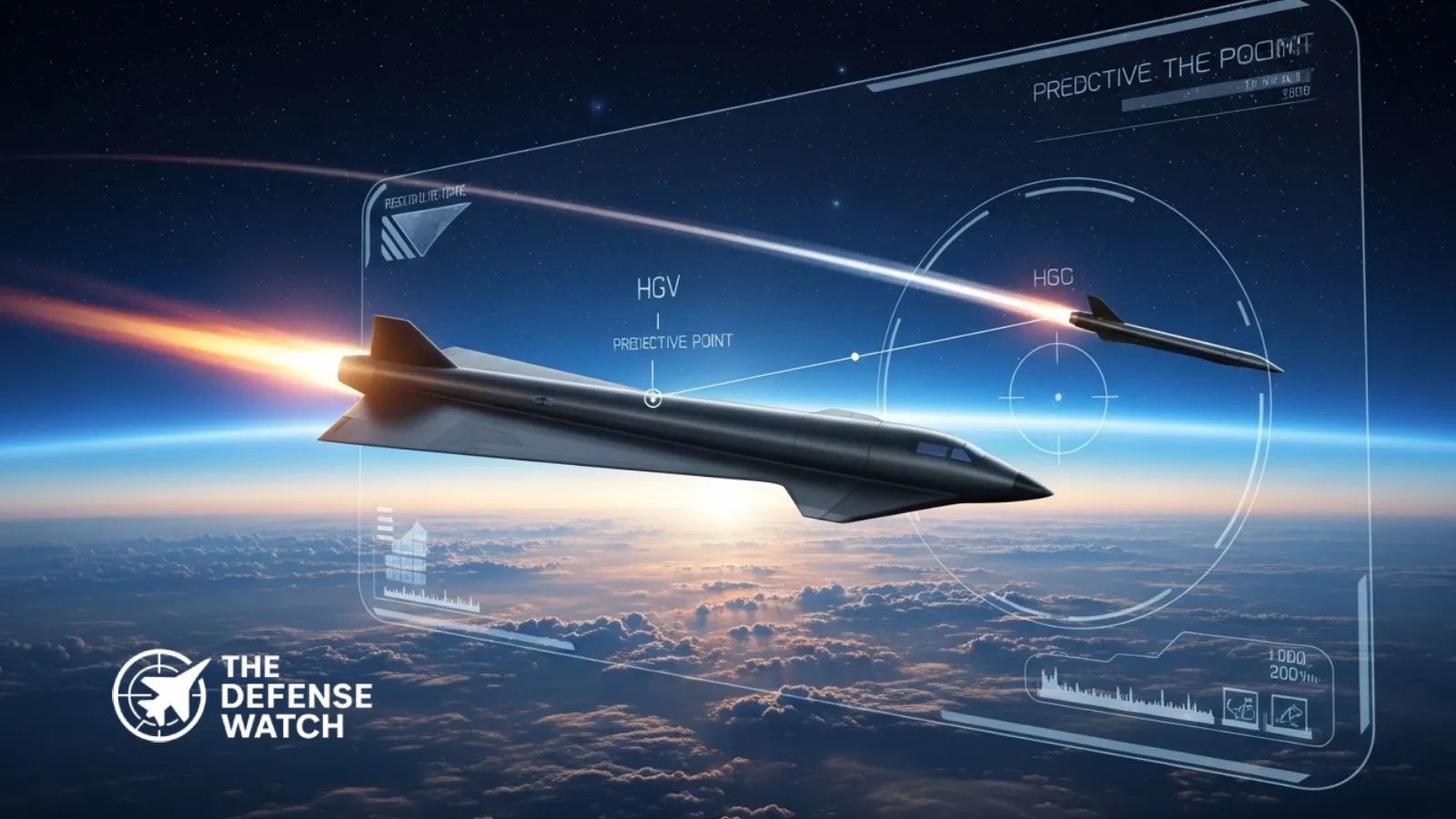
Hypersonic glide vehicles travel at extreme speeds and maneuver unpredictably within the atmosphere. Traditional missile defense systems are optimized for ballistic trajectories, not for threats that skip and glide at lower altitudes.
This is where the Glide Phase Interceptor becomes critical.
Instead of attempting interception during boost phase or terminal phase, the interceptor targets the weapon during its glide phase, when it is still traveling at hypersonic speed but before it descends toward its target.
This window is short. Detection, tracking, discrimination, and engagement must happen in seconds. That requirement is driving new sensor networks, command systems, and interceptor technologies across the U.S. missile defense architecture.
Other Transaction Authority Speeds Development
The agreement operates under Other Transaction Authority, a contracting approach that allows the Pentagon to move faster than traditional acquisition programs.
Under 10 U.S. Code 4022, MDA can rapidly prototype advanced technologies with fewer regulatory delays. This approach is increasingly used for cutting edge systems such as hypersonic defense, space tracking, and directed energy.
For the Glide Phase Interceptor, speed is central. U.S. defense leaders have repeatedly warned that hypersonic weapons from peer competitors are advancing faster than traditional defenses.
Funding Signals Urgency From Congress
At the time of award, $174.1 million was obligated from Section 20003 of Public Law 119-21. This reflects direct congressional support for accelerating hypersonic defense solutions.
Lawmakers have pushed for faster fielding of systems that can counter emerging threats from nations such as China and Russia, both of which have demonstrated operational hypersonic glide vehicles.
This funding is not for theoretical research. It is aimed at turning the Glide Phase Interceptor into a deployable capability within the next few years.
Integration With Broader U.S. Missile Defense Architecture
The Glide Phase Interceptor is not a standalone system. It is expected to work alongside space based tracking sensors, Aegis destroyers, and future missile defense networks.
Programs such as the Hypersonic and Ballistic Tracking Space Sensor and upgrades to Aegis weapon systems are being aligned to support glide phase engagements.
This layered approach reflects a shift in U.S. missile defense thinking. Rather than relying on a single interception opportunity, the Pentagon is building multiple chances to defeat a hypersonic weapon across its flight path.
Northrop Grumman Role In Hypersonic Defense
Northrop Grumman has emerged as a key player in hypersonic defense technologies, including propulsion, sensors, and interceptor concepts.
Its work on the Glide Phase Interceptor builds on experience in missile systems, space tracking, and advanced propulsion. The accelerated schedule suggests MDA sees Northrop’s design as a strong candidate for eventual operational deployment.
The company is competing in a high priority area that is likely to see continued funding growth through the decade.
Strategic Impact
The Glide Phase Interceptor represents one of the first serious attempts by the United States to directly counter hypersonic glide vehicles in their most survivable flight regime.
If successful, it would close a major gap in U.S. missile defense.
For years, analysts have noted that hypersonic weapons were designed specifically to bypass existing missile shields. The Glide Phase Interceptor is designed specifically to remove that advantage.
The expanded funding and accelerated timeline show that this is no longer a long term research project. It is now an urgent operational requirement.