

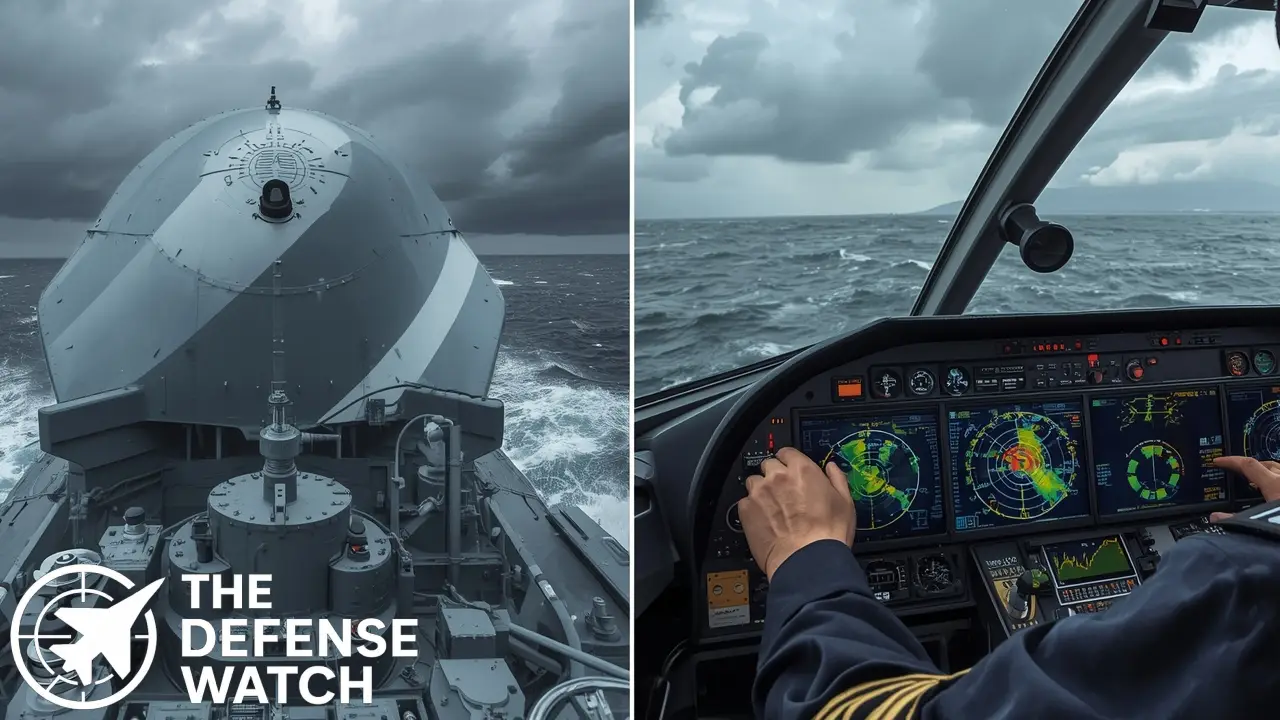
Weather Radar and Military Operations
Weather radar is often associated with civilian meteorology, but in defense and aerospace, it is just as critical. Armed forces worldwide—from the U.S. to NATO allies—rely on weather radar to plan operations, ensure safe navigation, and maintain strategic superiority in complex environments.
In military aviation, accurate radar-based forecasting is essential for mission safety. Fighter jets, transport aircraft, and unmanned aerial systems (UAS) depend on real-time weather data to avoid turbulence, thunderstorms, and hazardous flying conditions. Without precise weather radar inputs, sorties may be delayed or compromised.
Weather Radar at Sea: The Naval Perspective
For naval forces, weather radar is indispensable. Aircraft carriers, destroyers, and submarines operate in environments where storms and sea states can impact mobility and combat effectiveness. Advanced naval weather radar helps ships chart safe courses, detect incoming storms, and coordinate air-sea operations.
The U.S. Navy and allied navies use shipborne Doppler radars not only to track weather patterns but also to synchronize missile launches and carrier flight operations. The accuracy of a single radar sweep can determine whether an amphibious landing proceeds as planned or is postponed due to rough seas.
Dual-Use Technology: Civilian to Military Transition
Many military weather radars are built upon civilian technologies, particularly Doppler radar. While Doppler radar is widely used in storm detection and forecasting, militaries have adapted it for detecting low-flying aircraft, artillery rounds, and drones. This “dual-use” crossover highlights how civilian research often finds direct application in defense.
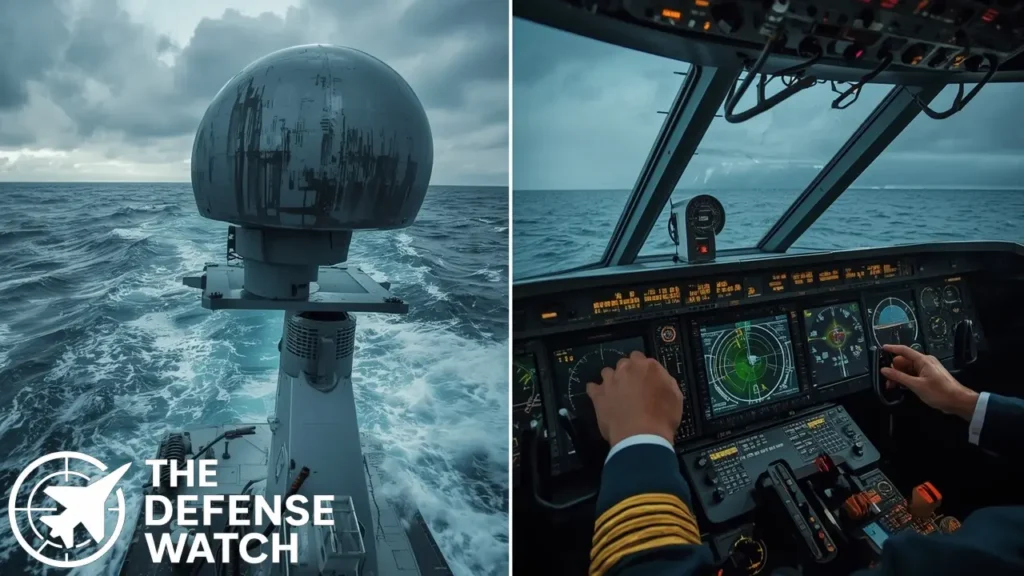
For example, Doppler radar can track wind shear—dangerous to both civilian airliners and military aircraft alike. In combat, the same technology helps artillery units adjust for wind conditions when firing long-range precision munitions.
Strategic Value in Modern Warfare
Weather data is not just about comfort or safety—it is about survival and operational success. Accurate weather radar inputs influence missile launches, drone flights, and satellite communications. A drone mission over the Middle East or a missile test in the Pacific must account for atmospheric conditions such as crosswinds, precipitation, and electromagnetic interference caused by storms.
Modern militaries also integrate weather radar with artificial intelligence (AI) to create predictive models. These systems allow commanders to simulate battlefield conditions days in advance, shaping both tactical and strategic decisions.
Analysis: Why It Matters Now
As climate patterns grow more unpredictable, weather radar is becoming even more central to defense planning. From Arctic operations to Pacific deployments, forces are encountering harsher, less predictable weather. Investing in advanced radar systems—whether land-based, airborne, or satellite-integrated—is increasingly seen not as optional, but as mission-critical.
In short, weather radar is more than a forecasting tool—it is a strategic enabler. For defense planners, ignoring the weather is no longer an option.
Source: National Weather Service on Weather Radar Technology
FAQs
Weather radar in the military is used to detect storms, wind patterns, and atmospheric conditions that impact operations, missions, and navigation.
It ensures safer flight paths, allows mission planning around weather threats, and provides data for drone and missile operations.
Yes. While based on similar principles, military weather radars are often ruggedized, integrated with command systems, and adapted for detecting artillery and drones.
It provides real-time tracking of wind and precipitation, essential for artillery accuracy, aviation safety, and storm avoidance.
Absolutely. Naval vessels depend on radar for storm avoidance, safe navigation, and synchronizing air-sea missions.

4 comments
[…] If weaponization accelerates, it could trigger an arms race in orbit, with devastating consequences for satellites that underpin modern life—from banking transactions to weather forecasts. […]
[…] The Janus microreactor program is part of the Army’s broader modernization initiative to improve energy resilience and operational readiness. Microreactors are compact, transportable nuclear power systems capable of generating reliable electricity in environments where conventional power grids may be vulnerable or unavailable. They are designed to operate for years with minimal maintenance while supporting a variety of military missions. […]
[…] Chris Winslett, general manager of Blue Canyon Technologies, noted that Pandora carries the largest telescope payload ever integrated onto a Blue Canyon spacecraft. He highlighted the spacecraft’s advanced guidance, navigation, and control systems, which provide the precision pointing and stability required for the mission’s success. […]
[…] latest E 2D Advanced Hawkeye contract aligns with those priorities, ensuring radar performance and mission availability through the end of the […]