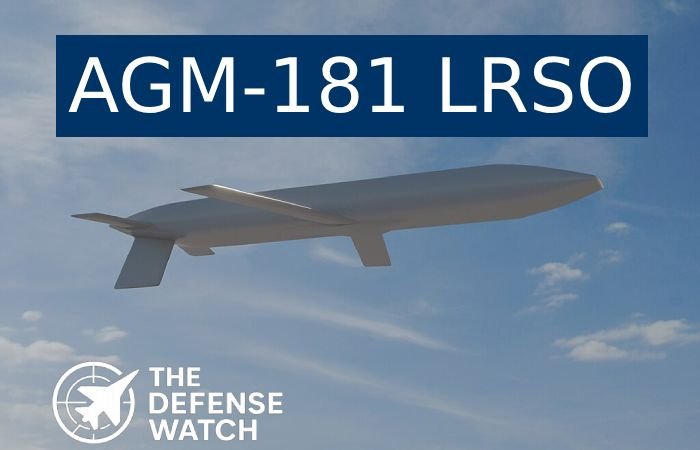
AGM-181 Long-Range Standoff Missile (LRSO)
The AGM-181 Long-Range Standoff (LRSO) missile represents the United States Air Force’s next-generation strategic cruise missile, engineered to ensure credible nuclear deterrence in an era of advanced air-defense threats. Developed by Raytheon, the AGM-181 is designed to replace the aging AGM-86B ALCM, delivering a modern, low-observable weapon capable of penetrating sophisticated integrated air-defense systems.
At its core, the AGM-181 prioritizes survivability, flexibility, and precision. Built around advanced stealth shaping, radar-absorbing materials, and a highly efficient propulsion system, the missile enables U.S. bombers to strike from far outside enemy air-defense envelopes. While much of the LRSO program remains classified, the missile is understood to feature a nuclear-capable warhead, long-range subsonic flight profile, and multi-mode guidance architecture integrating GPS/INS and terrain-following navigation.
The AGM-181 is expected to operate from legacy and next-generation platforms, including the B-52H Stratofortress and the B-21 Raider. Its standoff capability ensures bomber survivability while delivering strategic precision at intercontinental ranges. The missile’s digital architecture supports future software-driven enhancements, enabling adaptability against evolving air-defense radars and countermeasures.
Operationally, the LRSO will strengthen the U.S. nuclear triad by ensuring that the airborne leg remains credible against peer adversaries. With production supported through the 2030s, the AGM-181 is set to become a central element of U.S. strategic deterrence strategy for decades.
AGM-181 Missile Price in United State
The AGM-181 LRSO is a defense-only, government-procured system with costs not publicly itemized. Estimates place program unit pricing in the multi-million-dollar range, varying by quantity, configuration, and long-term production contracts negotiated through the U.S. Air Force.
FAQs
The exact range of the AGM-181 Long-Range Standoff (LRSO) missile is classified by the U.S. Air Force. However, defense analysts estimate that it is designed to achieve long-range, intercontinental-level standoff distances, allowing U.S. bombers to strike well outside advanced enemy air-defense networks.
The U.S. government has not released an official unit cost for the AGM-181. Based on budget documents and comparable strategic systems, analysts estimate the price to fall in the multi-million-dollar range per missile, with total program costs projected to exceed tens of billions over its full lifecycle.
While official performance data is restricted, the AGM-181 is widely understood to be a subsonic cruise missile, similar to the AGM-86B it will replace. Its subsonic speed is optimized for stealth, low-altitude penetration, and extended range during strategic missions.